
Four Ideas, One Game (Rowan · Twain · Flank · Oddwin)
TRANSFER — the whole thesis of the academy: the five grid games share a small set of *ideas,* and an idea you learn in one game *reappears* in another. Connection (Rowan), the double threat (Twain), territory flip (Flank), and parity (Oddwin) aren't four games' worth of separate skills — they're four *ideas* that travel. Learn the idea once and you own a piece of every game that uses it.
Chapter — Four Ideas, One Game
Gridley, the family host, gathered four students who each believed, quietly and a little proudly, that they were experts in different games — and set out to show them they’d been teaching each other the whole time without noticing.
“Rowan, you’re the Connect-4 and Hex player. Twain, the tactics specialist. Flank, our Othello expert. Oddwin, the Dots-and-Boxes master.” He nodded at each. “Four games. Four experts. Four completely separate skills.” He paused, in the way that meant a trap was about to spring. “Or so you think. I’m going to show you one idea, from one of you — and then I’m going to find it hiding in all the others.” He set out four different boards. “Watch what travels.”
Rowan went first, because connection was where most of the students had started. “My whole game is making the line,” he said, extending a chain of stones toward a winning link on the Connect-4 board. “Four in a row, or a path across the Hex board. Build the connection before they cut it.” He said it like it belonged only to him. Then Gridley walked him over to Flank’s Othello board and asked, “Rowan — how does Flank make a stable edge?” Rowan looked, and slowly saw it: a line of anchored pieces along the edge, connected corner to corner. “That’s… a connection,” he said, surprised. “Flank’s stable edge is a line — the same idea as my winning row, just doing a different job.” Flank blinked. “I never thought of my edges as connections.” “They are,” Gridley said mildly. “Rowan’s idea was in your game the whole time. You just called it something else.”
Twain went next, and she was sure her double-threat was hers alone. “I make two winning threats at once,” she said, placing a stone on the Gomoku board that opened two lines toward five-in-a-row. “You can only block one. That’s my move — the fork.” Gridley smiled and turned to Oddwin’s Dots-and-Boxes board. “Oddwin — when you set up the double-cross, what are you really doing?” Oddwin, who controlled parity by sacrificing two boxes to force the opponent to open the next long chain, worked it out aloud. “I… leave them two bad options. Take the boxes and open the big chain for me, or… either way I win the chain.” She stared. “That’s two threats they can’t both escape. That’s — Twain, that’s your fork.” Twain looked genuinely startled. “The double-cross is a double threat?” “The double-cross,” Gridley said, “is your fork wearing a Dots-and-Boxes costume. Same idea. Different board.” Twain sat back, a little humbled and a lot delighted.
Then it was Flank’s turn to be surprised, and Oddwin’s. Flank had always thought flipping territory was the soul of Othello and nothing like the others’ games. But Gridley pointed at Hex, where taking a key cell could turn a whole region of the board from “contested” to “yours.” “Flank — isn’t that a territory flip? A single move that changes who controls a whole area?” Flank frowned, then nodded slowly. “It’s not flipping pieces,” he said, “but it’s flipping control. Same shape of idea.” And Oddwin, the parity master, found her idea — who is forced to move last — hiding in the Othello endgame Mobi always talked about, where running out of good moves forces you to hand over a corner. “Parity is just… who gets stuck moving when they don’t want to,” Oddwin said. “And that’s in Othello too. And Hex. And—” she laughed. “It’s everywhere.” The four of them stood around the four boards, and the walls between “their” games had quietly dissolved.
Gridley let them sit in it. “Here’s what just happened,” he said. “You each walked in as an expert in one game. But you weren’t, really. You were each an expert in one idea — connection, the double threat, territory, parity — and you’d only ever seen it in one place, so you thought the idea and the game were the same thing.” He gestured at all four boards. “They’re not. The idea is the real thing. The game is just one place it lives. And that means —” he grinned — “each of you already knows four games’ worth of more than you thought, because your one idea shows up in all of them. Rowan, you understand Flank’s edges. Twain, you understand Oddwin’s double-cross. You’ve been experts in each other’s games this whole time and didn’t know it.” He tapped the boards. “That’s the secret this whole academy is built on. You don’t learn five games. You learn four ideas — and then you recognize them, over and over, everywhere they hide. And once you can do that — spot the idea under the costume — you can learn a brand-new game faster than anyone, because it’s never really brand-new. It’s your old ideas, wearing new clothes.” Rowan looked at the four boards that no longer felt like four separate worlds, and said what all of them were feeling: “I thought I knew one game. It turns out I knew a piece of all of them.” Twain, still delighted at finding her fork in Oddwin’s game, said, “Do it again — show us another one,” and Gridley, who had been hoping someone would say exactly that, reached for a fifth board.
The GridForge ensemble
Four Ideas, One Game (Rowan · Twain · Flank · Oddwin) is part of GridForge's distributed-narrative cast. Each character embodies a different curricular primitive; together they teach the full subject.
-
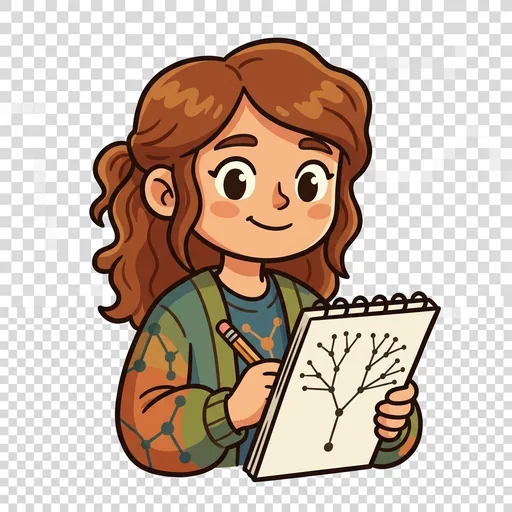
Arbor
The game tree: every position branches into the moves that follow
-
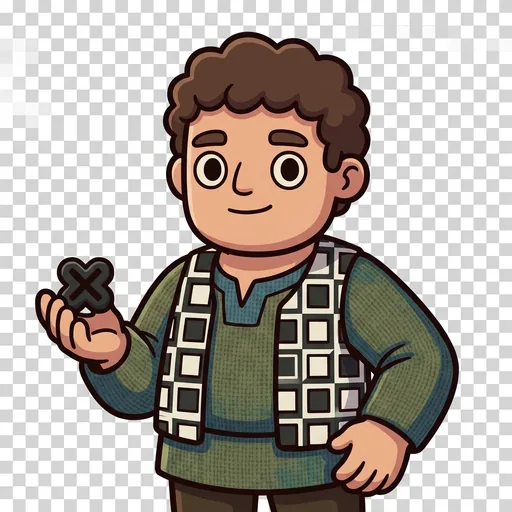
Ballast
Stability and corners: the unflippable pieces in Reversi
-
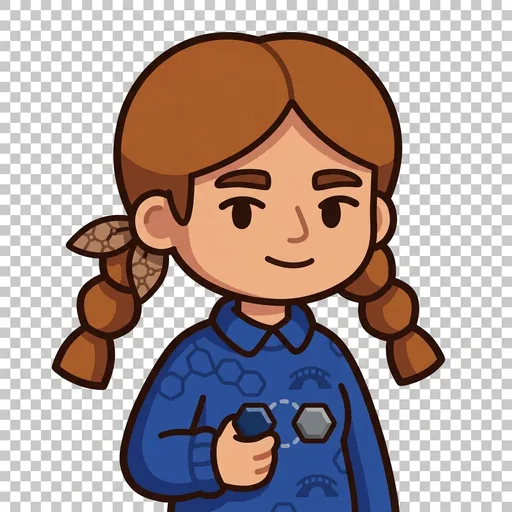
Causeway
The bridge: a virtual connection that cannot be cut in Hex
-
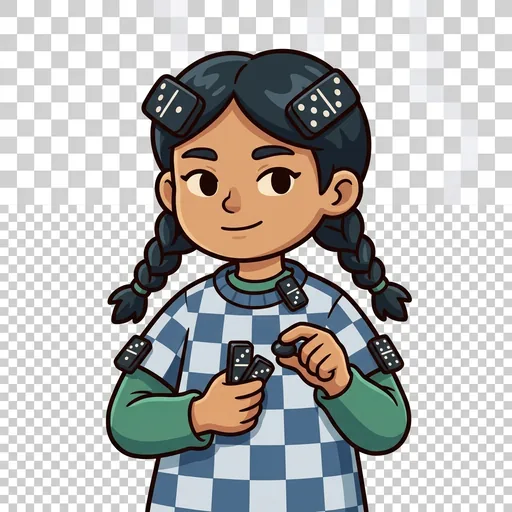
Domino
Forcing sequences: chaining threats to keep the initiative in Gomoku
-
Flank
Territory flip: capturing a line of pieces in Reversi
-

Mobi
Mobility: keeping more moves available than your opponent
-
Oddwin
Parity: who-moves-last, the key to Dots-and-Boxes
-
Rowan
Connection: extending a chain of your pieces toward a win
-

Twain
The fork: one move that makes two threats at once