
Twain
OXYMORON — two opposite words placed right next to each other on purpose. "Bittersweet." "Deafening silence." "Jumbo shrimp." The two opposites seem to fight — but together they say something truer than either word could alone.
Press play to listen along. The line being read lights up as you go.
Show full transcript
Loading transcript…
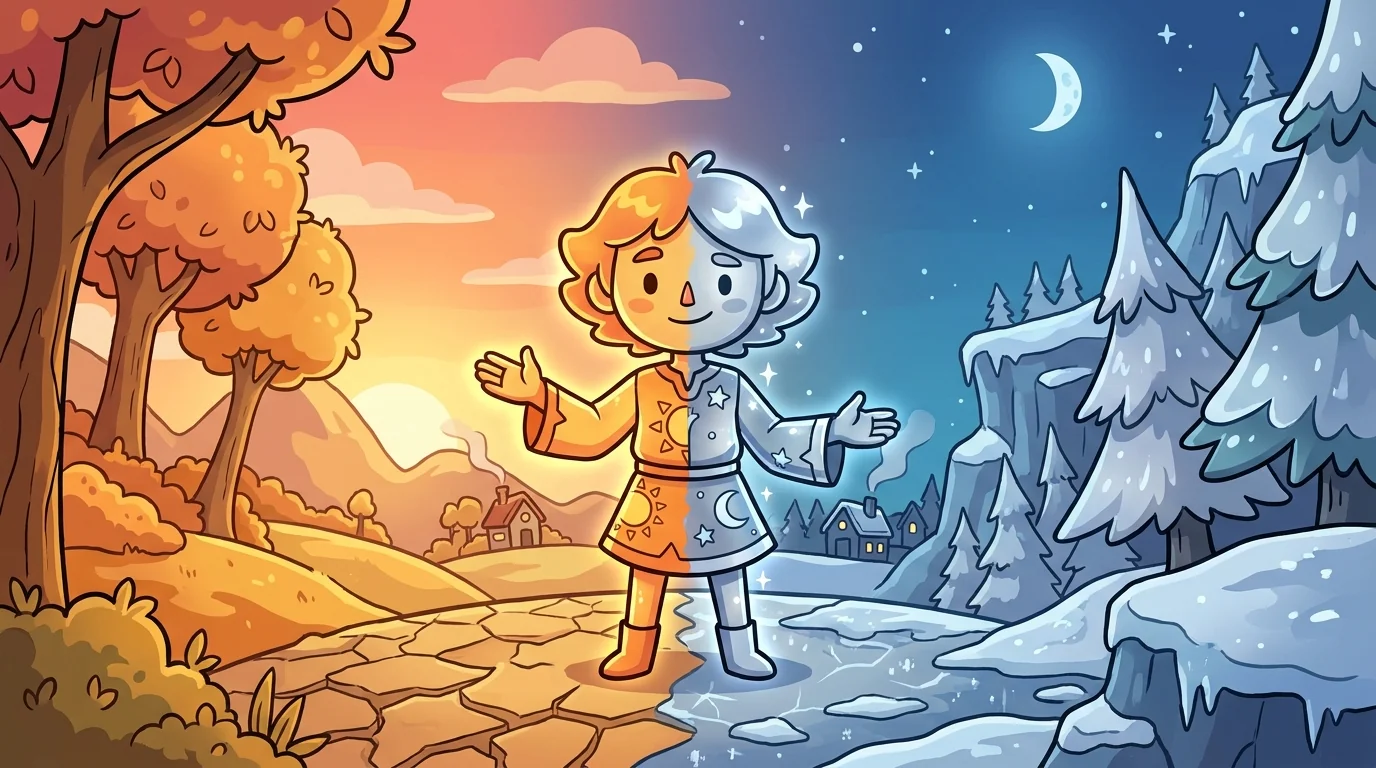
Trope's detective cast met Twain on a strange evening that was somehow both warm and cool at once — and Twain, it turned out, was exactly like the evening.
Twain was a curious two-toned creature: one half of him glowed warm and sunny, the other half shone cool and silvery, right down the middle. When he spoke, he liked to put two opposite words side by side — and instead of canceling out, the opposites seemed to deepen each other. "A bittersweet goodbye," he said, and his two halves shimmered together, and somehow you understood the feeling exactly: sad and sweet, both at once.
"You're two opposite things at the same time," a young detective said.
Twain smiled, both halves at once. "That's my whole nature," he said. "My name is Twain. I keep the oxymoron — two opposite words placed right next to each other." His warm half and his cool half glowed together. "Deafening silence. Jumbo shrimp. A wise fool. The two words seem to fight. But put together, on purpose, they say something truer than either one could alone."
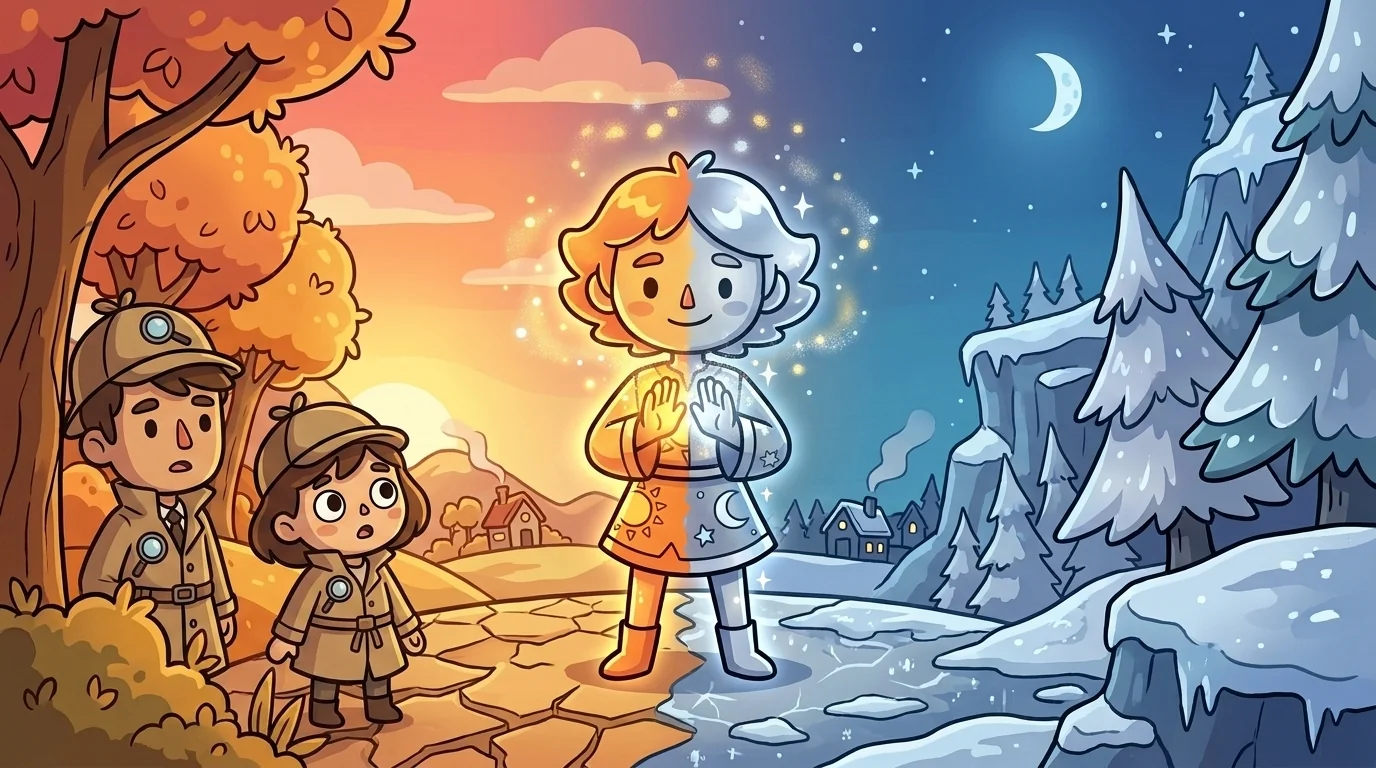
The detectives studied his two-toned glow. "But how can opposites be true together?" one asked.
Twain's halves shimmered. "Think of bittersweet," he said. "When you say goodbye to a wonderful summer — is it happy? Yes. Is it sad? Yes. Neither word alone is right. But bittersweet — the two opposites together — catches the real feeling exactly." He held up his warm and cool hands together. "Real life is full of these. A loud quiet. A terribly good time. A small giant. The opposites don't cancel. They mix into something true."
A young detective's eyes widened. "So an oxymoron says a feeling that's too complicated for one word!" "Exactly," Twain glowed. "When a feeling is two things at once, you need two opposite words at once."

Trope asked Twain to join the detective cast. "These young detectives think every word has to agree with the one beside it," Trope said. "They'd never dare put two opposites together. I think you could teach them the oxymoron."
Twain glowed warm and cool together. "I'll come," he said. "I do love two opposites that belong together."
So Twain joined the cast, and the detectives' writing began to hold two truths at once.
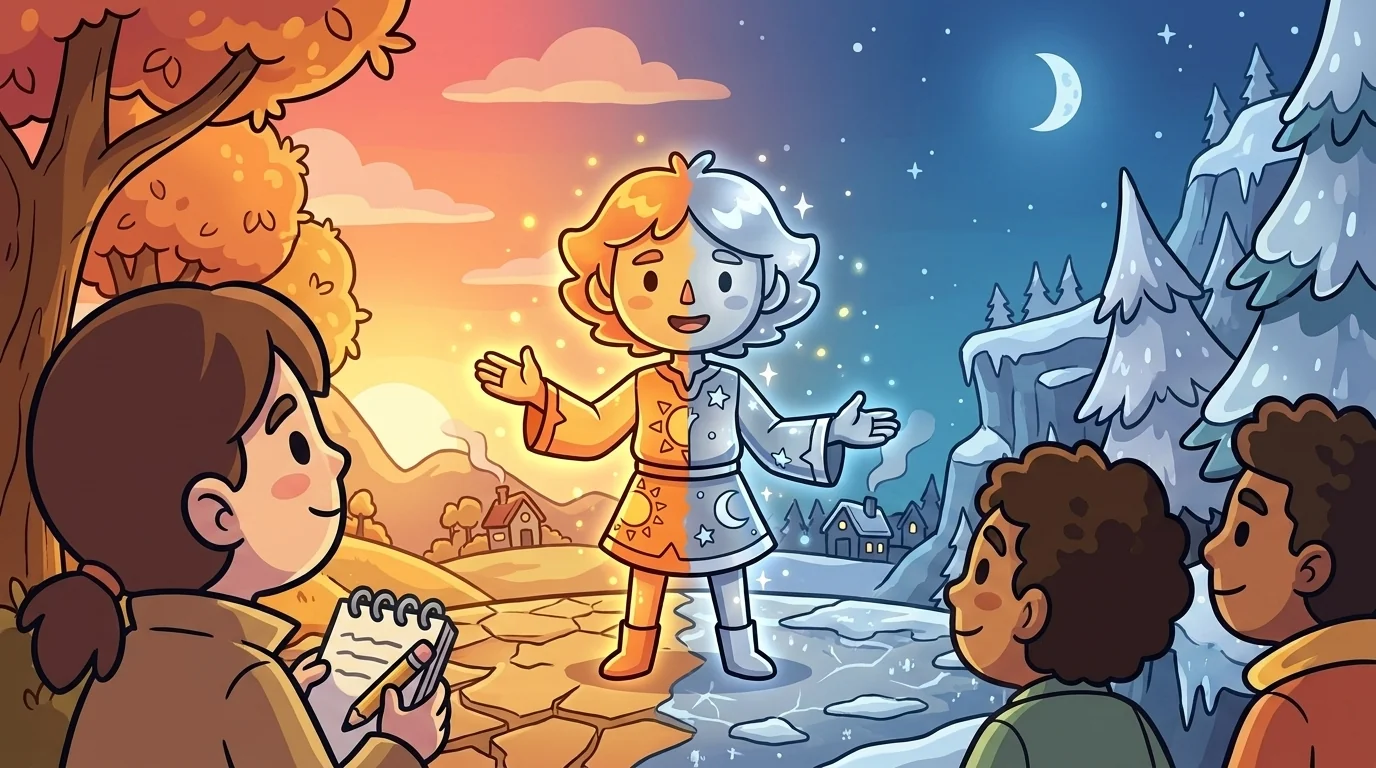
When Trope teaches the oxymoron, Twain leads, shimmering. "Find a feeling that's two things at once," he tells the detectives. "Then put the two opposite words right next to each other. A cheerful gloom. A loud whisper. A painful joy. Don't worry that they fight — that's the point. The clash is the meaning."
A young detective was trying to describe how it felt to win a game while her best friend lost — and one word kept failing her. Twain suggested two opposites: a sad victory. And suddenly the complicated feeling landed perfectly. "Neither sad nor victory alone was right," Twain said. "Together, they told the truth."
"Here's the clue for catching one," he added. "An oxymoron is two words side by side that seem to contradict — and yet the writer put them there on purpose. When you spot two words that argue with each other but somehow feel right, you've found an oxymoron. The fight between them is doing the work."
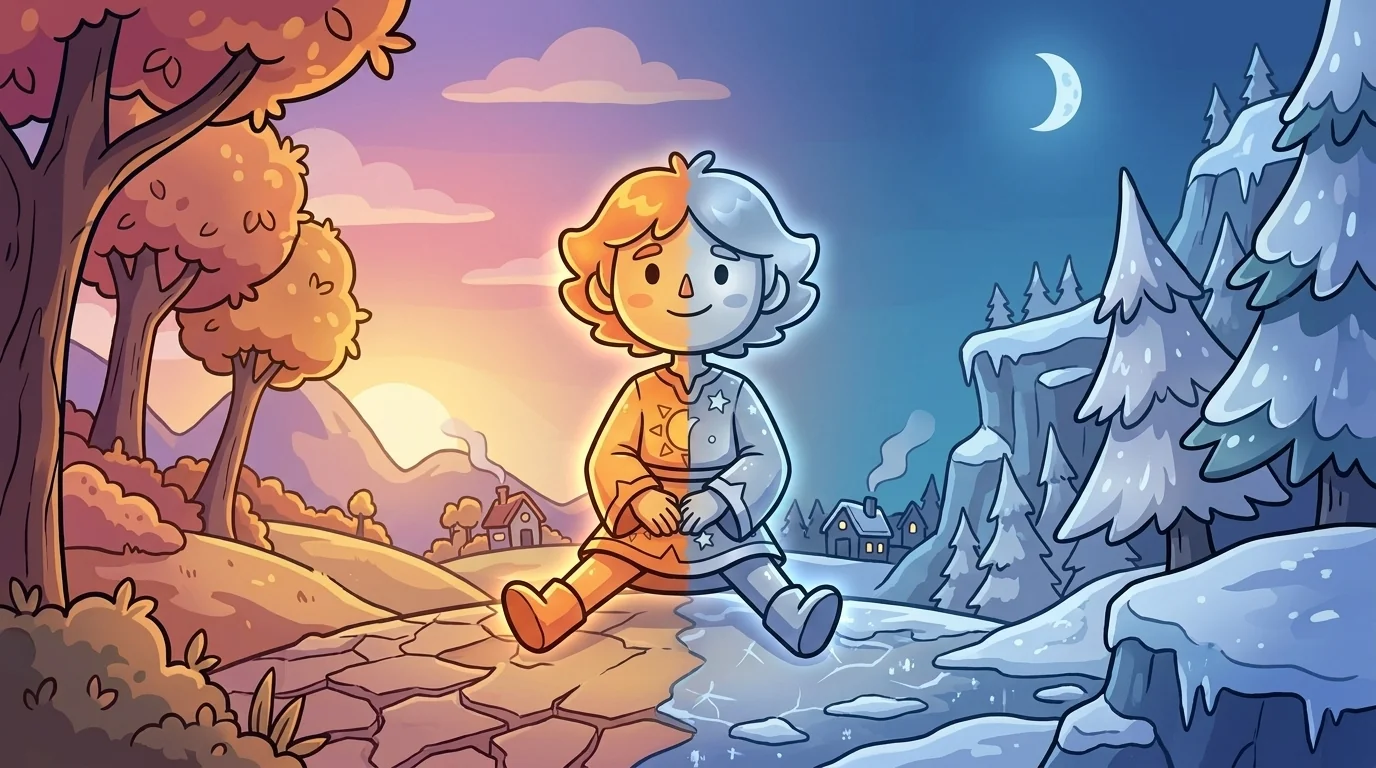
After the lesson, Twain sat with the detectives in the strange warm-and-cool evening, his two halves glowing gently side by side.
For a long time, Twain had felt broken — two opposite halves that didn't match, never quite one thing or the other. He'd wondered if being two contradictory things at once meant something was wrong with him, that he should pick a side and be whole.
But sitting in the evening that was somehow both warm and cool, Twain understood himself at last. He wasn't broken. He was complete — precisely because he held two opposites at once. Real feelings were rarely just one thing; the truest moments were bittersweet, the deepest victories a little sad. By being two things at once, he could say what no single thing could. His two halves weren't a flaw. They were how he told the whole truth. A warm-and-cool contentment glowed through both sides of him at once. He didn't need to pick a side. He was the truth that lived in the middle. And his two halves shone together in the strange and perfect evening, glad.
The FigureForge ensemble
Twain is part of FigureForge's distributed-narrative cast. Each character embodies a different curricular primitive; together they teach the full subject.
-
Ferry
Metaphor — 'X IS Y' direct comparison; carries meaning across
-

Ripple
Simile — 'X is LIKE Y' softer comparison
-

Knot
Idiom — fixed expressions whose meaning isn't literal
-
Twin
Analogy — extended comparison / X:Y::A:B parallel mapping
-

Hum
Personification — non-human takes on human qualities
-

Mask
Hyperbole + understatement + irony cluster — say one thing, mean another
-

Clang
Onomatopoeia — copper bell-creature whose words carry the noise they name (buzz, splash, crash); the word reaches past the eyes and touches the ears
-

Chain
Alliteration — living-chain creature whose links lock when words share a first sound (big blue balloon); a little is catchy, too much is a tongue-knot
-
Token
Symbolism — quiet creature with a many-pocketed cloak of small objects that stand for big ideas (a dove = peace); shows the meaning instead of saying it