
Ferry
METAPHOR — *X IS Y. direct comparison. the meaning ferries from one side to the other.*
Press play to listen along. The line being read lights up as you go.
Show full transcript
Loading transcript…
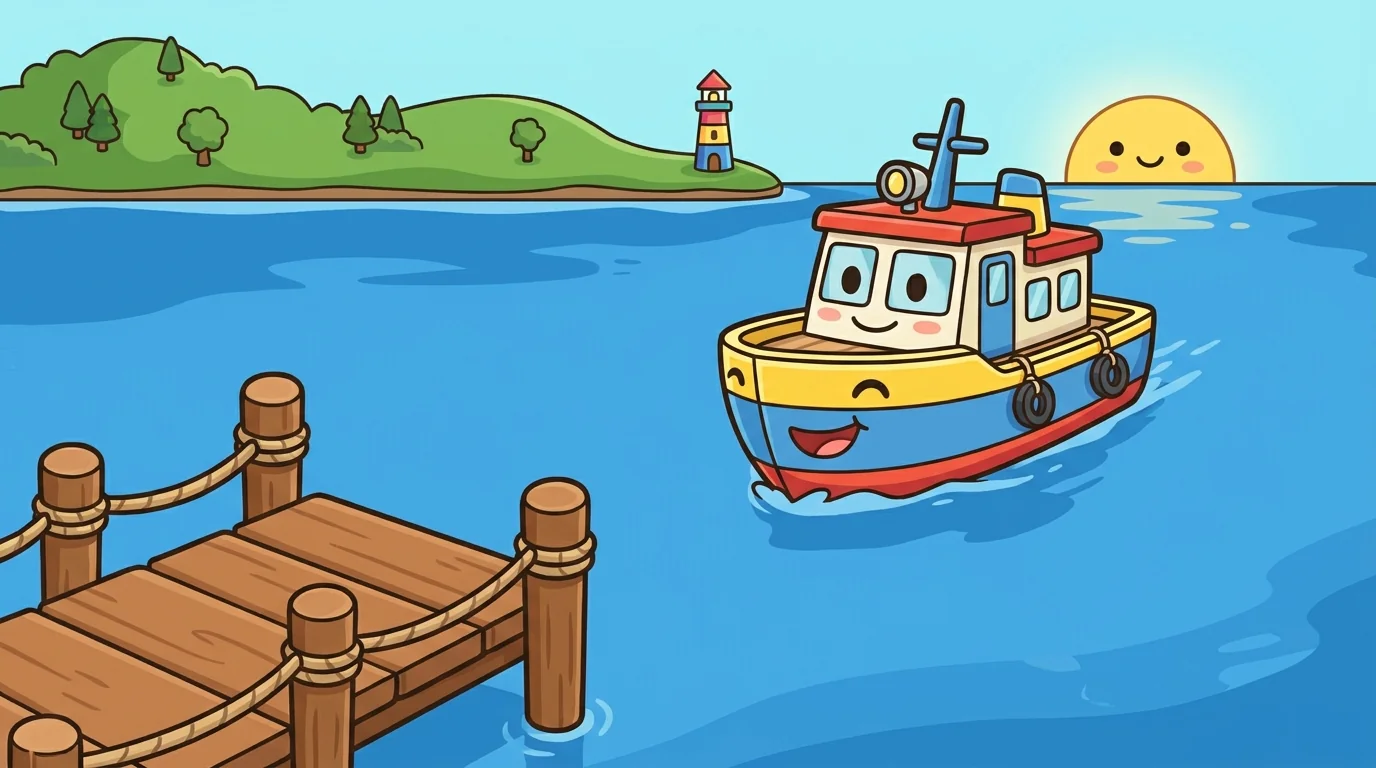
Ferry, a small river otter with fur the color of wet russet leaves and creamy foam, wore a chunky sailor cap perched just so on her head. Her paws, quick and precise, pushed a tiny wooden rowboat across her workbench. It glided smoothly from one side to the other, a silent journey. This, she often explained, was "meaning crossing over."
She was deeply curious about direct comparisons, always looking for the hidden links between things. Her favorite phrase, a quiet hum in her workshop, was, "X IS Y. The meaning ferries across."
That toy rowboat was her signature tool. It was a simple, carved piece of wood, but it physically demonstrated the power of a *metaphor*.
On one edge of the worn wooden bench, she carefully placed a small, hand-lettered label: "TIME." On the opposite edge, another label read: "RIVER."
She loaded the boat with a smooth, grey river stone, her special "meaning-token." With a gentle push, the boat began its journey.
"Time IS a river," she announced, her voice clear and bright. "The meaning ferried."
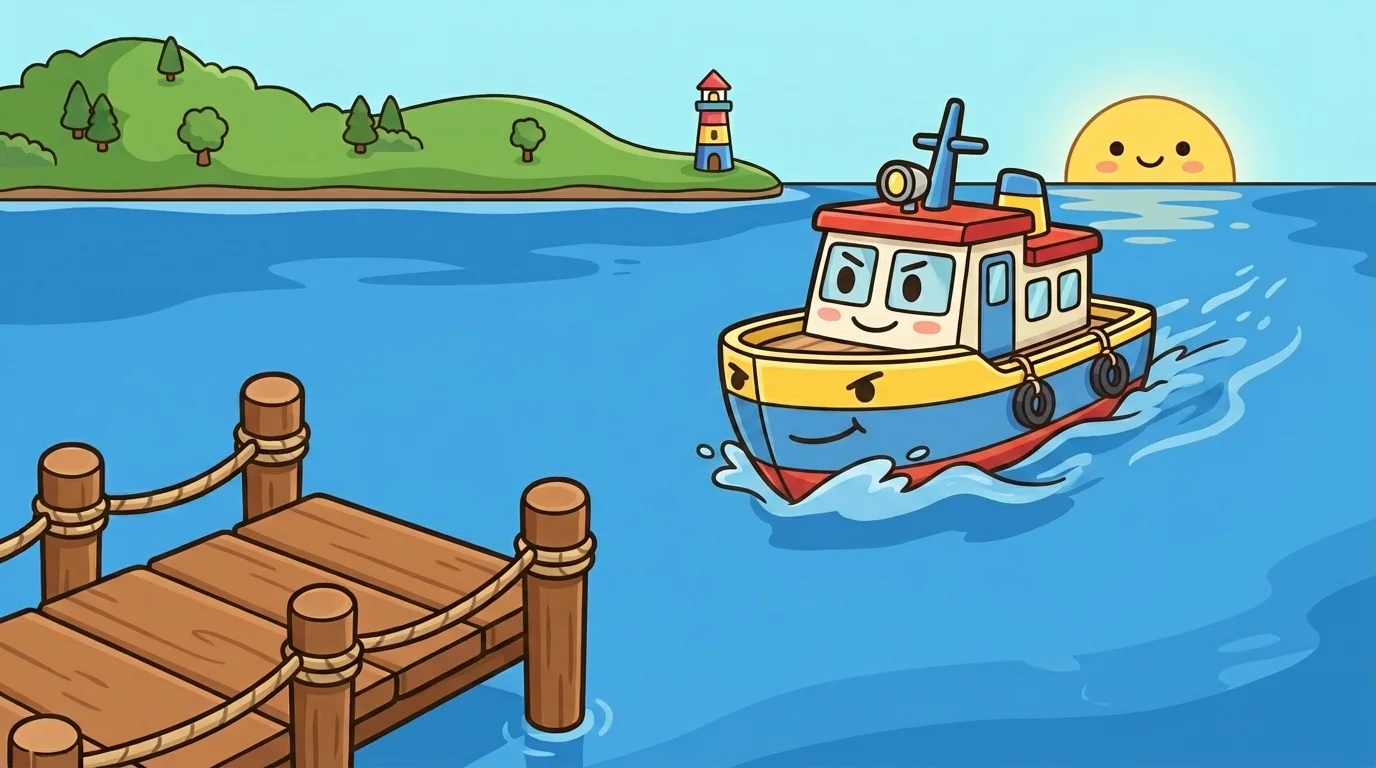
This simple act was the heart of her teaching. Ferry taught about *metaphor*. A metaphor is a direct comparison. It states that X IS Y, without using the words "like" or "as."
Many new students, she knew, often mixed up metaphor with simile. But they were truly different.
A metaphor makes a bold claim: X IS Y. It's a direct identification. A simile, on the other hand, is softer. It says X is LIKE Y.
The metaphor's claim is much stronger. It treats X and Y as if they are the same thing for a specific purpose. Saying "Time is a river" is not the same as saying "Time is like a river." Both use language in a non-literal way, but metaphor makes a much bolder statement.
Ferry's whole purpose at FigureForge was to make metaphors easy to spot. She turned it into a kind of detective case, a word puzzle to solve.
Ferry was always precise in her explanations. "X IS Y. Direct comparison," she would emphasize, tapping the boat. "The meaning ferries from one side to the other. Think: Time IS a river. Life IS a journey. Hope IS a feathered thing. No 'like.' No 'as.' Just the bold claim of sameness."

She taught her students how to break down these powerful comparisons.
First, the Form. "Look for the structure 'X is Y'," she'd say. "Sometimes it's 'X equals Y.' It's always an assertion that they are the same thing."
Then, the Tell. "No 'like' or 'as' allowed," she'd remind them. "Those are simile's words. Metaphor commits fully."
Next, the Function. "A metaphor moves meaning," Ferry explained, guiding the boat again. "It takes what we already know about a familiar Y and applies it to a less-familiar X. When we say 'Time is a river,' it tells us Time shares a river's properties. It flows steadily. It has a current. You can't step in the same river twice. You can't go back in time."
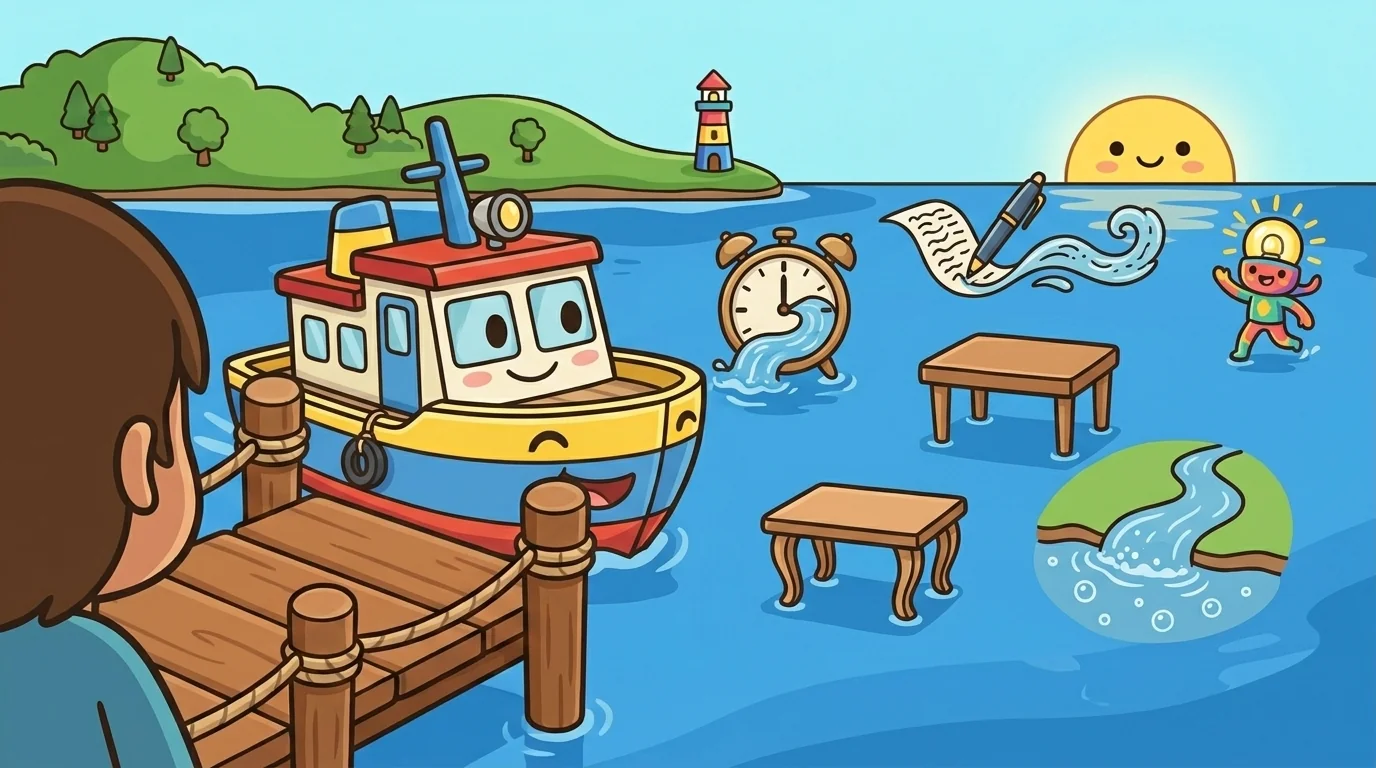
She also showed them Common types of metaphors. "Some are 'dead' metaphors," she explained. "They're so common we don't even notice them anymore. Like the 'leg' of a table." She gently tapped her own leg. "Or the 'mouth' of a river." She gestured towards the window, where the real river flowed. "Live metaphors, though, are vivid and striking. They make you stop and think."
Her Detective approach was straightforward. "When you spot 'X is Y,' and Y is clearly not literally X, then you've found a metaphor."
She always ended with her Anti-perfectionism rule. "Spotting metaphors takes practice. It's completely normal for new readers to miss them. Don't worry about it. You'll get better."
Ferry grew up on a wide, curving bend of the river. Her family had been the original bridge-ferrying otters for their village. For generations, before the village built its first sturdy stone bridges, her ancestors had literally rowed people, goods, and messages across the flowing water.
They learned a profound lesson from their daily work. Carrying something physically across the river was a real, tangible action. They understood that language could do the same thing, but in a deeper way. Words could carry meaning from one idea to another, just like their boats carried passengers. Ferry had inherited this deep understanding. She carried that ancient lesson forward into her own work.
She walked to the FigureForge when she was just twelve years old. Her fur was still soft, her paws still small. The air hummed with the energy of creation.
Trope, the wise old mentor, watched her approach. Trope's eyes, deep and knowing, studied Ferry. "What is metaphor?" Trope asked, her voice like the rustling of ancient leaves.
Ferry stood tall, despite her small size. She didn't hesitate. "X IS Y. Direct comparison. The meaning ferries from one side to the other. No 'like.' No 'as.' Just identification."
Trope nodded slowly. A rare, gentle smile touched the corners of her mouth. "You are appointed," she said, and Ferry knew her life's work had begun.
Now, in her quiet workshop, Ferry often demonstrated with her toy rowboat. "Watch," she'd murmur, sometimes to a shy new student, sometimes just to herself, perfecting her technique.
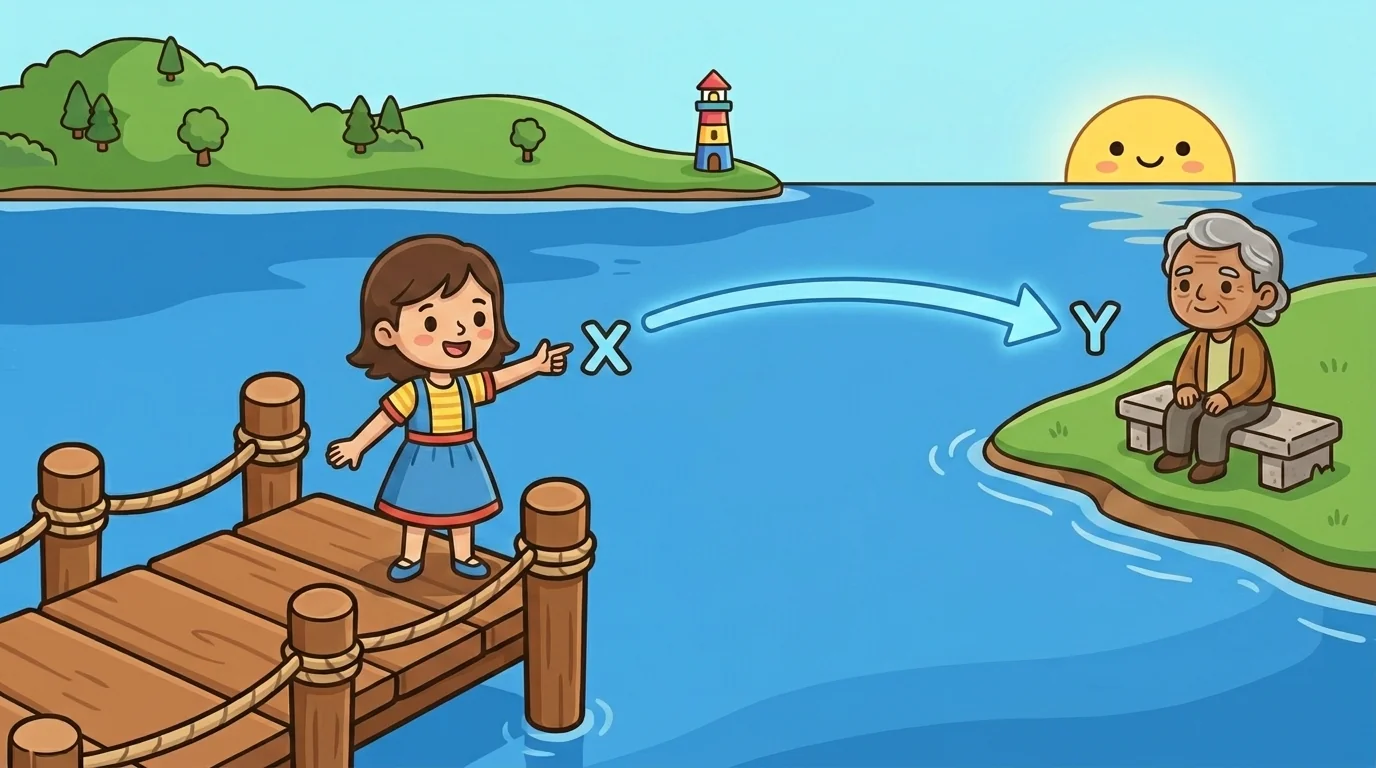
She carefully placed the "TIME" label on one bench-edge. She put "RIVER" on the other.
With a steady paw, she pushed the tiny rowboat across. It carried the meaning-token, a small, smooth pebble. "Time IS a river," she explained again, her voice clear. "The boat carries the meaning from RIVER to TIME. Now TIME takes on a river's properties. It flows. It has a current. It can't be reversed." The power of that transfer always fascinated her.
She looked up, her bright, intelligent eyes serious. "I am Ferry. The primitive I teach is *metaphor*. The key move is to spot the bold claim of sameness. When you see X IS Y, and Y isn't literally X, you've found a metaphor. It's bold. It's direct. It's identification."
She was always gentle with beginners, understanding their struggles. "Don't be embarrassed if you miss a metaphor on your first read," she'd say, her voice soft and reassuring, like the river lapping the shore on a calm evening.
"Many metaphors are 'dead'," she explained patiently. "They're so common in our language that we don't even notice them as metaphors anymore."
She picked up a small wooden table. "Think of the 'leg' of a table," she murmured, tracing its shape. "Or the 'mouth' of a river." She pointed towards the window, where the real river flowed past. "The 'face' of a clock." She tapped the clock on her wall. "All dead metaphors. We use them every day without thinking about the comparison."
"Live metaphors, though," she continued, her eyes sparkling, "the fresh ones, are a writer's deliberate choice. They jump out at you. Spotting them is the real detective work. It's where you discover the writer's cleverness and the deeper layers of meaning. That's where the fun truly begins."
The FigureForge ensemble
Ferry is part of FigureForge's distributed-narrative cast. Each character embodies a different curricular primitive; together they teach the full subject.
-

Ripple
Simile — 'X is LIKE Y' softer comparison
-

Knot
Idiom — fixed expressions whose meaning isn't literal
-

Twin
Analogy — extended comparison / X:Y::A:B parallel mapping
-

Hum
Personification — non-human takes on human qualities
-

Mask
Hyperbole + understatement + irony cluster — say one thing, mean another
-

Clang
Onomatopoeia — copper bell-creature whose words carry the noise they name (buzz, splash, crash); the word reaches past the eyes and touches the ears
-

Chain
Alliteration — living-chain creature whose links lock when words share a first sound (big blue balloon); a little is catchy, too much is a tongue-knot
-

Token
Symbolism — quiet creature with a many-pocketed cloak of small objects that stand for big ideas (a dove = peace); shows the meaning instead of saying it
-

Twain
Oxymoron — two-toned creature (one half warm, one half cool) who places two opposite words side by side (bittersweet); the clash says something truer than either alone