
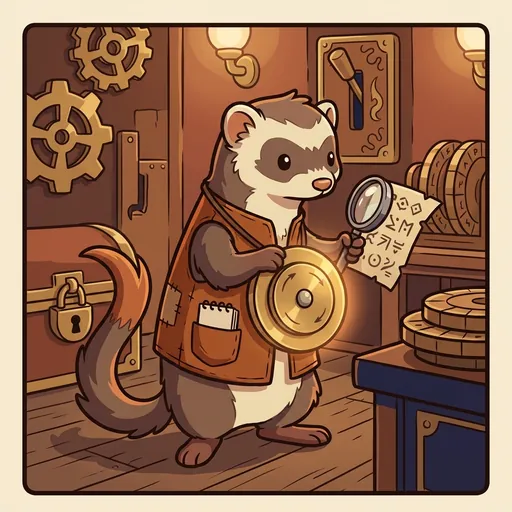
Sift
CIPHER PUZZLES — substitution / Caesar / frequency analysis / pattern-in-coded-messages. The puzzle-archetype of messages that have been encoded and can be decoded by finding the key.
Listen along — Sift
Loading audio…
Press play to listen along. The line being read lights up as you go.
Show full transcript
Loading transcript…
Chapter 3 — Sift and the Spinning Wheel
The message on the wall was gibberish: WKH SHDUV DUH ULSH.
Sift read it and did not panic — which she’d learned mattered, because the gibberish only stayed gibberish until you had the key. She was a ferret-tween, long and slender, brown-and-cream with a flick of russet, and around her neck hung a little spinning brass wheel: two alphabet discs, one nested inside the other, joined by a rivet so the inner ring turned against the outer.
She lifted the wheel and turned the inner disc one notch. Then another. On the third notch, she held it up to the wall and read the first word through the shift. “W becomes T, K becomes H, H becomes E — the.” She grinned. “Shift of three.” She spun through the rest and the wall’s nonsense unfolded into plain words: THE PEARS ARE RIPE. A hatch under the message swung open, and Sift laughed, because of course the coded note had just been somebody bragging about fruit.
She’d grown up thinking of coded messages exactly that way — as friendly little secrets, never scary ones.
Her family were the village recipe-keepers, ferrets who looked after the community cookbook. By old tradition, the most-loved recipes were written in a simple cipher, so that a new cook had to be taught the key — welcomed in — before they could read grandmother’s scone recipe. Cracking the cipher wasn’t sneaking; it was being invited to the table.
When Sift was six, an aunt slid the cookbook across to her and pointed at a page of nonsense. “Want in?” she said, and showed her how to spin a little wheel until DIWWHU turned into BUTTER. Sift remembered the exact feeling — the jolt of this is scrambled, I’ll never read it, and then, one spin later, warm real words. She’d been chasing that feeling ever since. To her, a cipher was a door someone had left a key for, not a wall someone had built to keep her out.
That framing stuck, and she guarded it: no spies, no war, no scary secrets in her puzzles. Just pears, scones, and coded notes between cousins.
She was twenty-two when she walked up to the EscapeForge academy, brass wheel swinging at her collar.
Latch handed her a slip of paper with one coded line and no key at all: FDW.
Sift didn’t reach for her wheel first. She looked at the letters. “Only three of them, and it’s clearly a short word.” She tried a shift of three in her head — F to C, D to A, W to T. “Cat,” she said, and only then spun her wheel to check. It read CAT.
“You guessed before you spun,” Latch said.
“Short words give it away,” Sift said. “And if I didn’t know the shift, I’d count letters — whichever one shows up most in a long message is probably E, because E is the most common letter in English. That’s the loose thread you pull.” She tucked the wheel back under her chin. “I try wrong shifts all the time first. Those aren’t dead ends. They’re how you find the one that works.”
Latch nodded once. “The cipher room is yours.”
On her first teaching day, she held up the spinning wheel and let the discs catch the lamplight before she said a word.
“Every message in this room is scrambled on purpose,” she said, “which means every one of them can be un-scrambled. There’s always a key. Sometimes you’re handed it. Sometimes you find it.” She put a coded line on the board: WKDQN BRX. “Caesar shift. Don’t stare — try shifts. One, two, three, and so on. One of them turns to real words.”
A girl named Bree tried shift one, got VJCPM, wrinkled her nose. “That’s still nonsense.”
“Good — cross it off, that’s one down,” Sift said. “Keep going.” Bree hit shift three and the line snapped into THANK YOU. Her mouth fell open at how suddenly it happened.
“Now a harder kind,” Sift said, and put up a longer coded note where the letters weren’t just shifted but swapped. “No single shift will crack this. So we count. Which letter shows up the most?” The class tallied. “Q!” “So guess Q is really E,” Sift said, “then try the next-most-common as T, then A. And keep peeking for tiny words — if your trial gives you thq, you’re wrong; if it gives you the, you’re on the trail.”
A boy in the corner had frozen, staring at the gibberish like it might bite. Sift crouched by him. “It looks like a mess because it is a mess — right now. That’s not you failing. That’s just the before. Pick one letter. Count it. Guess it’s E. We’ll build the key one letter at a time.” He counted, guessed, wrote one mapping down — and a real word poked through. He exhaled like he’d been holding his breath.
After class, Bree lingered by the wheel.
“Sift? What if I try every shift and none of them work?”
Sift spun the wheel slowly. “Then it’s not a plain shift — it’s a swap, and you switch to counting letters instead. But hear the important part: there is always a key. Somebody wrote this to be read. They weren’t hiding it from you forever — they left the key somewhere in how the letters behave.” She smiled. “You’re not cracking a safe. You’re being handed a message that’s a little shy.”
Bree turned that over. “So it’s not scary.”
“It’s a game,” Sift said. “Ciphers are invitations, not threats.”
Bree nodded and spun the wheel once, just to feel it.
When she’d gone, Sift stayed and turned the brass discs under the lamp, watching the letters line up and un-line-up — and felt that warm rush she’d felt since she was six: the nonsense holding its breath, and then, one gentle turn later, beginning to speak.
The EscapeForge ensemble
Sift is part of EscapeForge's distributed-narrative cast. Each character embodies a different curricular primitive; together they teach the full subject.
-
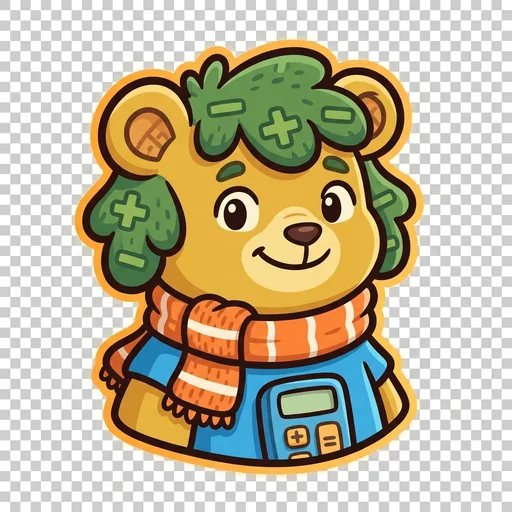
Tally
Math puzzles — counting / arithmetic / number-sense
-
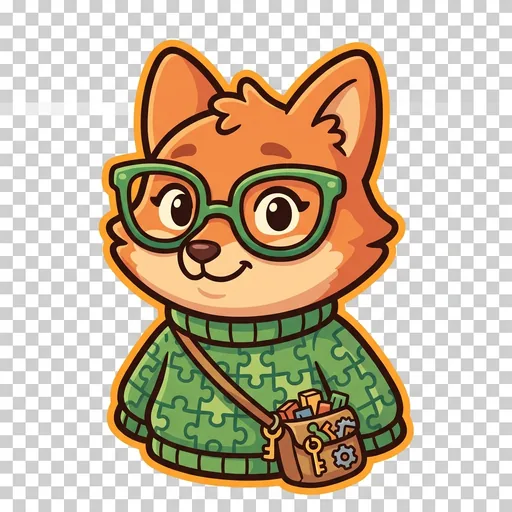
Lexa
Word puzzles — anagrams / vocabulary / spelling
-
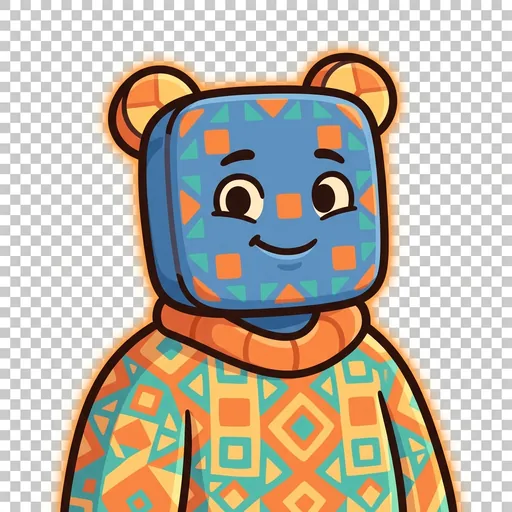
Tile
Pattern puzzles — repetition / symmetry / tessellation
-
Cog
Logic puzzles — deduction / elimination / constraint
-
Link
Connection puzzles — association / category / cross-reference
-
Beat
Sequence puzzles — temporal-order / step-by-step / dependency