
Seam
EDGES + CONNECTION — *a highway or rail line can rip two neighborhoods apart; a park, a bridge, or a crossing can stitch them back.* The urban-equity primitive of *the seam between districts — noticing what divides communities and designing to reconnect them.*
Press play to listen along. The line being read lights up as you go.
Show full transcript
Loading transcript…
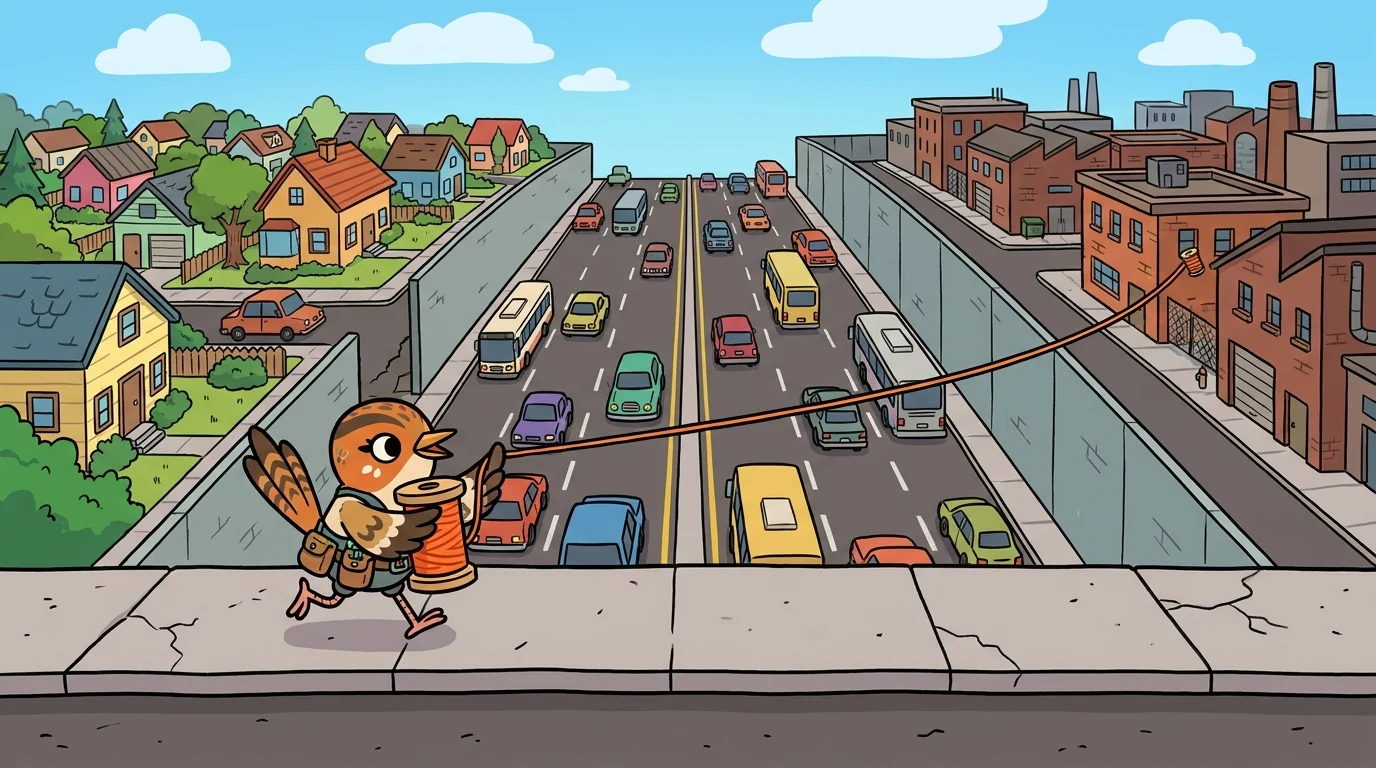
Seam was a young tailorbird with feathers the color of wet slate and a sharp, needle-like beak. She looked at cities the way she looked at cloth, seeing them as pieces that could be joined or left torn.
Today, she hopped along the high concrete lip of a massive retaining wall where two neighborhoods met. Below her feet, six lanes of traffic roared like a muddy river, filling the air with the smell of hot rubber. On her left lay the Grid, a crowded place of brick apartments, narrow alleys, and small corner stores. On her right, across the wide highway, lay the Parkside neighborhood, where old trees shaded quiet wooden houses.
The two neighborhoods were only fifty yards apart, but they felt like they belonged to different countries.
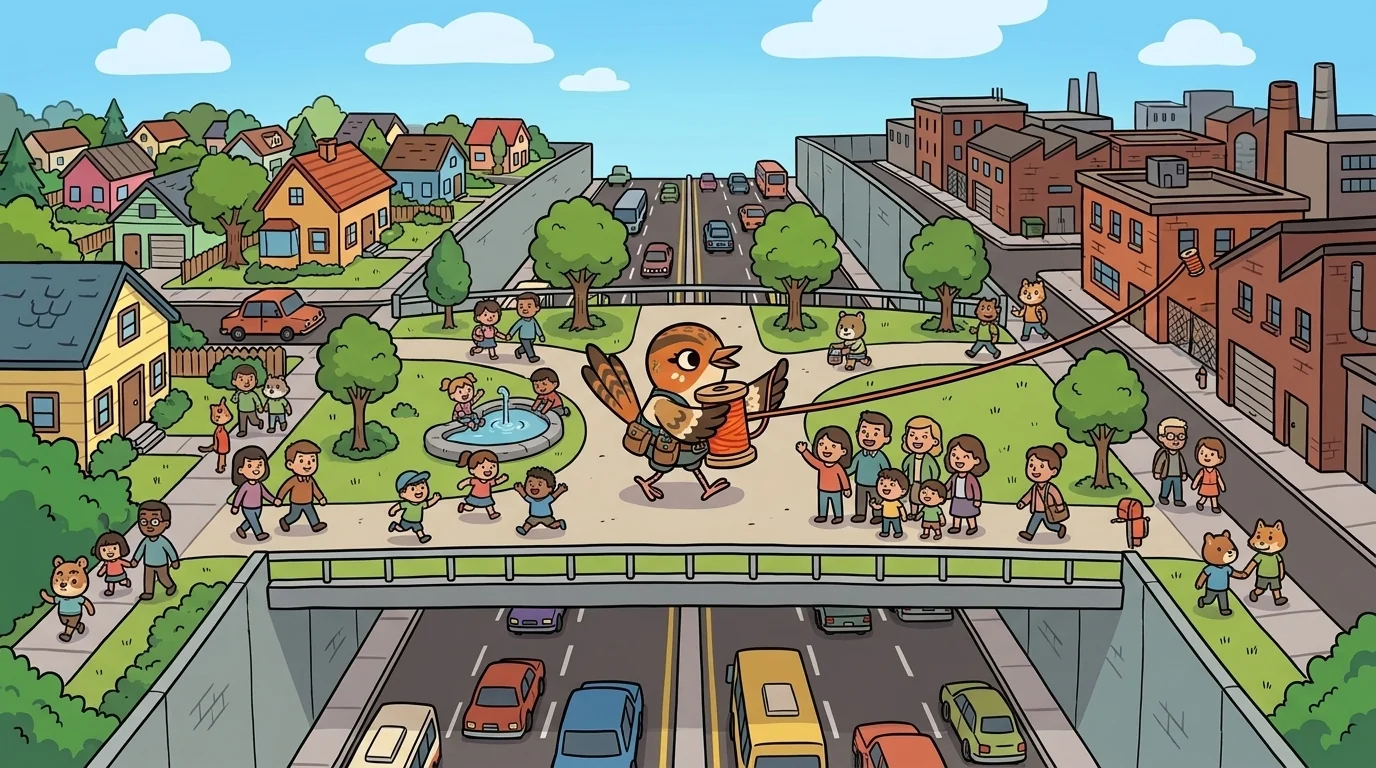
Seam carried her favorite tool, a heavy wooden spool of bright orange thread that she used to show people things. She tucked the loose end under a chunk of asphalt and hopped backward, letting the thread spin out behind her. The bright line trailed across the gray concrete, looking like a streak of fire against the dull stone.
"Every city is made of pieces," she said, her voice barely carrying over the rumble of the trucks.
A young apprentice named Pip watched her from the safety of a nearby wooden bench.
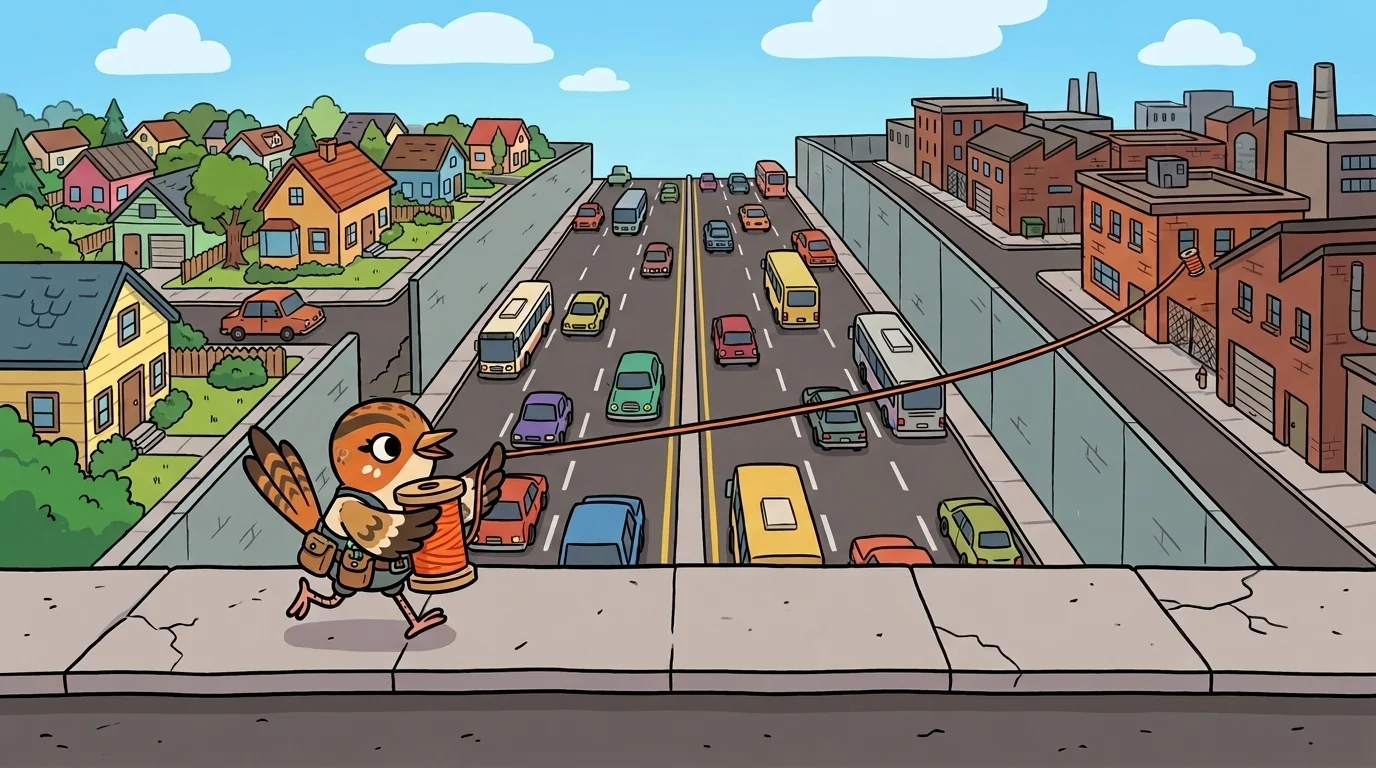
"Why do you stretch that thread?" Pip asked, squinting through the blue exhaust haze. "It just gets dirty down there in the dust and the fumes."
"I stretch it to show people the gap," Seam said, pulling the line until it was perfectly straight. "The most important part of any fabric is the seam, which is the edge where two pieces meet. A good seam joins them, but a bad one leaves a jagged rip that only grows wider over time."
She pointed her beak toward the roaring highway, where cars sped past without stopping. "This road is a rip, and even though the two sides look close on a map, they are truly miles apart."
Seam sat on her wooden spool and looked across the deep chasm of the highway. She taught *edges and connection*, which is the way the boundaries between neighborhoods can either divide people or bring them together.
"Look at what runs between these two places," she said, gesturing with her wing. "Sometimes it is a wide road, a rail line, or a tall concrete wall."
She handled the history of the city honestly but gently, like an elder telling a hard truth to a child. "It was not fair, and it was not an accident," she said, looking down at the rushing traffic. "Long ago, a big road was pushed right through this community, splitting it in half. They chose this place because the people living here had the least power to say no."
Pip looked down at the concrete barrier, his face turning serious.
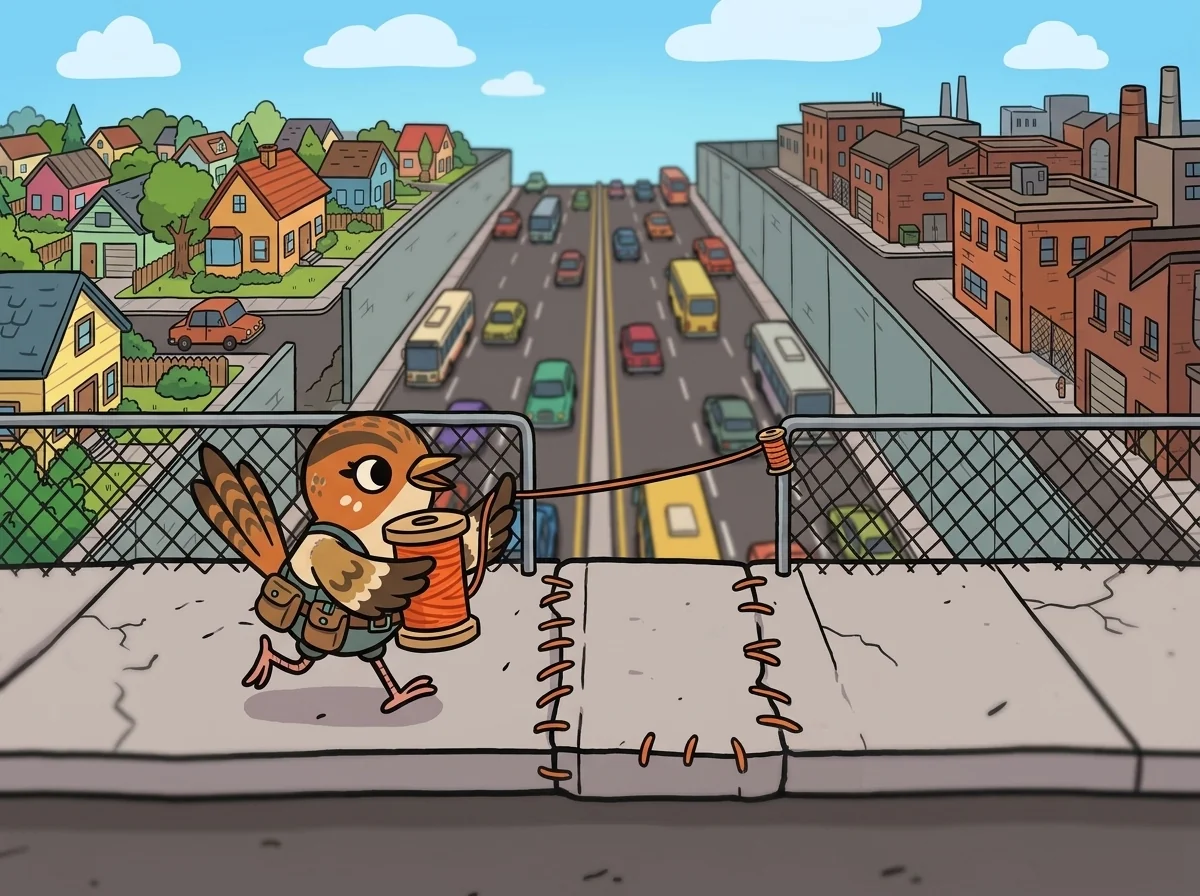
"But a seam can be mended," Seam continued, her voice bright with hope. "A new crossing, a bridge, or a park built over the top can act like stitches. Design can reconnect what design once divided, if we only take the time to do it carefully."
Seam knew about these divisions because she had lived through one herself when she was very young. She had grown up in a thick, green hedgerow that ran along the edge of a wide meadow. Her flock nested in the high branches of the hawthorn trees, singing to the morning sun. Ground-dwellers, like the field mice and hedgehogs, lived in the cool shadows near the roots. They all shared the berry bushes on the other side of the dirt lane.
Then, a human built a tall wooden fence right through the middle of their home.
The birds could easily fly over the top, but the ground-dwellers were suddenly trapped on one side. The mice could no longer reach the sweet berries, and the little community began to fray. The animals grew quiet, and the old friendships began to fade away.
One autumn, the animals worked together to dig a safe gap beneath the bottom board of the fence. It was a deliberate seam, just wide enough for a hedgehog to pass through safely. Watching her neighbors use the new path, Seam understood her life's work. She realized that what divides a community can be designed away if you notice it and stitch with care.
One sunny morning, Plumb, the wise mentor of CityForge, hopped up onto the ledge beside her. He was a large, heavy bird with gray feathers and eyes as steady as stone.
"What is a seam?" Plumb asked, looking down at the bright orange thread she had stretched.
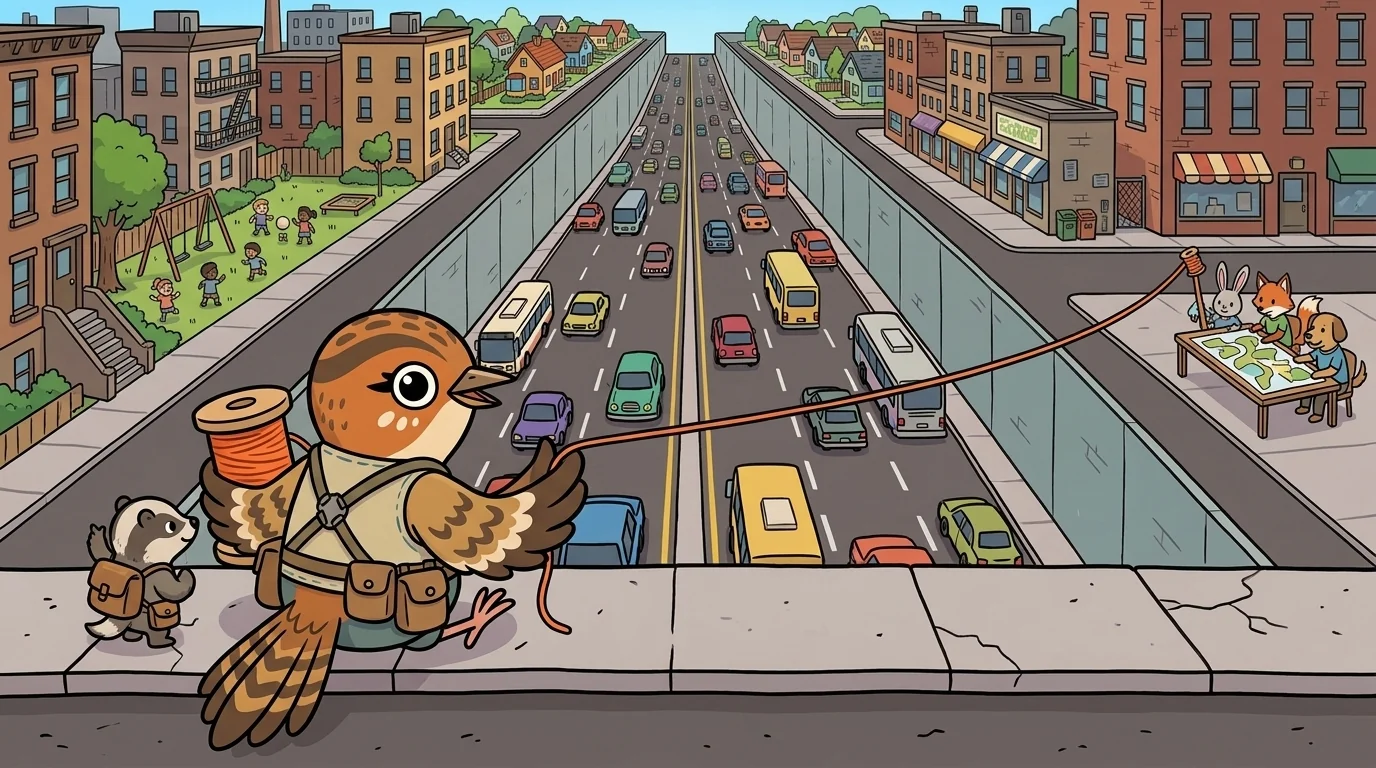
"It is the edge where two neighborhoods meet," Seam answered, pulling the thread tight. "A highway or a wall can rip them apart, often on purpose, to the people with the least power. But a crossing, a bridge, or a shared park can stitch them back together again. We must notice the rip, mend it with care, and always listen to both sides."
Plumb nodded slowly, his heavy beak dipping in approval, and told her that she was officially appointed. "You are appointed to teach this craft to others," he said.
In her lessons, Seam had her students find the biggest barriers on their city maps. They stretched bright orange threads across the highways and railway lines that divided the neighborhoods. Then, she asked them to design a stitch to bring the two sides back together.
One eager student drew a massive concrete bridge that towered high above the streets.
"Look at my bridge," the student said proudly. "It is strong and very modern."
Seam hopped over to his drawing and pointed to a tiny, jagged line near the highway fence. "What is this tiny, faint line running through the grass?" she asked.
"Oh, that is just a hole in the fence," the student replied, waving his hand. "People cut it so they could walk to the grocery store, but it looks messy."
"That is the most important part of your map," Seam said gently. "That is a stitch the neighbors made themselves, and you must never erase it. Your job is to make their stitches strong and safe, not to flatten their work."
She looked at the quiet classroom, her dark eyes warm with memories of her own early mistakes. "My first plans drew a bold new bridge and ignored the little worn path," she admitted. "That was not a failure, but a reminder to look for the stitches people made first. Then, we must make those stitches strong."
She teaches her students a few habits about edges and connection: Look closely at what runs between neighborhoods. The seam matters as much as the pieces, because a highway or wall can easily divide people who live close. *Remember that some rips in the city were made on purpose. Big dividing roads often cut through communities with the least power to refuse, and we must name that honestly. *Always remember that even the deepest seam can be mended. A crossing, a bridge, or a safe path can reconnect what design once divided. *Find the small, informal stitches that the people have already made. Strengthen the worn path through a fence or the corner where two sides meet, rather than erasing them. *Listen carefully to the voices on both sides of the gap.* You must reconnect with the neighborhoods on their own terms, instead of flattening either side to fit your plan.
A student raised her hand, looking doubtful as she stared at the gap on her map. She asked if one single crossing could really bring a split neighborhood back together.
Seam pulled her bright orange thread until it hummed like a guitar string in the wind.
"It will not happen all at once, but a single stitch is always where the mending starts," she said. "Notice the rip, listen to both sides, and connect them with care. If we work piece by piece, the seam will always hold."
Later that day, Seam stood at the entrance of a brand-new park built over the highway. Grass and young trees grew where loud cars had roared just months before. An old man from the Grid walked out onto the green grass, smiling at the warm sun. From the other side, a young girl from Parkside ran to meet him, laughing as she ran. They met in the middle, right over the hidden highway, and began to talk.
Seam felt the old, cut-off ache from her divided childhood melt away. In its place was a deep, stitched-back-together satisfaction, the gladness of two pieces rejoined on their own terms.
The CityForge ensemble
Seam is part of CityForge's distributed-narrative cast. Each character embodies a different curricular primitive; together they teach the full subject.
-

Block
Zoning + density — the badger-tween with clay-block models who teaches zoning as 'plan for the neighbors first, not the buildings'
-

Stoop
Public space + community — the capybara-elder on a wooden stoop who treats public space as the city's living room, foregrounding existing stoop-cultures (Brooklyn / Latin American plazas / Italian piazzas / West African gathering trees)
-
Lane
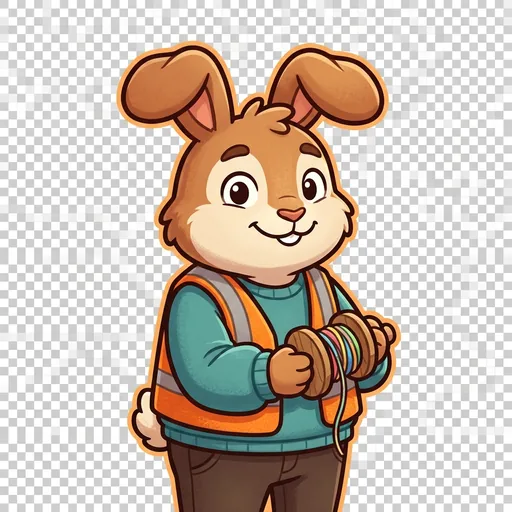
Walkability + mobility — the rabbit-tween in safety-vest with a chalk-spool who teaches streets-as-spaces ('streets are rooms; cars are guests, not owners')
-

Hub
Transit nodes — the pangolin-tween in conductor-vest who teaches that transit is about ACCESS, not about cars-vs-trains ('many ways, equal ways; the bus matters as much as the train')
-

Dwell
Housing equity + repair — the owl-elder in a mended quilted-coat who teaches anti-displacement, repair-not-replace urbanism ('repair before replace; listen before plan; the people who live here ARE the design')
-

Canopy
Green infrastructure — trees and parks cool the city and soak up rain; shade placed where it is needed most
-

Mix
Mixed-use land use — weave homes, shops, and work close so daily life is a short walk