
Canopy
GREEN INFRASTRUCTURE — *trees and green space cool the city and soak up the rain — and shade is shared unequally, which is a design choice.* The urban-equity primitive of *the living infrastructure — canopy, parks, and green — placed where it is needed most, not only where money already is.*
Press play to listen along. The line being read lights up as you go.
Show full transcript
Loading transcript…
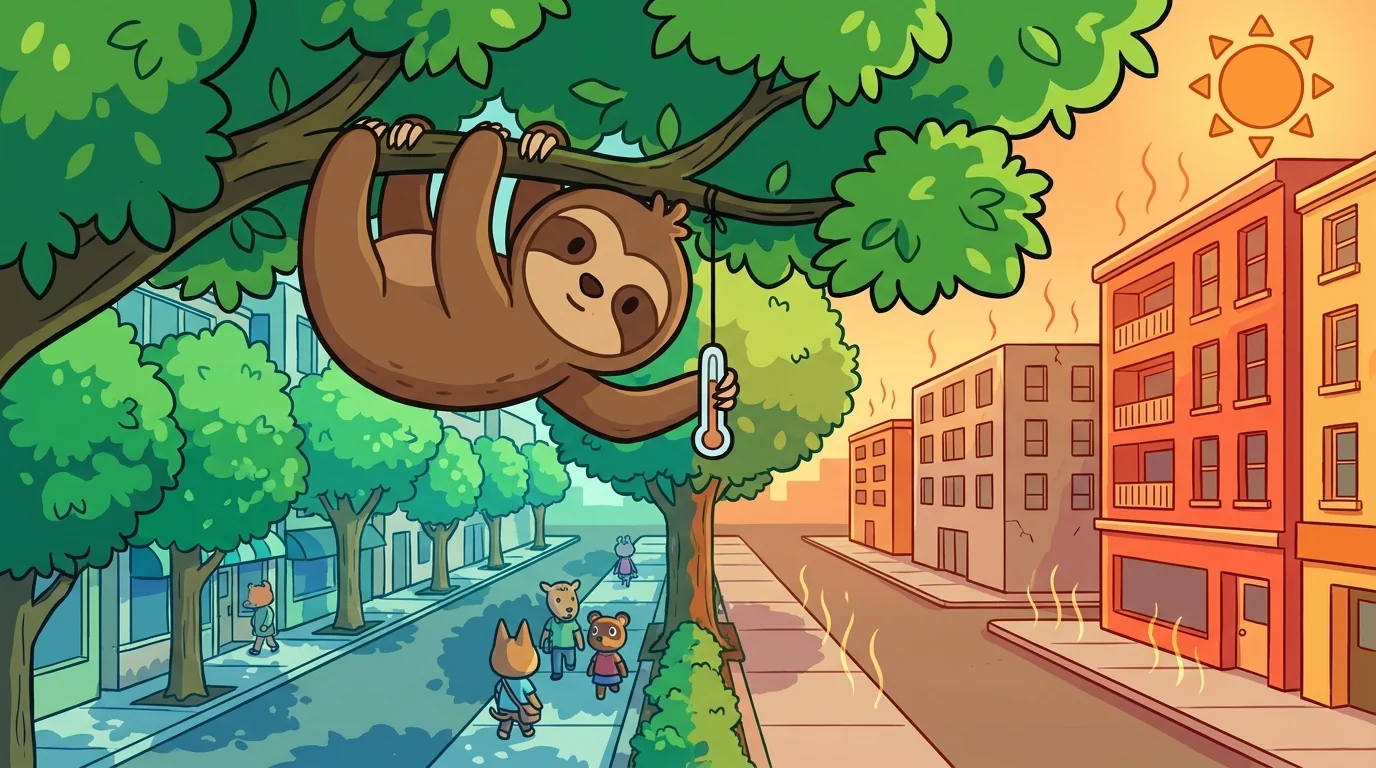
Canopy was a young sloth who lived, as sloths do, up in the leaves — and who had noticed something about her city that she couldn't stop thinking about.
She moved slowly and looked closely, hanging in the branches of a big street-tree with a little thermometer on a string. "Come up here," she'd say to anyone passing. "Feel the difference." And it was true: up in the green, under the leaves, the air was cool and dappled and kind. Down on the bare, treeless block one street over, the pavement baked and shimmered. "Same city," Canopy would say, tapping her thermometer. "Ten degrees apart. The trees did that."
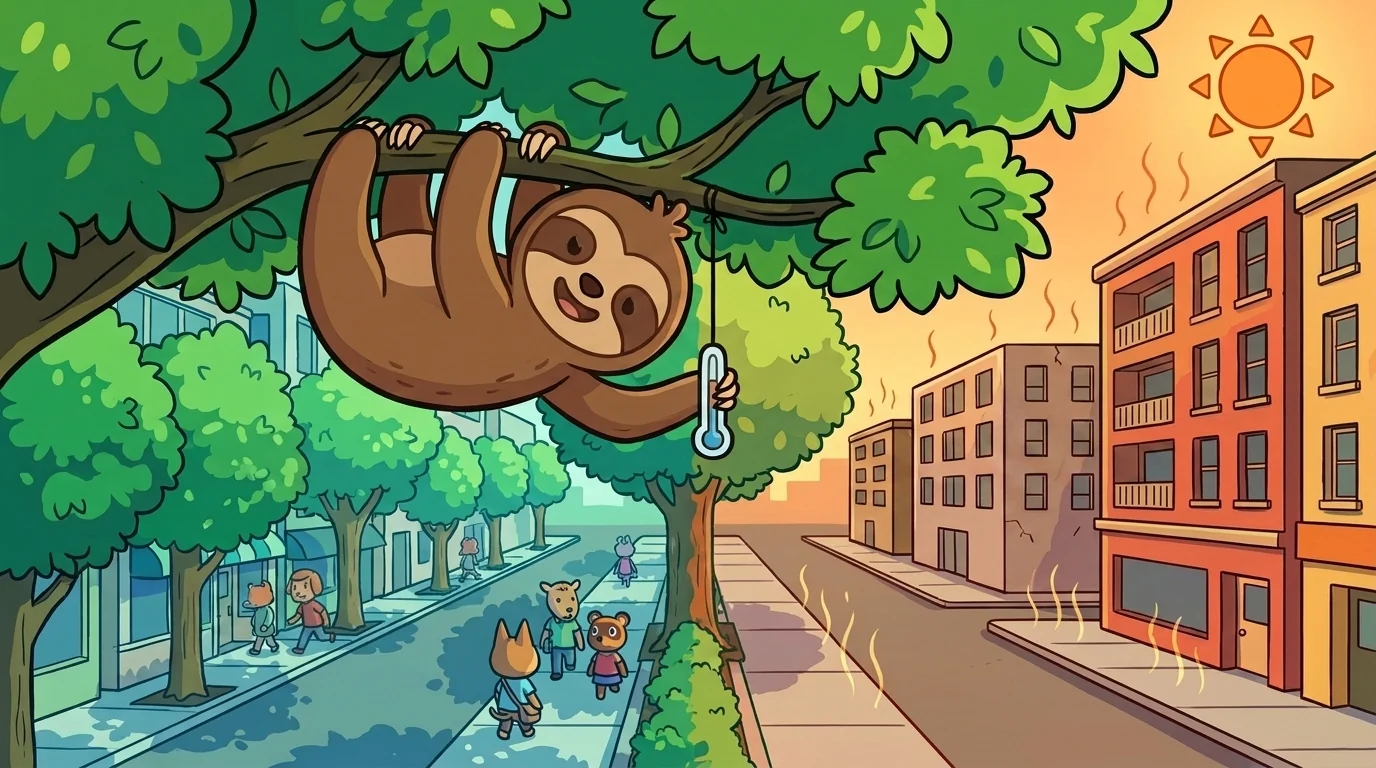
Canopy taught *green infrastructure — the idea that trees, parks, and green space aren't just decoration; they're working parts of the city, as real as pipes and roads. "A canopy of trees," she explained, "cools the street, cleans the air, and soaks up the rain so it doesn't flood. Green isn't a luxury on top of the city. It's infrastructure the city runs on." She loved that word — infrastructure* — used for something alive.
But the part she cared about most was harder. Canopy would climb high and look across the whole city, and she'd see it plainly: the leafy, shaded streets and the bare, hot ones weren't scattered by chance. "The blocks with the most trees are usually the blocks with the most money," she'd say quietly. "And the hottest, barest streets are where people have the least. Shade got shared unequally. That wasn't nature. That was a choice — lots of small choices, about where to plant and where not to. And choices can be made differently."
Canopy never framed this as anyone's fault or shame. "It's not about blaming a street for being bare," she said. "It's about noticing, and then planting where the need is greatest — not only where the green already is." That was the CityForge way, and the urban-equity gate Plumb foregrounded: repair what's uneven, start with who's been left hottest. She was careful, too, to honor the green that communities already tended — the courtyard fig, the community garden, the old shade-tree everyone met under. "Old trees before new ones, when we can," she'd say, echoing Stoop. "A tree that's been loved for fifty years is worth ten saplings."
Canopy came from a grove on the edge of the city, where her family had tended the same trees for generations — and watched the city grow toward them, paving as it came. Young Canopy noticed that the new neighborhoods with parks stayed cool while the ones built fast and bare turned into heat-traps. The summer an old neighbor on a treeless block got sick from the heat, Canopy understood her life's work: shade is not a luxury; it is care, and care should go first to where it's needed most.
One day Plumb, the CityForge mentor, climbed up to her branch.
"What is green infrastructure?" Plumb asked.
Canopy patted the trunk. "It's the living parts of a city that do real work — trees, parks, green roofs — cooling the air, cleaning it, soaking up the rain," she said. "And it's noticing that shade is shared unequally, and planting where the need is greatest first. Green is infrastructure, and infrastructure should be fair." Plumb nodded. "You are appointed," he said.
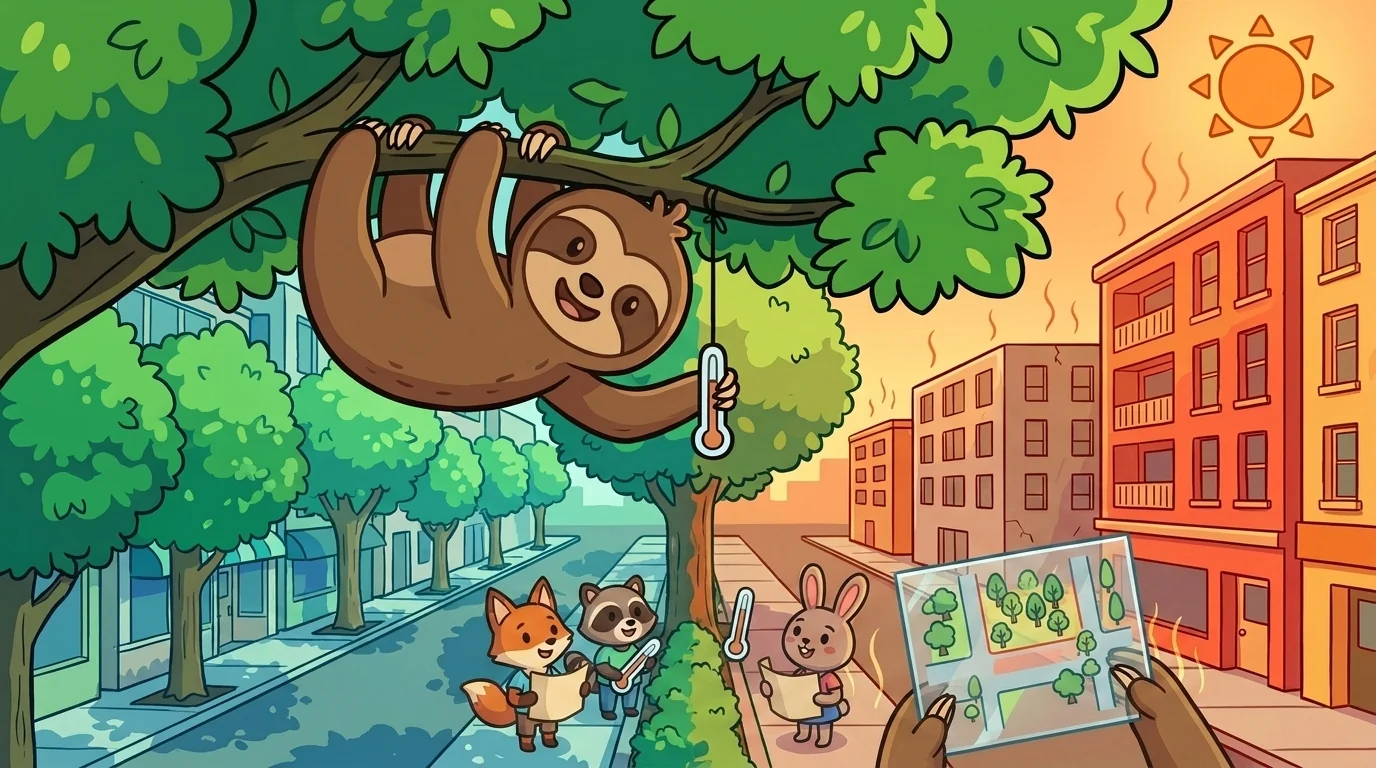
In her lessons, Canopy hands out two thermometers and sends students to a shaded street and a bare one, and they come back astonished at the gap. Then they map where the city's trees are — and where they aren't — and ask who lives in the bare places.
She teaches her students a few habits about green infrastructure: Green is a working part of the city. Trees cool, clean, and drain — plan them like you plan pipes and roads, not as an afterthought. *Shade is shared unequally, and that's a choice. The hottest blocks are usually the ones with the least. Look at the map and ask who was left out. *Plant where the need is greatest first. Fairness means starting with the barest, hottest streets — not adding more green where there's already plenty. *Old trees before new ones. A mature tree does far more than a sapling. Protect what's grown before planting fresh. *Green soaks up the rain.* A city of all pavement floods; a city with green infrastructure lets the ground drink. Design for the water, not just the sun.
Canopy tells her students, "My first tree-maps were just pretty pictures until I asked who lived under the bare parts. That's not a failure — that's the map finally telling the truth. A map of trees is also a map of who got care."
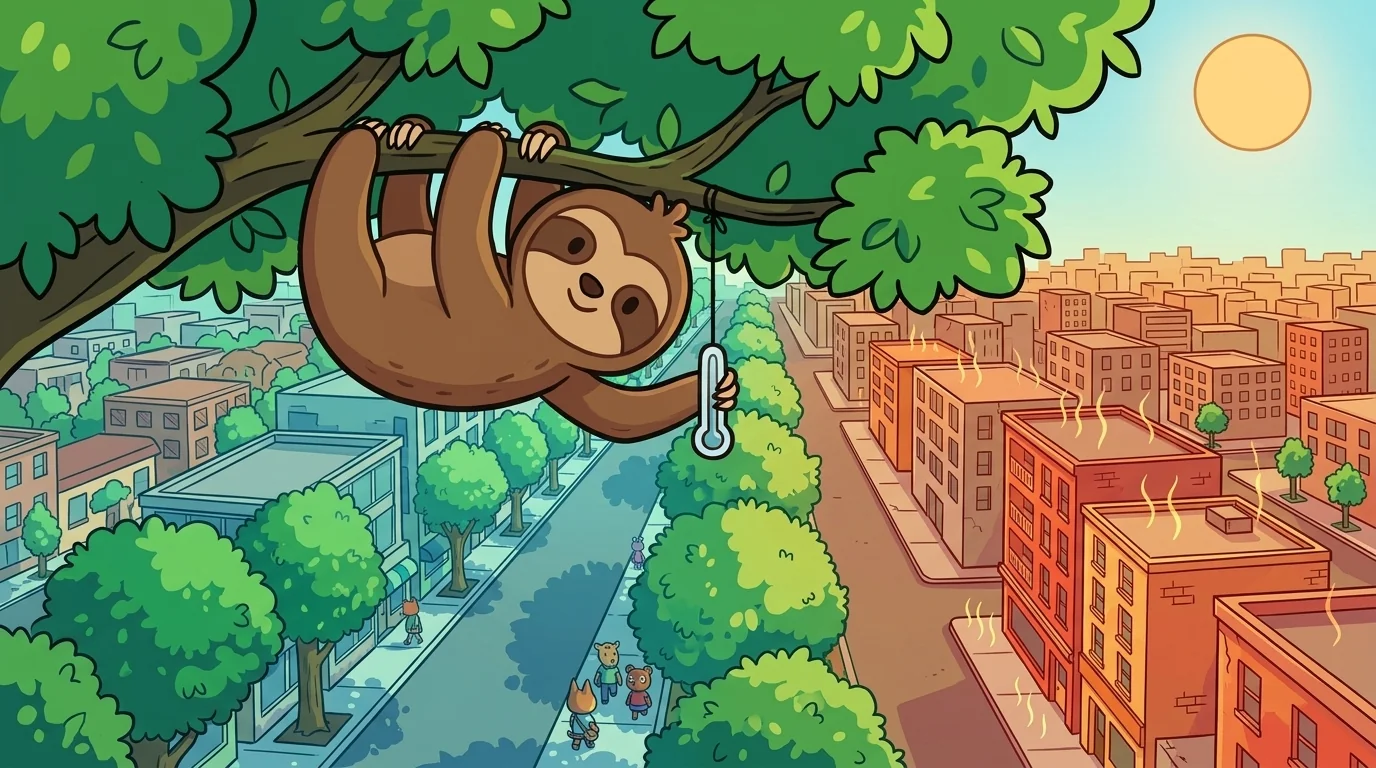
When a student asks whether a few trees really matter that much, Canopy always answers the same slow, sure way, from up in the leaves:
"Ten degrees matters. Clean air matters. A dry street in a storm matters. And a shaded bench for the neighbor who has none — that matters most of all. Plant where the need is greatest, and the whole city breathes easier."
Canopy settles into her cool green branch and looks out over a city she's helping shade block by block, some of it for people she'll never meet, and the heat-struck worry she carried the summer her neighbor fell ill has eased into a calm, planting-for-later gladness — the quiet joy of care that arrives, years from now, exactly where it's needed.
The CityForge ensemble
Canopy is part of CityForge's distributed-narrative cast. Each character embodies a different curricular primitive; together they teach the full subject.
-

Block
Zoning + density — the badger-tween with clay-block models who teaches zoning as 'plan for the neighbors first, not the buildings'
-

Stoop
Public space + community — the capybara-elder on a wooden stoop who treats public space as the city's living room, foregrounding existing stoop-cultures (Brooklyn / Latin American plazas / Italian piazzas / West African gathering trees)
-
Lane
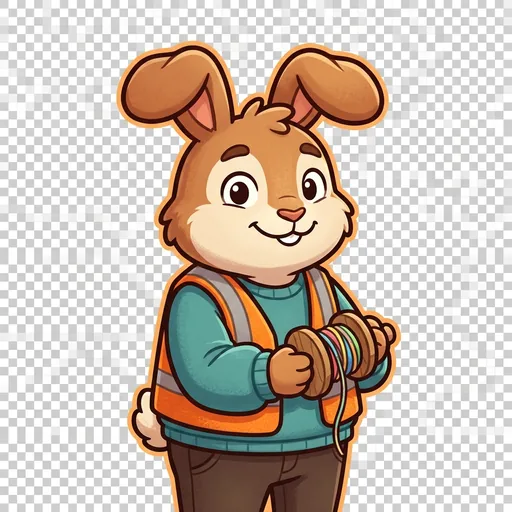
Walkability + mobility — the rabbit-tween in safety-vest with a chalk-spool who teaches streets-as-spaces ('streets are rooms; cars are guests, not owners')
-

Hub
Transit nodes — the pangolin-tween in conductor-vest who teaches that transit is about ACCESS, not about cars-vs-trains ('many ways, equal ways; the bus matters as much as the train')
-

Dwell
Housing equity + repair — the owl-elder in a mended quilted-coat who teaches anti-displacement, repair-not-replace urbanism ('repair before replace; listen before plan; the people who live here ARE the design')
-

Mix
Mixed-use land use — weave homes, shops, and work close so daily life is a short walk
-

Seam
Edges and connection — a highway can rip two neighborhoods apart; design can stitch them back