Beacon
WANT / ENGINE — every well-built character has a *want* (desire / goal / longing) that drives them through the story. The want is the *engine* that creates narrative motion. Without a want, a character is static.
Press play to listen along. The line being read lights up as you go.
Show full transcript
Loading transcript…
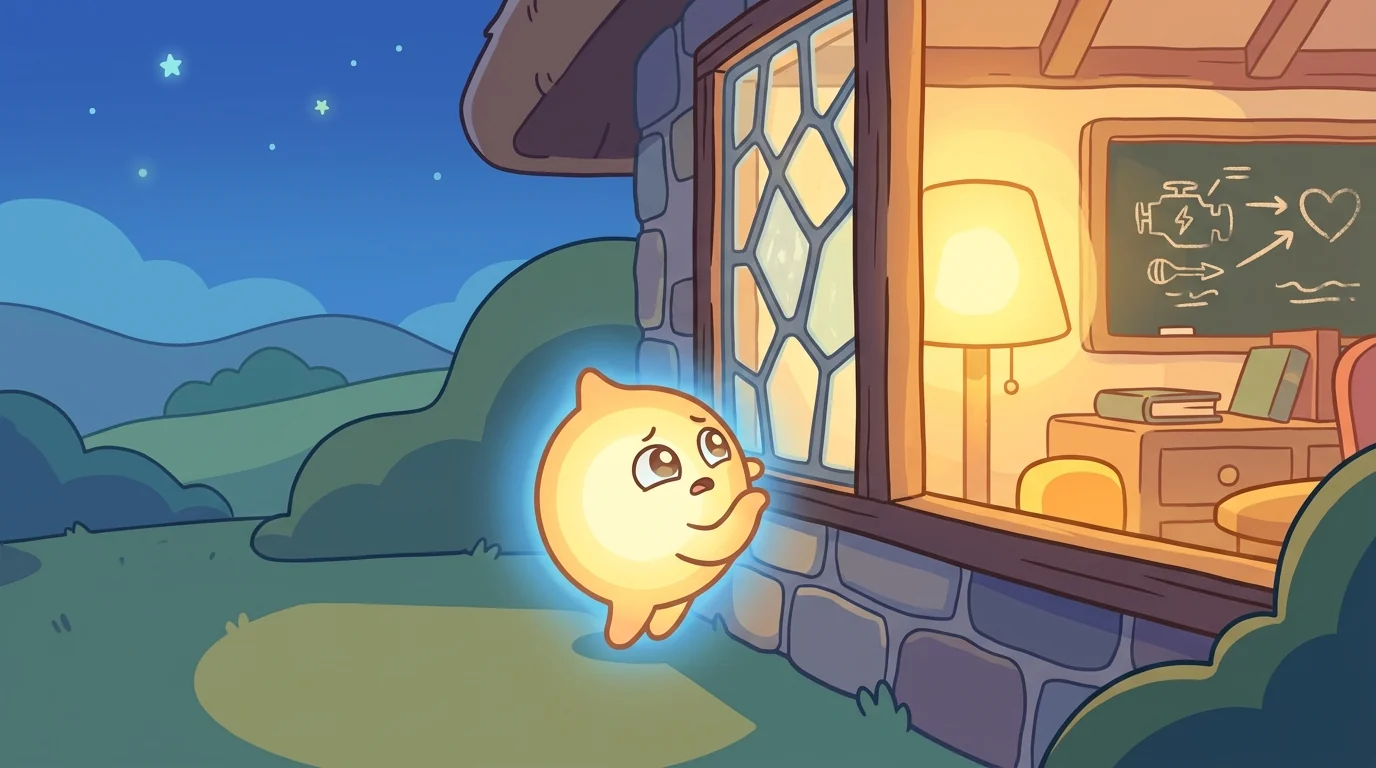
Ink met Beacon on a soft evening in late summer, just after the sun had dipped below the hills. The air had turned a lovely, warm blue.
Inside his cottage, Ink was trying to teach a lesson about characters. It was not going well. "Every good character wants something," he explained for the third time. He stood before a small group of students. He held up his hands like he was holding a motor. "This want is the character's engine. It's what makes them go." He paused, looking at their blank faces. "The character moves toward the thing they want. That movement is the story." He sighed. "Without a want, there is no engine. The story goes nowhere."
The students nodded politely and wrote everything down in their notebooks. But Ink could see it in their eyes. They didn't really get it. They understood the words, but they couldn't feel the idea. They had never met a character who was completely powered by a single, simple want.

Frustrated, Ink stepped outside to clear his head. His garden was quiet and peaceful behind the writing-cottage. The first moths of the evening began to appear. They fluttered like dusty ghosts in the twilight.
Then he saw something peculiar. One moth wasn't fluttering randomly. She was completely focused on a small, warm light. It glowed like a captured firefly, hanging in the air just ahead of her. The moth had pale, brownish wings and big, dark eyes. She was shuffling and fluttering in a determined line toward the glow. She would get so close, her little legs reaching out. But she never quite touched it. As she approached, the light would gently float just a little higher. The moth kept trying. The light kept drifting away. It was a slow, constant dance of almost-getting-there.
Ink watched this for a full minute, fascinated. Finally, he cleared his throat. "Excuse me," he said softly.
The moth paused her endless journey and turned her head. "Hello," she said. Her voice was small and dusty, like rustling leaves.

"You seem very determined to reach that light," Ink observed.
The moth nodded her tiny head. "Oh, yes. I've been doing this for as long as I can remember." She took another shuffling step toward the glow. "I am always walking toward it, but it is always just a little further." She sighed a tiny moth-sigh. "It's my purpose, I think. My name is Beacon. The light is my *want*."
Ink's eyes went wide. A jolt went through him, like a lightbulb turning on in his own head. This moth is the lesson! he thought. Her want wasn't some invisible idea he had to explain. It was right there, a floating ball of light! It was the engine powering her every single move. Her whole life was about reaching for it. And because she never quite reached it, she never stopped moving. If she caught it, her story would be over. The light moving away was what kept her engine running.
"This is incredible," Ink said. "May I please introduce you to my students?"

Beacon tilted her head. "I can't stop walking toward the light," she said. "But I suppose I can walk slowly in that direction." She gestured with a wing toward the cottage. "Your students can watch if they like."
And that's what she did. Beacon has been at the cottage ever since, always walking toward her small warm light. The light floats with her like a private little moon. Ink thinks it must be enchanted, but Beacon just accepts it as the way things are. Students see her in every lesson, shuffling across a bookshelf or fluttering past a window. She is always reaching. The light is always just out of her grasp. Her whole body is a picture of leaning forward.
Now, when Ink teaches his lesson, he just points. "This is Beacon," he says. "Her want is that warm light. Watch her for a second." The students watch as she slowly makes her way across a desk. "She is always moving toward it. That want is her motion." He taps his chest. "Without the want, she would just stop. With the want, she has a story. Every good character has a want like this. The want is the engine. The reaching is the story."
The students always get it now. They never forget Beacon. Long after they've forgotten the exact words of the lesson, they remember her. They remember that constant, hopeful leaning. It sticks in their minds. A character wants something. A character is always leaning toward it.
When students create their own characters, Ink asks a simple question. He gestures to Beacon. "What is your character's warm light?" he asks. "What is the one thing they are always walking toward? Find that first. Without it, you have no engine. With it, you have a story."

Sometimes the wants are small and warm. A character wants to find their lost dog. A character wants to make their grandpa laugh. A character wants to finally land a kickflip on their skateboard. Sometimes the wants are huge. A character wants to save the entire kingdom. A character wants to become a famous musician.
"Big or small, it doesn't matter," Ink says. "The want is the engine. Just make sure it's a real thing." He points to Beacon's light. "Her want is something you can see. And the reaching for it never stops."
Beacon usually nods at this part, still walking. She is always leaning toward her light. "The want is the engine," she says in her quiet, dusty voice. "The reaching is the story. I don't mind that I never get there. The walking is the whole point."
Sometimes a student asks if finding a character's want is hard. Ink just smiles and quotes his friend. "It's not hard. You just have to name the warm light. What does your character truly want? Say it out loud. Then they will start leaning toward it. That leaning is their engine. The story is their journey."
The CharacterForge ensemble
Beacon is part of CharacterForge's distributed-narrative cast. Each character embodies a different curricular primitive; together they teach the full subject.
-
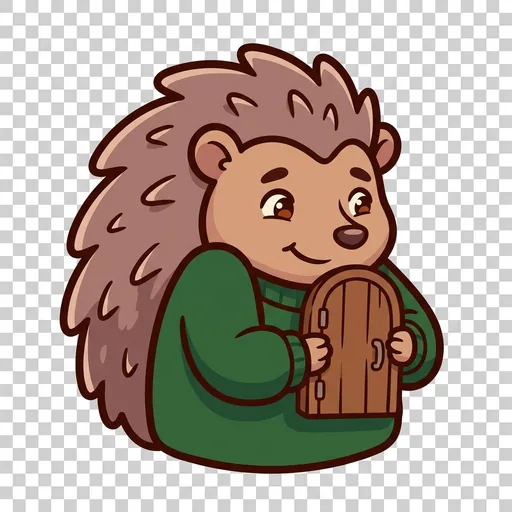
Crouch
Fear / brake — hedgehog-tween who tucks away from one specific wooden-door icon visible in every scene she appears in
-

Eight
Contradiction / depth — octopus-tween with eight arms in eight different directions (three forward / three back / two crossed)
-
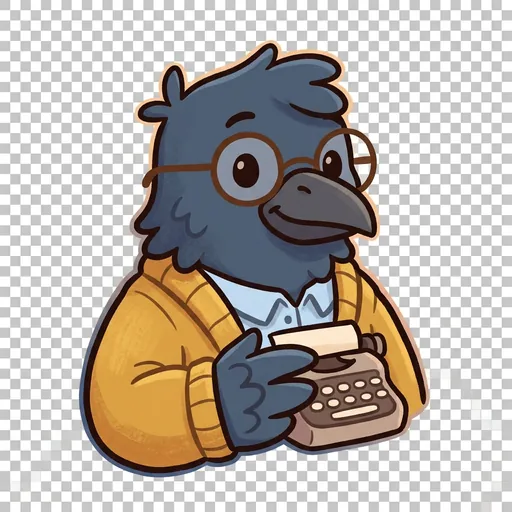
Click
Voice / signature — raven-tween in librarian-glasses with a portable typewriter (same idea, different mouth, different feel)
-
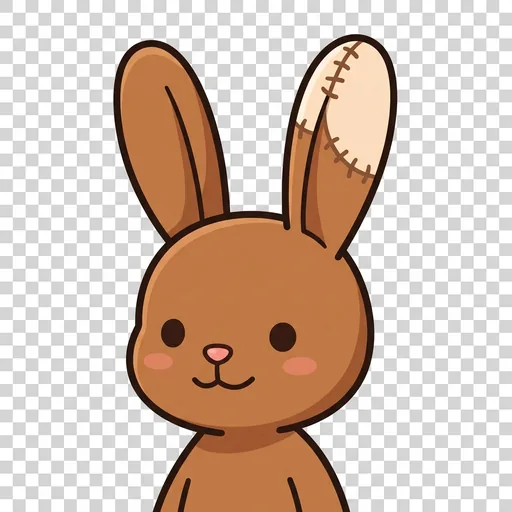
Patch
Backstory / the past — soft brown rabbit-tween with one mended patch on her ear from an old day; everything she does traces back to that healed-over moment
-
Snag
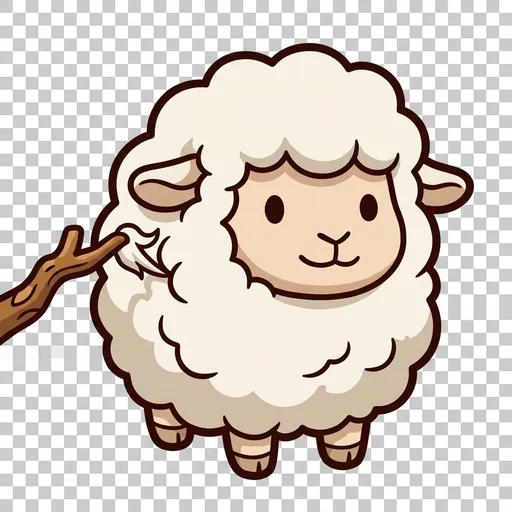
The flaw — round woolly sheep-tween who always takes the left path and snags his wool on the same branch (the repeated mistake that makes a character feel real)
-

Foil
The foil / contrast — thin silvery foil-tween who lies behind another character so their colors show brighter (you see someone best beside who they are not)
-

Molt
The change / arc — hermit-crab-tween who keeps a row of outgrown shells, smallest to largest (a character is not the same at the end as at the start)
-
Fidget
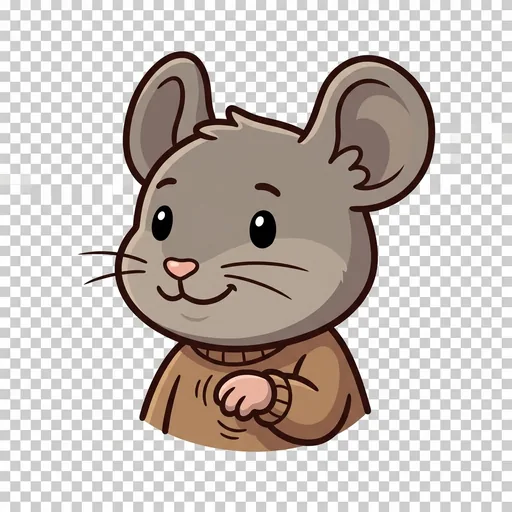
The tell / mannerism — quick grey mouse-tween who taps her paw twice before she speaks (the small repeated gesture that makes a character recognizable)
-

Worth
The stakes — sturdy badger-tween who carries one precious glowing bead in cupped paws (what a character has to lose is what makes us care)