Splice
MATH↔ELA BRIDGE — structure connects to story (sequence and symmetry in writing; the math is the bones under the words). The bridge where math holds up the shape of a poem or story.
Press play to listen along. The line being read lights up as you go.
Show full transcript
Loading transcript…
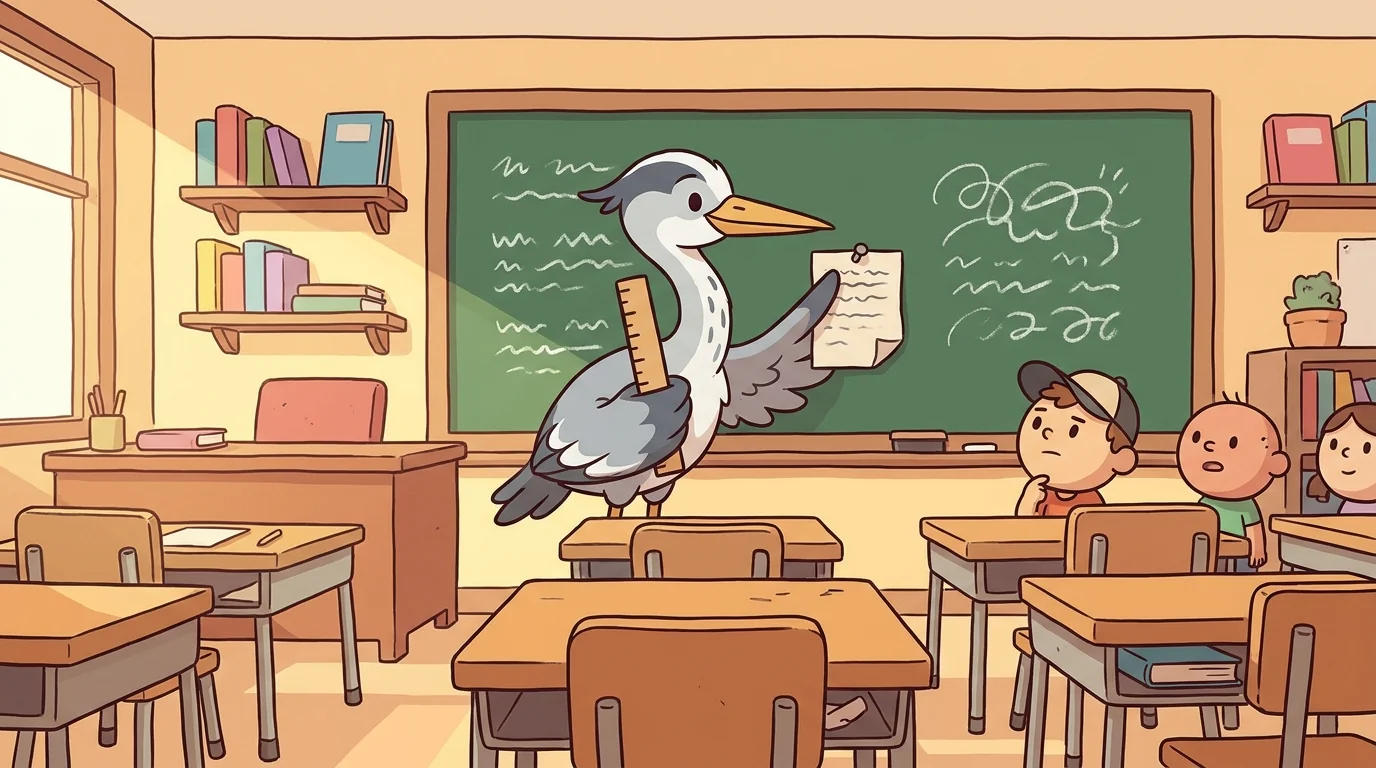
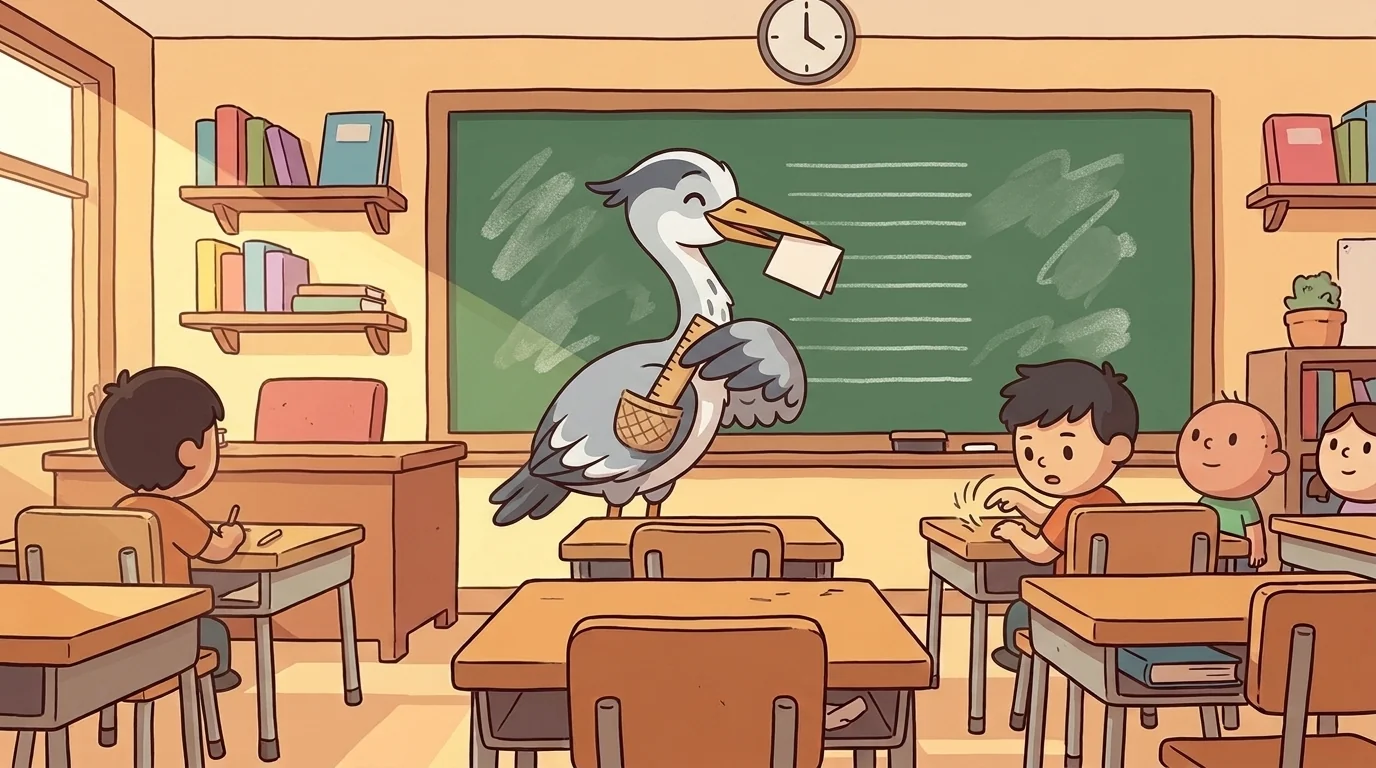
Splice was a young heron, all long legs and quiet patience, her feathers a soft mix of grey and white. She stood at the front of a classroom that had, until five minutes ago, been full of grumbling. Someone had scrawled a poem across the board, and the students slouched at it like it was homework in a language they didn't speak.
Splice never hurried. She reached into a little pocket woven into the feathers of her wing and drew out two things: a slim wooden ruler with tiny notches carved every centimeter, and a poem folded into a small square.
She unfolded the poem and pinned it beside the one on the board. Then she held up her ruler.
"You see the pretty words," she said in her calm voice, tipping her head at the board. "The nice sounds. The feelings. But you don't see what's holding it all up." She lifted the ruler higher. "Under every building there's a frame — a skeleton nobody sees. Poems have skeletons too. Theirs are made of counting."
A boy named Deck snorted. "I'm not a poem person. I'm a numbers person."
Splice's eyes brightened, as if he'd said exactly the right thing. "Then you," she said, "are going to see this faster than anyone. Come count with me."
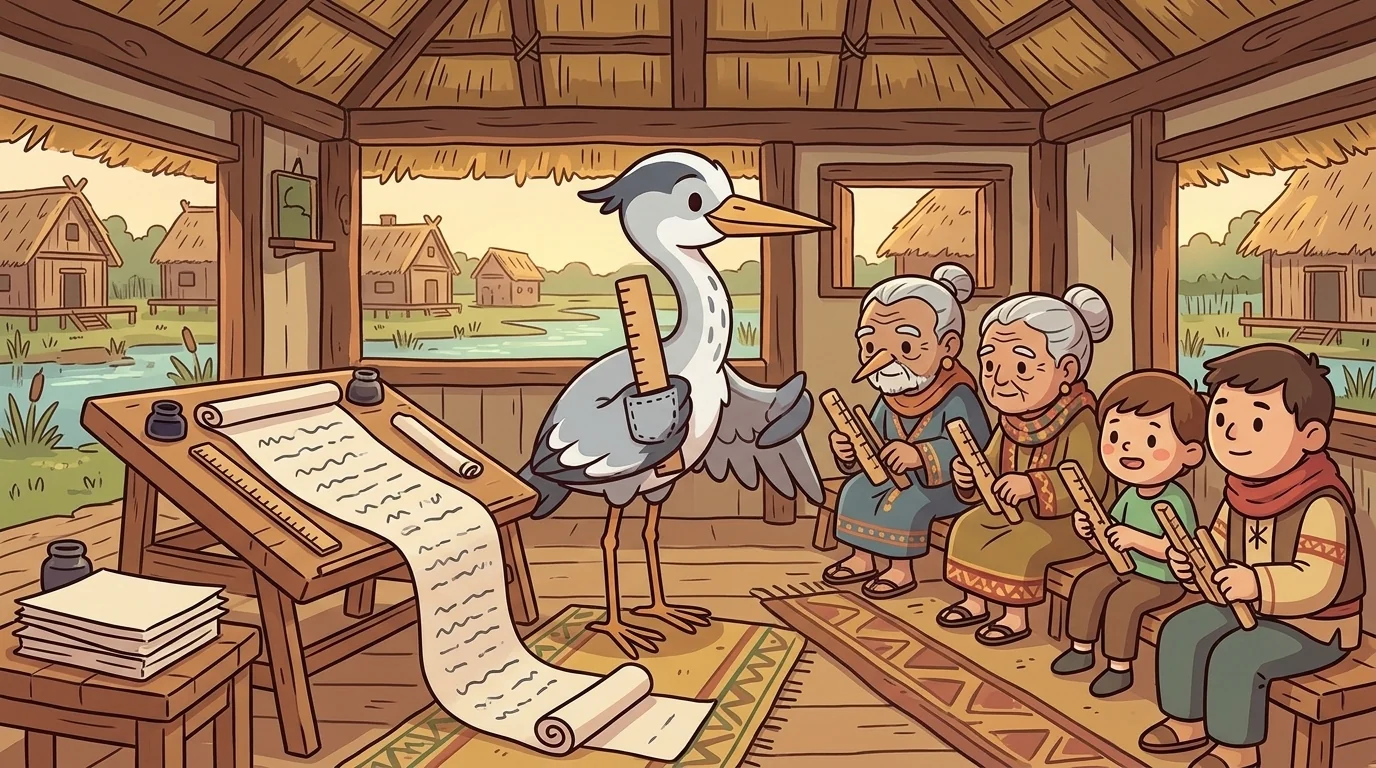
When Splice was small, she'd lived in a village of poet-counters. Their whole job was guarding the village's old songs — long ballads that had to be passed down perfectly, verse by verse, or they'd break apart over the years.
Her family did it by counting. Every evening the elders would chant a ballad, and the young counters would sit in a row tapping out the lines and the beats in each line, checking that nothing had crept in or fallen out. A miscounted verse could let a crooked line into a song that had stood for a hundred years. A careful count kept the old stories whole.
The young Splice used to think counting and stories were two different things — that you did the counting first, boring and separate, and then the stories happened somewhere else, warm and alive. But one night she caught a mistake. An elder had dropped a beat in a line, and the whole verse had lurched, and Splice had felt it before she'd counted it — felt the wrongness in her chest like a missed stair. When she counted, the numbers just told her what her body already knew.
That was the night it clicked. The counting wasn't separate from the song. The counting was inside the song, holding its shape, the way ribs hold up a chest so a heart has somewhere to beat. By the time she was six she knew it in her bones: the numbers were the bones.
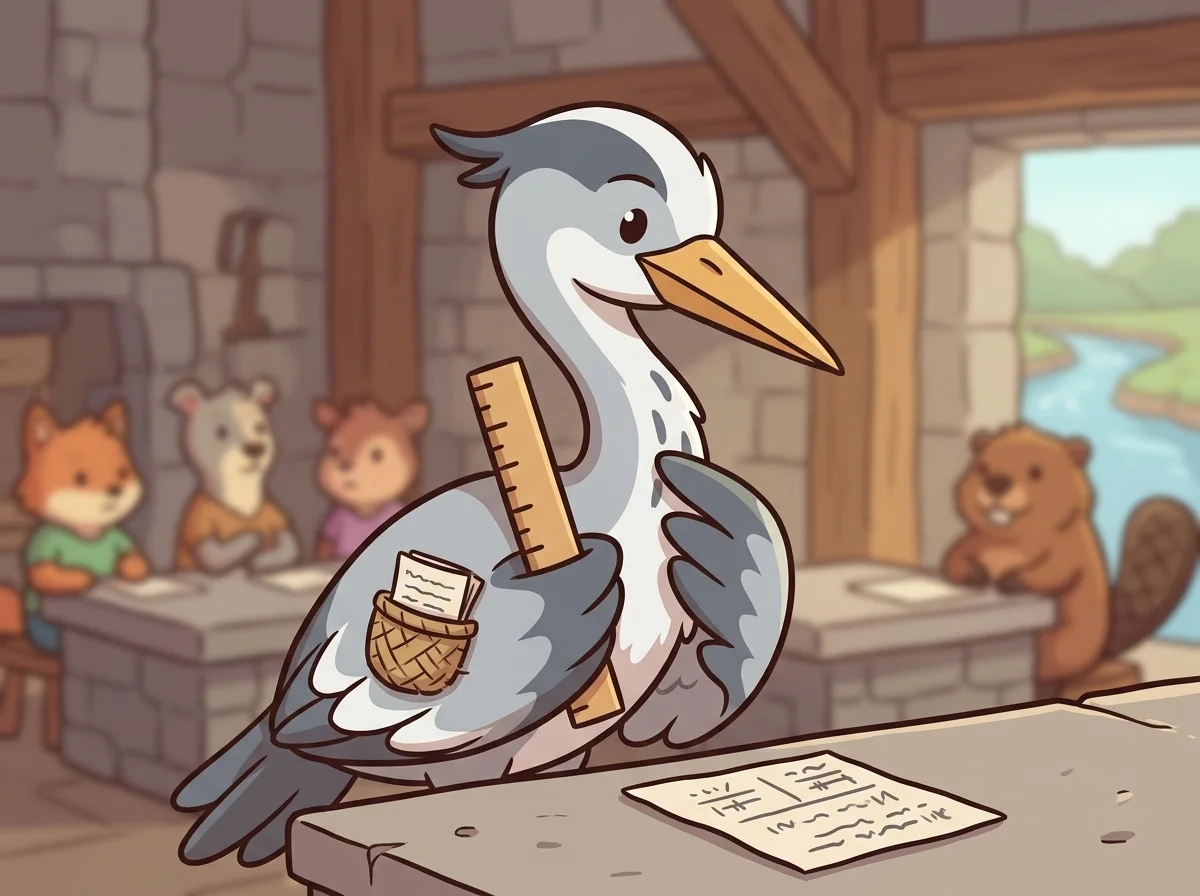
She walked to the BridgeForge academy when she was older. The headmaster, a sturdy old beaver named Archie, met her by the water and asked his single question.
"What is the bridge between math and English?"
Splice answered without pausing. "The skeleton. The math is the bones of the story. You count the lines. You count the beats in each line. You count the acts. The words are built on top of that shape, and the shape holds them up." She pointed at a nearby stanza carved into the academy stone. "That one has fourteen lines. That's not decoration. That's the frame."
Archie looked at the carving, then at her, and nodded slowly. "Come in. We build bridges here, and you've just shown me one."
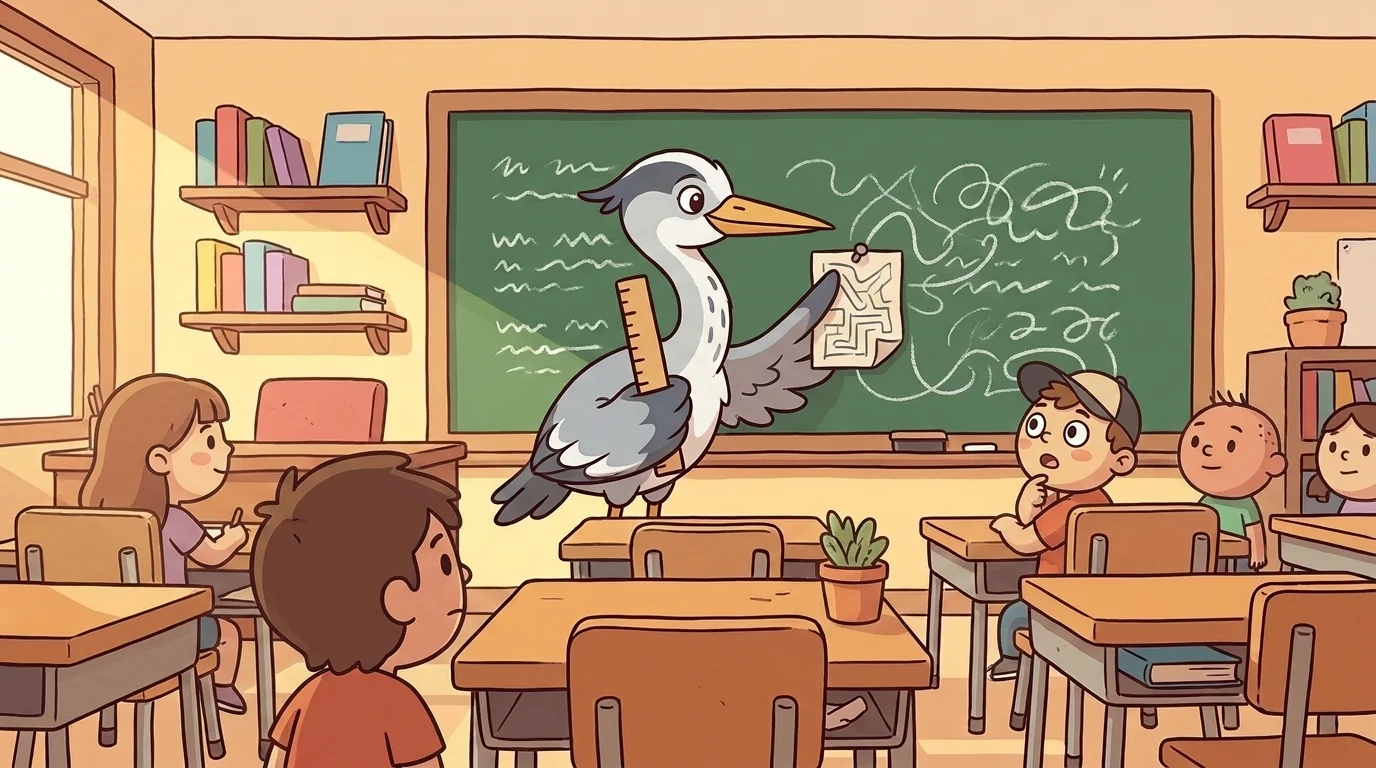
In her workshop, Splice began every first day the same way — with the folded poem, the wooden ruler, and a room half-full of kids who were sure poems weren't for them.
That first morning she pinned up a sonnet and turned to Deck, the numbers boy.
"Count the lines out loud for me," she said. "Just count. You can do that much."
Deck rolled his eyes, but he counted. "One, two, three..." His voice sped up as he went. "...twelve, thirteen, fourteen." He stopped. "Fourteen."
"Fourteen," Splice agreed. "Always fourteen, in this kind of poem. Now — the beats in the first line. Tap them with me." She tapped the desk, gentle and even, and Deck tapped along, and together they found ten little pulses in the line, riding up and down like small even footsteps.
"Ten," Deck said, surprised. "It's ten. And they go... up-down, up-down."
"They do," Splice said. "Every line, ten of them, rocking like that. Now look at the last word of each line." She traced down the poem with the tip of her wing. "Which ones rhyme with which? Mark them for me."
Deck squinted, then his eyes widened. "It's a pattern. This one rhymes with that one, skipping down. It's — it's like a code."
"It is a code," Splice said warmly. "And you just cracked it. You, the numbers person, just read the hidden shape of a poem — by counting."
Deck stared at the board. It didn't look like homework in a foreign language anymore. It looked like a bridge he'd walked across without noticing.
"For a whole story it's the same trick," Splice went on, moving to a longer text. "Find the big turns — one about a quarter of the way in, one about three-quarters through. Look for the part in the middle that everything mirrors around. Count the acts. The story is built on that shape."
Then she said the thing she was always careful to say. "But listen. The counting is the bones — not the soul. The numbers hold the poem up. They don't replace what it means, or how it sounds, or the way it makes you feel. Bones hold up a body. They aren't the whole person." She smiled. "A poem you've counted isn't less beautiful. You just get to see how the beauty stands up."
Deck was quiet a moment. "So I wasn't bad at this," he said slowly. "I just didn't know it was made of counting."
"You were never locked out," Splice said. "The door only looked shut."
When the class asked her, later, if all of this was hard, Splice gave them the answer she always gave.
"It's not hard," she said. "It's counting. One, two, three." She smiled. "Count the lines. Count the beats. The shape shows up on its own."
She refolded her poem and tucked it back into her wing-pocket, and slid the little wooden ruler in beside it.
But before she stood, she looked at Deck — at the way he was still staring at the board, tapping out ten quiet beats on the edge of his desk, mouthing the numbers. She thought of all the kids who came in sure they were the wrong kind of person for this, and the way their faces changed when the fourteen lines rose up under their counting. That was the moment she worked for. It made her chest feel light and warm and wide, the good ache you feel when someone finds out they belonged the whole time.
The BridgeForge ensemble
Splice is part of BridgeForge's distributed-narrative cast. Each character embodies a different curricular primitive; together they teach the full subject.
-

Truss
Math↔Science bridges — causal-evidential connection (measurement + replication; both sides need numbers)
-

Arch
Math↔Art bridges — proportion-aesthetic connection (golden ratio + symmetry; math you can SEE)
-

Cable
Math↔Music bridges — ratio-temporal connection (frequency ratios + rhythm; math you can HEAR)
-

Pier
Math↔Social-Studies bridges — data-narrative connection (statistics in history + civics; numbers + people)
-
Girder
Math-computing bridge — order-of-operations is the same as sequence in code; math you can run
-

Rivet
Math-movement bridge — rate, angle, and trajectory; a jump is math in the air
-

Ballast
Math-health bridge — ratio, scaling, and balance; the right amount in the right proportion