
Rush
RUSH — *tempo. how fast the pulse runs. speeding up (accelerando) and slowing down (ritardando) to steer a song's whole feeling.*
Press play to listen along. The line being read lights up as you go.
Show full transcript
Loading transcript…
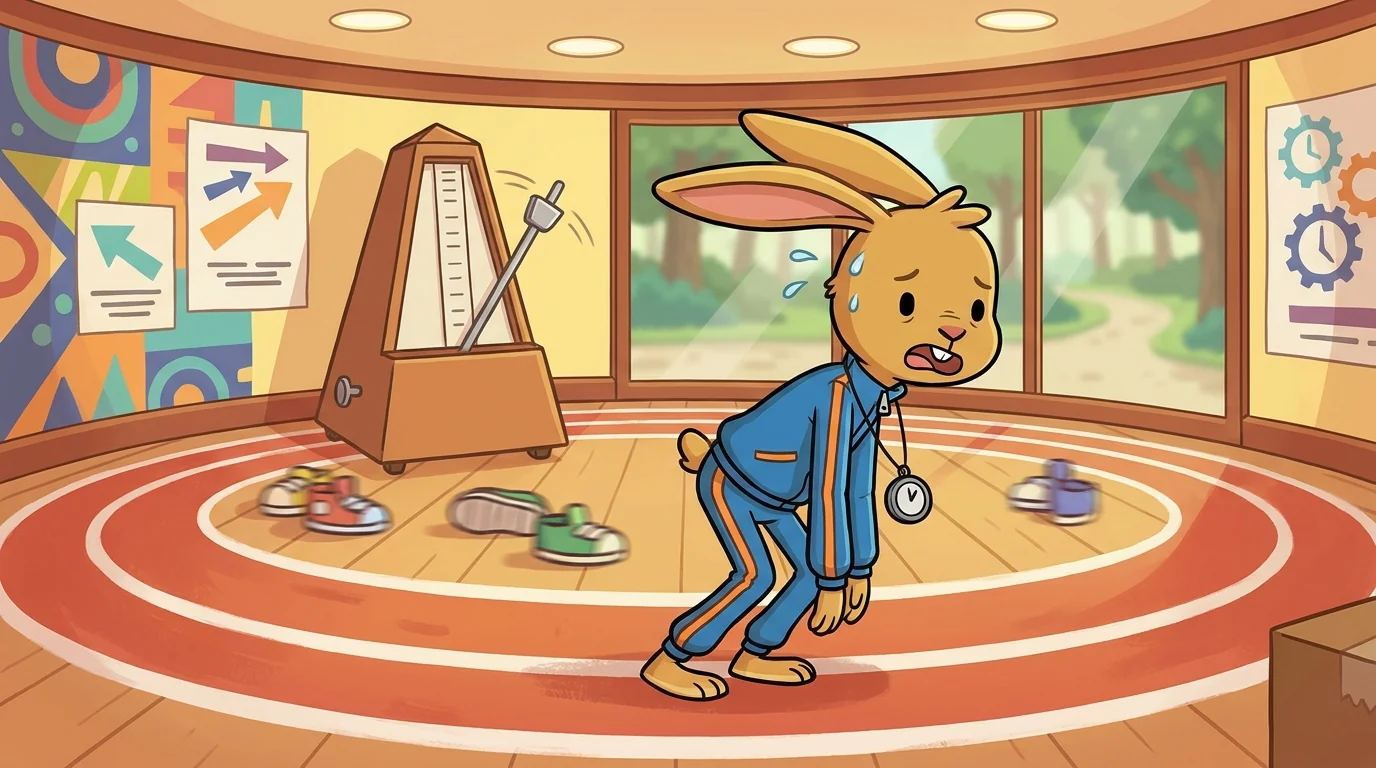
You could hear Rush's room before you reached it. From down the hall came a metronome ticking, then ticking faster, then faster still, then suddenly winding all the way down to a slow, sleepy tock… tock… tock. Inside, Rush was doing laps around a big circular track painted on the floor, and he was a hare — a lean, tawny, long-eared hare-tween in a tracksuit with a stopwatch on a cord bouncing against his chest. He skidded to a stop when the class arrived, breathing hard, ears flat back with speed.
"You made it!" he panted, delighted. "Okay okay okay — but quick question — did you walk here, or did you hurry?" He didn't wait for an answer. "Because that's the whole thing. That's my whole thing. Walking and hurrying are the same trip. Just different *tempo*."
Pip raised a paw, a little suspicious. "Isn't that just Throb's thing? The pulse? The steady beat?"
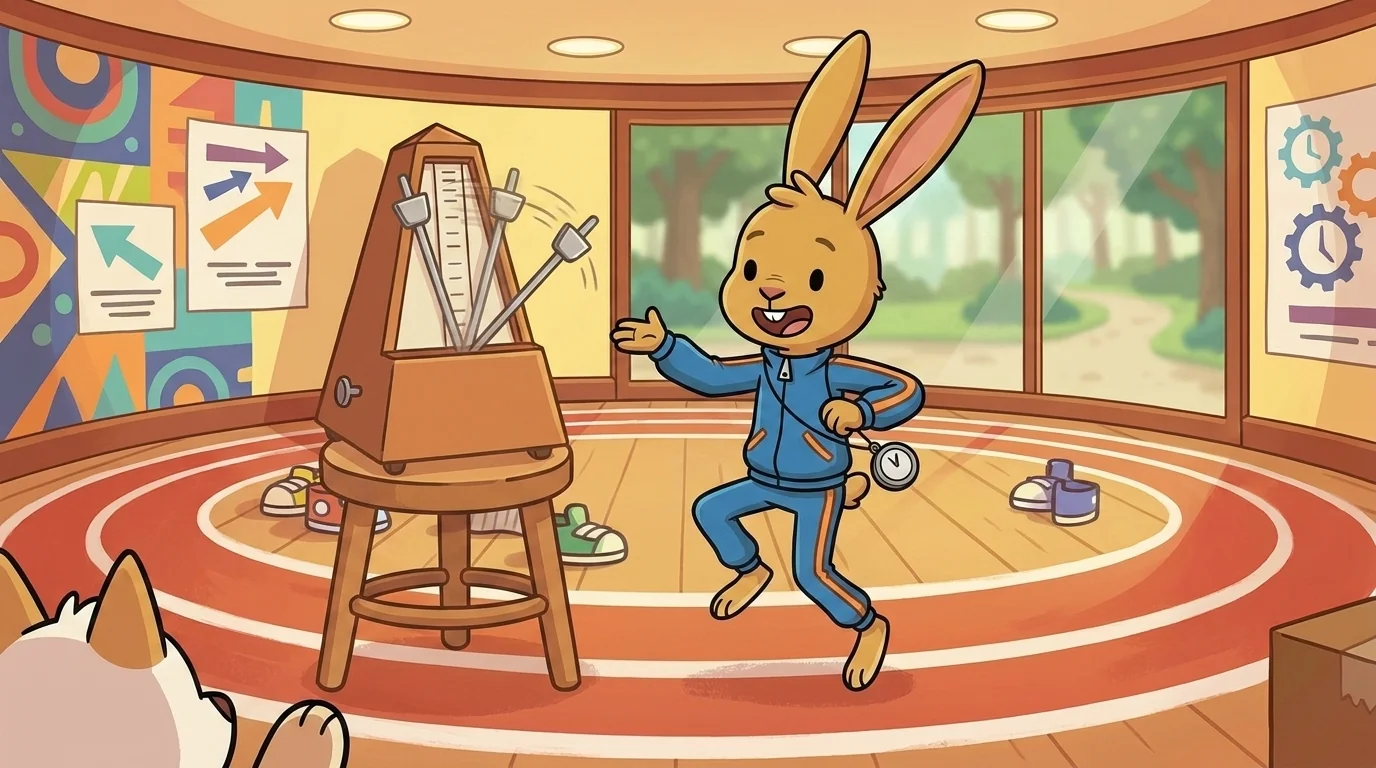
"Ooh, good catch, but no," Rush said, hopping in place. "Throb keeps the clock steady — tick, tick, tick, always even. I'm about how fast the clock runs in the first place. And even better — I'm about changing it while the song plays." He set a metronome on a stool and started it slow. Tock…… tock…… tock. "That's a slow tempo. Feels calm, right? Like a lullaby. Like walking home tired."
Then he reached over and cranked a little dial, and the tock…… tock squeezed tighter and tighter — tock. tock. tock-tock-tocktocktock — until it was a blur. "And that's a fast tempo. Feels like a chase! Feels like your heart when you're nervous! Same clicks. Same evenness. Just — faster." His ears stood straight up. "Fast or slow doesn't change the notes at all. It changes the whole feeling."
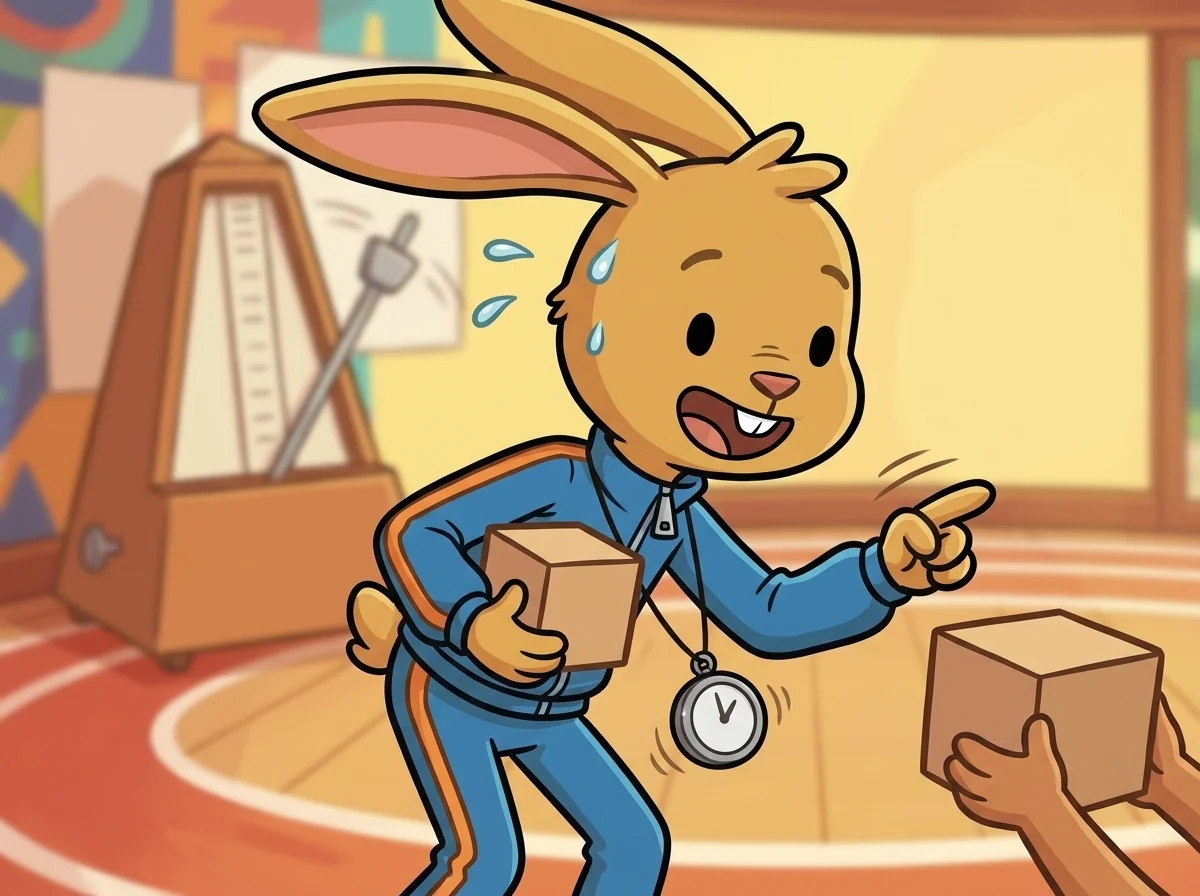
He handed Pip a woodblock. "Play me a little tune. Anything. Four beats, slow." Pip tapped out a gentle, drowsy little pattern. "Nice. Sleepy. Now — same tune, twice as fast." Pip played it again, quick and light, and it turned into something that skipped and darted. She actually laughed.
"It's the same four notes!" she said. "But slow it was like a yawn and fast it was like — like running downhill!"
"RIGHT?" Rush spun a full circle on his heel. "One tune. Two tempos. Two totally different animals. A funeral march and a birthday party can be the exact same melody — the only difference is how fast you take it." He tapped his stopwatch. "Musicians even give tempos fancy names. Slow ones, fast ones. But you don't need the names. You just need to feel the difference between strolling and sprinting."
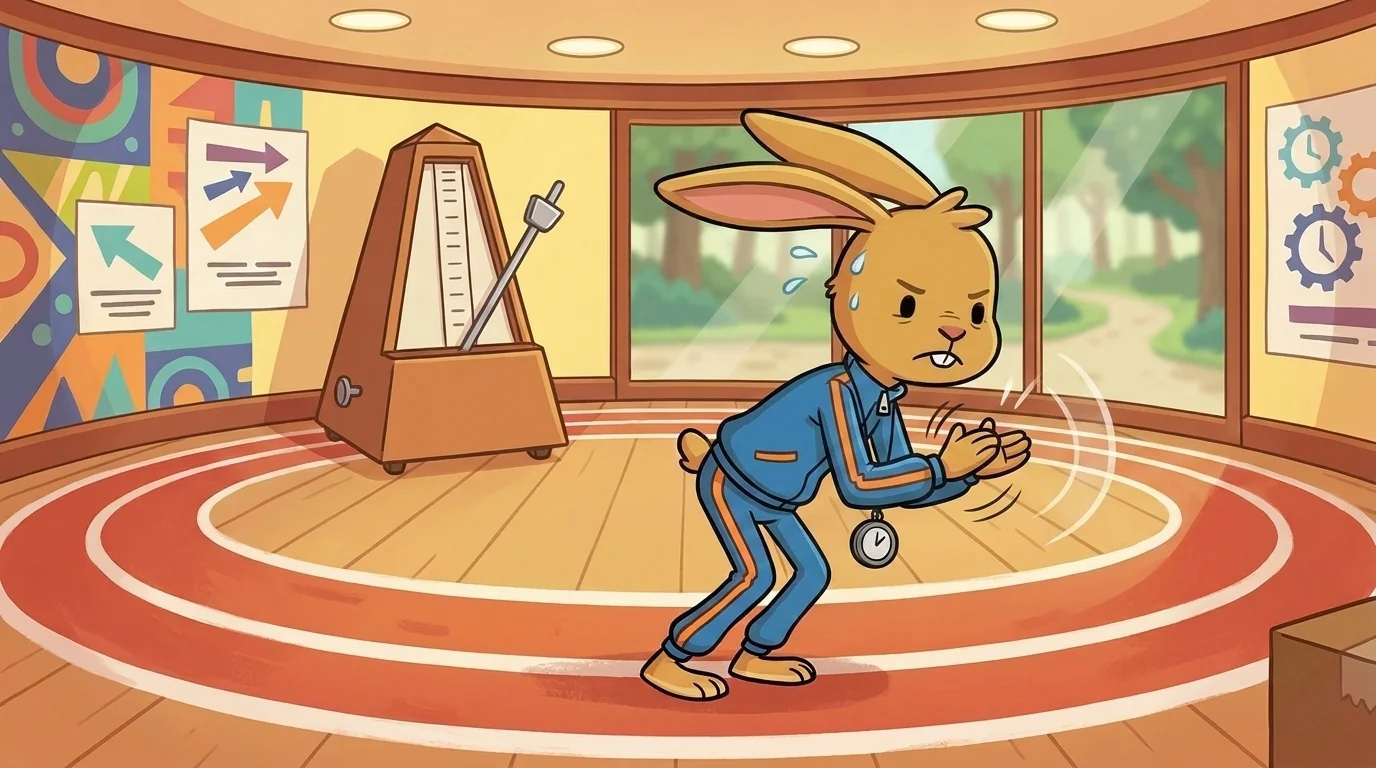
"Now here's the tricky part," Rush said, and he actually made himself stand still, which clearly cost him something. "It's easy to go fast. Anybody can go fast. The hard craft — the real craft — is changing speed on purpose, smoothly, right in the middle of a song." He set the metronome going at a medium clip and started clapping along. Then, slowly, he began to clap a hair faster each time, and a hair faster, so gradually you almost couldn't catch it happening — until the whole room was clapping in a breathless gallop. "That's called *speeding up — an accelerando*. It's the sound of excitement building, a train pulling out, a heart starting to race."
Then he did the opposite. From that gallop he began, so gently, to stretch each clap a little longer, a little longer, easing the whole room down, down, until they landed together on one final, unhurried clap and stopped. "And that's slowing down — a ritardando. It's how a song says goodbye. It's the sound of something coming gently to rest." He wiped his brow. "And I'll be honest with you — slowing down is so much harder than speeding up. Every hair on me wants to race. Making myself ease off, right when my whole body says GO — that's the toughest thing I do."
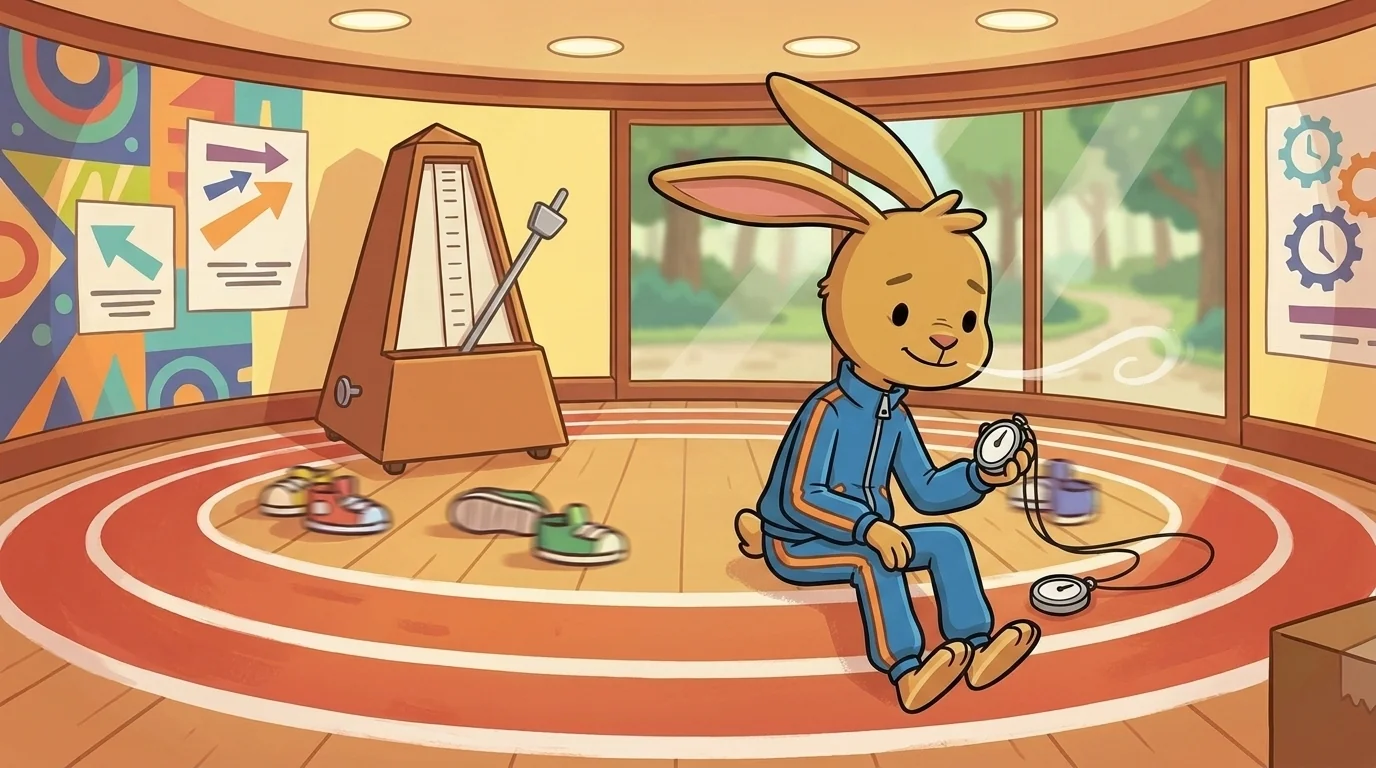
Afterward, Pip found Rush sitting on the edge of his track for once, ears relaxed, catching his breath in long slow pulls. "You okay?" she asked. "You're always going so fast."
Rush gave a tired, honest laugh. "Between you and me? Fast is easy for me. Fast is where I hide." He looked at his stopwatch, then set it down. "The thing I actually had to learn — the thing that made me a real musician instead of just a fast one — was that a song has to know when to ease up. You race to the top, sure. But then you have to have the heart to slow it down and let people breathe. Otherwise it's just noise going nowhere."
He leaned back and let out one long, slow breath, and Pip watched his racing chest finally settle into something calm and even. "Feel that?" he murmured. "My heart's slowing down right now. That's a ritardando too. Everything that races has to learn how to land." He smiled at her, gentler than she'd ever seen him. "Go fast when the song wants to fly. But don't be scared to slow it all the way down. That's where the tender stuff lives."
And Pip, who was usually the one bouncing off the walls, sat down next to the fastest kid in the academy and just breathed slow with him for a while, and it felt like the safest place in the world.
The BeatForge ensemble
Rush is part of BeatForge's distributed-narrative cast. Each character embodies a different curricular primitive; together they teach the full subject.
-

Throb
The steady pulse — the underlying clock every other rhythm hangs from
-

Snap
Subdivision — splitting a beat into equal smaller parts (eighths, sixteenths, triplets)
-

Hammer
Accent — emphasis on specific beats (the downbeat, the backbeat, polyrhythmic emphasis)
-
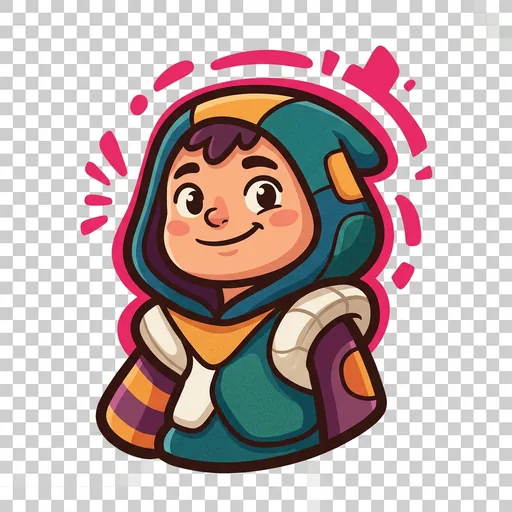
Tilt
Syncopation — placing weight off the expected beat to create pull and forward motion
-
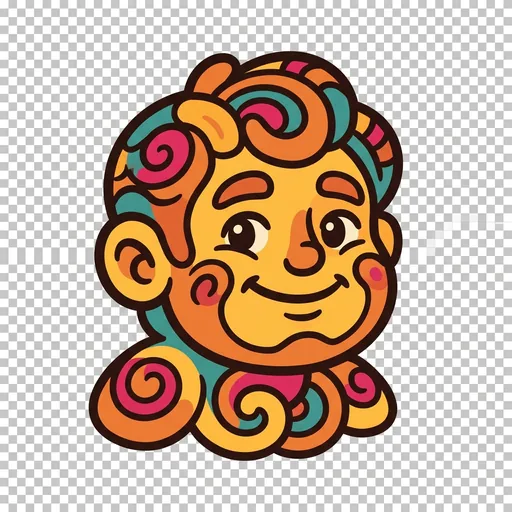
Spin
Groove — the looping pattern that emerges when pulse + subdivision + accent + syncopation cohere; the thing that makes a beat feel like a particular genre
-
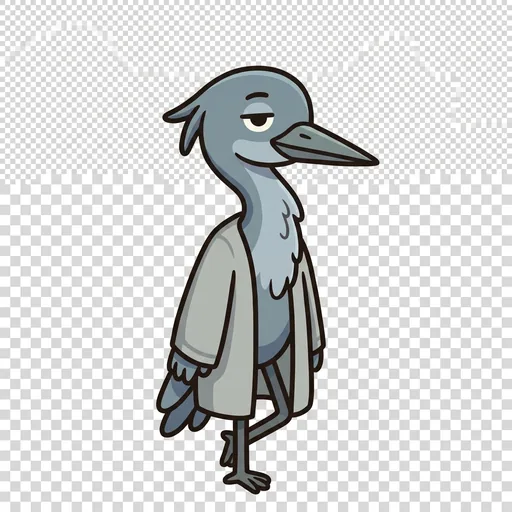
Lull
The rest — the beat you leave empty on purpose; silence counted as part of the music, so the next sound lands bigger
-

Crest
Dynamics — how loud or soft the music is, swelling louder and easing softer to give a song its waves
-

Volley
Call-and-response — one player calls a phrase and the others answer it back; music as a conversation traded around a circle
-
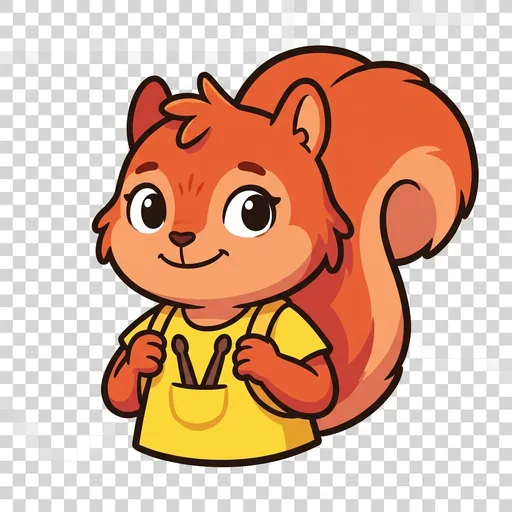
Flurry
The fill — the quick burst of drum notes that carries a song across the turn from one section into the next
-
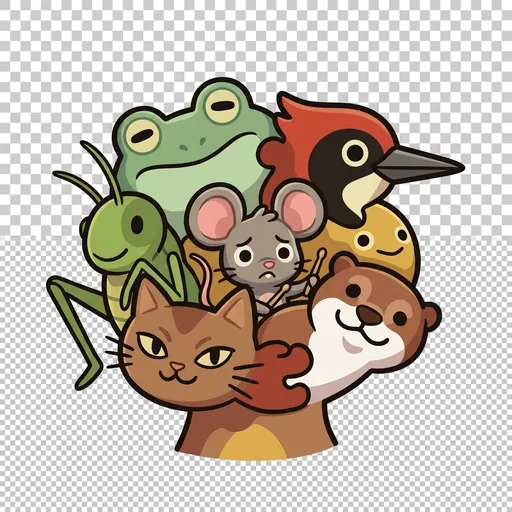
The Jam
The whole rhythm section playing together — how pulse, subdivision, accent, and syncopation lock into one groove that lifts everybody up at once