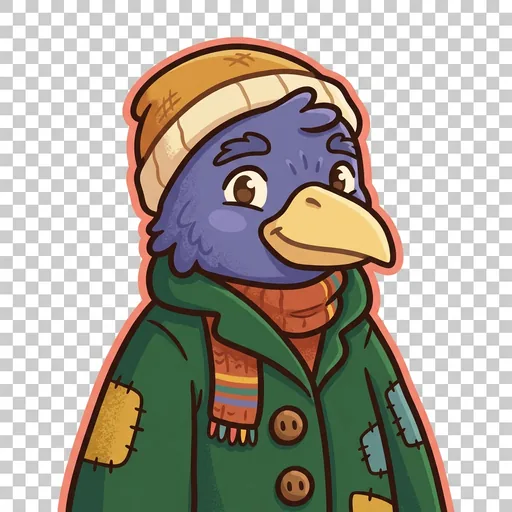
Sink
SINK — the heavier plate finds its way down. it takes a long time; that's okay.
Press play to listen along. The line being read lights up as you go.
Show full transcript
Loading transcript…
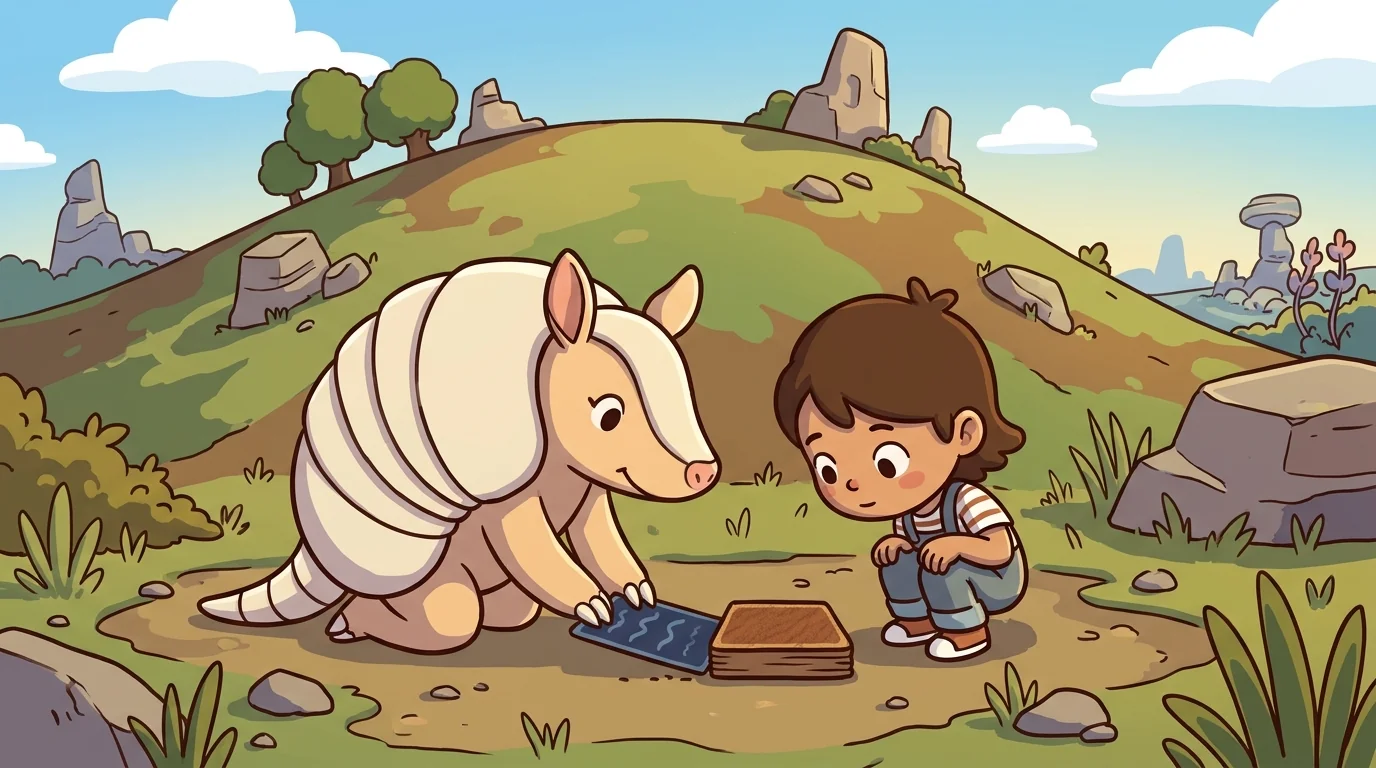
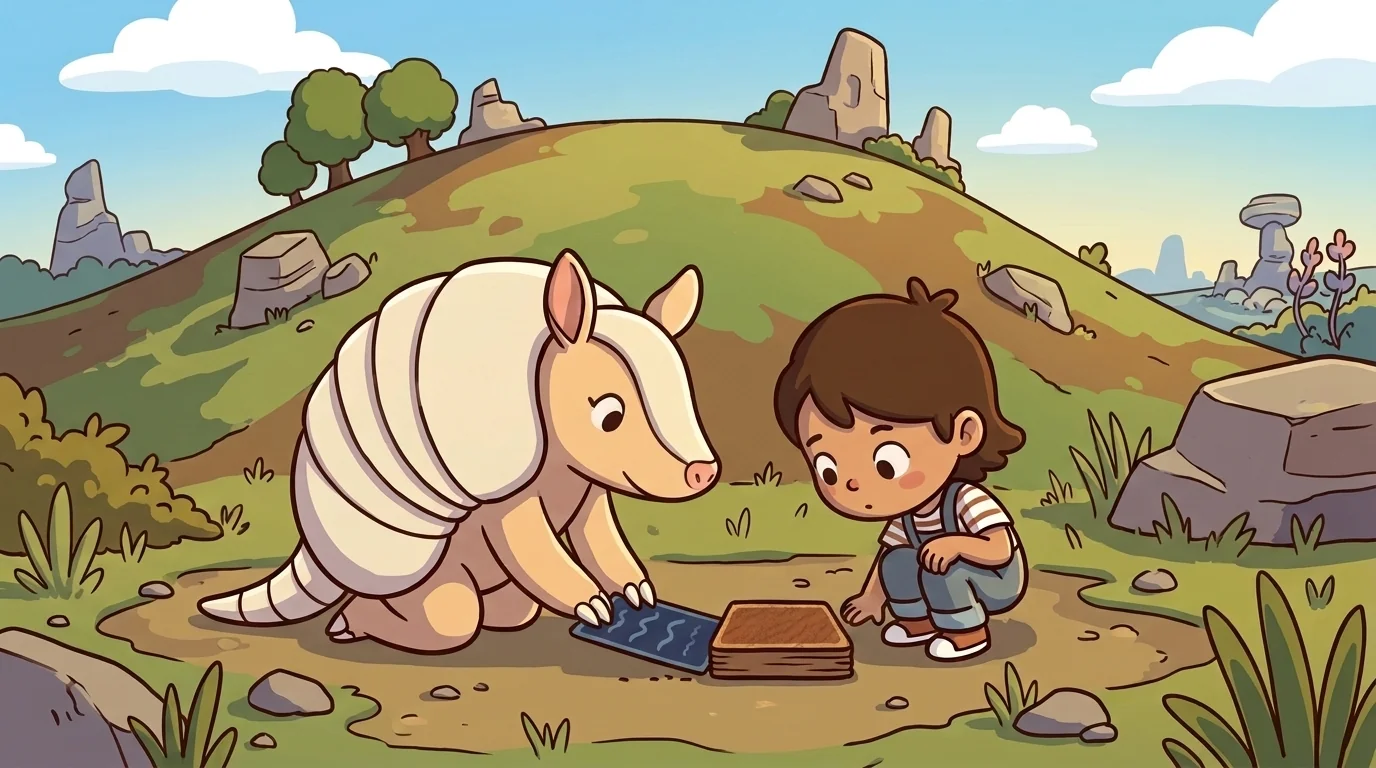
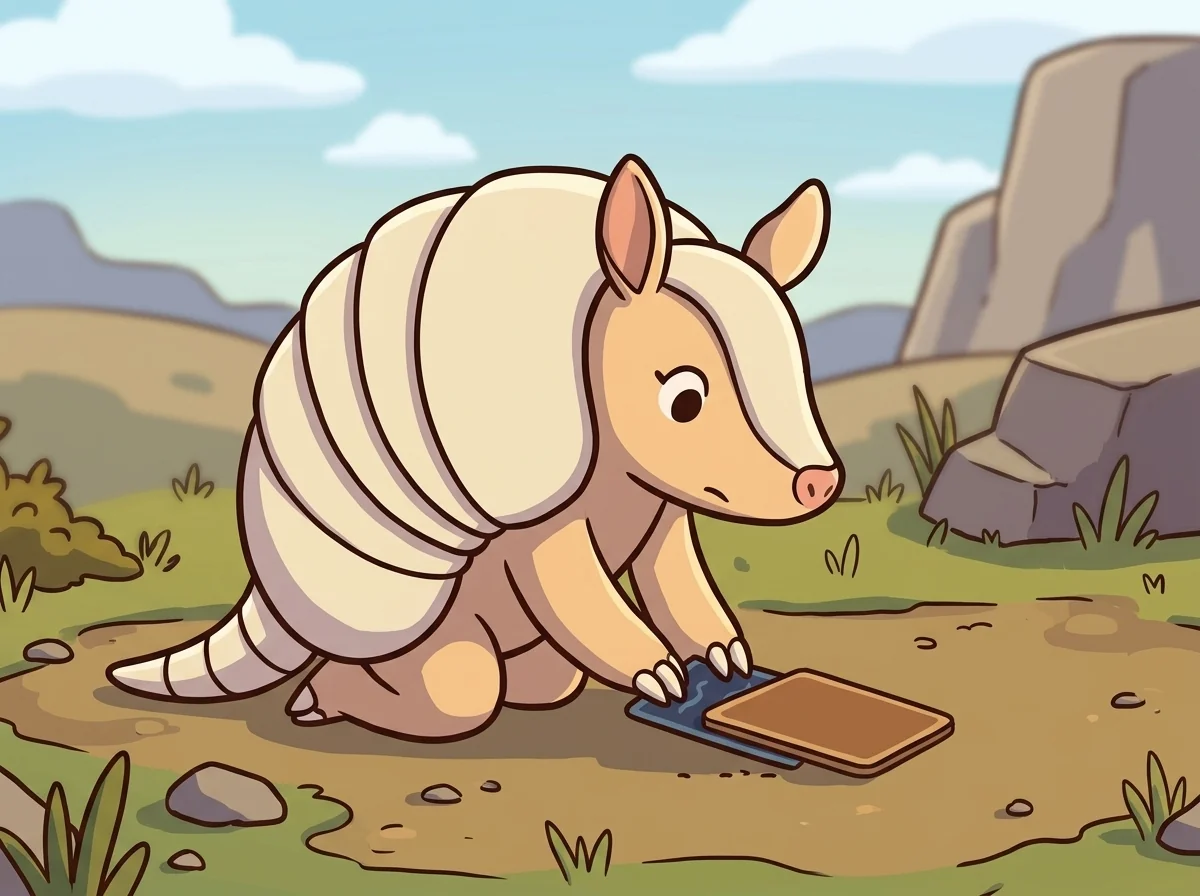
At the bottom of a quiet hill in TectonicForge, a small armadillo named Sink knelt over two flat cards and pushed one of them under the other, so slowly that nothing seemed to happen at all.
A younger creature crouched beside her, watching. And watching. And still watching.
"Are you moving it?" the little one finally asked.
"Yes," Sink said.
"It's not moving."
"It's moving." Sink didn't look up. Her soft, creamy shell-bands rose and fell with her breath. "You're just faster than it. That's alright. Most things are." She nudged the top card a hair's width. "One card is a heavy ocean floor. The other is a lighter stretch of land. When they lean into each other, the heavy one finds its way down. Underneath. It doesn't shove. It doesn't smash. It sinks."
The younger creature leaned so close their nose nearly touched the cards. "How long does it take?"
"For a whole ocean to slide under a whole country?" Sink tucked the card another whisper deeper. "Longer than you'll be alive. Longer than your grandchildren will be alive. Centimeters a year — about as far as your fingernail grows." She finally looked up, calm as still water. "But it never stops. That's the part people miss. It's the slowest, most patient work there is, and it never once stops."
The little one sat back, amazed. "So it IS doing something."
"It's always doing something," Sink said. "Even right now. Even under us."
Sink had not always been so patient.
When she was very small, she had planted a seed by the family burrow and checked on it every single morning, and every single morning it was still just dirt. By the fourth day she was near tears. "It's broken," she told her grandmother. "I did the work. I put it in the ground and I waited and nothing happened. It's a waste."
Her grandmother — an old armadillo with a slow, warm voice — didn't tell her to be patient. She just sat down in the dirt beside her.
"You feel cheated, don't you? Like the waiting is stealing something from you."
Sink nodded, miserable.
"Come here." Her grandmother walked her to the ridge above the burrow, where the old worn-down mountains sat low against the sky. "Those hills were once tall and jagged. Sharp as teeth. Now look at them — soft, round, tired. Do you know how long that took?"
Sink shook her head.
"Longer than anyone can hold in their mind. And the whole time, every single day, they were doing it. Rising. Wearing down. The Earth never rushed and it never quit." Her grandmother smiled. "Your seed is doing the same slow thing. Not-yet isn't the same as never. It's just the part you can't see."
Sink didn't understand it all that day. But the tight, cheated feeling in her chest loosened a little. The waiting stopped feeling like losing. It started feeling like something being kept safe, just out of sight.
The seed came up green on the ninth day. By then, Sink had stopped needing it to.
She walked to TectonicForge when she was twelve, because a place that studied the Earth ought to understand the kind of work that takes a million years.
Geo, the old mentor, met her at the gate. He didn't ask her to lift anything or prove she was quick. He asked one thing. "What happens when two great plates of the Earth meet?"
Sink didn't answer in a rush. She knelt, set her two plate-cards on the ground, and pressed one gently beneath the other. She held it there.
"The heavier one finds its way down," she said. "It takes a long time. That's okay." She looked up at him with steady eyes. "The mountains grow. The trenches deepen. And when the ground shakes, that's not the Earth being angry. That's just the slow work finally reaching the surface where we can feel it."
Geo looked at the little dip where her cards overlapped for a long, quiet moment. "You belong here," he said.
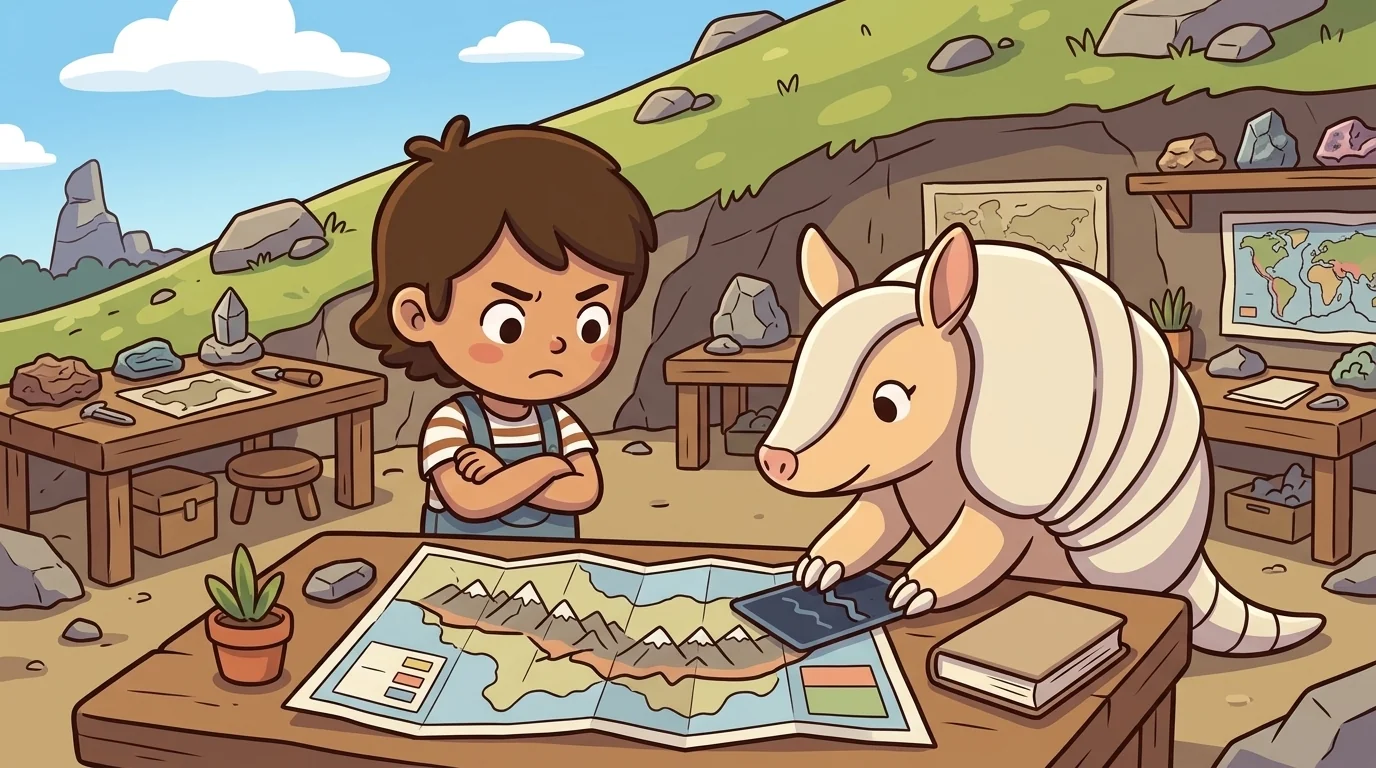
Sink's workshop was full of things that were secretly moving.
A boy came in one afternoon, arms crossed, frustrated. He'd been staring at a map of the Andes mountains for his project and couldn't make sense of it. "The book says these mountains are still growing," he said. "That's not true. I looked at them online. They just SIT there. Nothing's happening."
Sink knew that feeling — the certainty that if you can't see it, it can't be real. "Hold your hand out flat," she said. He did. "Watch your fingernails grow."
He stared at his hand. "I can't."
"But they are. Right now. You'll cut them in a week and you'll KNOW they grew, even though you never once saw it move." She slid her two cards together on the bench, slow and even. "That's how fast the plates go under. About that same speed. The land here at the edge crumples upward, a fingernail at a time, for millions of years." She tilted her head. "Does your hair feel like it's doing nothing?"
"...No. It's just slow."
"So are the mountains. Same as your seed. Same as your fingernails." She tapped the map. "This whole range — every peak — is the Earth quietly pushing, the way it has since long before people. When the ground trembles here, folks call it a disaster. But a disaster is what happens to PEOPLE caught in the path. The trembling itself?" She pressed the top card down one last hair's width. "That's just the patient work, letting us know it's still going."
The boy uncrossed his arms. "So it never stopped. Even when I said it did."
"Even when you said it did," Sink agreed, warm. "The slow things don't need us to believe in them. They just keep going."
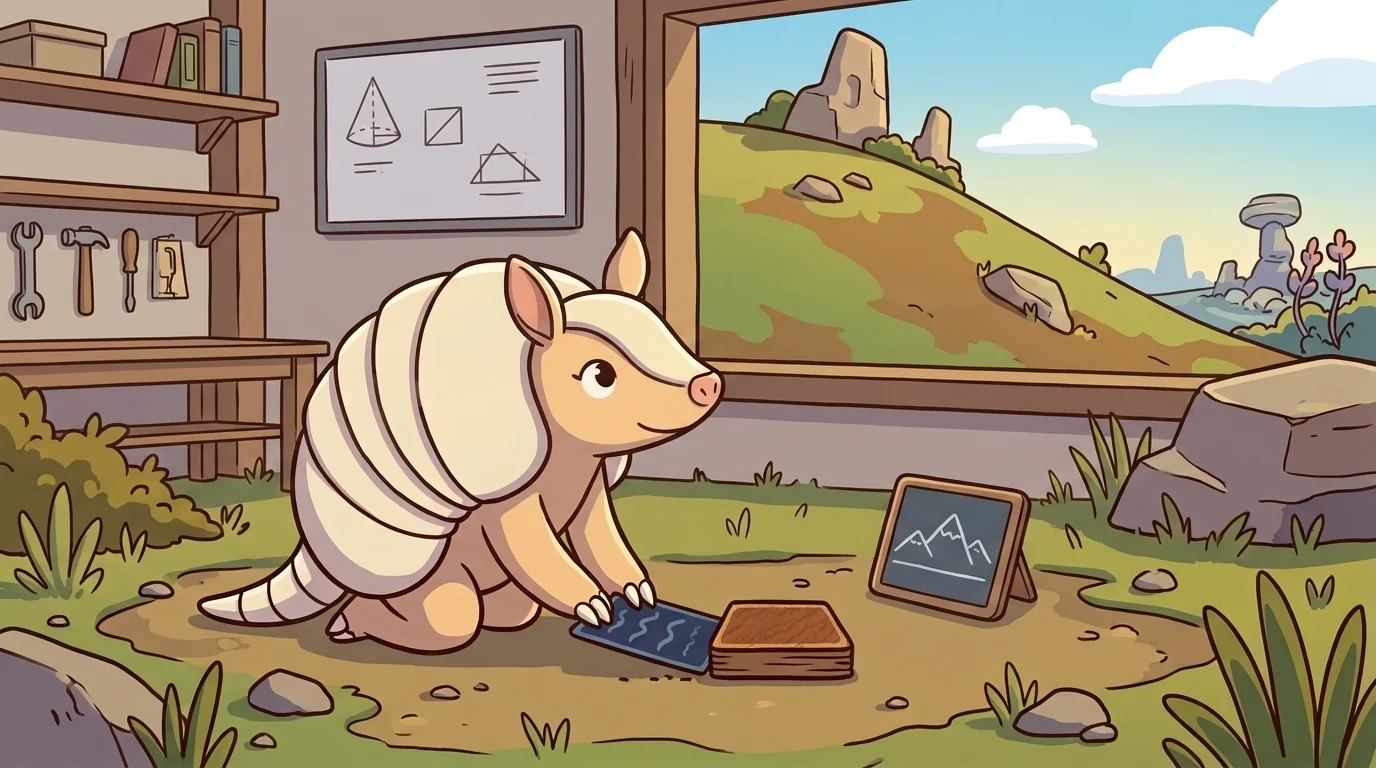
Later, when the workshop was empty, the boy came back with one more question. He was quieter now.
"When it's that slow," he said, "and you can't feel it or see it or hear it — how do you not go crazy waiting?"
Sink thought about the seed. About the tight, cheated feeling in her small chest, and her grandmother sitting down in the dirt beside her.
"You stop waiting FOR the end," she said. "You just... stay with the slow. There's a stillness in it, once you let go of needing it to hurry. Not a bored still. A full one — like the deep quiet before something you've wanted a long time." She looked out the window toward the low, worn hills. "The whole world is built out of patience nobody watched. Every mountain, every trench, every stretch of ground under your feet — all of it is slow work that came due long after anyone stopped looking."
The boy nodded slowly, and Sink watched the frustration ease off his shoulders — the same way, years ago, the cheated feeling had eased off hers.
She didn't say the rest out loud, but she felt it settle in her chest, soft and certain and utterly unhurried: the slowest things aren't the empty ones. They're the ones being kept. And staying still with them, without needing them to finish, is the calmest, safest feeling there is.
The TectonicForge ensemble
Sink is part of TectonicForge's distributed-narrative cast. Each character embodies a different curricular primitive; together they teach the full subject.
-

Spread
Divergent boundary + new crust — when something pulls apart, something new is forming in the middle
-

Slide
Transform boundary + stored energy — two plates sliding past; they catch, they hold, then they let go
-

Vent
Volcanism + magma chemistry — eruptions tell us what was happening below
-

Tremor
Seismology + earthquake preparedness — earthquakes are the Earth telling its story; we can read the lines; we can be ready