Pippa
NUMBER BONDS — split a whole into two parts, and join the two parts back into the whole.
Press play to listen along. The line being read lights up as you go.
Show full transcript
Loading transcript…
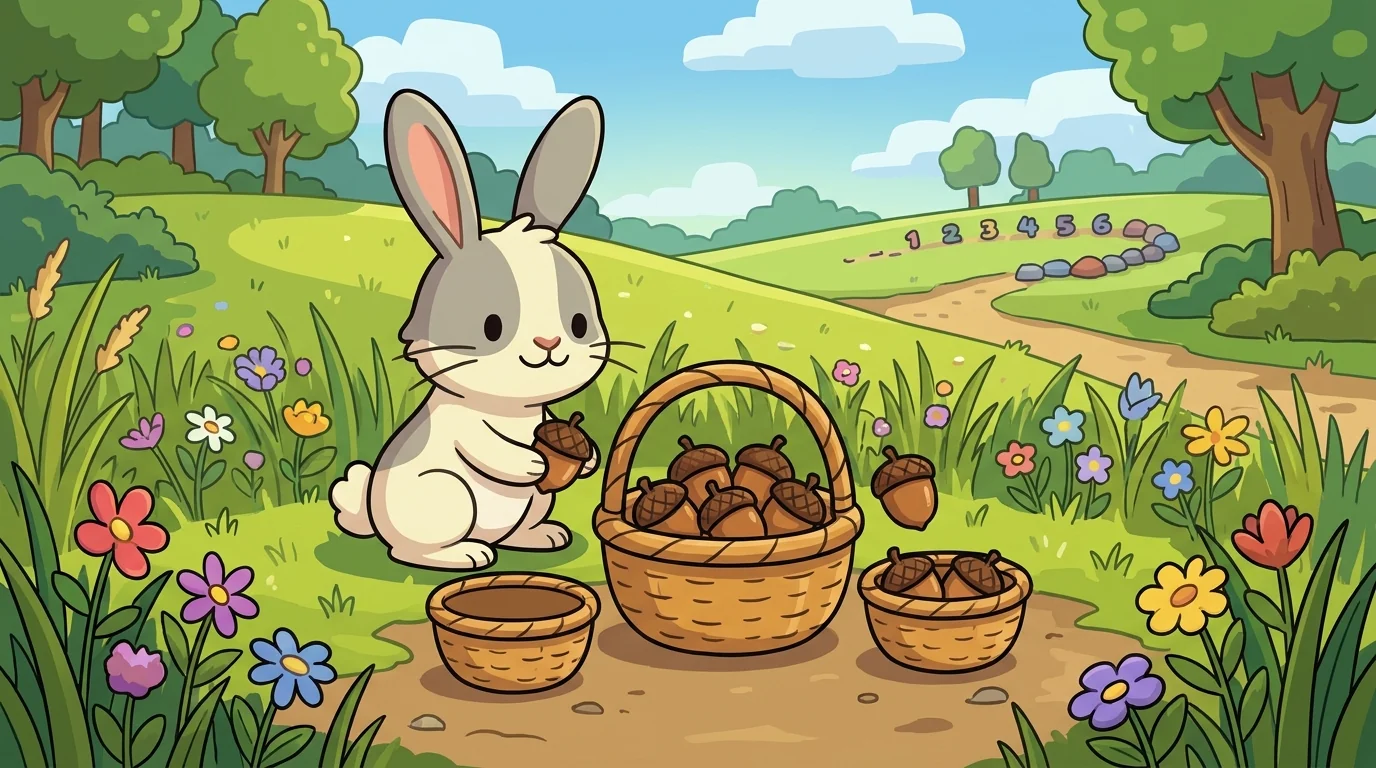
Pippa is a soft cream-and-grey rabbit with long ears and gentle whiskers. She lives in the meadow-garden near Sumi's number line, where she keeps three little baskets: a whole basket and two smaller part baskets. Sumi brings the child to visit Pippa whenever a number wants to be split into parts.
Pippa does one gentle thing, over and over, and never gets tired of it. She takes a whole pile — say, 5 acorns — and she splits it into two parts. Maybe 2 acorns in one basket and 3 in the other. Then she joins the two parts back together, and — every time — she has 5 again. Apart into parts. Back into the whole. Nothing is ever lost.
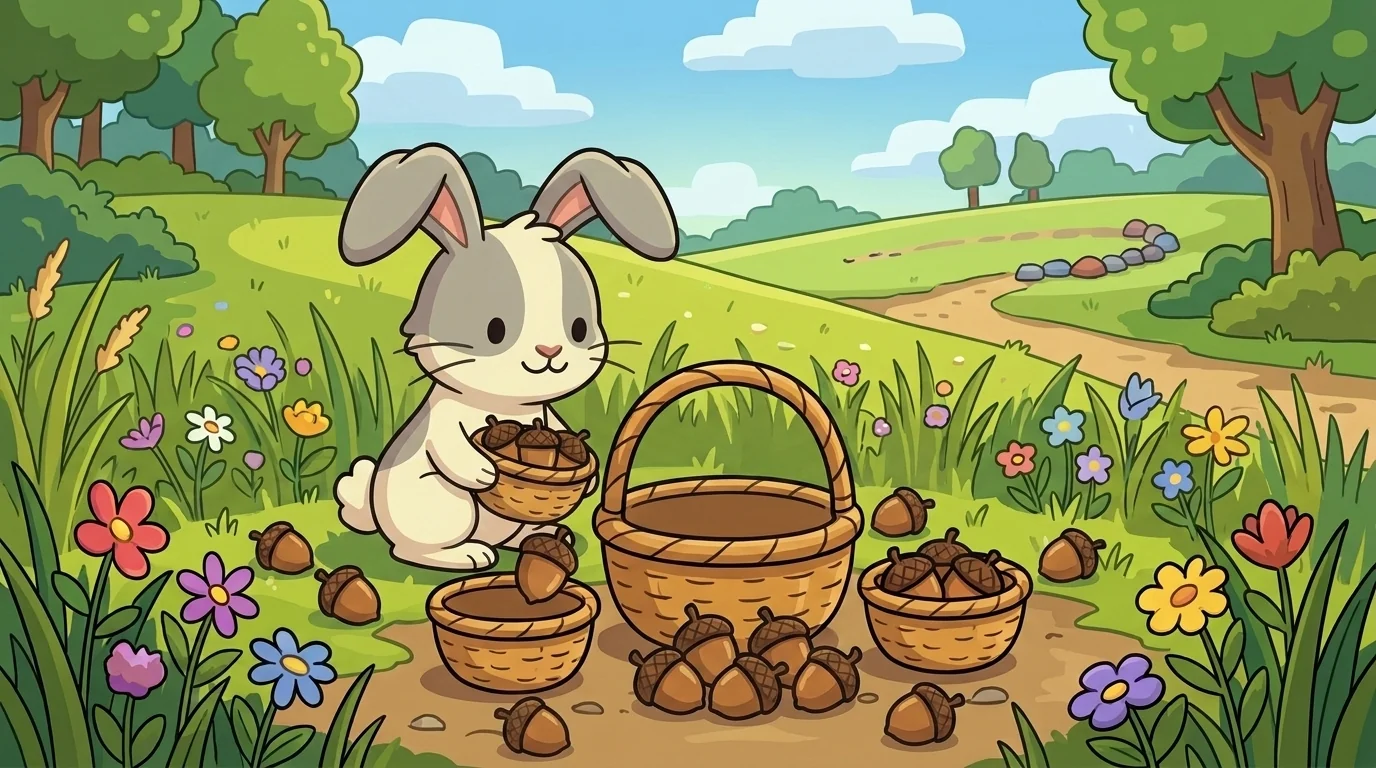
"Two parts make the whole," Pippa says, and her long ears give a happy flop. That is Pippa's whole gentle teaching. A whole number can come apart into two parts, and those two parts always join back into the same whole.
5 can be 2 and 3. Or 1 and 4. Or 5 and 0. Different parts, same whole — always 5. And it works backward, too: if you know the two parts, you know the whole; if you know the whole and one part, you can find the missing part. Pippa loves how the parts and the whole are all one little family — that's why she calls them a fact family.
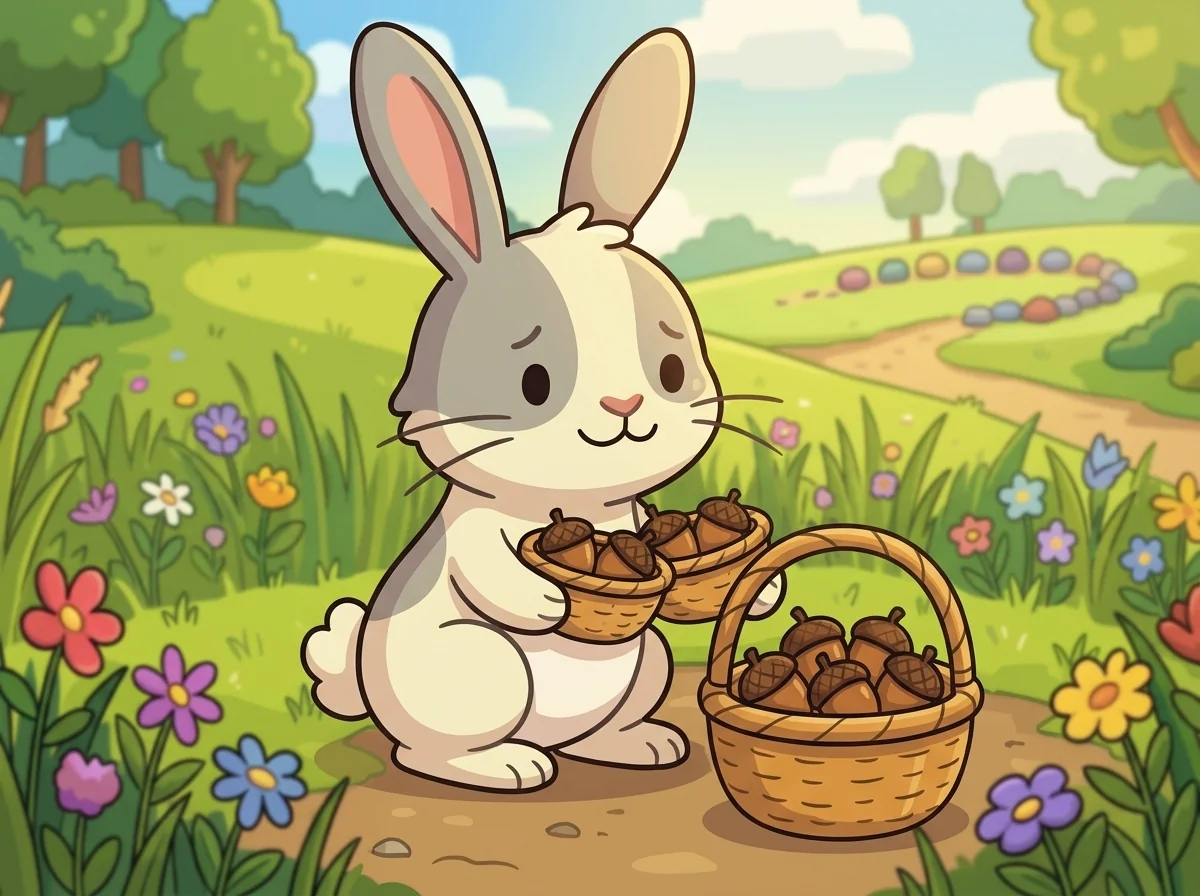
Sometimes a friend splits 5 into 2 and 2 and frowns, because it doesn't join back to 5. Pippa never says wrong. Pippa never says try harder. She just twitches her whiskers kindly and says, "Let's join them and check. Two parts make the whole."
And they join the baskets and count — and if it isn't the whole yet, they gently move one acorn until it is. In Pippa's garden, a mismatched split is never a mistake. It is just two parts that need a little nudge to become a family.
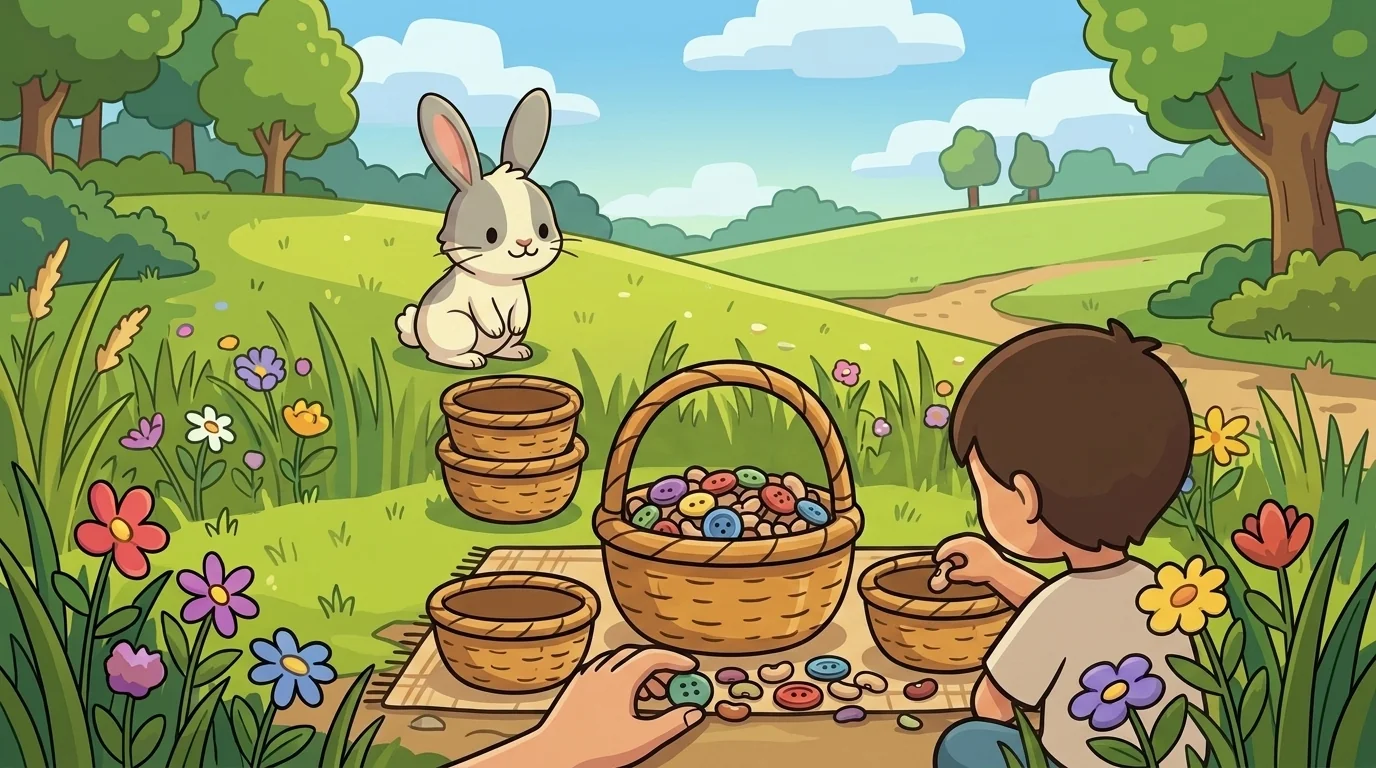
A grown-up can split and join too! Pippa loves it when a big person and a small person share a little pile of buttons or beans. The grown-up can hold the whole; the child can split it into two parts; and together they join it back and see the whole return. Math in Pippa's garden is for sharing gently, never for racing.
And Pippa works hand in hand with Sumi. When Sumi hops to add or take away, Pippa's parts make it easy — because if you know that 5 is 2 and 3, you already know 2 + 3 and 5 − 3 and 5 − 2, the whole little family at once. Friends helping friends, one bond at a time.
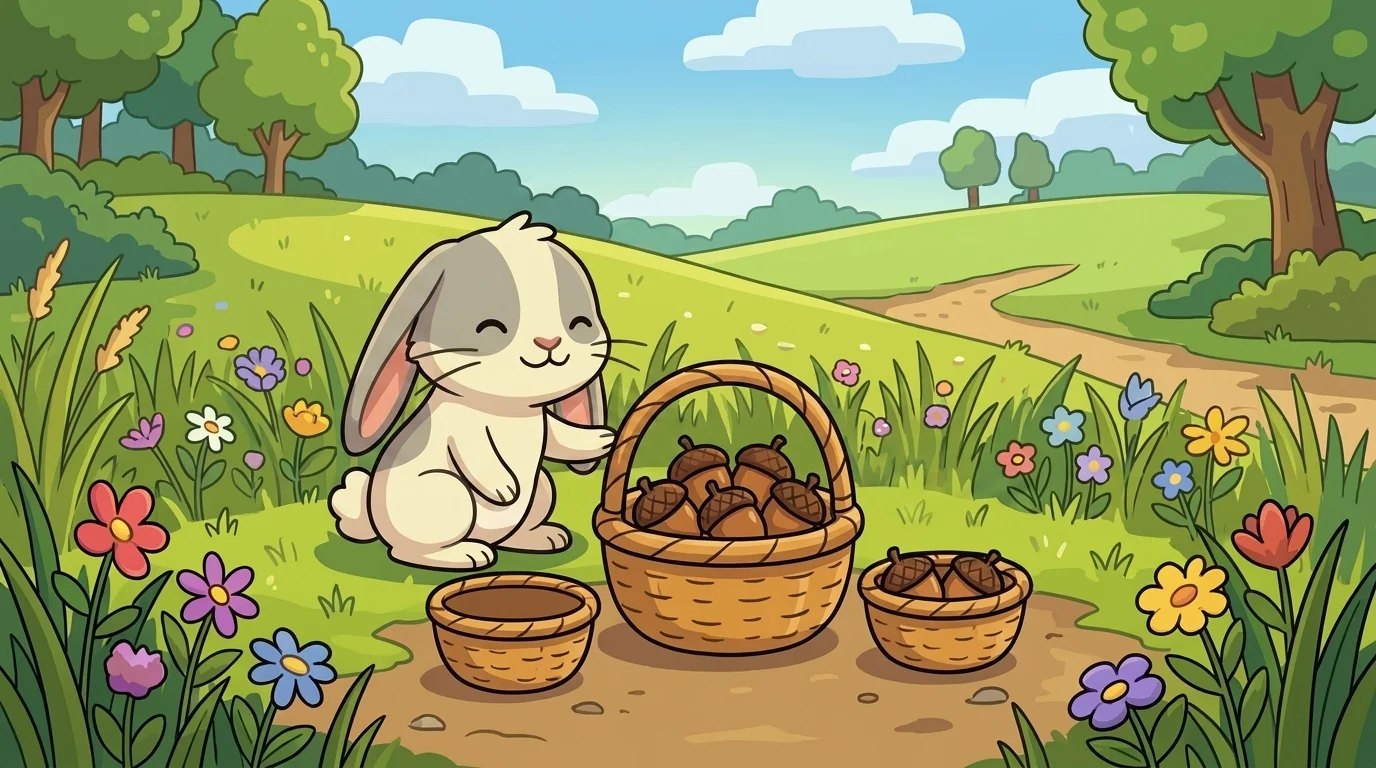
When the two parts finally join back into the whole — safe and sure, exactly the same as before — Pippa feels a soft, settled calm spread through her, like curling up somewhere warm. She loves that feeling: that things can come apart and still, always, come back together.
"Two parts make the whole," she says softly, ears resting cozy, proud and glad. And the child feels it too — that quiet, safe it always joins back. That's Pippa.
The SumPals ensemble
Pippa is part of SumPals's distributed-narrative cast. Each character embodies a different curricular primitive; together they teach the full subject.
-

Sumi
Add & subtract (counting on / back) — a warm acorn-orange squirrel kid who hops forward and back along a number line to add and take away; dotted jump-arcs mark each equal hop
-
Tenny
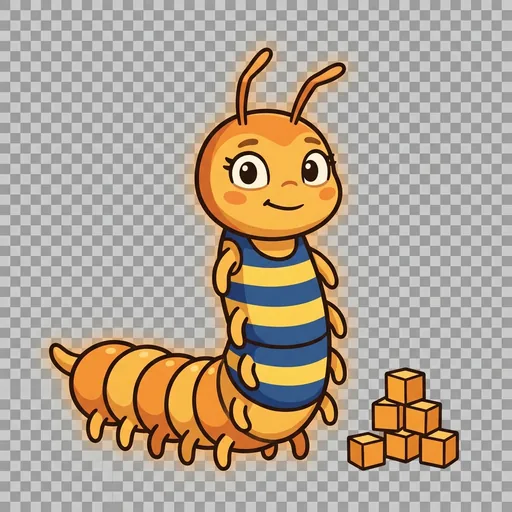
Place value (tens & ones) — a friendly many-segmented centipede kid whose ten body-segments bundle into a ten-rod and unbundle into ones; a tidy ten-rod and loose unit-cubes beside her
-

Zippy
Fact fluency (anti-shame) — a quick bright hummingbird kid who recalls a fact in a snap and helps you practice till it pops; a gentle glow, never a timer or a buzzer