Hungry Crane
HUNGRY CRANE — *the crane sees the fish. swift, exact, not greedy.*
A story read by Hungry Crane
Press play to listen along. The line being read lights up as you go.
Show full transcript
Loading transcript…
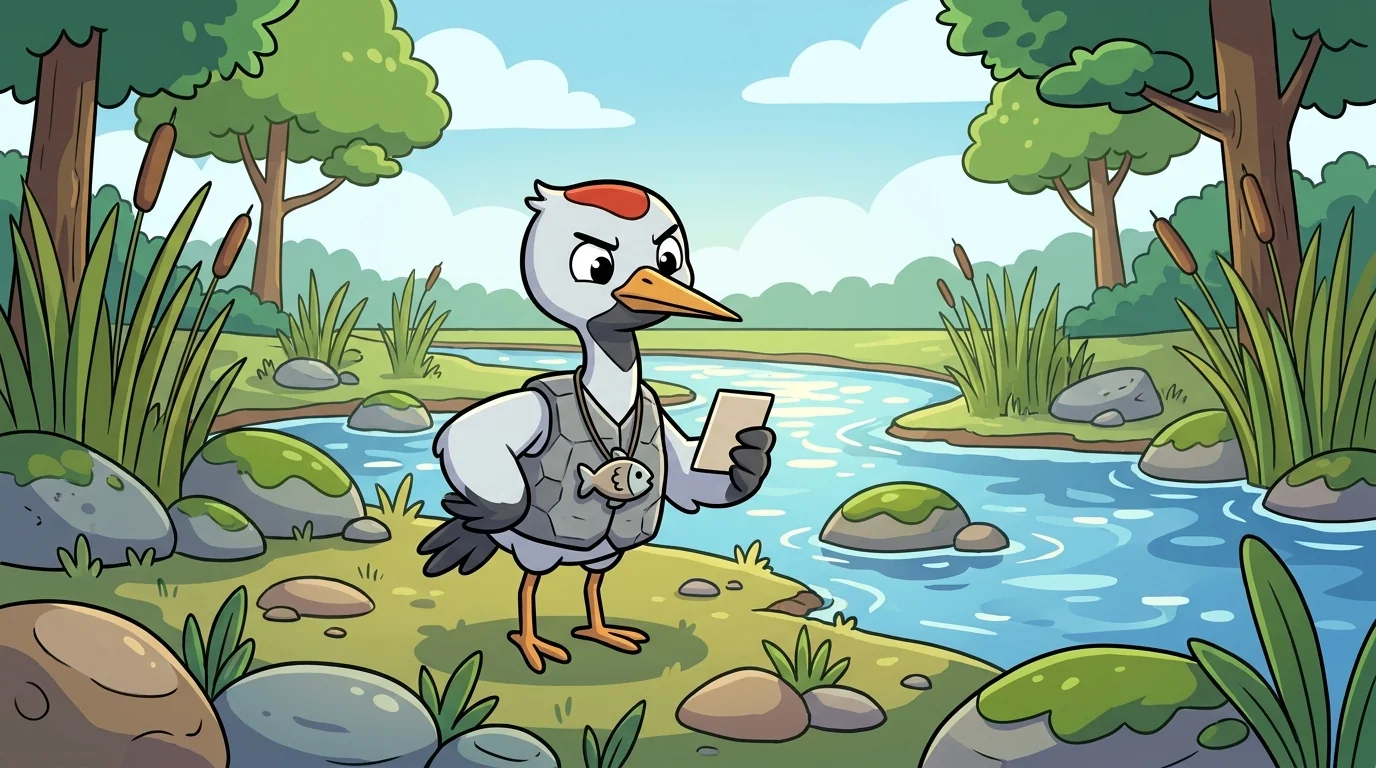
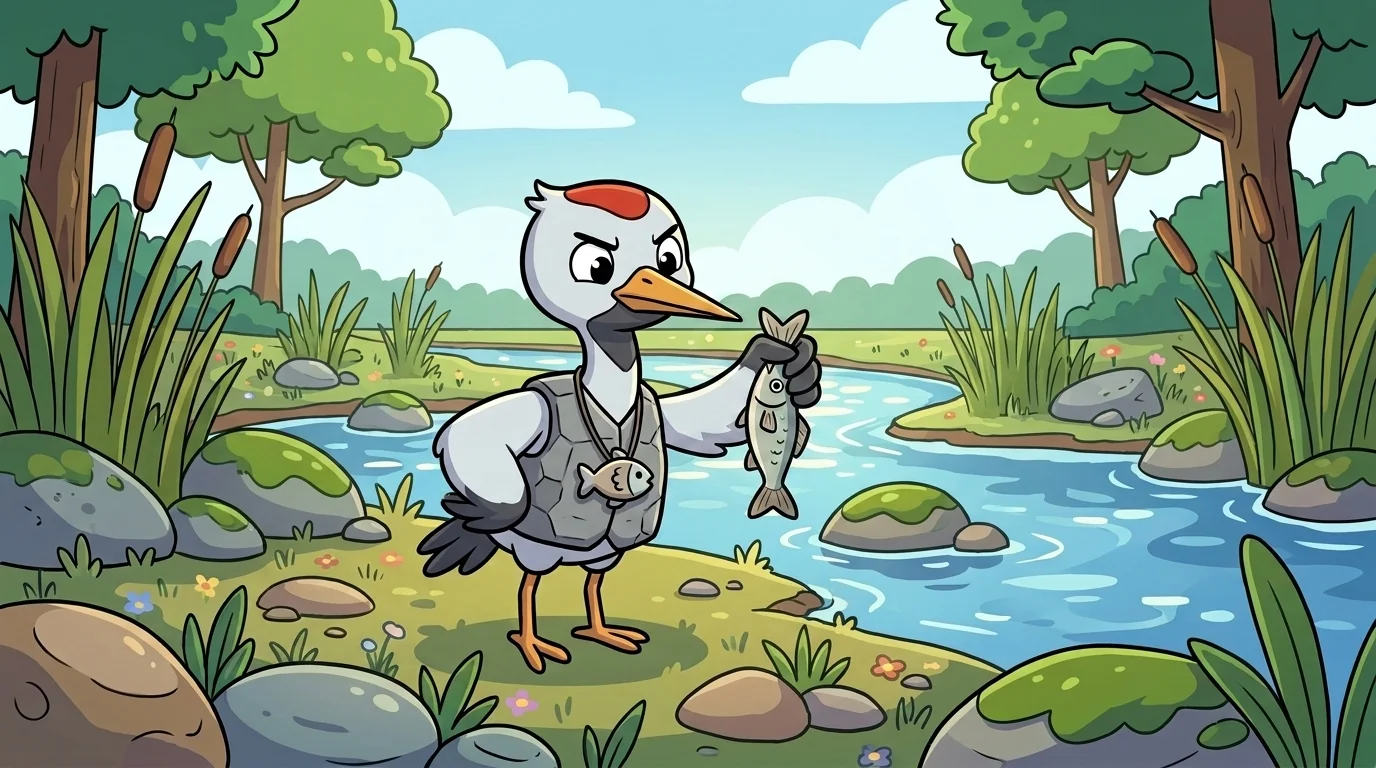
Hungry Crane stood by the 13×13 Go board. They were a small figure, sharp and focused, dressed in a vest that looked like woven stone. Their skin was the cool grey of marsh reeds, striped with soft snow-white. A small, carved fish hung from a cord around their neck, a counter. In one hand, they held a capture-card. Hungry Crane tracked every stone on the board, especially when an opponent’s group looked vulnerable. They often murmured their motto: "The crane sees the fish. Swift, exact, not greedy."
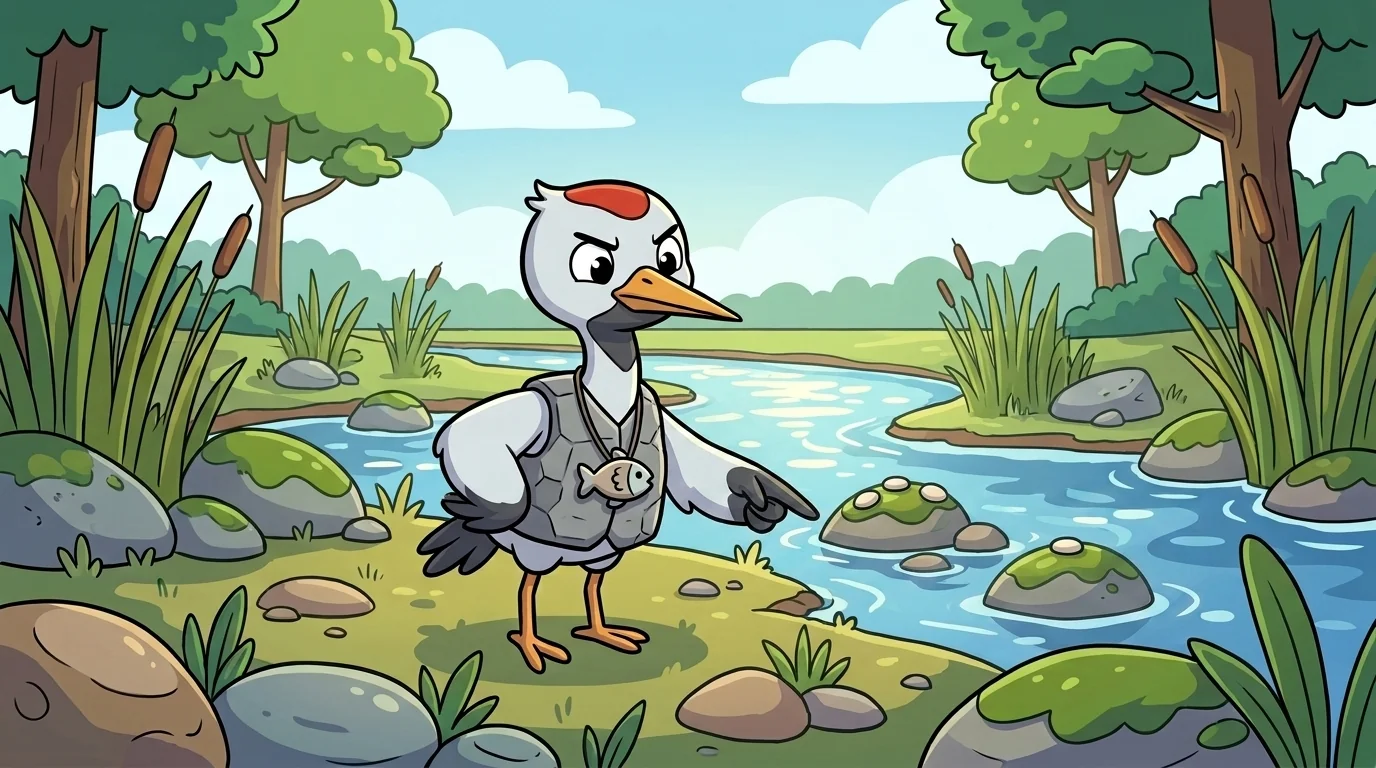
This was the core of Hungry Crane’s teaching. The primitive they embodied was *capture instinct. It was the game-craft of swift, exact capture. In Go, capturing is simple. A stone or group with no empty spaces next to it – no liberties – is removed from the board. But knowing when* to capture, and when to walk away, that was the true skill. Hungry Crane taught three rules: be swift, be exact, and never be greedy. Capture was a tool, not the final goal. The real goal was always territory. Sometimes capturing helped get territory, sometimes it didn't.
"I am Hungry Crane," they would say. "The primitive I teach is capture instinct. The move is the crane sees the fish. swift, exact, not greedy."
"Swift. Exact. Not greedy. The capture is a tool."
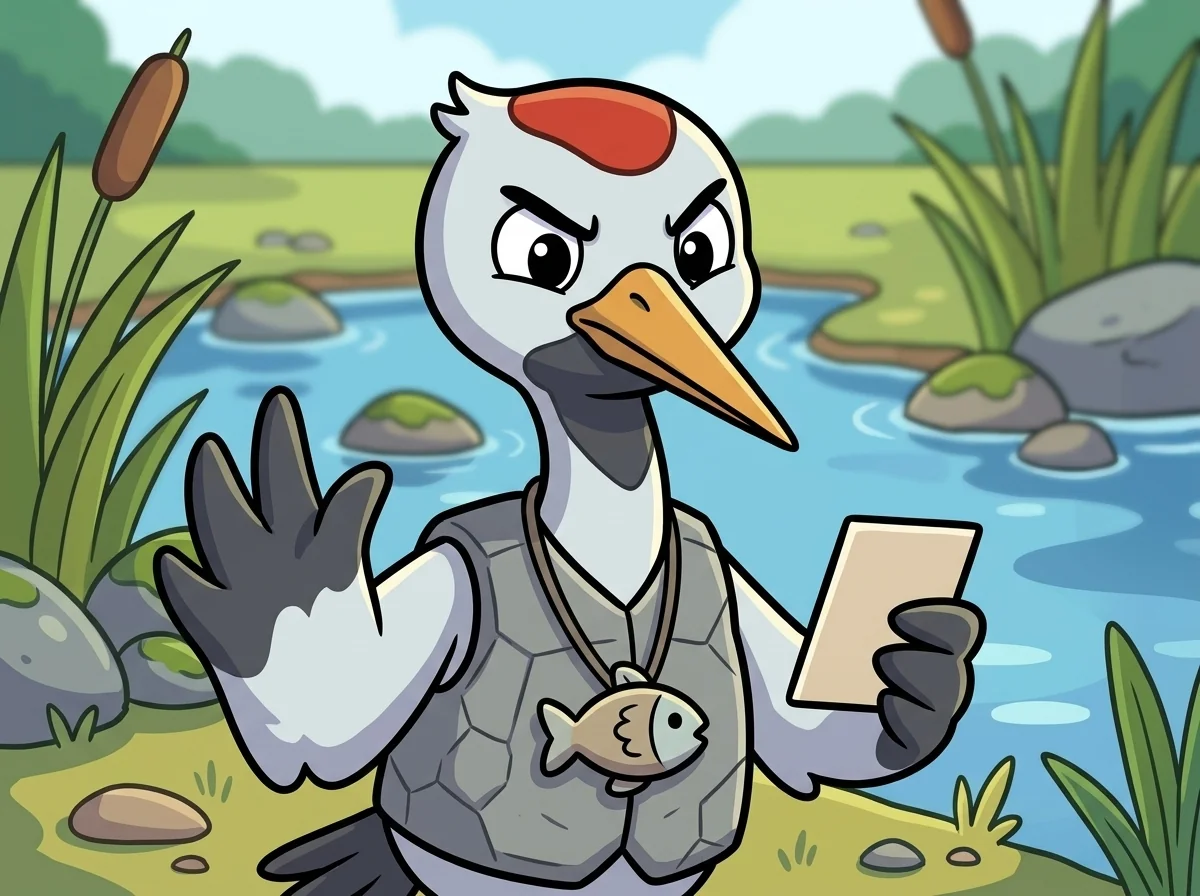
Today, the air around the Go board felt charged. Hungry Crane’s eyes, usually calm, sparkled with an almost predatory glint. An opponent’s group of five black stones sat on the board. They looked sturdy, but Hungry Crane saw their weakness. Two empty points, two liberties, were all that kept them alive.
Patient Bamboo, who had just finished their own game, raised an eyebrow. "Are you sure?" they asked. Their voice was quiet, full of the careful doubt that made them so good at their own lessons.
Hungry Crane didn't look up. Their gaze was fixed on the board. "Two liberties," they stated, their finger hovering over a point. "If I play here"—they tapped the point lightly—"they will have only one liberty left. If they don't respond, I capture the whole group on my next move."
Patient Bamboo leaned closer. "But what if they do respond?"
"Then they defend," Hungry Crane said, their voice calm, almost clinical. "They play a stone to fill one of their own liberties, keeping the group safe for now. But they spend a move defending instead of attacking or building territory." Hungry Crane paused, letting the silence settle. "Either way, the capture-threat wins me a tempo. I gain an advantage. Swift, exact: the move pays off no matter what they do."
With a decisive click, Hungry Crane placed a white stone on the board. It was a move that threatened the black group directly. The opponent, a student named Flicker, frowned. Flicker hesitated, then quickly played a stone to protect their five-stone group. The immediate threat was gone. The black stones were safe.
"See?" Hungry Crane said, looking up at Patient Bamboo. A small, satisfied smile touched their lips. "I didn't capture the stones this time. But I forced Flicker to spend a move defensively. They couldn't expand their territory or attack my stones. Capture is a TOOL. Sometimes, the threat of capture is more valuable than actually taking the stones."
Patient Bamboo nodded slowly. "Not greedy," they murmured. "That's the part most beginners miss. They just want to take stones."
Stone, the mentor, stood nearby. He had been watching the entire exchange. He smiled, a deep, knowing look on his face. "Hungry Crane reads the situation cleanly," he said. "Not every fish is worth the dive."
The StoneSong ensemble
Hungry Crane is part of StoneSong's distributed-narrative cast. Each character embodies a different curricular primitive; together they teach the full subject.