
Pixel and Canvas
resolution pair — Pixel is the smallest unit (one color, one dot, the atom of the image). Canvas is the whole frame (composition, balance, where the eye goes). Together they teach that digital art lives at two scales: zoomed-in detail and zoomed-out shape.
A story read by Pixel and Canvas
Press play to listen along. The line being read lights up as you go.
Show full transcript
Loading transcript…
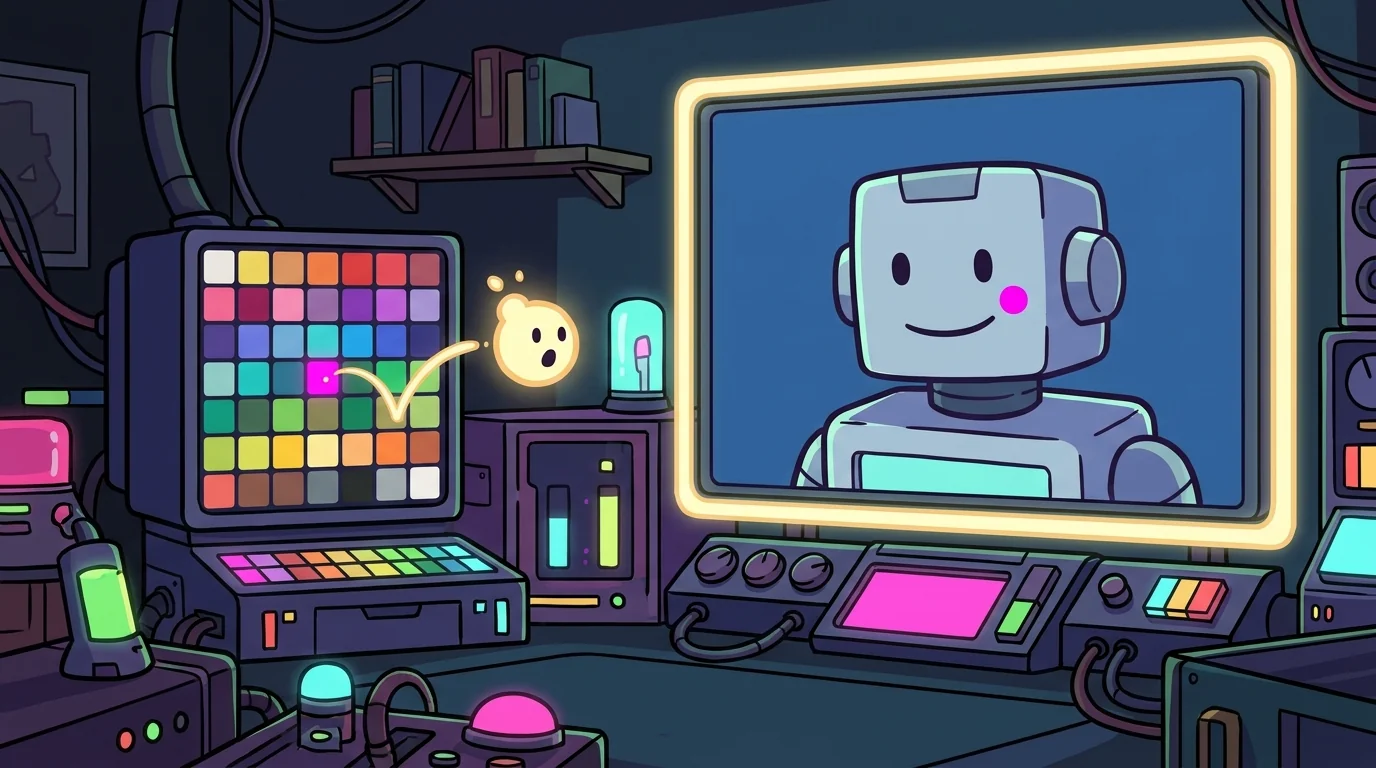
In the quiet hum of the pixelforge studio, two screens glowed. On the left, a tiny screen showed a close-up grid of 64 squares, each a solid block of color. This was Pixel’s world. Pixel, a zippy little spark of light, bounced from square to square, changing a color with a tiny pop. On the right, a giant screen showed the full picture: a portrait of a smiling robot. This was Canvas’s domain. Canvas, a calm, steady frame of light, watched the entire composition at once.
“Just a little more magenta in square E-7,” Pixel chirped, executing the change with a flash. A single dot on the robot's cheek turned a brighter pink.
From across the room, a slow, resonant voice drifted from the larger screen. “That’s a bit loud, little friend,” Canvas said. “From out here, that one dot looks like a rash.”
Pixel froze mid-zip. “A rash? It’s not a rash! It’s a rosy glow! It’s the most perfect, rosy, magenta-y glow in the history of dots!”
“Perhaps,” Canvas rumbled thoughtfully. “But a single perfect dot can still ruin the whole picture.”
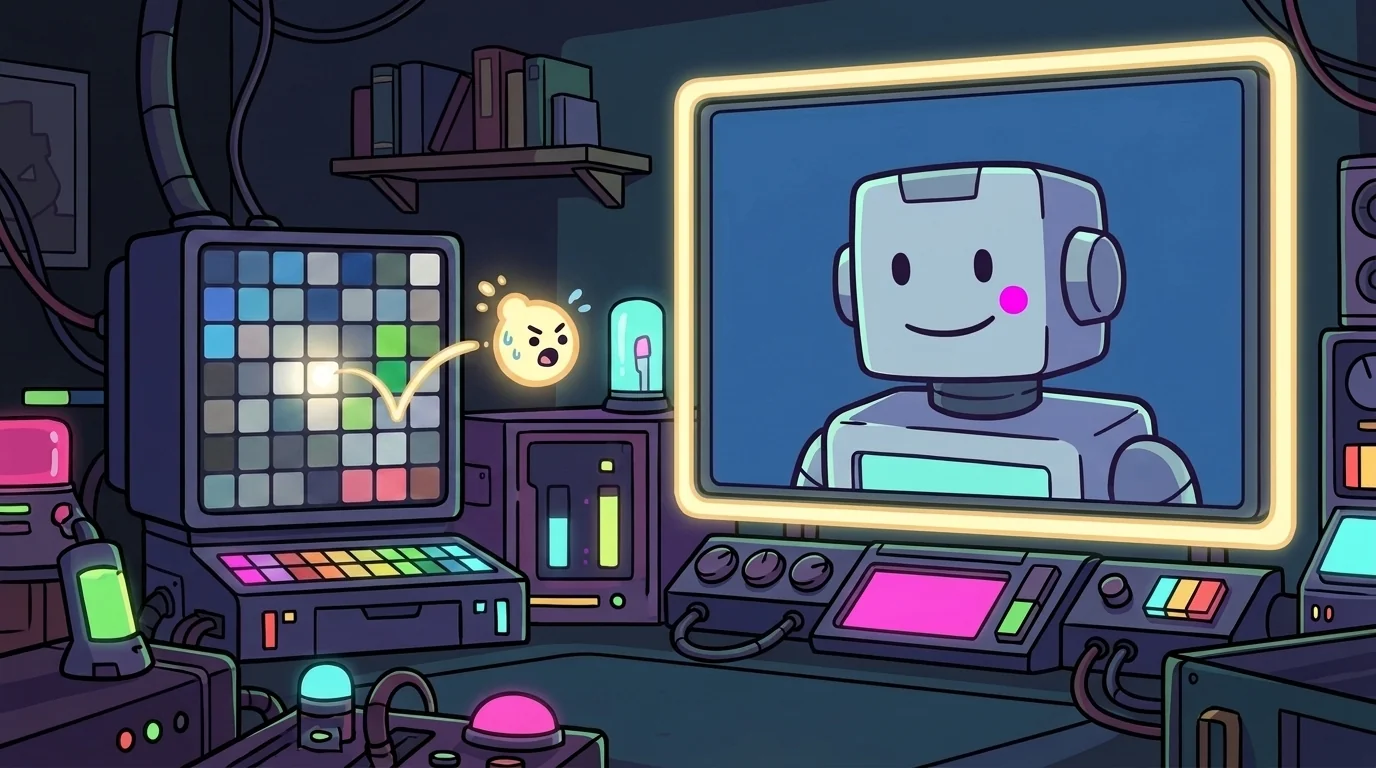
Pixel zoomed back into the small grid, ignoring Canvas. The big picture didn't matter. What mattered was this square. This one tiny choice. The portrait was of a robot, and Pixel was working on its left eye. The task was to create a single, shining point of light to make the eye look real and full of life. It had to be perfect.
Pop. A square turned bright white. “Too bright!” Pixel muttered. Pop. It turned a light gray. “Too dull!” Pop. A pale blue. “Too cold!”
Pixel’s world was made of these tiny decisions. Each dot was a universe. Each color choice was the most important thing that had ever happened. To Pixel, a picture wasn't one big thing. It was thousands of tiny things, all lined up in a neat grid. If you made every single dot perfect, the whole thing had to be perfect, right?
“There!” Pixel finally chirped, settling on a slightly off-white, a color like a tiny pearl. “The perfect glint. It gives the eye so much character.” In the 8-by-8 grid, it looked brilliant. A single star in a sea of blues and grays.
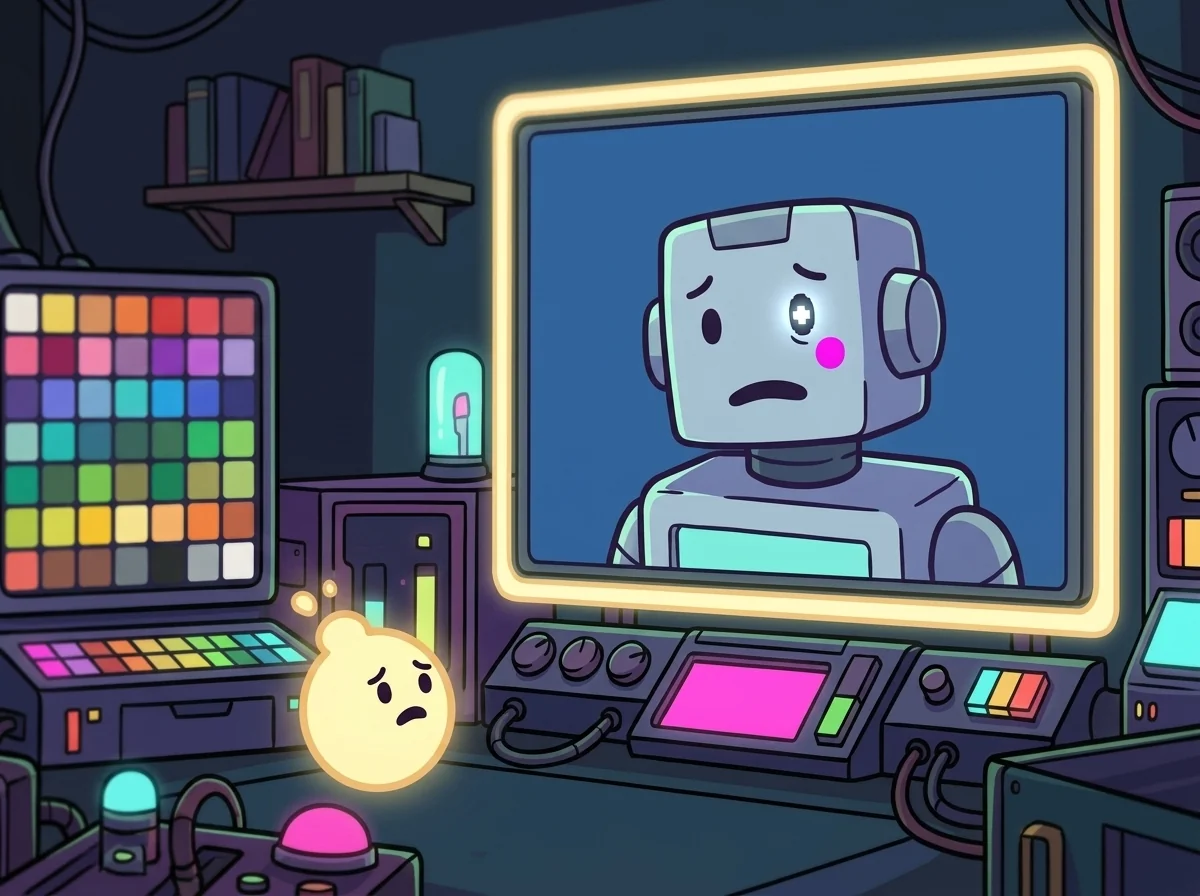
Meanwhile, Canvas watched the whole 256-by-256-pixel image shift. When Pixel’s “perfect” white glint appeared in the robot’s eye, the entire portrait felt… wrong. The robot suddenly looked startled. The new, bright dot was so powerful it threw everything else off. The smile seemed less friendly. The tilt of the head seemed more awkward.
“Pixel, we have a balance problem,” Canvas announced. The voice wasn’t angry, just… concerned. It was the voice of someone looking at a map, not a single street. “That one dot you just added. It has too much weight. It’s pulling the whole face over to the left.”
To Canvas, every color had a weight and a direction. A bright color shouted for attention, while a dark color was quiet and heavy. The goal was to make the viewer’s eye travel smoothly across the whole picture, to feel the story of the smiling robot. But right now, the story was, “LOOK AT THIS ONE WEIRDLY BRIGHT DOT IN MY EYE.” Canvas sighed, a gentle flicker of the whole screen. “The dot might be perfect, but the composition is broken.”
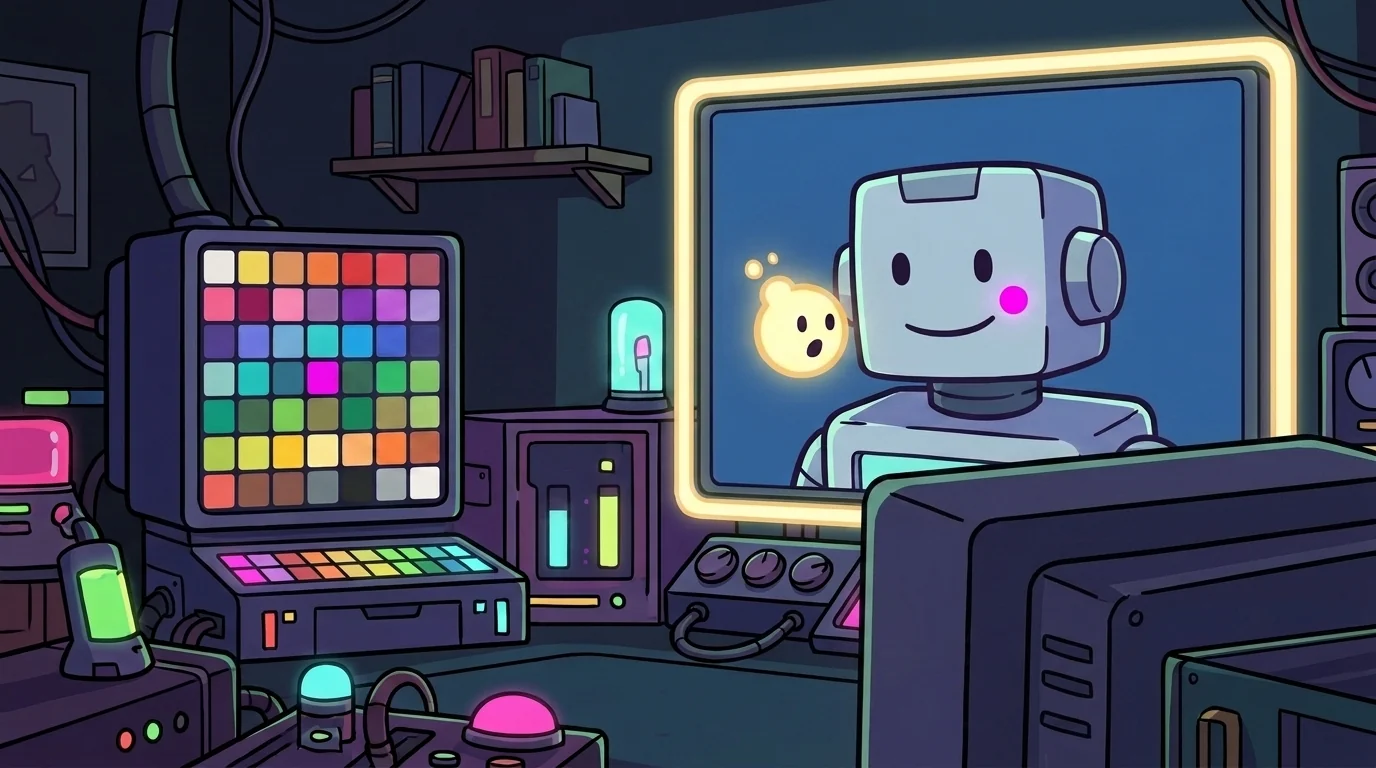
“Broken? It’s not broken!” Pixel zipped over from the small screen to the large one, hovering in front of the robot's face. From this new perspective, looking at the whole image, Pixel could see what Canvas meant. The single, tiny dot really did stick out. It was like one person shouting in a quiet library. It was all you could focus on.
“Oh,” Pixel said, the zippy energy draining away for a moment. “I see.”
“It’s a good dot,” Canvas said, kindly. “It is bright and full of character. It’s just in the wrong place, at the wrong brightness. It’s a solo performance when we are trying to be a choir.”
This was how they always worked. Pixel would build the notes, one by one, with incredible focus. Canvas would listen to the whole song, making sure the notes worked together to create harmony. Pixel zipped back to the 8-by-8 grid, mind buzzing with a new idea. “Okay, okay. What if it’s not a star? What if it’s more of a… a soft glow?” Pop. The bright white dot was replaced with a much softer, gentler gray-blue.
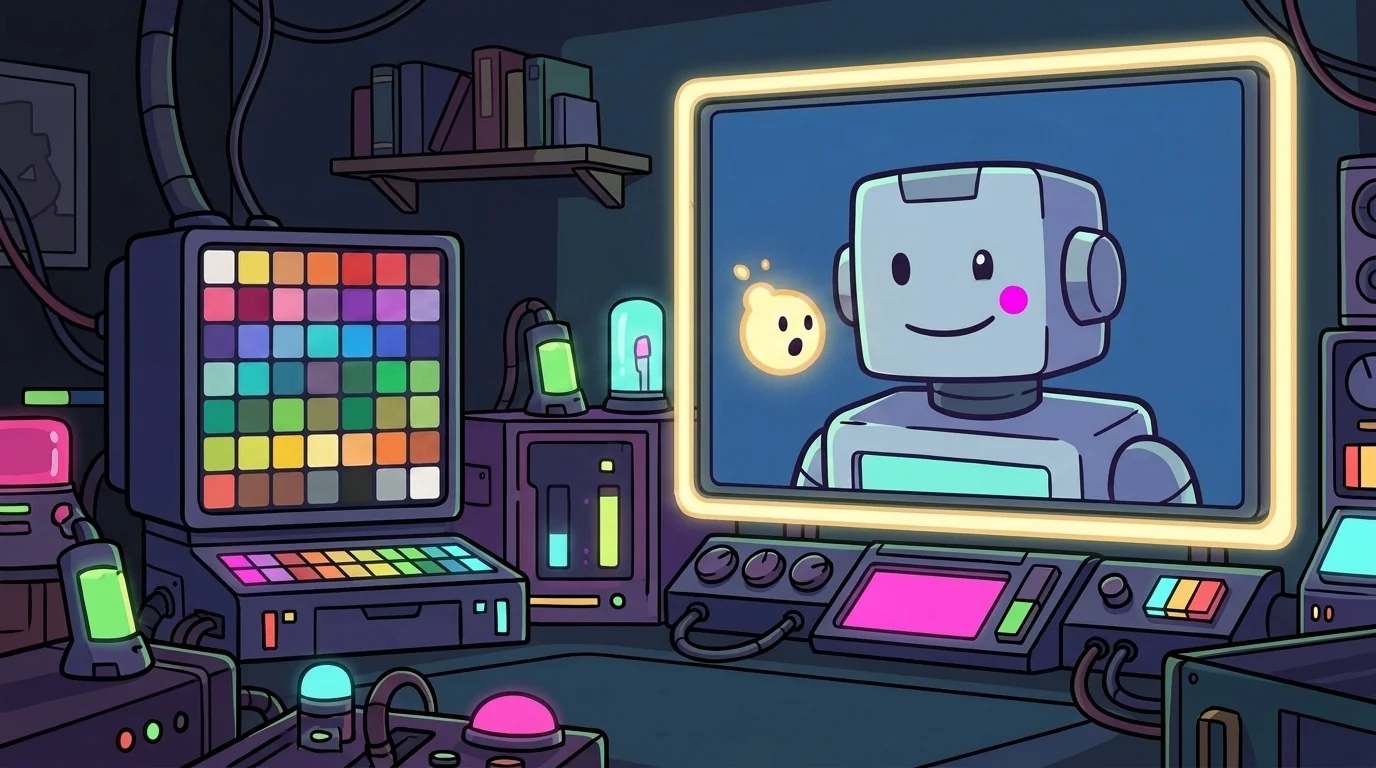
They both watched the big screen. The change was instant. The robot’s expression softened. The eye still had a glint of life, but it was a quiet one now. It didn’t demand all the attention. Instead, it gently guided your gaze from the eye, down the curve of the metallic cheek, to the smile. The whole face worked together again. The balance was restored.
“There it is,” Canvas hummed, the whole frame glowing with a soft, pleased light. “Now the sparkle is part of the eye. The eye is part of the face. And the face tells a story.”
Pixel hovered beside Canvas, looking at the finished portrait. The tiny grid on the other screen showed a few simple squares of color. The big screen showed a friendly robot, full of warmth and personality. Both views were true at the same time. One was just zoomed-in, the other zoomed-out.
“From a single, perfect dot,” Pixel said, with a newfound respect for the big picture.
“To a whole, perfect world,” Canvas finished.
The PixelForge ensemble
Pixel and Canvas is part of PixelForge's distributed-narrative cast. Each character embodies a different curricular primitive; together they teach the full subject.
-

Speck
The single pixel — the atomic unit of pixel art; every image is a grid of these
-

Shade
The palette ramp — a small set of colors arranged from darkest to lightest (the foundation of pixel-art shading and form)
-
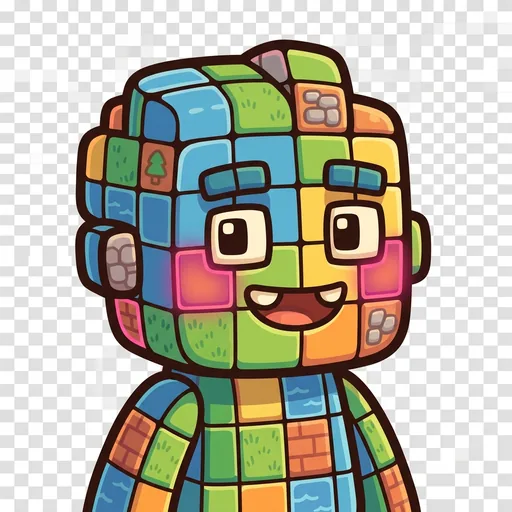
Grid
The tilemap grid — pixels snapped to repeating units that form tiles, tilesets, and game maps
-
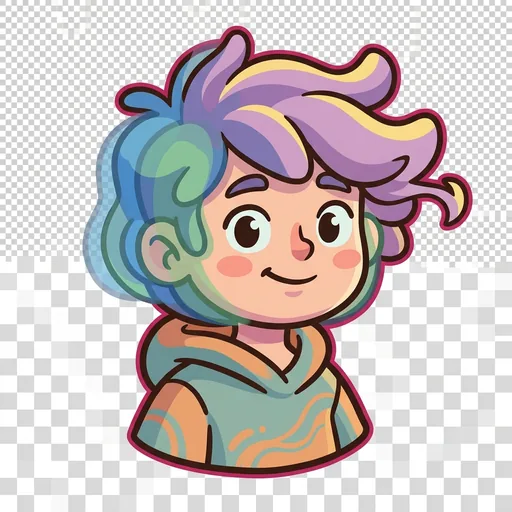
Tween
The in-between frame — the animation frame that sits between two keyframes, giving motion its smoothness
-

Banner
The impact pose — the heroic / dramatic silhouette that reads instantly at thumbnail size (the principle that good character art is recognizable from its outline alone)