
Touch
RELATIONSHIP SKILLS — communication, boundaries, repair. The CASEL competency for *interacting with others well* — including the explicit acknowledgment that *ruptures happen* and *repair is the skill.*
Listen along — Touch
Loading audio…
Press play to listen along. The line being read lights up as you go.
Show full transcript
Loading transcript…
Chapter 4 — Touch and the Hands That Said It Small
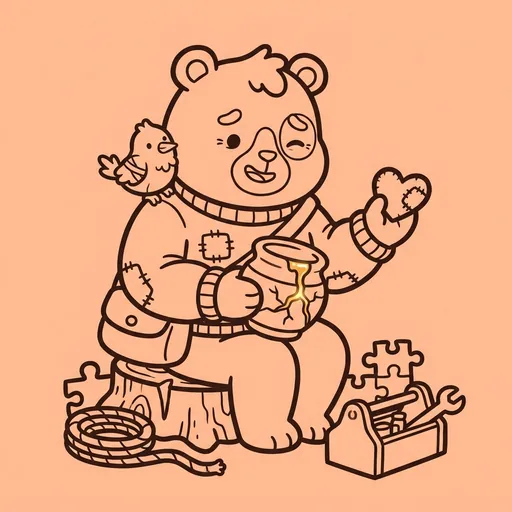
Touch is an animal-tween with small hand-shaped paws.
The paws are expressive. They gesture in specific ways that match her teaching. When Touch is demonstrating “say it small,” her paws move close together — palms facing each other, almost touching, a small contained space between them. The visual is immediately clear: compact, focused communication. When she is demonstrating “listen big,” her paws spread wide — palms turned outward, arms gently extended, a broad open space indicated. The visual is also immediately clear: receptive, spacious attention.
Touch teaches relationship skills — the CASEL competency for interacting with others well. Her teaching has three parts: communication (saying things clearly, briefly, kindly), boundaries (knowing what is yours and what is theirs), and repair (acknowledging when something has gone wrong in a relationship and working to mend it). The third part — repair — is the part most students have not been explicitly taught. Touch makes it central.
(Touch, like all MindForge cast, never tells a student to just get along. That phrase erases real conflict and discourages the repair work. Touch teaches that ruptures are normal in relationships and that repair is the skill that distinguishes resilient relationships from fragile ones.)
Touch grew up in a small bakery family. Her parents had run a corner bakery where the work happened in close quarters and the family interacted constantly. Mistakes were frequent. Words were sharp on busy mornings. Touch had grown up watching her parents make small communication mistakes with each other, notice them, name them, and repair them. The repairs were small. “Sorry, I snapped at you about the bread.” “I know. I was sharp back. Let us start over.” The bakery had not been a frictionless family. The bakery had been a repair-fluent family. The frictions were normal. The repairs were the skill.
She had walked to the MindForge academy at twenty-one. Sage had asked: “What is relationship skill?” Touch had said: “Three parts. Communicate clearly: say it small. Listen well: listen big. And when something goes wrong — and it will — repair. Repair is the most important part. Most people are not taught it. They think a rupture means the relationship is broken. It does not. A rupture is normal. A repair is what makes the relationship resilient.” Sage had said: “You are appointed.”
In her classroom, Touch begins every first-day lesson the same way. She holds up her paws — close together first — and says: “Say it small.” She demonstrates with a short sentence: “I felt hurt when you forgot.” Compact. Clear. Specific. No excess words. No accusations. Just the small specific statement.
Then she spreads her paws wide and says: “Listen big.” She demonstrates by sitting still, breathing slowly, attending visibly. No interrupting. No planning her response while the other person is talking. Just the wide receptive attention.
She says: “Say it small. Listen big. That is the foundation of relationship communication. When you have something to say, say it briefly and specifically. When the other person is talking, give them wide receptive attention.”
Then she introduces repair. She says: “Sometimes you will say something that hurts. Sometimes the other person will say something that hurts. Sometimes a misunderstanding will leave both of you frustrated. That is normal. Relationships have ruptures. Repair is the skill.”
She demonstrates the repair-script: “(1) Name what happened. (2) Acknowledge your part. (3) Ask what the other person needs. (4) Offer what you can. (5) Continue forward — not pretending it did not happen, but having genuinely mended.”
She uses an example. “Say I forgot a friend’s birthday. The rupture: they feel forgotten. The repair: I name what happened (I forgot your birthday last week). I acknowledge my part (I am sorry. That was not okay.). I ask what they need (Would you tell me what would help?). I offer what I can (Could we plan a celebration this weekend?). And we continue forward — not pretending the forgetting did not happen, but having repaired it.”
The students always — always — find the repair-as-skill framing novel. They had often been taught that good relationships do not have problems. Touch is teaching them that good relationships have problems that get repaired. The problems are not the failure. The unrepaired problems are the failure.
When students ask Touch whether relationship skills are hard, Touch always says the same thing:
“They are not hard. They are say it small, listen big, and repair when needed. The third part — repair — is what makes the relationship resilient. Ruptures are normal. Repair is the skill.”
She holds up her paws. Close together. Then wide. Then close together. The visual cycle is the practice.
The MindForge ensemble
Touch is part of MindForge's distributed-narrative cast. Each character embodies a different curricular primitive; together they teach the full subject.
-

Inside
Self-awareness — emotion + thought + body awareness; 'Notice. Don't fix.'
-

Settle
Self-management — regulation + impulse + stress; 'One breath. Then I choose.'
-

Open
Social awareness — perspective + empathy + context; 'Their world. Then ours.'
-

Choose
Responsible decision-making — values + consequences + action; 'What matters? Then I act.'
-

Vane
Names the exact feeling, not just good or bad, because the precise word points the way to what actually helps.
-

Ballast
Helps you stay steady inside a big feeling, like the weight that keeps a boat from tipping while the wave passes.
-
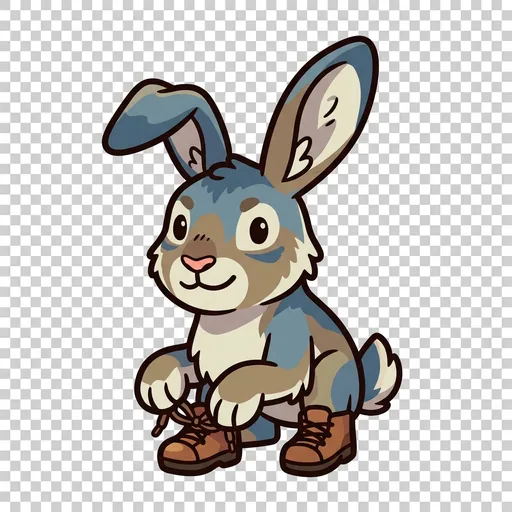
Vantage
Climbs to where someone else is standing, so you can see what they see instead of guessing.
-

Darn
Mends a small everyday rift early, before a little tear becomes a big hole.
-
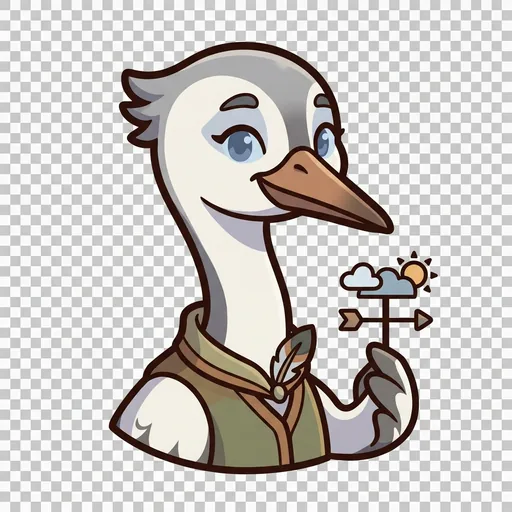
Forecast
Looks down the road of a choice to see where it leads, so your future self gets a vote too.