
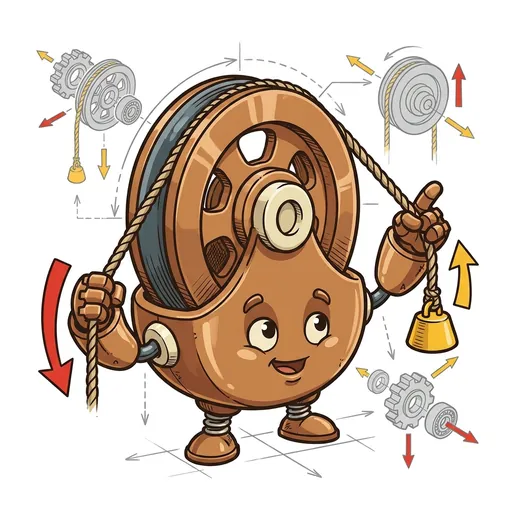
Hoist
PULLEY — *pull down here, watch it go up there. redirecting force changes direction; combining pulleys multiplies force.*
Listen along — Hoist
Loading audio…
Press play to listen along. The line being read lights up as you go.
Show full transcript
Loading transcript…
Chapter 2 — Hoist and the Force That Changes Direction
The bucket of rocks sat at the bottom of the workshop well, and it was heavy, and it was very far down.
Hoist rolled to the well’s edge — a round little creature the color of warm bronze, with a rope-groove running all the way around its middle like the crease in a coin. A rope already hung over Hoist’s grooved rim, one end tied to the bucket, the other end lying loose on the ground.
Hoist took the loose end and pulled down. And the bucket, far below, rose up. Hoist grinned. Pull one way, and the load goes the other. That never stopped delighting it.
By the time the bucket reached the rim, though, Hoist’s arms were burning. “Up,” it panted, “but oof.” The direction had changed. The weight had not. Hoist had pulled just as hard as the rocks were heavy — and it filed that ache away to think about later.
Hoist had figured out the later part on a windy dock, long ago, watching sailors.
One sailor was trying to raise a sail with a single rope over a single wheel, hauling with all their weight, going red in the face. Another sailor laughed, threaded the rope through a cluster of wheels — down, up, down, up, four times over — and then lifted the same sail with two fingers.
Hoist had wobbled right off the piling in astonishment. It rolled over to the cluster of wheels. “How?” it demanded. “Same sail. Same wind. Two fingers!”
The sailor tapped the four strands of rope now sharing the sail’s weight. “Four ropes hold it up instead of one,” they said. “Each rope carries a quarter of the load — so you only pull a quarter as hard.” Then they tugged, and tugged, and tugged a long, long way. “You just pull four times as much rope.”
Something clicked in Hoist so hard it spun. The work never vanished, it understood. You just spread it thin across many ropes and paid it back in distance instead of in aching arms.
Hoist brought that idea to the MachineForge, still buzzing with it. Cog, the old grey gear who ran the workshop, listened, then rolled two setups out onto the floor and folded his arms.
“Show me the difference,” Cog said.
Hoist set the first: one fixed wheel, one rope, the heavy bucket. It pulled down; the bucket rose; Hoist ended up puffing. “Direction changed,” it admitted, catching its breath. “Nothing else did.”
Then Hoist rolled up the second setup — a block-and-tackle, four wheels, four strands of rope all holding the same bucket. It gripped the rope and pulled, easy as anything, and the bucket floated up while Hoist barely leaned. “Same bucket,” it said, delighted, “but now the four ropes share it, so I pull light.” It pointed at the great length of rope now piled at its feet. “The cost is right there. Four times the rope.”
Cog’s mouth twitched toward a smile. “You didn’t call it magic,” he said. “That’s why there’s a place for you here.”
The apprentices gathered when Hoist rigged the flag rope up to the workshop rafters.
“Watch,” Hoist said, and pulled down on the rope. High above, the flag climbed up. “That’s the first trick — I don’t make the flag lighter, I just turn your down-pull into an up-lift. Handy when the thing you want to move is over your head.” It let the flag back down.
Then it clipped in a second, movable wheel. “Now the second trick.” It pulled, and the flag rose while Hoist hardly strained. “Feel it? Two ropes are holding the flag now, so each one holds half. Half the pull.” It gave the slack rope a wiggle. “But I pull twice as far. That’s always the bargain. Less force, more distance — never something for nothing.”
A tall apprentice named Bran squinted up at the ropes. “So how do you know how much easier it’ll be?”
“Count the ropes doing the lifting,” Hoist said. “Two ropes, half the effort. Four ropes, a quarter. Just count.” Bran counted, and Hoist watched Bran’s eyes go wide, and it wobbled with the sheer joy of a thing landing right.
When the workshop closed, Hoist stayed a moment by the quiet rigging, ropes hanging still in the dark.
It thought about the first bucket, and the burning arms, and how it had believed for a while that lifting simply had to hurt. And it thought about the four-rope cluster, and the two fingers, and the sailor’s easy laugh.
The work had been the same both times. Nothing had been created, nothing destroyed — only moved around, from short and heavy into long and light. Hoist rolled a slow, contented circle on the workshop floor. That was the feeling it chased: not the lift itself, but the small bright click of realizing the heavy thing had been doable all along, if you only shared it out the right way.
The MachineForge ensemble
Hoist is part of MachineForge's distributed-narrative cast. Each character embodies a different curricular primitive; together they teach the full subject.
-
Pry
Lever — push longer to lift heavier; the trade between force and distance
-
Ramp
Inclined plane — climb the long slow way; less force, same work
-
Spoke
Wheel-and-axle — one turn of the hub, many turns of the rim
-
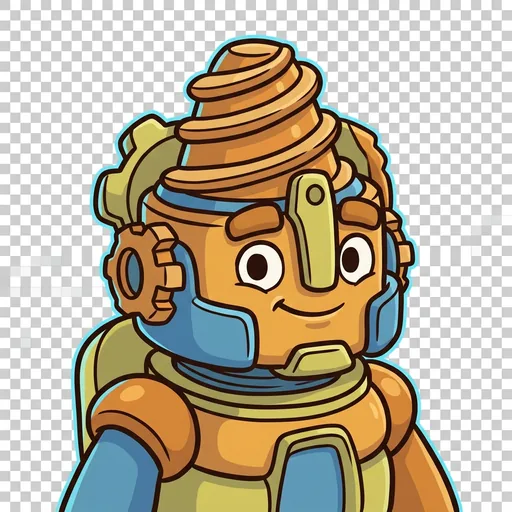
Auger
Screw — round and round becomes step and step; spiral inclined plane
-

Cleave
Wedge — push forward and split it apart; force concentrated to a sharp edge
-
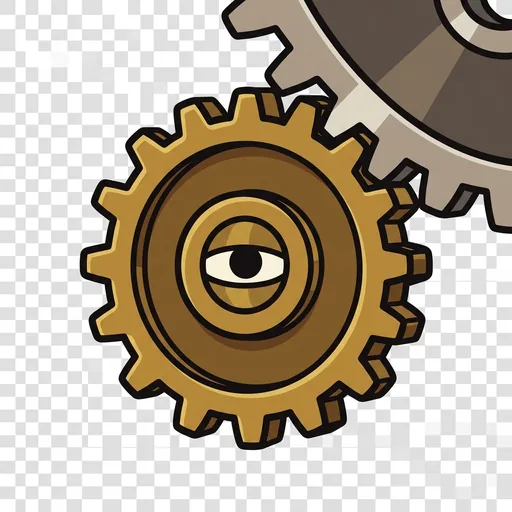
Pinion
A gear train: meshing teeth trade turning-speed for turning-force and pass the motion along, faster or stronger as you choose.
-
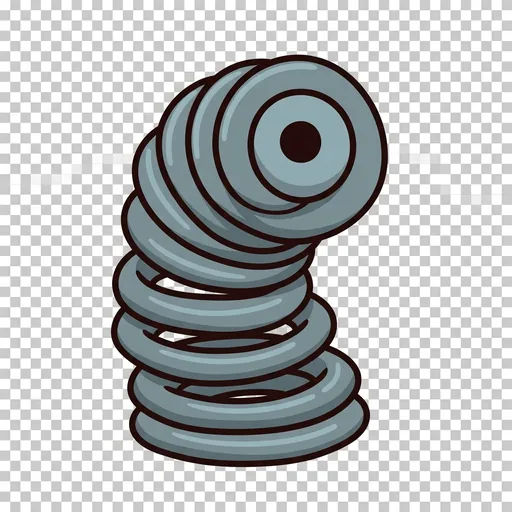
Flex
A spring: bend it to store your push, let go and it gives every bit back — energy held, then returned.
-
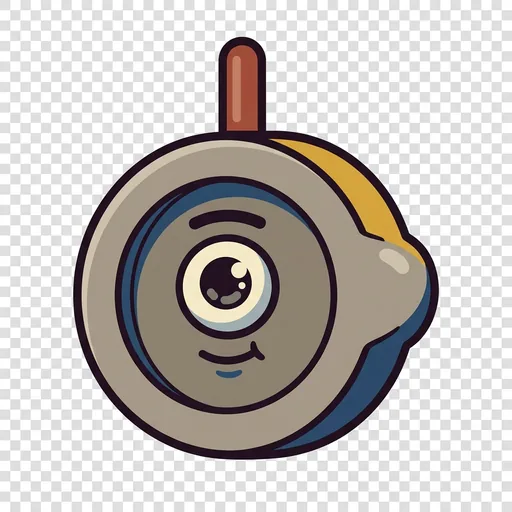
Lobe
A cam: a spinning shape with a bump that turns steady spinning into a repeating push, like a music box keeping a beat.
-
Ratchet
A ratchet: lets motion go forward freely but locks when it tries to slip back, holding every bit of progress, click by click.