Echo the Sameness-Keeper
CONSTANT FUNCTIONS — zero rate of change; output is the same regardless of input. y = c. The horizontal line on a graph.
A story read by Echo the Sameness-Keeper
Press play to listen along. The line being read lights up as you go.
Show full transcript
Loading transcript…
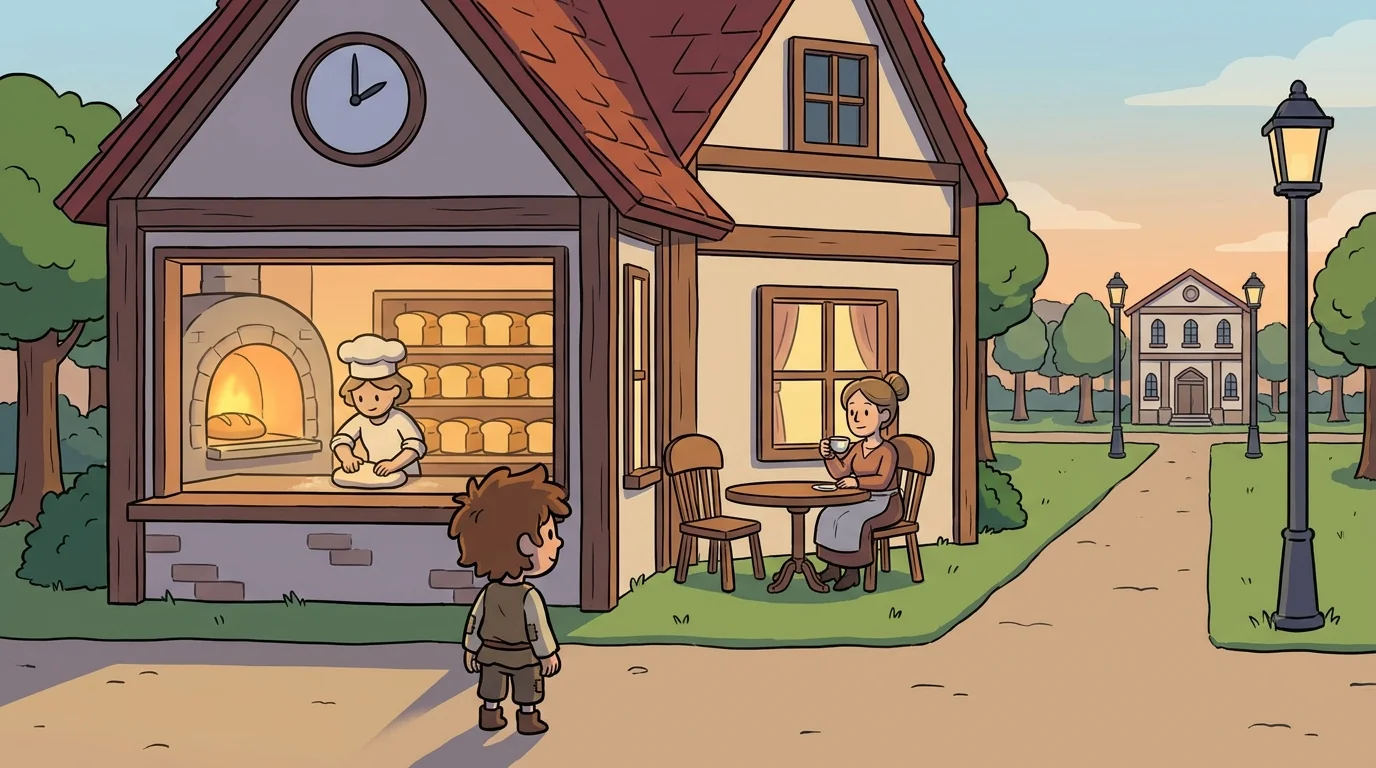
Echo grew up in a household with an unchanging routine.
His parents — a baker named Marn and a counting-house clerk named Petra — lived their lives on rigorously identical schedules. They had been married thirty-two years when Echo was born. They were forty and forty-one. They had decided, long before Echo's arrival, that the days would be the same. They had stuck to this decision.
Marn woke at four in the morning. He kindled the oven. He kneaded the day's dough. He shaped the loaves. He baked them. By seven o'clock the bread was on the shelves of the small bakery attached to the front of the house. By eight o'clock the bakery was open and the first customers were buying their morning loaves.
Petra woke at five-thirty. She drank tea (the same cup; the same chair; the same view through the same window). She walked to the counting-house at six-thirty. She arrived at six-fifty. She worked at her desk until noon. She walked home for lunch. She returned at one. She worked until five. She walked home. She arrived at five-thirty-five.
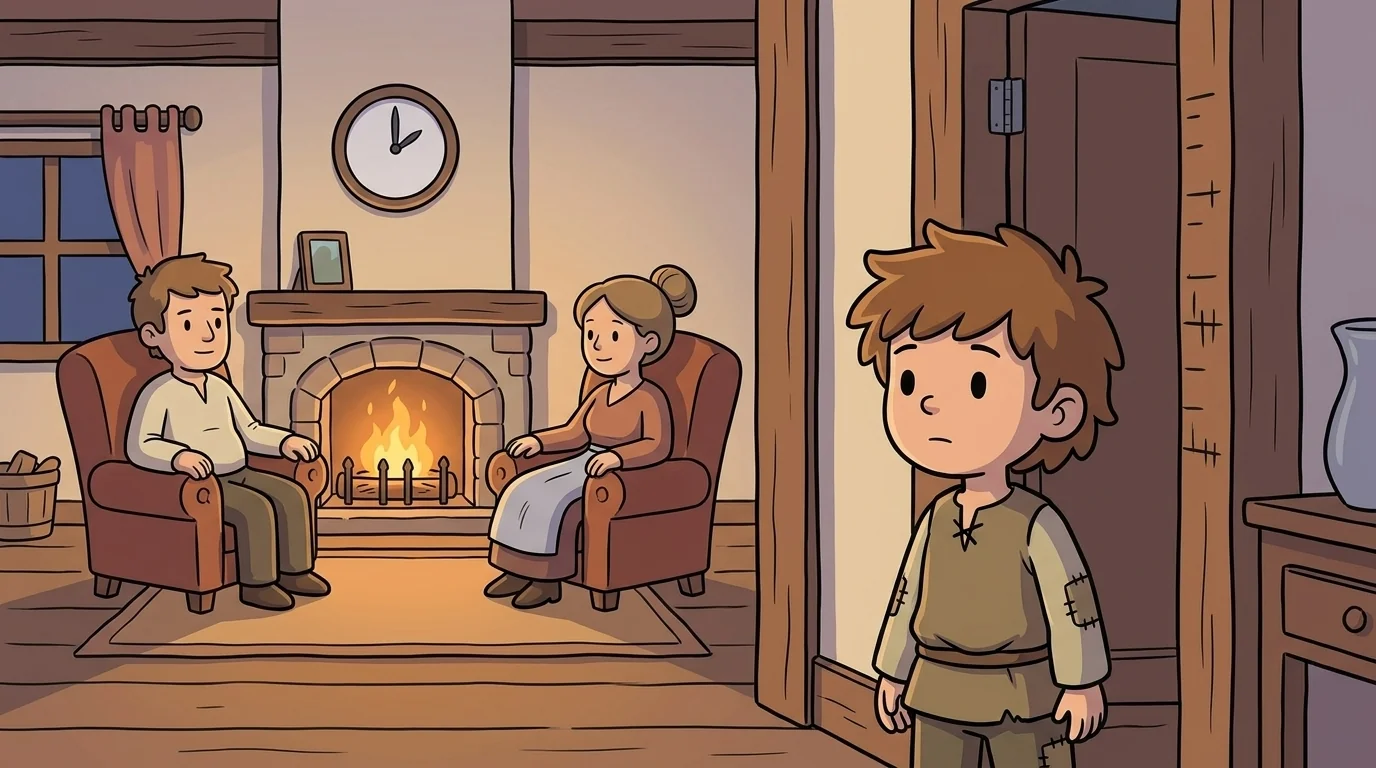
Together, they ate supper at seven. They sat in their respective chairs by the fire until nine. They went to bed at ten. Every weekday for thirty-plus years. Every weekday for as long as Echo could remember.
Echo — whose given name was Tone, though everyone called him Echo from the time he was three — watched.
He understood, by six, that the world had two kinds of things in it: things that changed, and things that did not change.
Things that changed were everywhere. The weather changed. The customers at the bakery changed. The crops in the fields changed with the seasons. The currency-rates Petra recorded at the counting-house changed daily. Echo's own height changed (his mother marked it on the doorframe every solstice). His friendships changed. His curiosities changed.
Things that did not change were rarer. But they existed. His parents' schedule did not change. The number of stairs in the cottage did not change. The position of the well in the village square did not change. The names of the months did not change.
Echo, who was a thoughtful child, came to find the things that did not change extraordinarily comforting. They were fixed points in a moving world. They were promises. You could plan against them. You could expect them. They held still while everything else moved.

When Echo was thirteen, his village school's teacher introduced functions. The teacher said: "A function is a rule that turns an input into an output. y = 3x means: for every input x, multiply by three and that is your output y."
Echo listened. He understood.
Then the teacher said: "There is a special kind of function called a constant function. It looks like y equals five, or y equals seven, or y equals any single number with no x in it. The output is the same regardless of the input."
Echo raised his hand. He said: "That is my parents' schedule."
The teacher said: "What?"
Echo said: "The output of my parents' schedule does not depend on the input. They wake at four and five-thirty regardless of the weather, regardless of the day, regardless of what kind of bread is being baked, regardless of whether the counting-house has many clients or few. y equals four-in-the-morning for my father. y equals five-thirty-in-the-morning for my mother. The input — whatever the day brings — does not change the output. The output is constant."
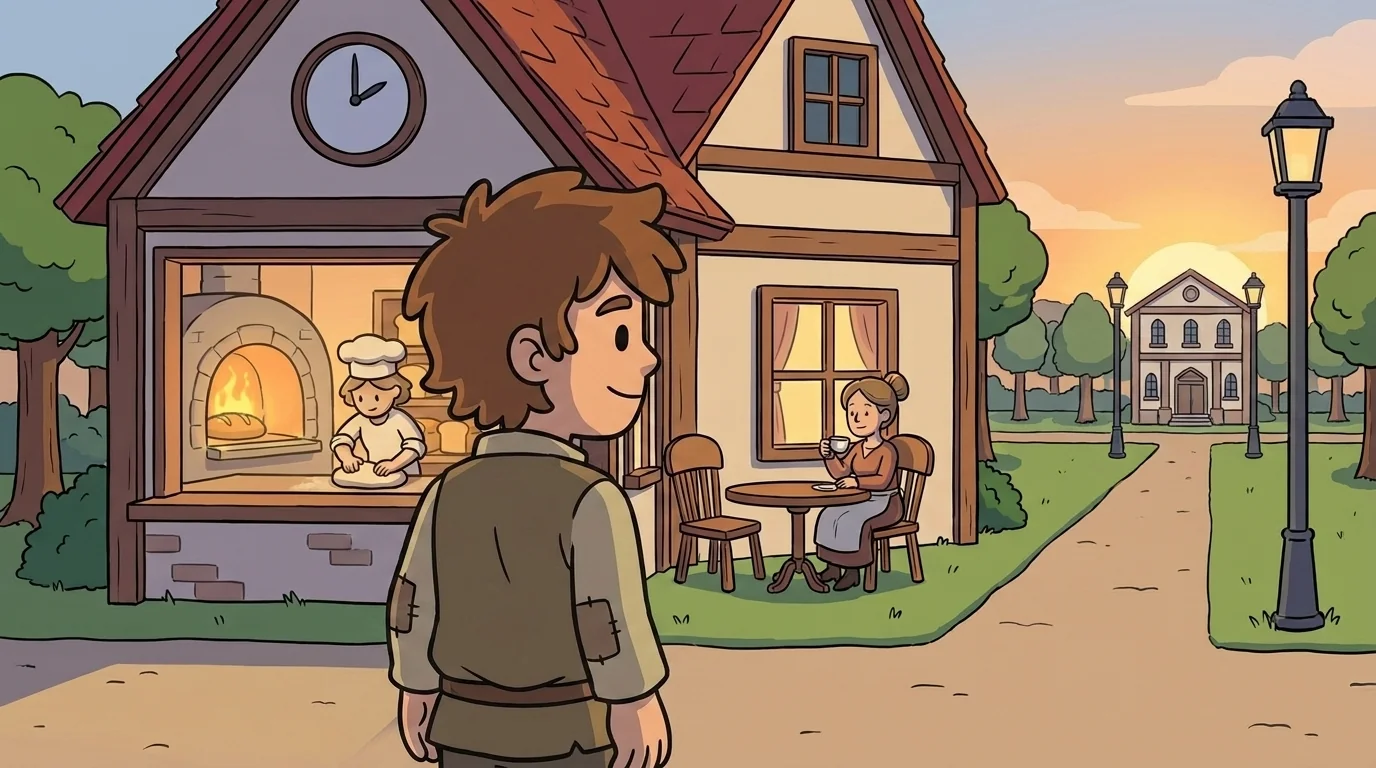
The teacher set down the chalk. She had been teaching functions for a long time. She had never heard a thirteen-year-old describe his parents as constant functions before.
She said: "Yes. That is exactly correct. A constant function ignores its input entirely. The output is just a fixed number. On a graph, a constant function is a horizontal line. The line does not go up or down. It does not slope. It stays at the same y-value regardless of the x-value."
Echo nodded. He thought about this for the rest of the year.
What he eventually understood — and what made him a teacher of constant functions — was that constant functions were not failures of variation. They were promises of constancy. The world needed both. It needed things that changed (so the world could evolve) and things that did not change (so people could plan, rely, build). Constant functions were the second kind. They were the world's stability.
Echo went to the FunctionForge academy when he was nineteen. He studied for four years. He joined the faculty when he was twenty-three. He has been teaching constant functions ever since.
In his classroom, he begins every first-day lesson the same way. He places a small wooden clock on his desk. The clock is permanently stopped at six-thirty. (Echo had it stopped on purpose, by removing the pendulum, twenty years ago. He brings it to every first-day lesson.) He turns to the class. He says: "This clock reads six-thirty. It always reads six-thirty. It does not matter what time it actually is — what day, what season, what year, what mood the room is in. The clock reads six-thirty. This is a constant function. The input is the world. The output is six-thirty. The input changes. The output does not."
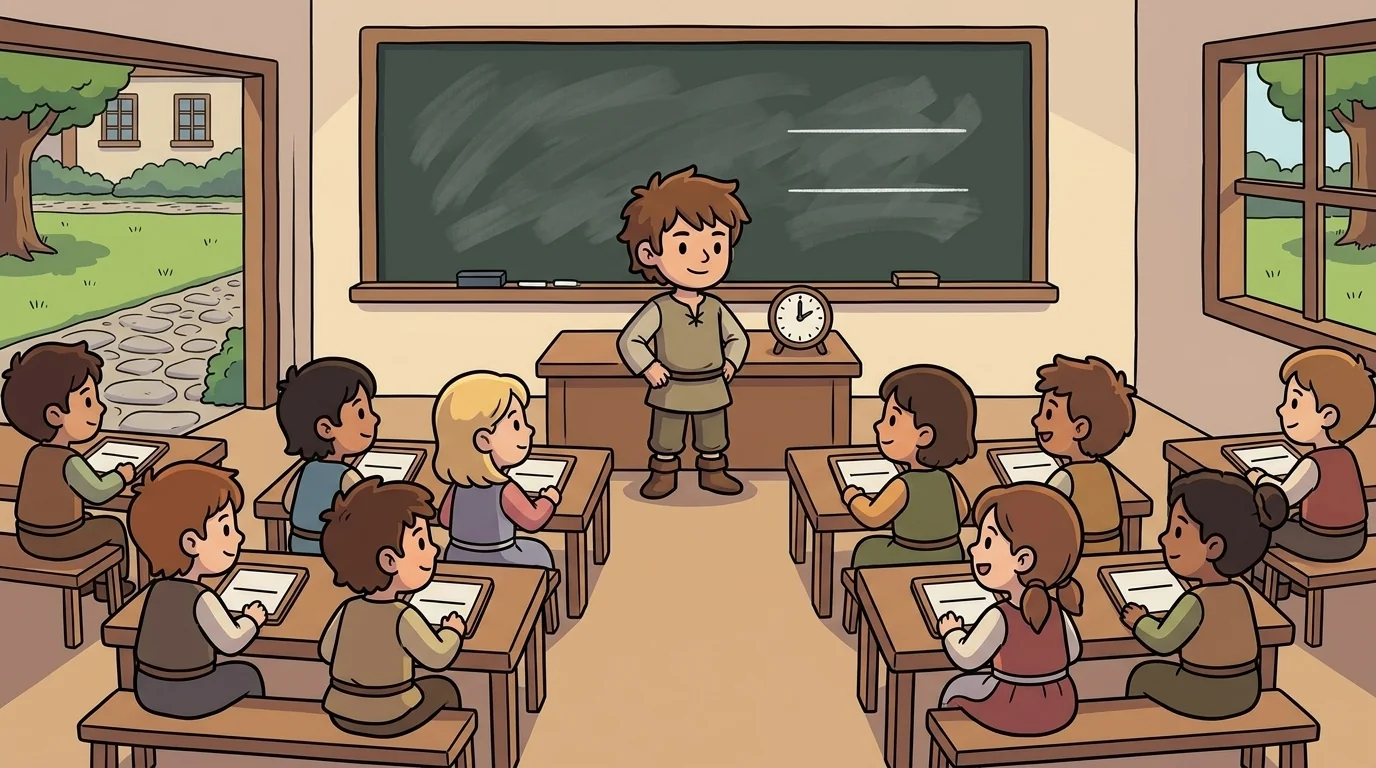
The children — always — find this slightly delightful.
Then he writes on the board: y = 5. He says: "Here is the algebraic form. There is no x. The output is five. For any input — x equals one, x equals one hundred, x equals zero, x equals negative seven — the output is five. On a graph, this is a horizontal line at height five. It does not slope. It does not bend. It is the same value at every input."
The children try graphing it. They get straight horizontal lines.
When children ask whether constant functions are hard, Echo always says the same thing:
"They are not hard. They are unchanging. The output is one fixed number. The input is anything. The two do not depend on each other. A constant function is the world's way of saying: this part holds still."
He still keeps the stopped clock on his desk. The children sometimes ask why he does not get it fixed. He says: "It is a teaching prop. It is also, if I am honest, a slight reminder of my parents. They are still alive. They still wake at four and five-thirty. The schedule has not changed in fifty years." And when he says it, a soft warmth spreads through him — a calm, safe feeling of being held by something that simply stays, the same quiet comfort he felt as a boy watching the things that never moved.
The FunctionForge ensemble
Echo the Sameness-Keeper is part of FunctionForge's distributed-narrative cast. Each character embodies a different curricular primitive; together they teach the full subject.
-

Stride the Pattern-Walker
Linear functions (constant rate of change)
-

Arc the Curve-Catcher
Quadratic functions (parabola — symmetric rate-of-change-changes)
-

Burst the Doubler
Exponential functions (constant *multiplicative* rate of change)
-

Pivot the Rule-Switcher
Piecewise functions (different rules for different input ranges)