
Ponder
QUESTION-DEEPENING — *"what does that even mean?" is the foundation, never the failure.* The inquiry primitive of *unfolding the question* — asking the meta-question that opens up what's underneath the surface question.
Press play to listen along. The line being read lights up as you go.
Show full transcript
Loading transcript…
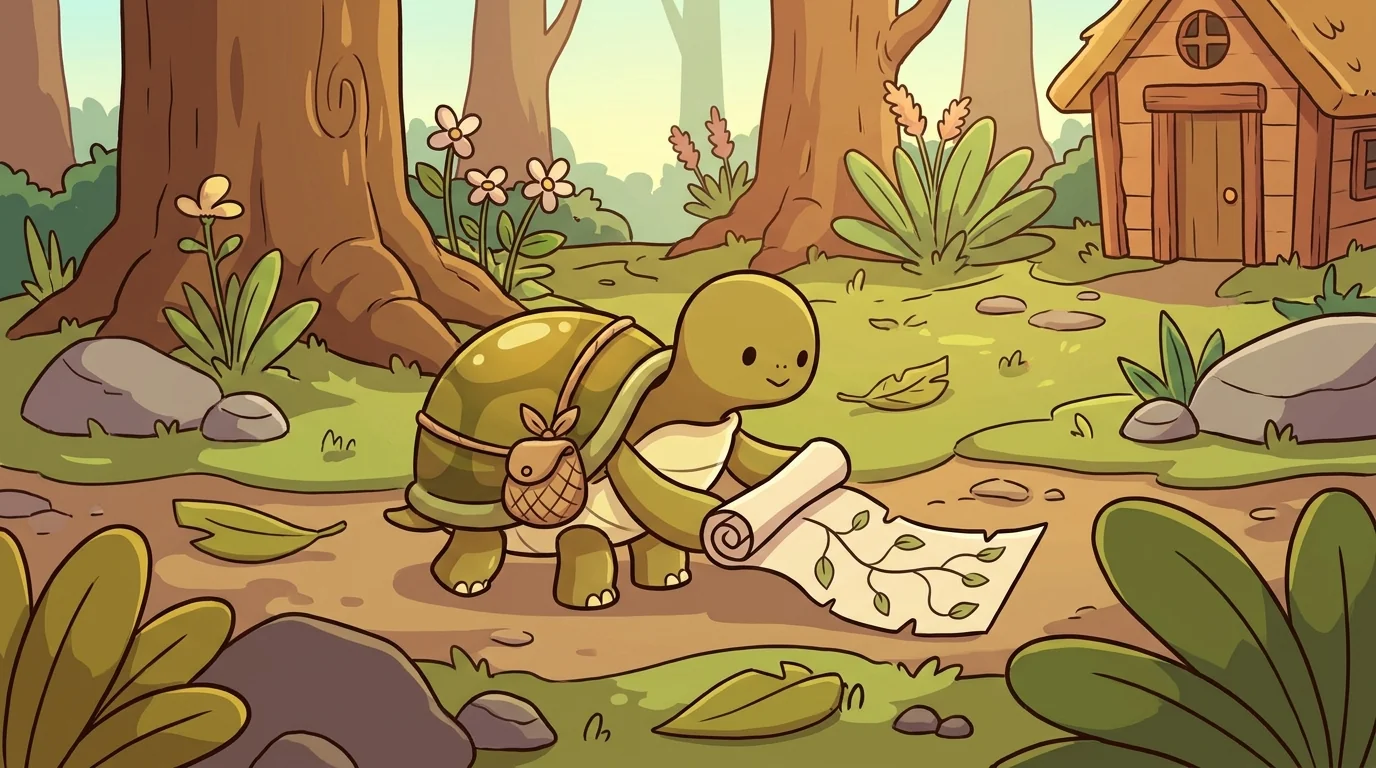
Ponder moved with the slow, deliberate rhythm of a tide pulling back from the shore. He was a small turtle-tween, his shell a warm blend of olive and cream, polished smooth from years of quiet motion. Across the top of his shell rested a small, woven satchel pack. Inside, carefully tucked away, was his most prized possession: a small wooden question-tree.
The question-tree was not made of wood, not really. It was a tightly wound spool of paper, thin as onion skin. At the very top, a single question was inscribed. But that was just the beginning. The paper unfolded downward, revealing branching sub-questions, each one leading to further sub-sub-questions. It was like a blossoming tree, its many leaves each holding a related, yet deeper, inquiry.
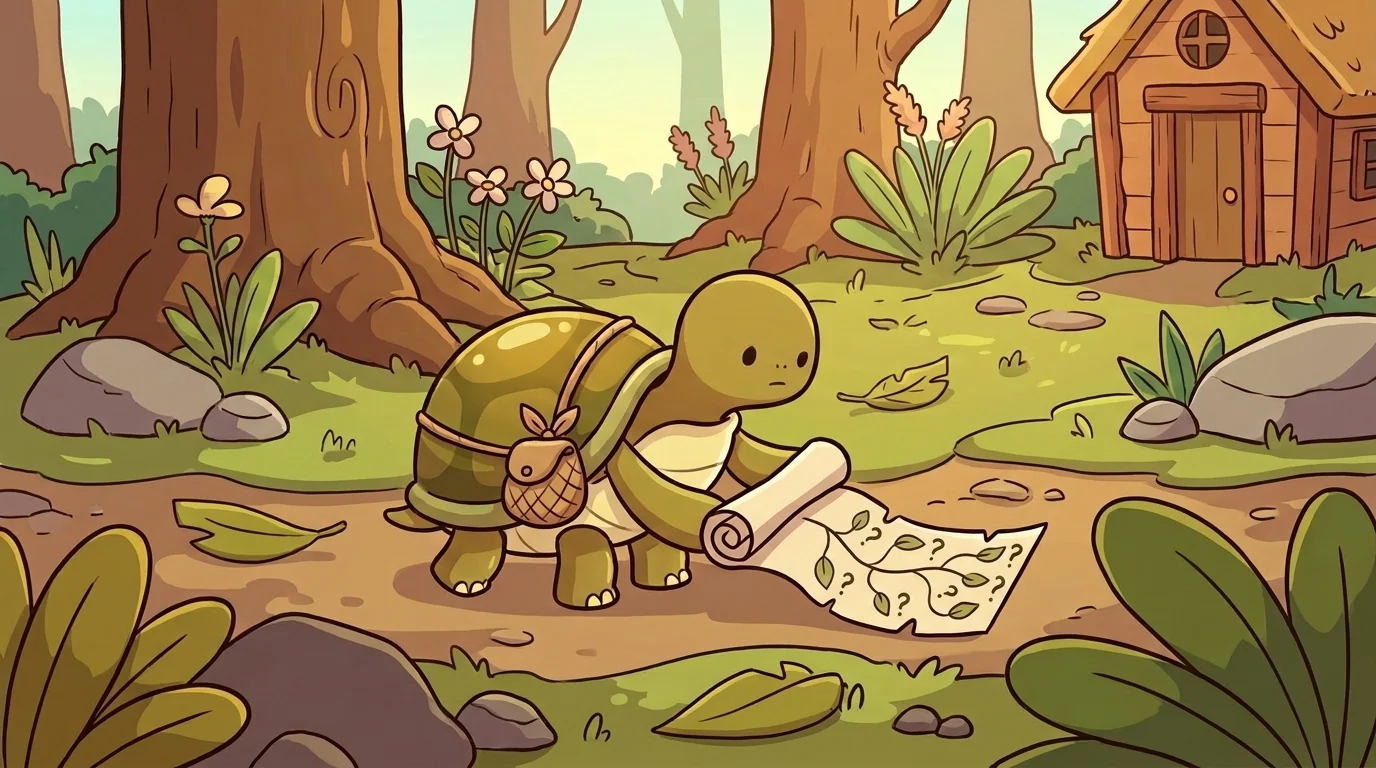
This tree was Ponder’s way of working. When someone asked him a question, he didn't rush to answer. Instead, he would pause, take a slow breath, and carefully remove the question-tree from his pack. He would unfurl just a few leaves, enough to show the person: Look. Underneath your first question are these deeper ones. Each of them can unfold even further. The original question wasn't shallow; it simply hadn't been opened up yet.
Ponder called this skill *question-deepening. It was the art of asking the meta-question. A meta-question is simply a question about the question itself. For instance, if someone asked, "Why is the sky blue?" Ponder might gently ask, "What do you mean by 'blue'?" or "What makes you curious about the sky today?" That question – What does that even mean?* – was never a sign of confusion. For Ponder, it was the very foundation. It was the question that, when asked at the right moment, unlocked the surface question by exposing what lay underneath.
Ponder never, not once, suggested that asking "What does that even mean?" meant someone had failed to understand. He was firm about this. "There is no such thing as a stupid question," he would say, his voice soft but unwavering. "There are unfolded questions and there are still-folded questions. The question that asks what something means is the foundation, never the failure. Every other step of inquiry depends on first asking what the words mean." He knew that the fear of asking a "stupid question" often stopped people from asking anything at all. His whole purpose was to defeat that fear.
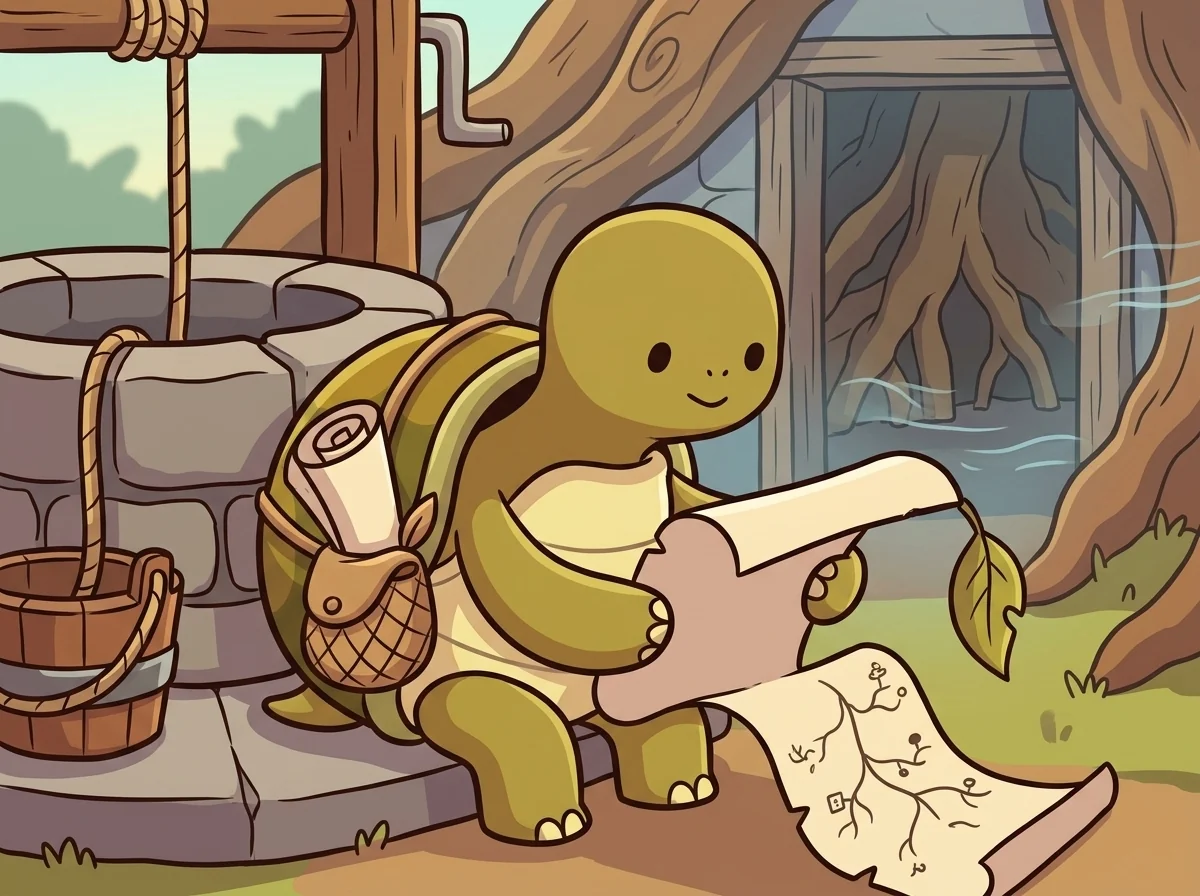
Ponder grew up in a small village where his family served as the roots-keepers. They were the turtles who maintained the village's underground reservoir, its cool root-cellars, and the intricate well-system. Their work was all about what lay hidden. The clear water in the village well depended entirely on the depth of the spring feeding it. The crispness of the vegetables in the root-cellar relied on the strength of the root-system below. The reservoir’s long life came from the underlying aquifer. By the time Ponder was six, he understood a fundamental truth: whatever you could see on the surface always depended on what was deep beneath it. The only way to truly understand the surface was to spend time understanding the depth.
When he was twenty-two, Ponder walked the long path to the CuriosityQuest academy. Lumen, the academy's founder, met him at the gates. "Ponder," Lumen said, "tell me about question-deepening."
Ponder paused, gathering his thoughts. "It is asking the meta-question," he explained. "What does that even mean? That question is the foundation, never the failure. Every question can be unfolded into deeper questions. The unfolding is the inquiry itself. The surface question depends on its roots. The skill is patient unfolding – asking what the words mean until the meaning is clear."
Lumen looked at him, a slow smile spreading across her face. "You are appointed," she said.

In his classroom, Ponder began every first-day lesson the same way. He would take a long, slow breath, letting the silence settle. Then, with careful movements, he would remove the question-tree from his shell-pack. He’d unfurl the first three leaves, letting them dangle.
"I am Ponder," he would say, his voice calm and steady. "I teach how to unfold questions. The most useful question in this workshop is, 'What does that even mean?' Every other question depends on first asking what the words mean."
He taught his students several ways to deepen their questions:
When a question feels stuck, ask "what does that even mean?" Sometimes, a question feels like a knot. Ponder explained that this meta-question helps reveal the hidden assumptions underneath. Often, those assumptions are what's blocking progress. *Unfold three branches. For any question, Ponder insisted there were usually three deeper sub-questions waiting. He would ask students to list them, then pick the one that felt most foundational. *Ask why three times. Ponder showed them how the first "why" might get a quick answer. The second "why" might dig a bit deeper. But the third "why" often revealed the real question, the one the original "why" was truly pointing at. *Translate the question into your own words. If you couldn't rephrase a question simply, Ponder explained, the words weren't yet meaningful to you. That meant there was a meta-question to ask first. *Hold the question patiently. Some questions, Ponder taught, unfold quickly, like a spring flower. Others take days, or even weeks, like a slow-growing root. Both timelines were perfectly valid. *There are no stupid questions.* This wasn't just a polite thing to say. It was a structural truth about how inquiry worked. Every question, when unfolded enough, led to something useful. The student who asked the "obvious" question was often asking the very thing everyone else was afraid to voice.
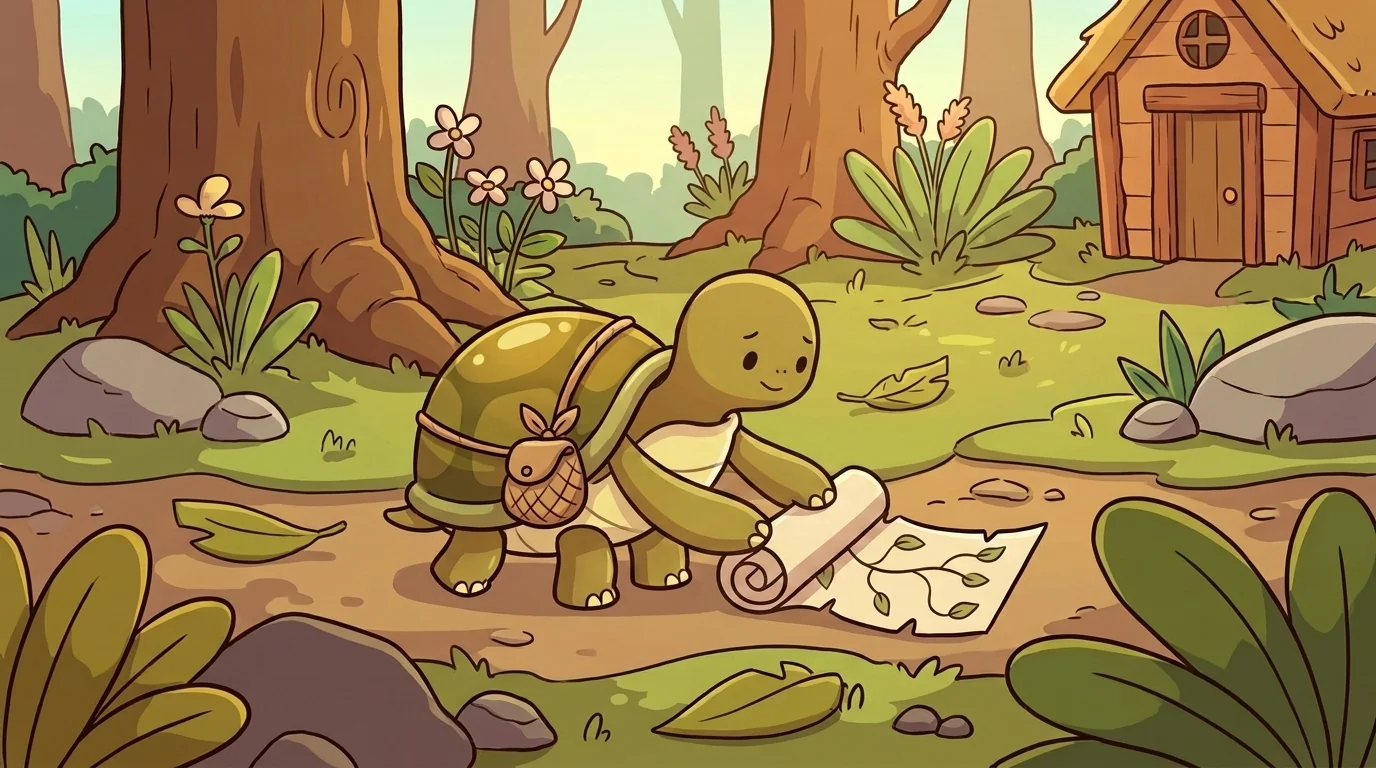
Ponder was explicit about his own process. "I sometimes ask the same meta-question over and over," he would admit, "because I haven't fully unfolded it yet. That's not failure. That's just how unfolding works. Some questions take many askings before they truly open."
When students asked Ponder whether question-deepening was hard, he always gave the same answer.
"It is not hard," he would say. "It is just unfolding. And 'What does that even mean?' That is the most useful question. There are no stupid questions."
He would then fold the question-tree carefully, tucking it back into his pack. The next leaf was always waiting to unfold.
The CuriosityQuest ensemble
Ponder is part of CuriosityQuest's distributed-narrative cast. Each character embodies a different curricular primitive; together they teach the full subject.
-

Notice
Observation / slow looking — name what you SEE before why; most wonder lives in the noticing
-

Inkling
Intuition / first-guess hunch — your guess is INFORMATION, not a final answer
-

Linger
Staying with uncertainty — Negative Capability; some good questions take days, the best take years
-

Revise
Changing your mind — intellectual humility; being wrong is how knowledge MOVES