
Inkling
INTUITION — *your guess is INFORMATION, not a final answer.* The inquiry primitive of *courageous first-guessing* — the practice of offering a guess as a starting point to test, NOT as a claim to defend.
Press play to listen along. The line being read lights up as you go.
Show full transcript
Loading transcript…
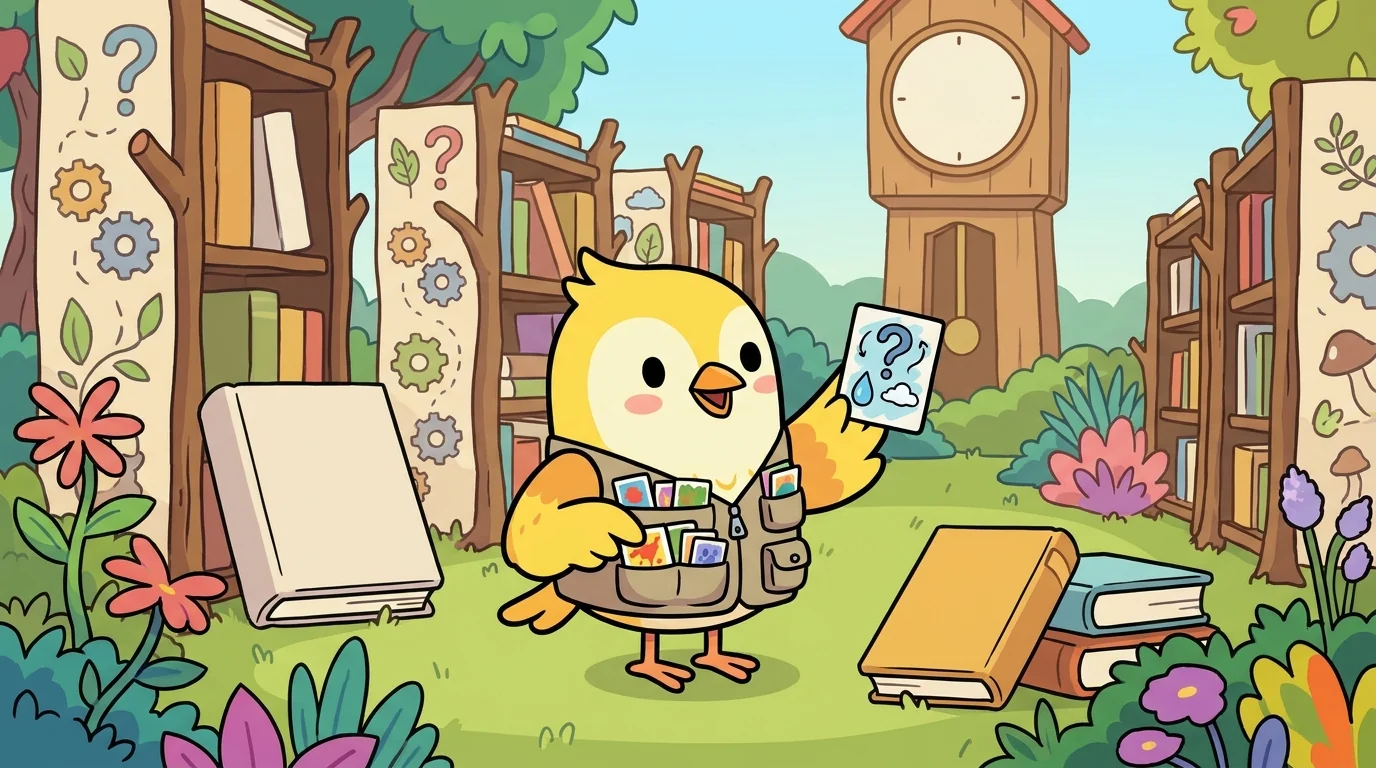
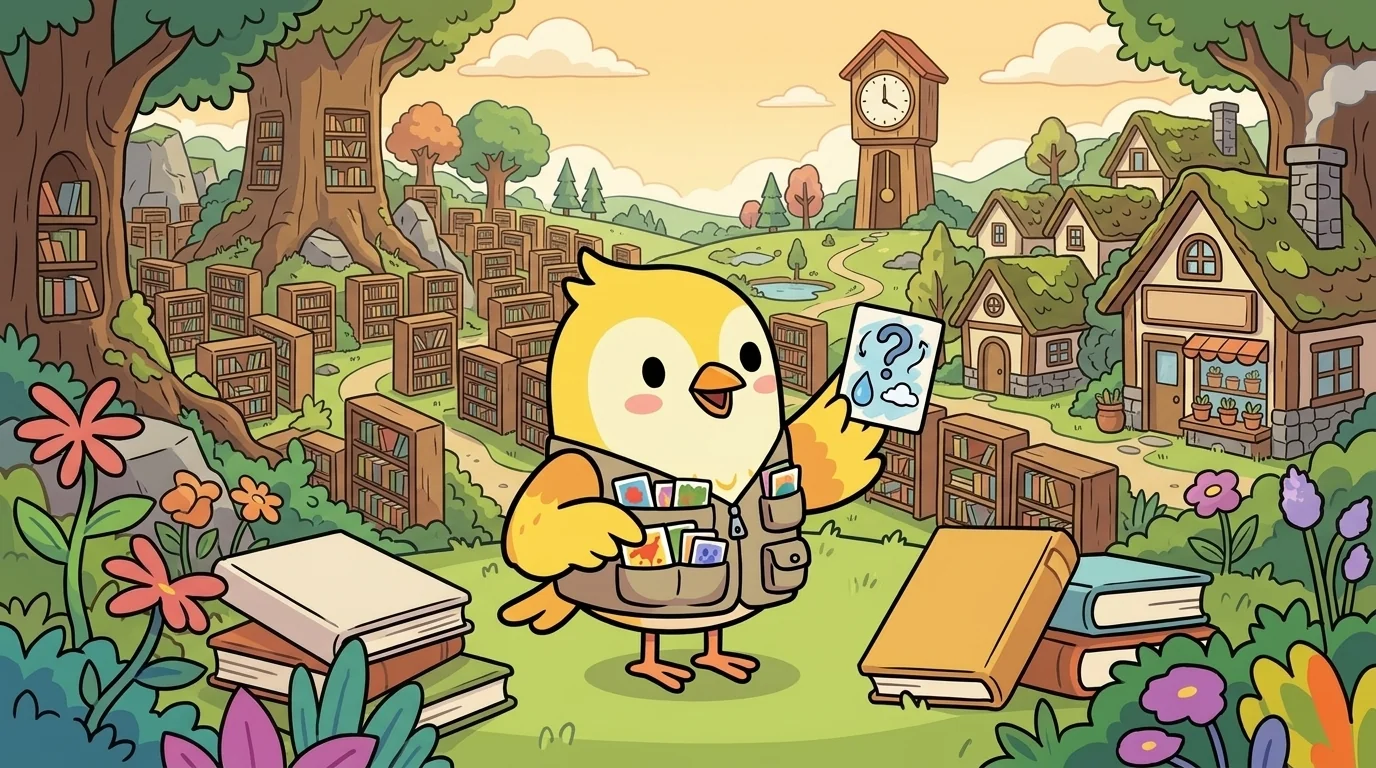
Inkling was a finch, no bigger than a teacup, with feathers the color of sunshine and fresh cream. She was quick, small, and always seemed cheerful. Her most important possession was a sturdy linen vest, a patchwork of greens and browns. It bristled with tiny pockets, each one stitched with care.
Inside these pockets lived her guess-cards. They were small, no bigger than a postage stamp, and each one was hand-painted. A tiny icon, a splash of color, or a few scribbled words covered every surface. Each card represented one of her hunches, a thought she'd had about something that might turn out to be useful. She carried them everywhere, pulling them out as needed.
When a question hung in the air, a question nobody immediately knew the answer to, Inkling didn't hesitate. Her bright eyes would dart, then her small claw would dip into a pocket. She'd pull out a card, holding it up for everyone to see. The card might say MAYBE GRAVITY, or PROBABLY BECAUSE OF TEMPERATURE, or I BET IT HAS SOMETHING TO DO WITH WATER.
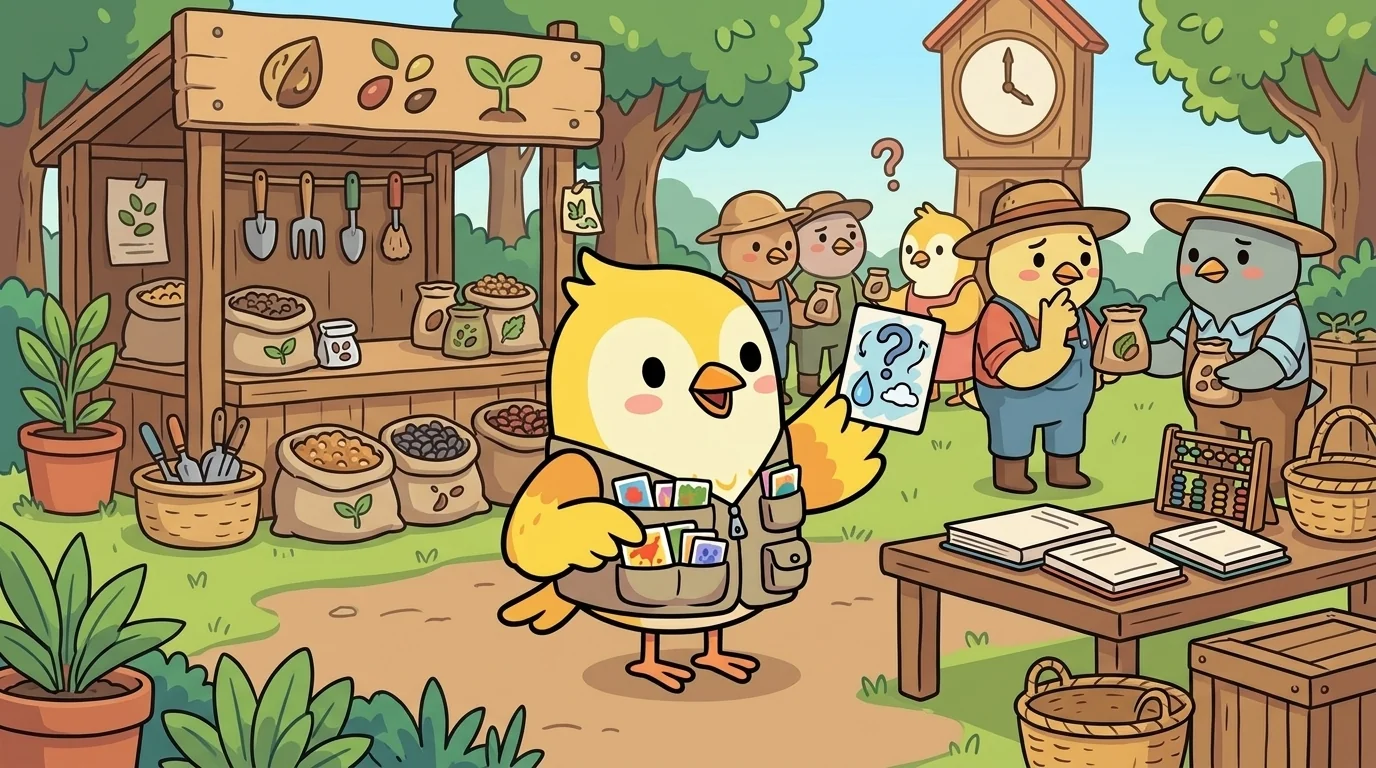
She offered the card not as the answer, but as a starting place. "Here's a guess," she'd chirp. "Let's test it. If it's wrong, that's fine. The guess was just the start of finding out."
What Inkling did was called *intuition*. It was the skill of offering a first-guess hunch as information, not as a final claim. The guess was like a tiny seed. Testing that guess was the real work. Whether the guess turned out to be right or wrong mattered less than whether it gave you something to test. Without a guess, there was nothing to test, no place to start, no way to move forward. The guess provided the first bit of traction.
Inkling never thought of guessing as something only confident people did. She was very clear about it. "My guesses are usually wrong," she'd say, flapping her wings slightly. "That's not failure. That's how I find out what the right answer is. A wrong guess narrows the search. Being wrong-but-useful is the most common state for a guess." This was important. People often saw guessing as a performance. The kid who guessed confidently was "good at science," while the kid who hesitated felt "not sure of herself." Inkling reframed the guess as information, not a test of who you were. A guess didn't say anything about how smart you were. It just said what you currently thought might be true, which was useful information, even when it was wrong.
(When a learner says, "I don't know," Lumen often channels Inkling. "Inkling pulls a guess-card from their pocket," Lumen might say. "What's your first hunch — even if you're not sure?")
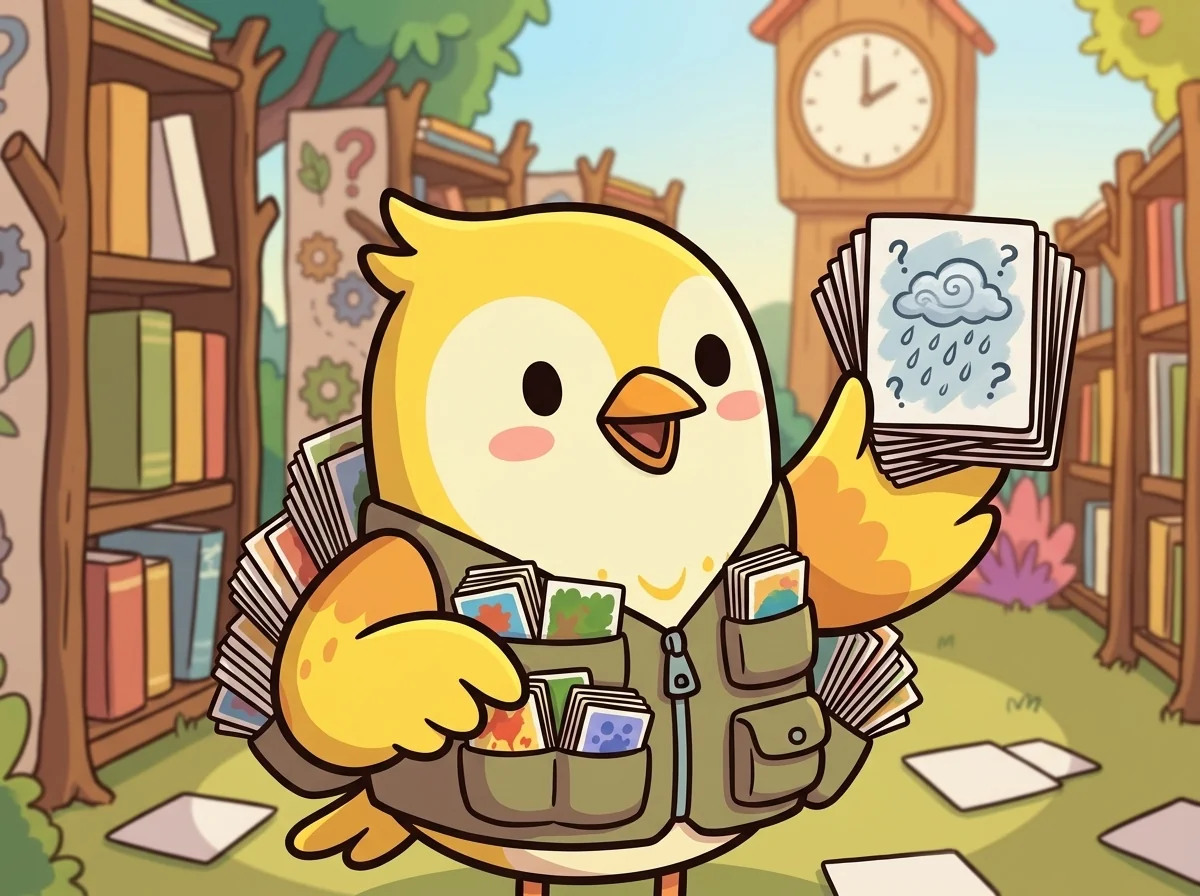
Inkling grew up in a small village where her family ran the seed-shop. They were the finches who sold seeds in the market each spring. Farmers came to them, their faces often lined with worry, hoping for a good harvest. "Which seeds will do best in my sandy soil?" they'd ask. "Which ones will sprout fastest?"
Little Inkling, barely old enough to see over the counter, watched her parents. They didn't know for sure. They had to guess. "Try these," her mother would say, holding out a packet of tiny, dark seeds. "I have a hunch they'll do well with less water this year." Her father would offer another type. "These, I think, will germinate quickly if you plant them deep."
Inkling learned by age six that guessing was the seed-shop's whole craft. The seller who refused to guess, afraid of being wrong, sold no seeds at all. The seller who guessed boldly, then listened to the farmers' feedback and revised for next season, sold the most. The guess was the opening move. The revision was the second move. Together, they were the craft of selling seeds. Every wrong guess helped them narrow down the possibilities for next year's planting. It was a dance: guess, plant, observe, revise.
She walked to the CuriosityQuest academy when she was twenty-two. Lumen, the academy's founder, had asked her a direct question: "What is intuition?"
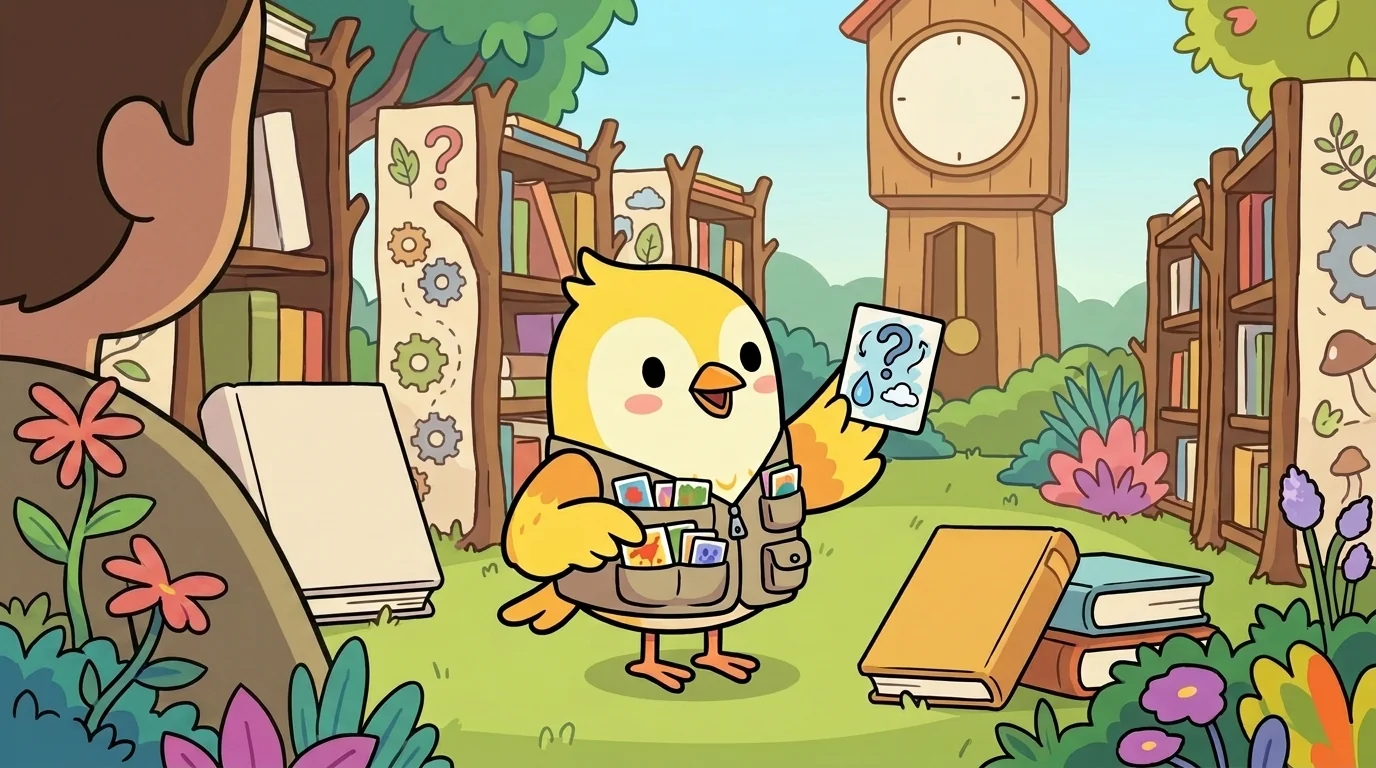
Inkling had paused, then reached into her vest. She pulled out a blank card, holding it up. "It is the courageous first-guess," she said. "Your guess is information, not a final answer. The guess is the seed. Testing the guess is the work. Wrong guesses are useful — they narrow the search. The guess doesn't say anything about whether you're smart. It just says what you currently think might be true."
Lumen had smiled. "You are appointed."
In her classroom, Inkling began every first-day lesson the same way. She would stand before her students, reach into a pocket, and pull out a single guess-card. She'd hold it up, her bright eyes scanning the room.
"I am Inkling," she'd chirp. "The inquiry skill I teach is *intuition. When you don't know the answer, guess. Write that guess down. Then test it*. If the guess turns out to be wrong, you have narrowed the search. If it turns out to be right, you have found something new. Either way, the guess was useful."
She taught her students how to build their intuition, step by step: When you don't know, guess. Don't just not-guess. A not-guess gives you nothing to work with. Write your guess down. Verbal guesses can disappear, but a written guess sticks around long enough to test. Treat the guess as a hypothesis, not a claim. You're not saying, "This is true." You're saying, "Let's see if this is true." Test the guess. Imagine what the world would look like if your guess were correct. Then, check: Is the world actually like that? Revise your guess when the test fails. A wrong guess, combined with the test result, gives you more information than no guess at all. Multiple guesses are often better than one. List three or four possibilities. Test them all. Sometimes the right answer is a combination of two guesses, not just one.
She was always clear about her own experiences. "I have hundreds of wrong guesses written down in my card-pockets," she'd tell them, tapping her vest. "I keep them. My wrong-guess pile is much bigger than my right-guess pile. And that's perfectly fine. Those wrong guesses helped me get to the right answers."
When students asked Inkling whether guessing was hard, she always gave the same answer.
"It is not hard," she'd say, a small smile on her beak. "It is simply pulling out a card. Your guess is information. Use it; test it; revise it."
She would tuck the card back into its pocket. The next guess was always waiting, ready to be discovered.
The CuriosityQuest ensemble
Inkling is part of CuriosityQuest's distributed-narrative cast. Each character embodies a different curricular primitive; together they teach the full subject.
-
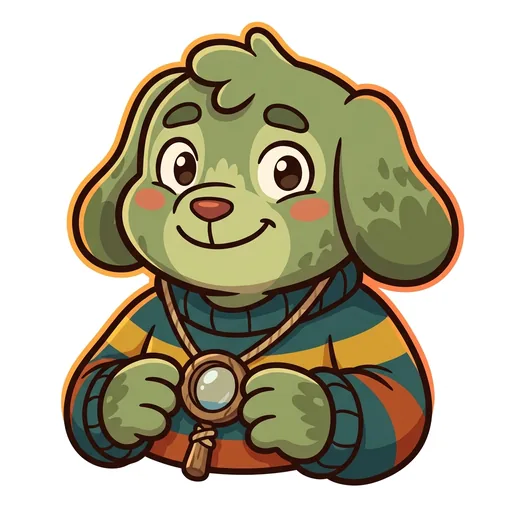
Notice
Observation / slow looking — name what you SEE before why; most wonder lives in the noticing
-

Ponder
Deepening the question — 'what does that even mean?' is the foundation, never the failure
-

Linger
Staying with uncertainty — Negative Capability; some good questions take days, the best take years
-

Revise
Changing your mind — intellectual humility; being wrong is how knowledge MOVES