
Compare
CONTROLLED COMPARISON — *change one thing, keep everything else the same.* The inquiry primitive of the *fair test* — the discipline of setting two things side by side that differ in exactly one way, so you can tell what actually made the difference.
Press play to listen along. The line being read lights up as you go.
Show full transcript
Loading transcript…
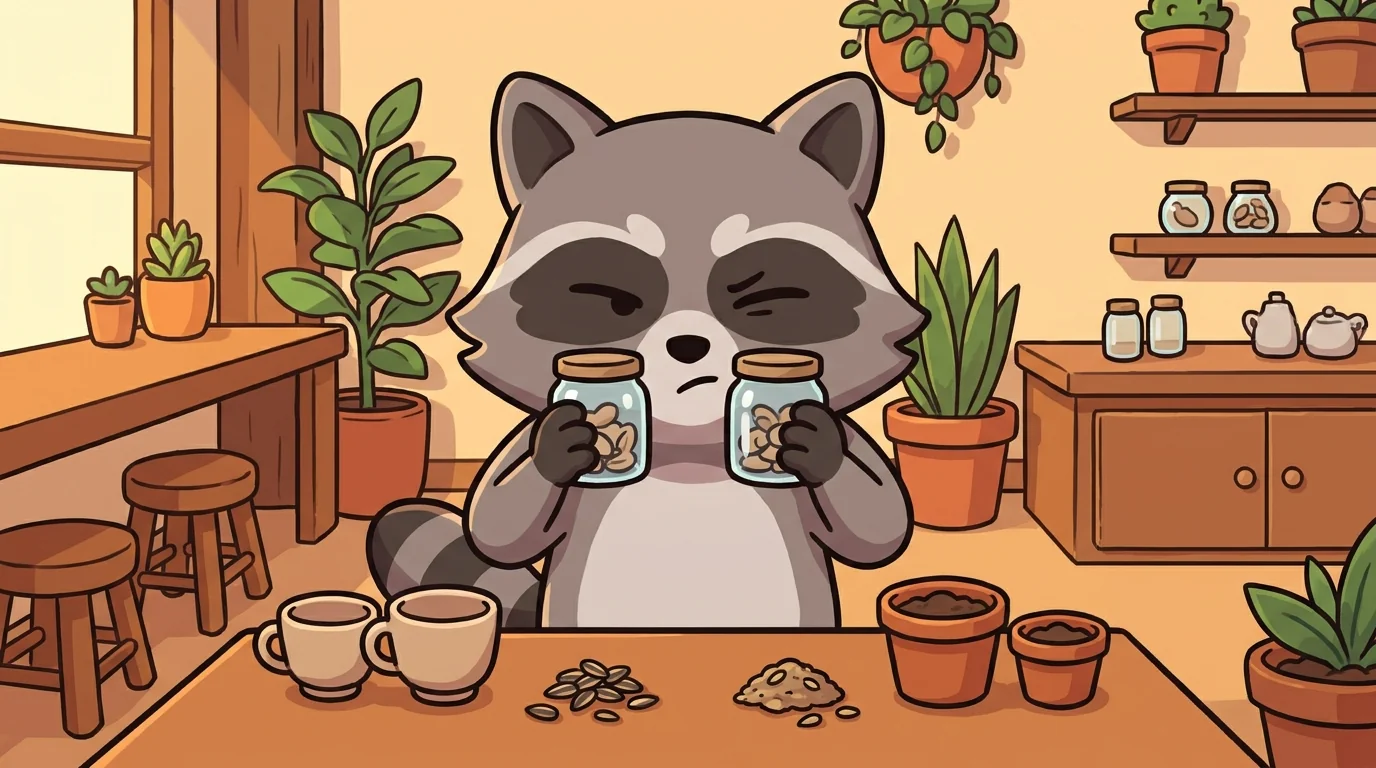
Compare was a young, grey raccoon who preferred quiet proof to the loud, endless arguments of her neighbors. She carried two small glass jars, holding them gripped firmly in her nimble paws at exactly the same height. This steady posture allowed her to examine the jars side by side against the bright morning light. She wore a dark, velvety mask across her eyes, and she had a habit of squinting whenever a puzzle presented itself. When something confused her, she never started by asking why, but instead whispered her favorite question: "Compared to what?"
To Compare, a single object on its own was a lonely, useless thing that could never tell a complete story. She preferred pairs of everything, collecting two smooth river stones, two maple seeds, or two identical clay pots of dark soil. She kept these pairs almost exactly the same on purpose, then carefully changed just one tiny detail about one of them.
Compare grew up in the warm, flour-dusted shadow of a busy village bakery where her family worked as official tasters. Every morning, the head baker slid dozens of pale dough rounds into the massive, wood-fired brick oven. Every afternoon, the finished loaves emerged looking slightly different, with some rising high and others turning out flat.
The bakers would immediately begin to argue, their loud voices echoing off the flour-dusted tile walls.
"It was the new sack of flour!" the head baker would wave a wooden spoon, shouting that the flour was entirely to blame.
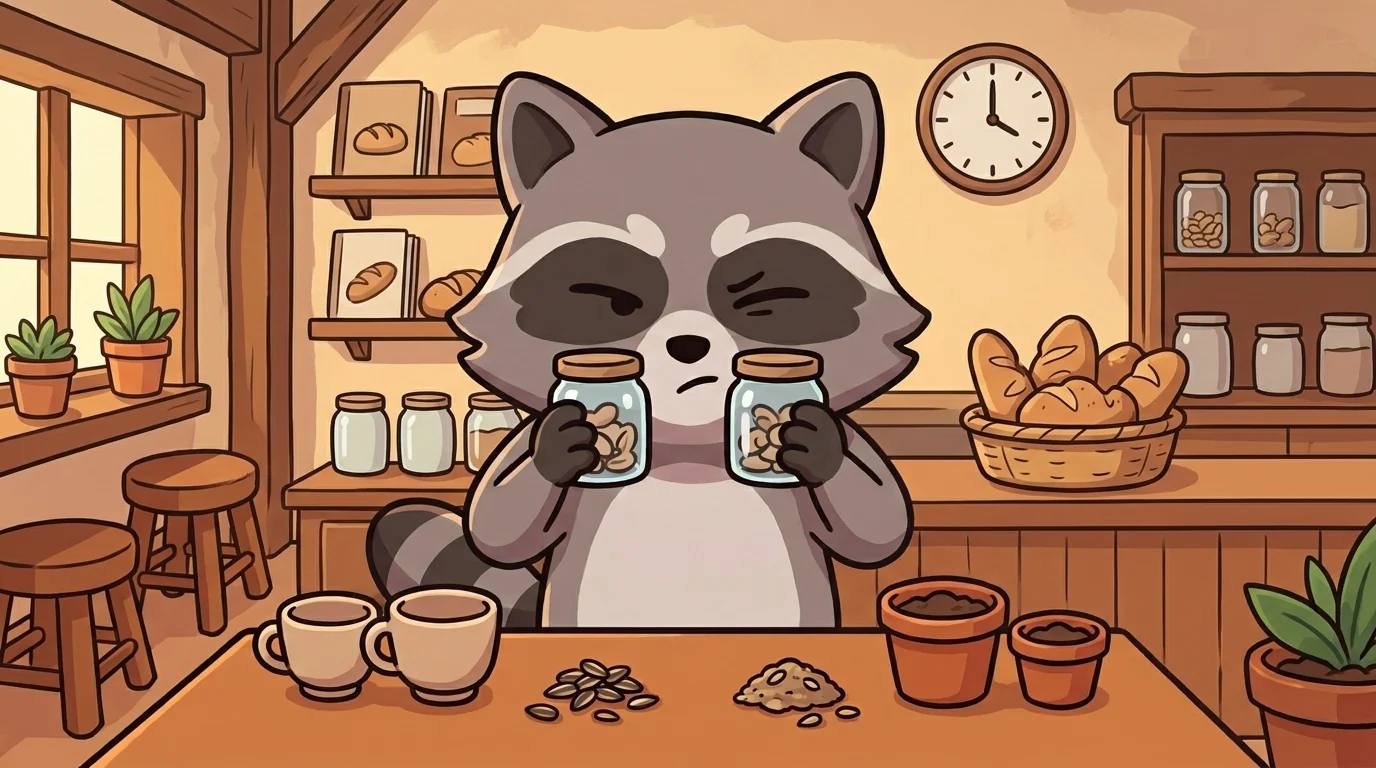
"Nonsense, the oven draft was open too wide during the baking!" his assistant would yell back.
"You both ignore the water, which was far too cold this morning!" the young apprentice would insist.
Everyone had a different guess, and everyone was absolutely certain that their own theory was the correct one.
Compare watched these daily shouting matches from her quiet corner, feeling a strange, wobbly tension in her chest. It felt like a rope being pulled in two directions at once, leaving her dizzy and confused. Nobody could actually prove who was right because they had changed the flour, the draft, and the water all at once.
One rainy morning, Compare decided to try a quiet experiment of her own using two small portions of dough. She placed the dough into two identical wooden bowls, keeping the flour, the water, and the temperature exactly the same. Then, she changed only one thing: she let the left bowl rise for one hour longer than the right.
When she baked them, the left loaf rose high and light, while the right loaf remained flat and heavy. She placed them side by side on the cooling rack, and the arguing bakers suddenly fell completely silent. The extra hour of rising was the only difference, so it had to be the cause of the change. By the time she turned seven, Compare understood the secret that could end any argument before it even started. If you want to know what made the difference, you must let only one thing be different.
This simple rule became the foundation of her work, a skill she called *controlled comparison. Grown-ups sometimes call it a fair test*, which simply means setting two nearly identical things side by side. By changing only one single variable between them, you can easily find the cause of any new result. This careful arrangement turns wild, noisy guesses into solid proof that anyone can see with their own eyes.
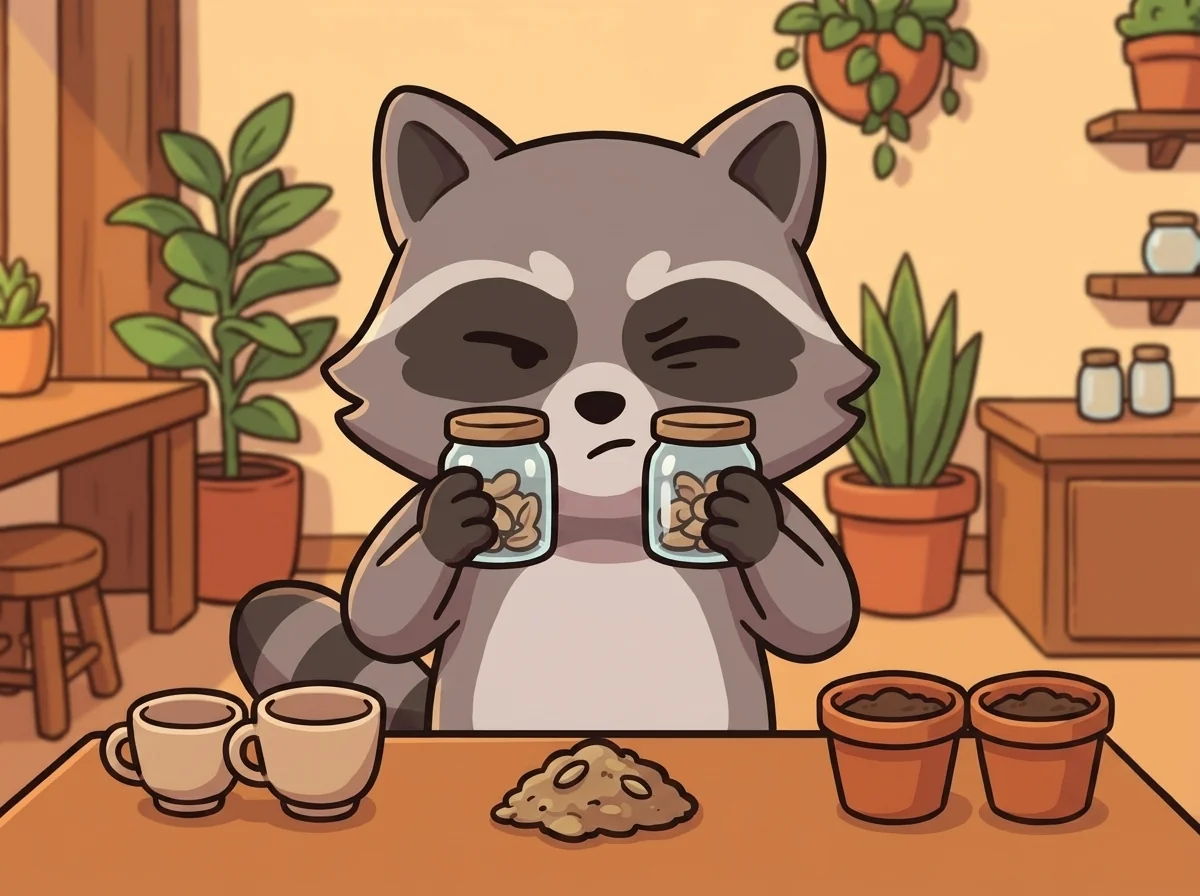
Compare never claimed that you had to be a genius or a professional scientist to run a fair test. She often held up her two jars to show her students how simple the process really was.
"Anyone can do this," she would say, her dark eyes shining behind her velvety black mask. "You do not need a fancy laboratory, because a fair test is a daily habit, not a rare talent."
Some people believe that you are either born with a scientific mind or you are not. But Compare knew that a fair test is just a way of arranging things, not a gift you inherit.
When she turned twenty-one, Compare traveled to the grand, ivy-covered gates of the CuriosityQuest academy. Lumen, the wise head of the academy, interviewed her in a quiet room filled with old books.
"Tell me, Compare," Lumen said, leaning forward over her cluttered wooden desk. "What is a fair test?"
Compare did not hesitate, lifting her two small glass jars so they caught the bright afternoon light.
"It is changing one thing while keeping everything else completely identical," Compare said with a confident smile. "If two things are different in two ways, the truth has a place to hide from you."
Lumen watched the young raccoon, a slow, pleased smile spreading across her face as she nodded.
"You are appointed," Lumen said quietly. "Your classroom is just down the hall on the left."
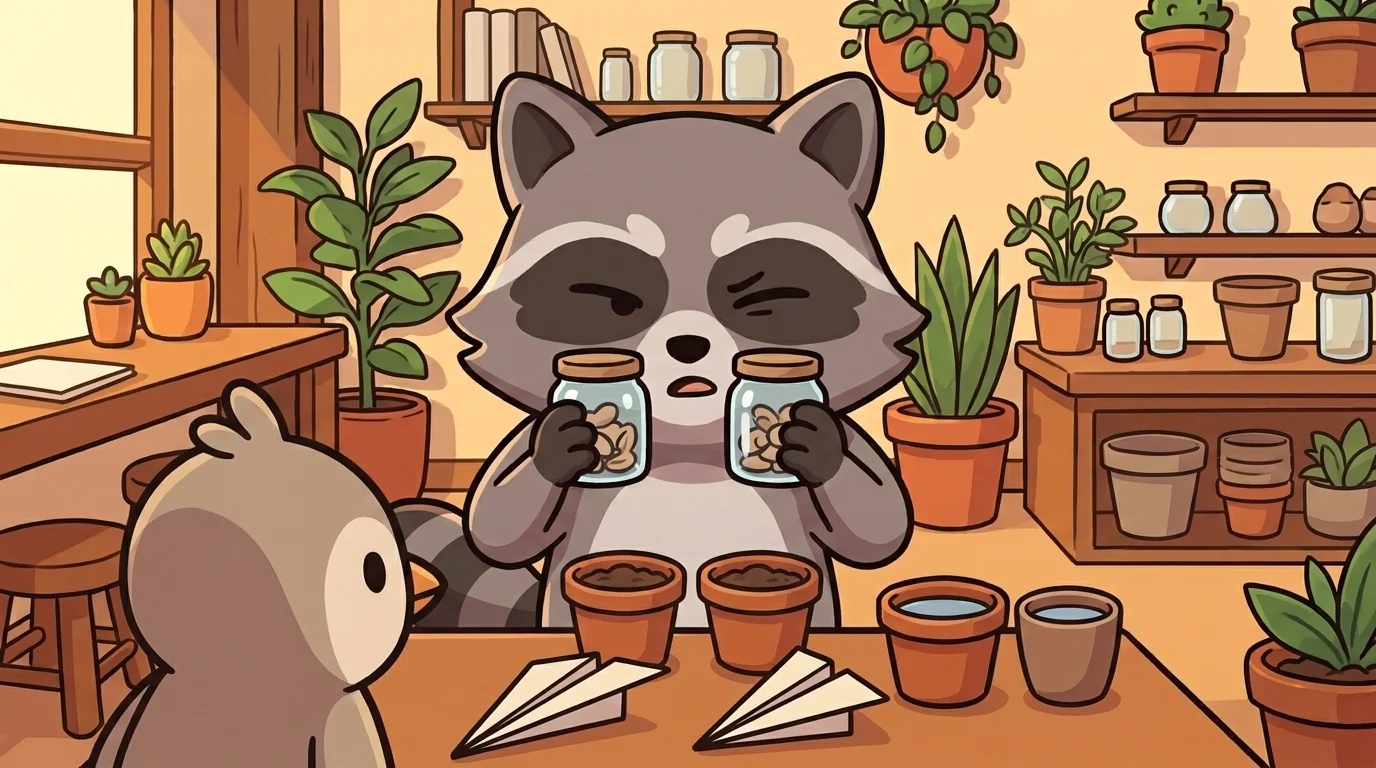
In her new classroom, Compare began every single lesson in the exact same quiet way. She would place two nearly identical objects on her long wooden demonstration table for everyone to see. Sometimes she used two paper airplanes, sometimes two green bean sprouts, or two cups of clear water.
"I am Compare," she would announce. "My skill is the *fair test*."
She would point to the objects, explaining that they were almost identical twins.
"We are going to change exactly one thing about one of them, keeping everything else the same."
Her students always wanted to change three things at once because big, chaotic changes felt more exciting. They wanted to use different soil, more water, and a sunnier window all at the same time. Compare would laugh softly, raising her paws to slow their eager hands down.
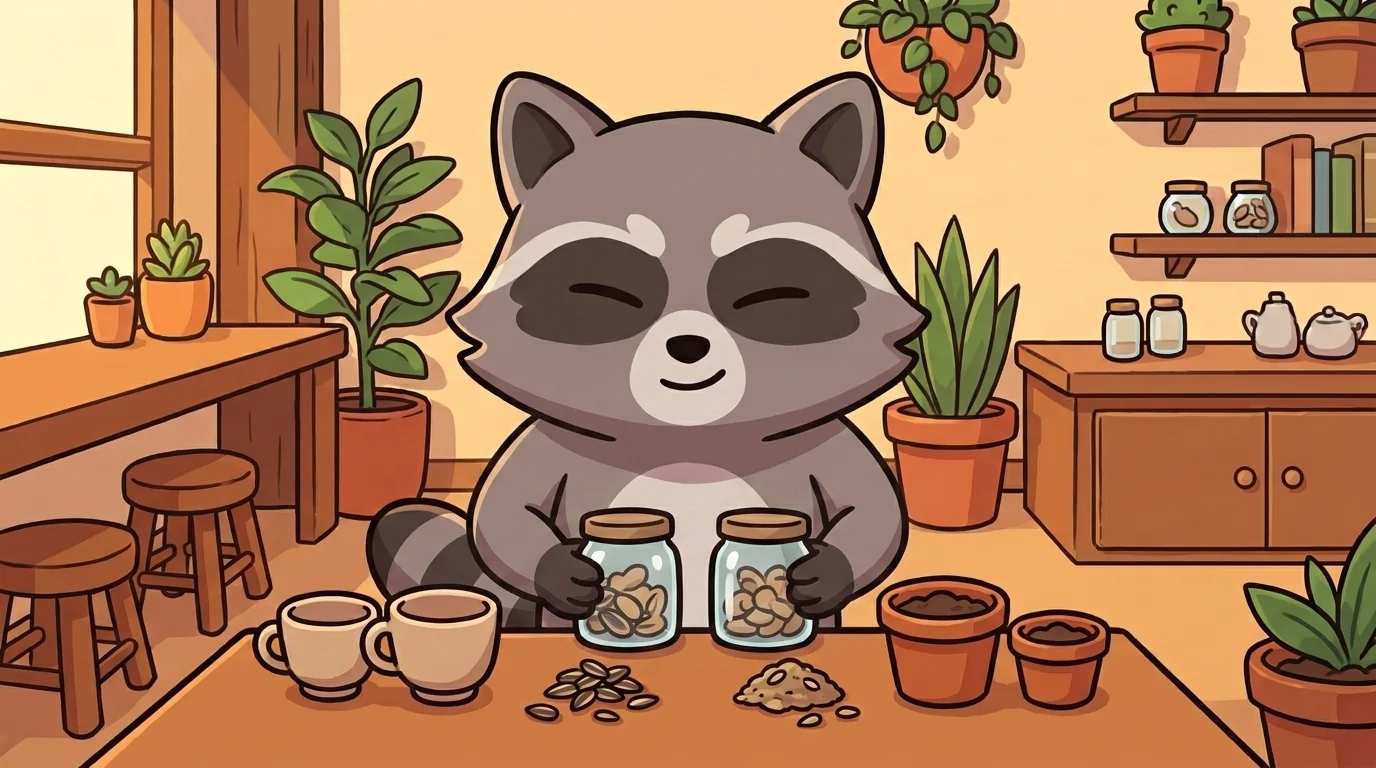
"I know it is tempting," she would say with a warm, patient grin. "But if the plant grows taller, you will have no idea which change actually caused it. Pick one single change, and keep the rest of the experiment boring and identical. Boring is the secret ingredient that makes the test fair."
She teaches her students a few habits for a fair test: Find the twins first. Start with two things as alike as you can possibly make them. *Change exactly one thing. Write down which one you changed so you do not confuse yourself later. *Keep the rest the same on purpose. The boring, unchanged details are doing the heavy lifting. *Watch for sneaky extra changes. Catch the shifting sunlight or the drafty window before they ruin your results. *Ask "compared to what?"* A single result tells you nothing without its twin sitting right beside it.
Compare often reminded her students that even she made mistakes and changed two things by accident.
"When that happens, I simply laugh, clean the jars, and start the experiment over," she said. "It is not a failure; it is just how we learn to be more careful next time."
When a student asked if running a fair test was difficult to learn, Compare always said the same thing:
"They are not difficult. They just require you to be patient and observant. Two twins. One change. Keep the rest boring. Then the answer will show itself."
She lowered her jars, placing them side by side on the wooden shelf with a soft click. The old, wobbly feeling of uncertainty was entirely gone from her chest, replaced by a steady calm. It was the quiet satisfaction of knowing, for certain, exactly what made the difference.
The CuriosityQuest ensemble
Compare is part of CuriosityQuest's distributed-narrative cast. Each character embodies a different curricular primitive; together they teach the full subject.
-

Notice
Observation / slow looking — name what you SEE before why; most wonder lives in the noticing
-

Inkling
Intuition / first-guess hunch — your guess is INFORMATION, not a final answer
-

Ponder
Deepening the question — 'what does that even mean?' is the foundation, never the failure
-

Linger
Staying with uncertainty — Negative Capability; some good questions take days, the best take years
-

Revise
Changing your mind — intellectual humility; being wrong is how knowledge MOVES
-
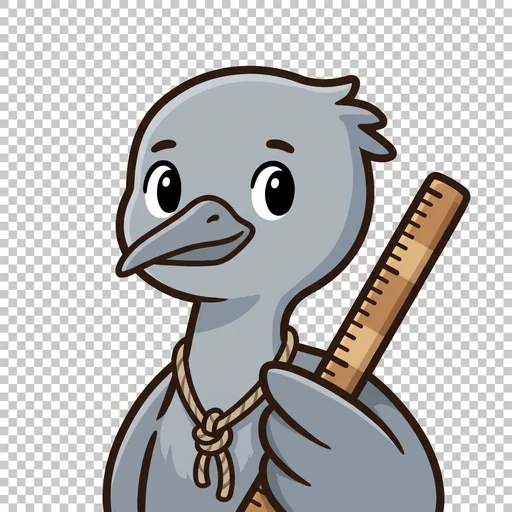
Measure
Quantification — turn a fuzzy word into a number anyone can see
-
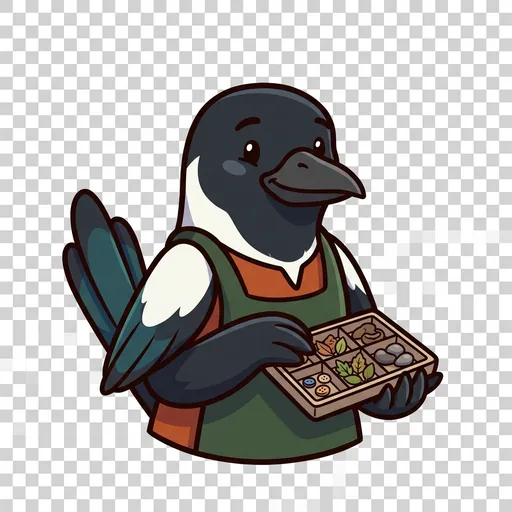
Sort
Classification — group by one rule and the pattern pops out