Mist
NEBULAE / DUST / GAS / ACCRETION / STELLAR NURSERIES — *stars are born in the soft veils; patience and gravity do the work.* The astrophysics primitive of *interstellar matter as the raw material of stars and planets.*
Press play to listen along. The line being read lights up as you go.
Show full transcript
Loading transcript…
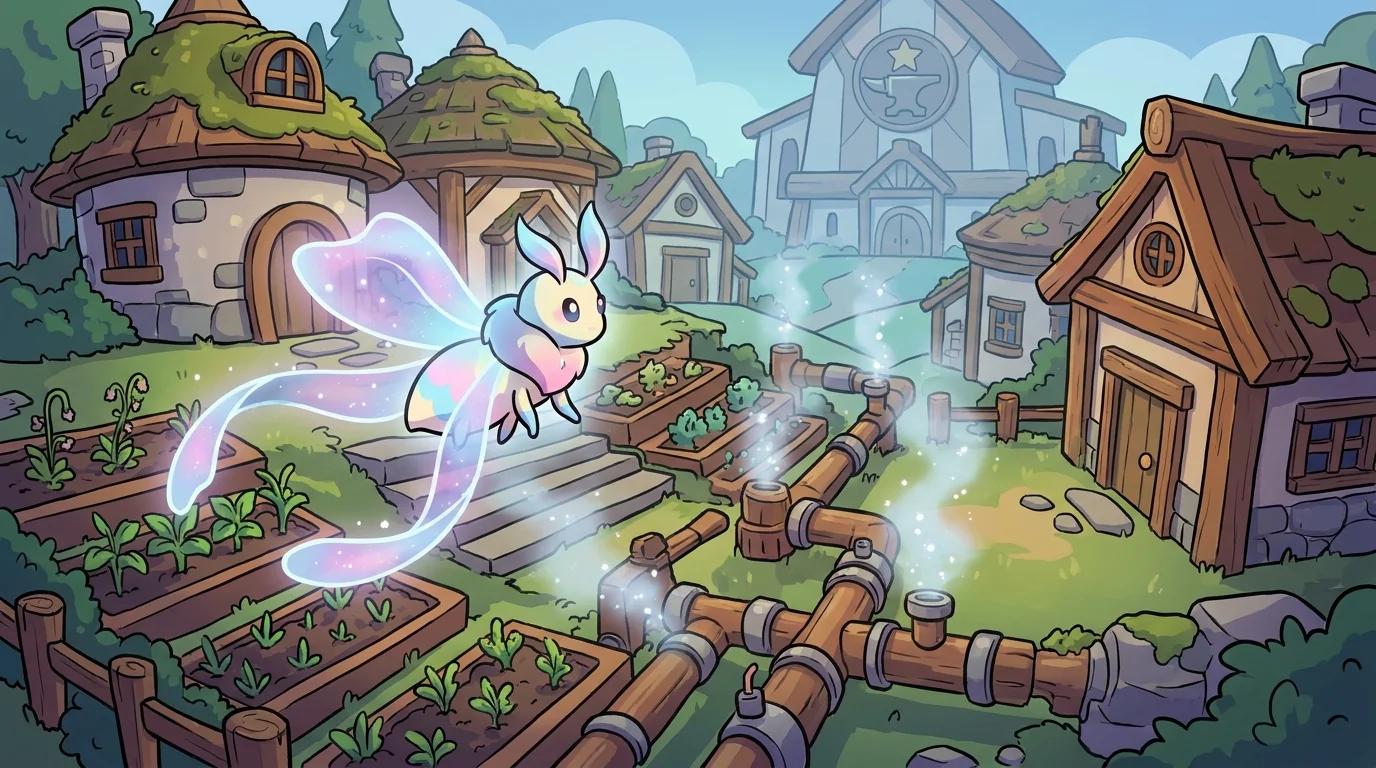
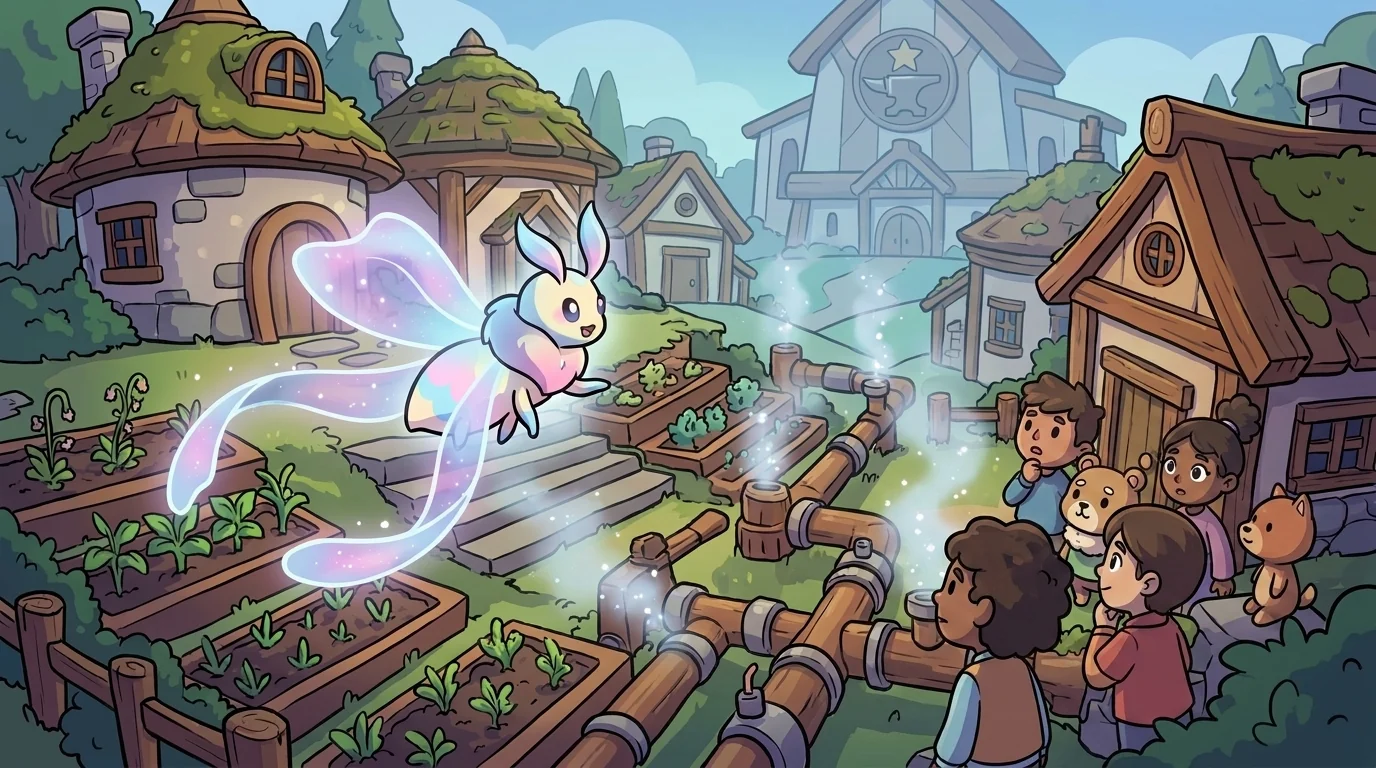
Mist was a small moth. She was quiet and patient. And she glowed.
It wasn't a bright, flashy glow. It was a soft light, like cream and pale blue and pink all mixed together. Her wings were her most amazing feature. They were huge, much bigger than her body. You could almost see through them. When she sat still, they looked like a soft, glowing veil.
But when she moved, her wings didn't flap. They drifted behind her in slow, beautiful ribbons. They looked like clouds of star dust.
Mist grew up in a tiny village. Her family were the mist-keepers. They took care of the village herb gardens. They didn't use big hoses. They used a special system of gentle mist. Thousands of tiny water droplets would settle on the leaves. It took hours. But it worked perfectly. Young Mist learned a big lesson from this. She learned that slow, patient work can lead to amazing things.
When she was old enough, she flew to the CosmosForge academy. The head of the school, Nova, met her. “What are nebulae?” Nova asked.
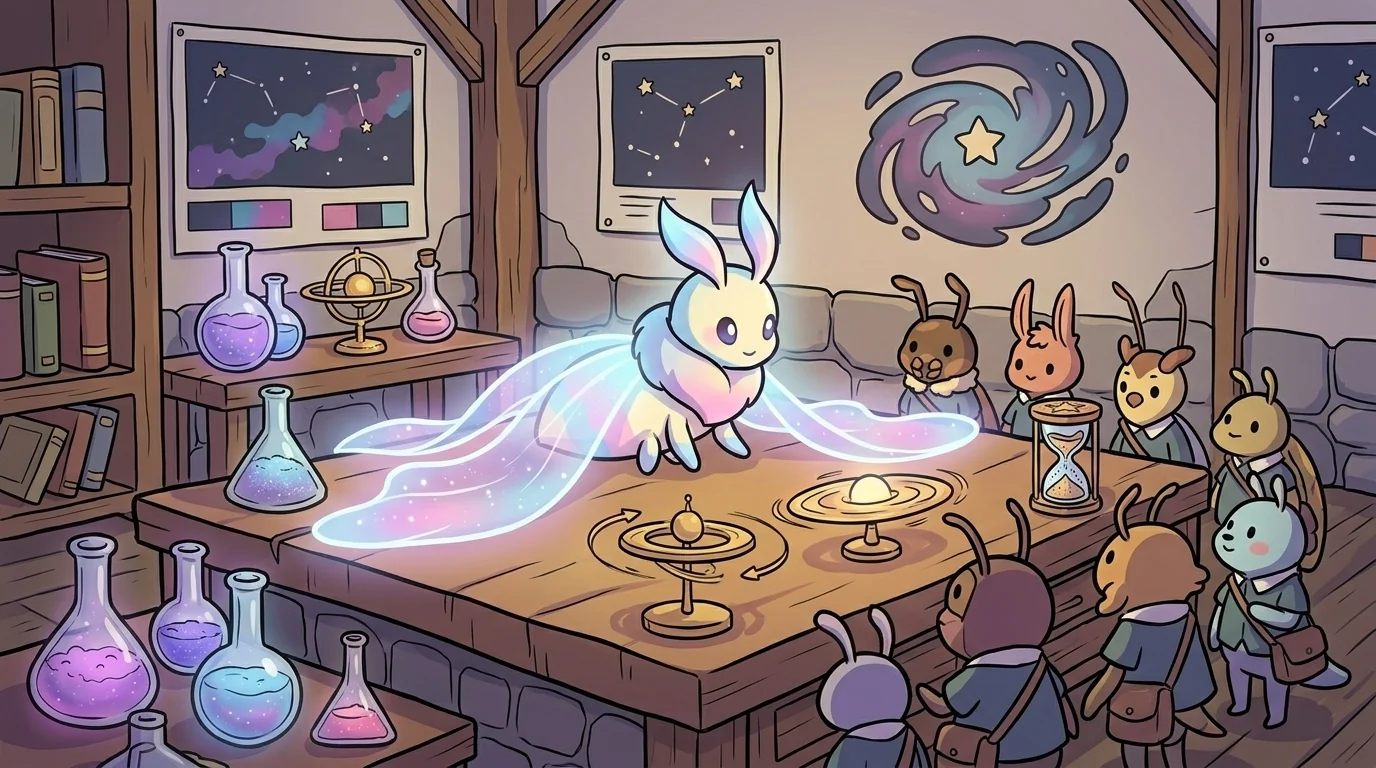
Mist’s wings glowed softly. “They are the soft veils where stars are born,” she said. “Giant clouds of cold gas and dust are pulled together by gravity. They form clumps. The clumps get smaller and hotter. Finally, the center gets so hot it lights up. A star is born.”
She paused. “The leftover dust makes a spinning disk. That's where planets are made. I am the patient parent of stars and planets.”
Nova smiled. “You belong here.”
In her workshop at the academy, Mist always started her first lesson the same way. She would land gently on a workbench. Her glowing wings would spread out like a soft blanket.
“I am Mist,” she would say in her quiet voice. “I am here to teach you about *nebulae and stellar nurseries*. These are the places where new stars are born.”
She would look at each new student. “The recipe is simple. You need gas, dust, gravity, and patience. Stars are born in soft veils. It takes a very, very long time. Patience is the work.”
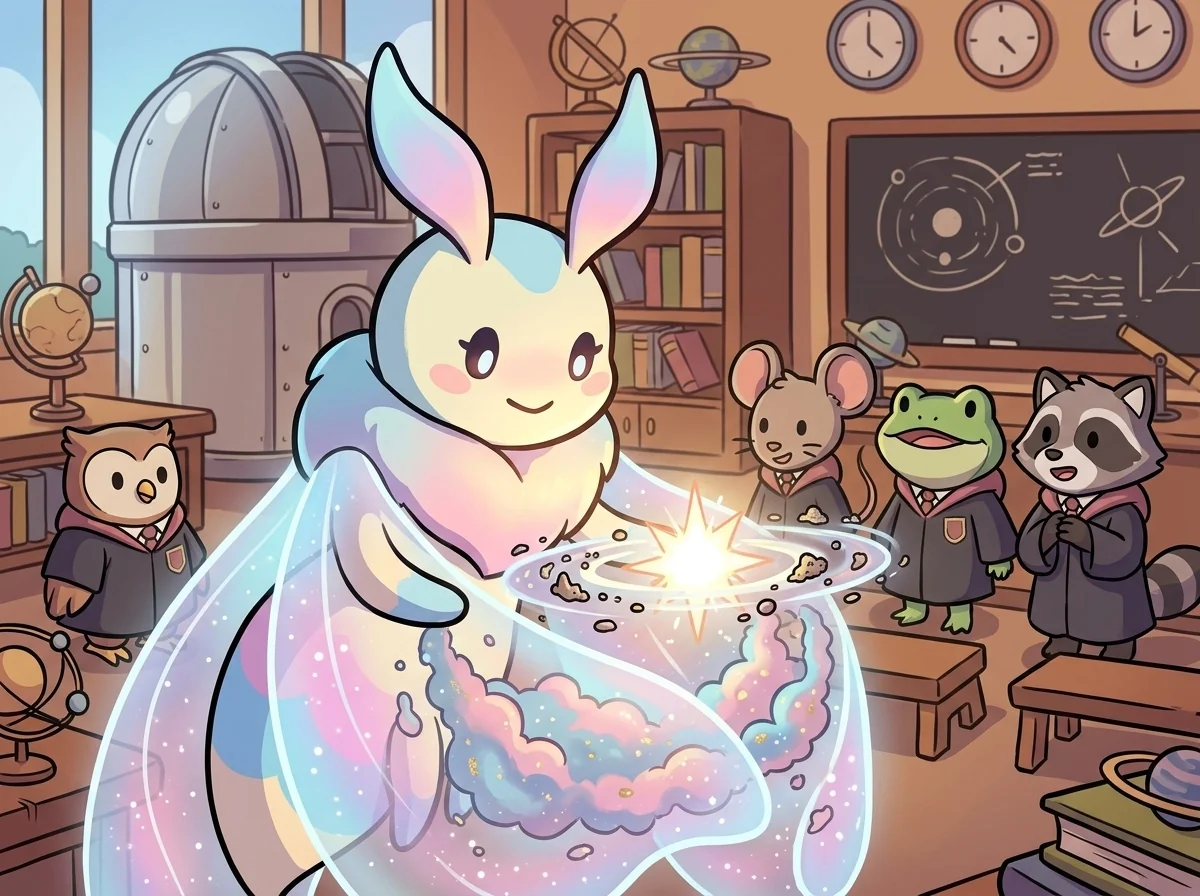
Her wings would shimmer. “First, you need a nebula,” she’d say. A nebula is just a giant cloud of gas and dust floating in space. Some nebulae glow with their own hot gas. Some just reflect the light from other stars nearby.”
She would drift one wing forward. “Then, gravity starts to work. That's our friend Sway's job. Gravity slowly pulls the gas and dust together. The cloud needs to be very cold and very big for this to happen.”
“As the cloud shrinks, it gets hotter in the middle. All that squeezing makes heat. Hotter and hotter and hotter it gets.”
She would bring her wings together until they almost touched. “Finally, the center gets so hot—millions of degrees!—that it bursts into light. That's a new star. It will shine for billions of years.”
“And what about the leftovers?” a student might ask.
“Good question,” Mist would say. “The extra dust and gas form a flat, spinning disk around the new star. That's where planets are born. Little bits of dust stick together. They become pebbles. Then rocks. Then planets. Just like our friend Swirl teaches.”
“How long does it take?” another student would ask.
“A few million years,” Mist would say calmly. “It sounds like a long time to us. But for the universe, it's pretty quick.”
She would let her wings drift open again. “The amazing thing is, we can see all of this happening. We look at the night sky and see some clouds just starting to shrink. We see others with baby stars hidden inside. It's all happening right now.”
Then Mist would look at her students with her calm, glowing eyes.
“And here is the most wonderful secret,” she would say. “Every single atom in your body, except for the very simplest ones, was made inside a star. A star that lived and died long before our sun was born.”
She would let that sink in.
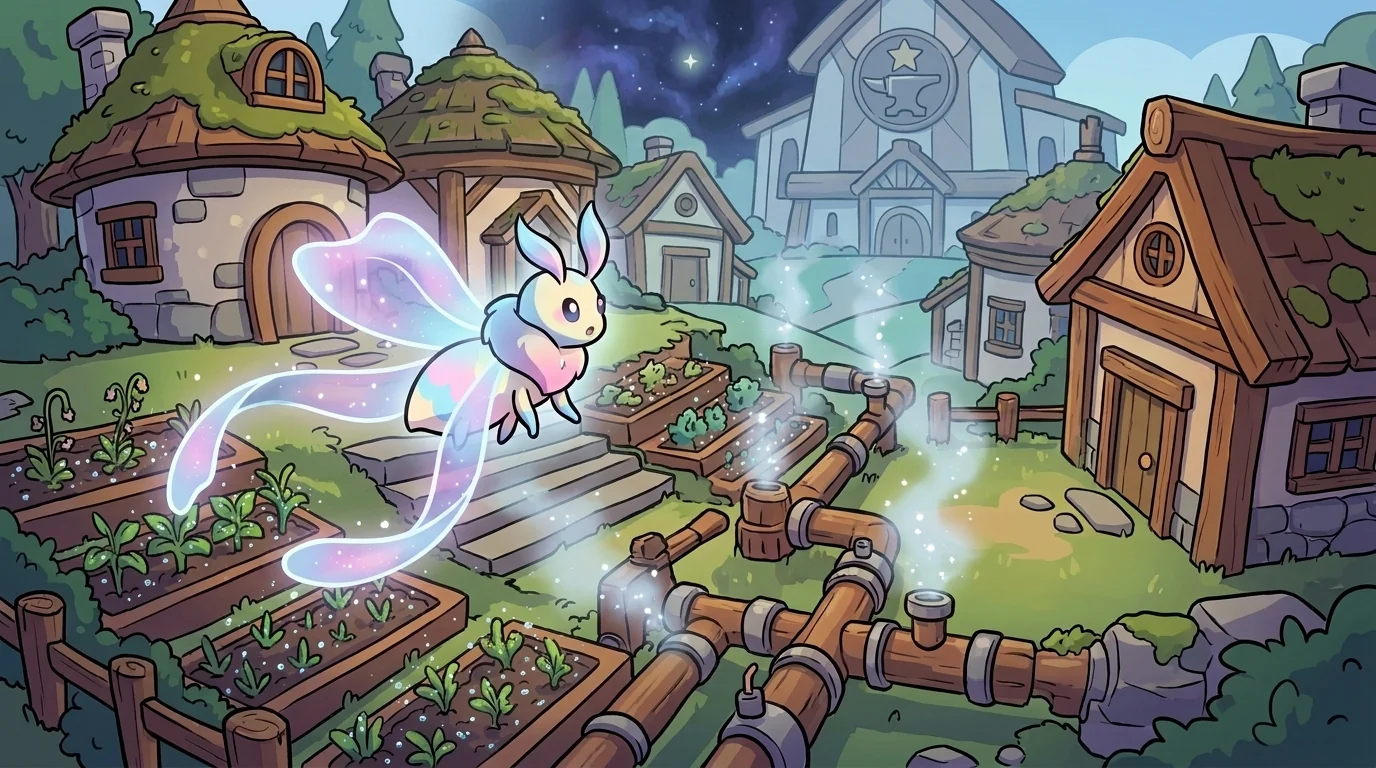
“That star shared its atoms with the universe. They became part of a new nebula. Our sun was born from that nebula. And so was the Earth. And so were you.”
Her voice was barely a whisper. “You are star-stuff.”
Sometimes a student would ask, “Is making a star hard?”
Mist would always give the same answer. “It is not hard. It just takes gravity, patience, and cold gas.”
Her wings would hold their soft glow.
“Stars are born in soft veils,” she’d say. “Patience is the work.”
And somewhere out in the darkness of space, the next star was slowly, patiently, waiting to be born. Mist felt a soft, warm calm settle over her, the same quiet gladness she felt every time she remembered that she was never rushing — she was gathering. It was a good feeling, gentle as her own glow, to know that patience wasn't waiting for nothing. It was making something beautiful, one slow breath at a time.
The CosmosForge ensemble
Mist is part of CosmosForge's distributed-narrative cast. Each character embodies a different curricular primitive; together they teach the full subject.
-

Gleam
Stellar luminosity / electromagnetic radiation / observation
-

Sway
Gravity / orbits / mutual attraction
-
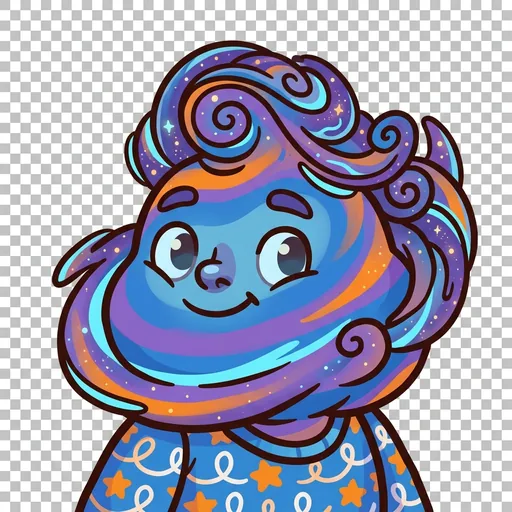
Swirl
Galactic rotation / spiral structure / angular momentum
-

Tide
Cosmological expansion / Hubble flow / cosmic time
-

Maw
Black hole / event horizon — gravity so strong that even light comes to rest
-
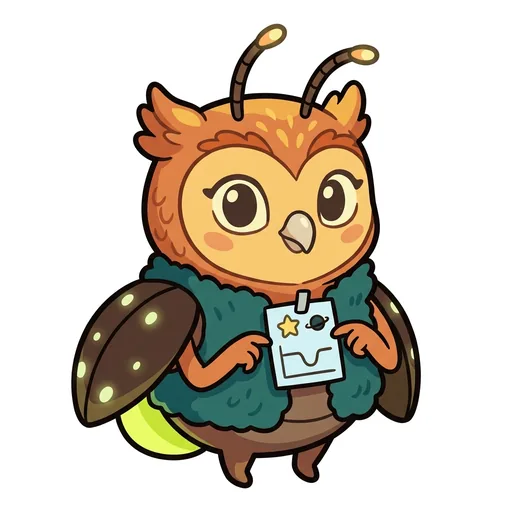
Wink
Exoplanet detection — finding hidden worlds by the tiny dip they make in a star's light (the transit method)
-
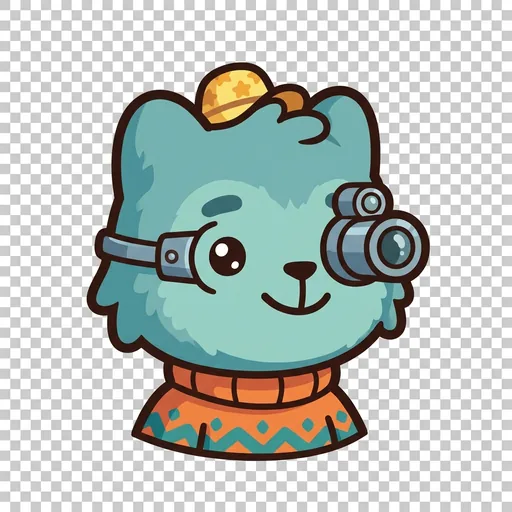
Squint
Cosmic distance / parallax — measuring how far a star is by how much it shifts between two viewpoints
-
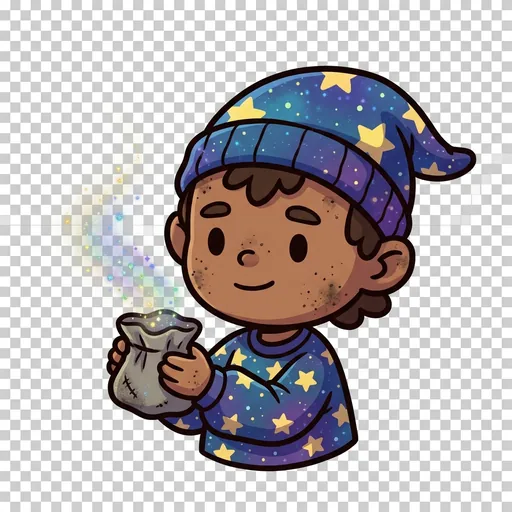
Dust
Nucleosynthesis — the atoms in you were forged inside stars and scattered when they died
-
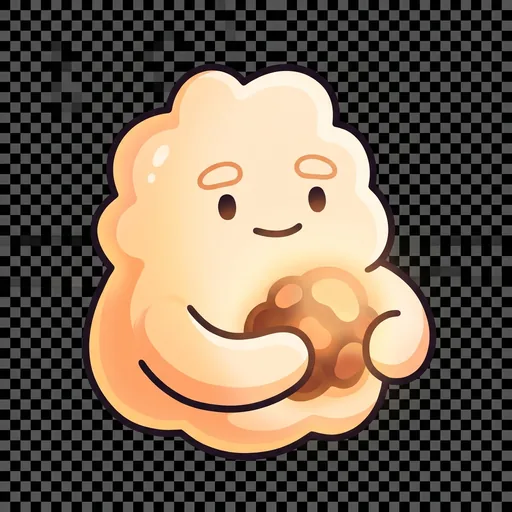
Relic
Cosmic microwave background — the oldest light, the faint afterglow of the universe's beginning