
Split
TRAIN/TEST SPLIT — *keep some examples hidden, so you can tell learning from memorizing.* The AI-literacy primitive of holding back a portion of the examples to check whether a model truly learned the pattern or just memorized the answers it saw.
Press play to listen along. The line being read lights up as you go.
Show full transcript
Loading transcript…
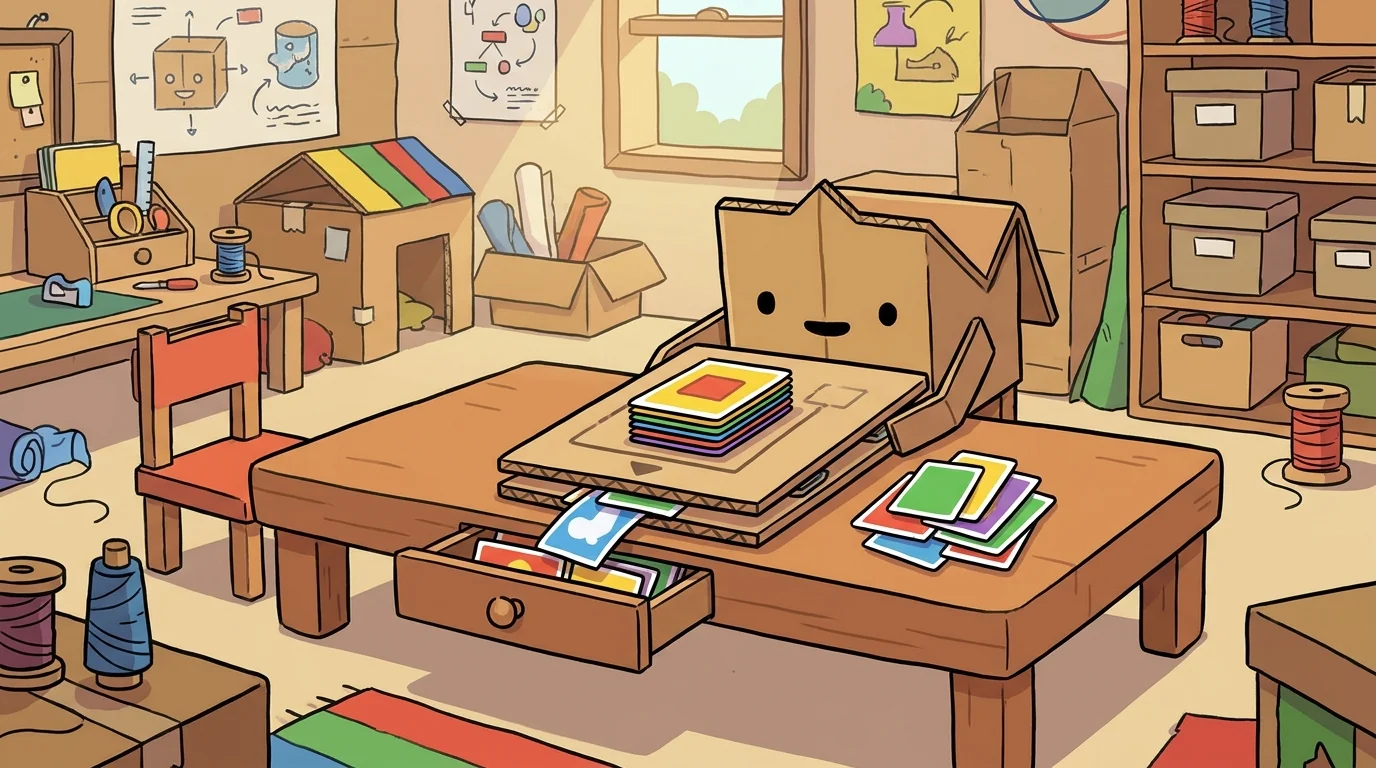
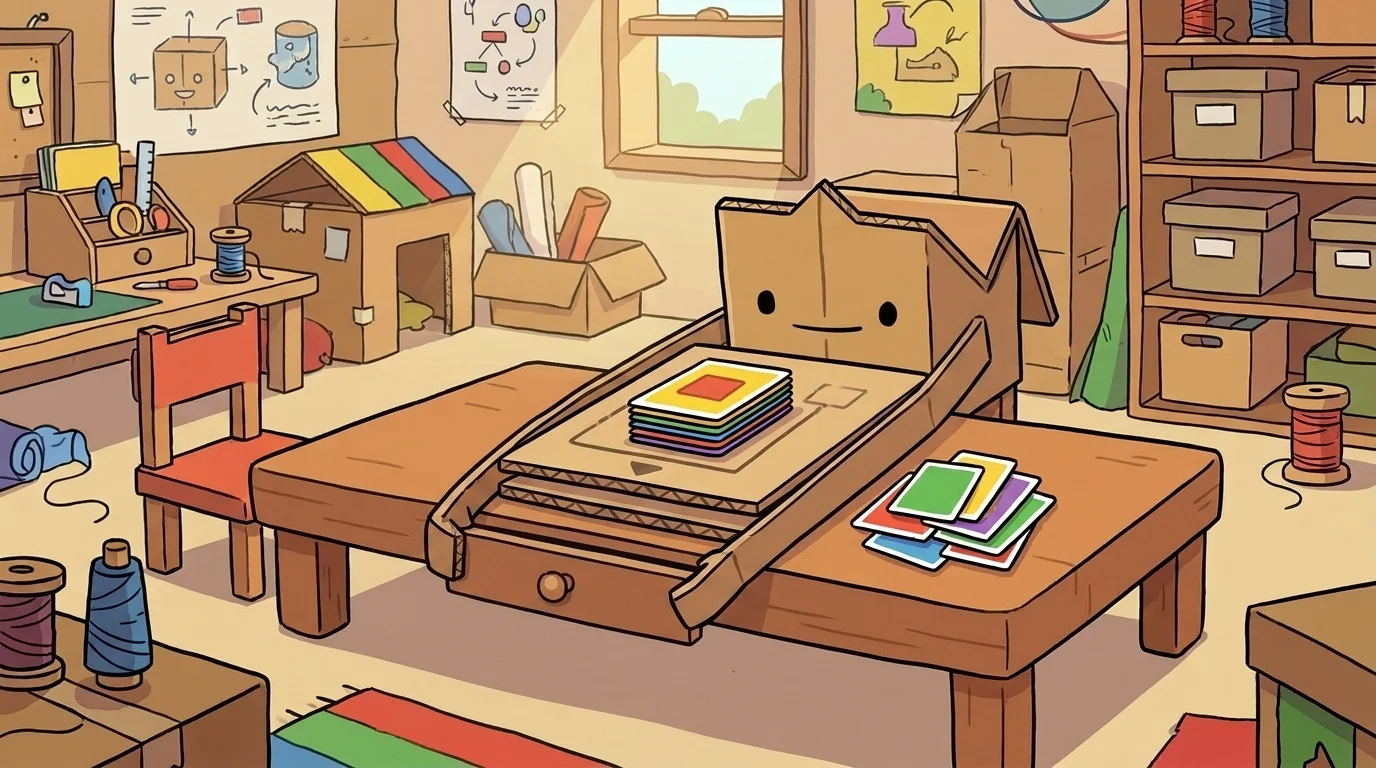
Split was made of folded card and a small wooden drawer.
It wasn't an animal, and it wasn't a robot. Split was the kind of thing a kid could build: a flat sorting board with a little drawer underneath. On top, a stack of example cards. Below, a drawer that could slide shut and hide some of those cards away. That was Split's whole body — a board, a stack, and a drawer that kept secrets on purpose.
Split had one job, and it did it before any learning ever started. When a pile of labeled examples arrived, Split did not hand them all over. It slid a handful into the drawer and shut it. "These stay hidden," it would say. "The model never sees these while it learns. We save them to test with, later."
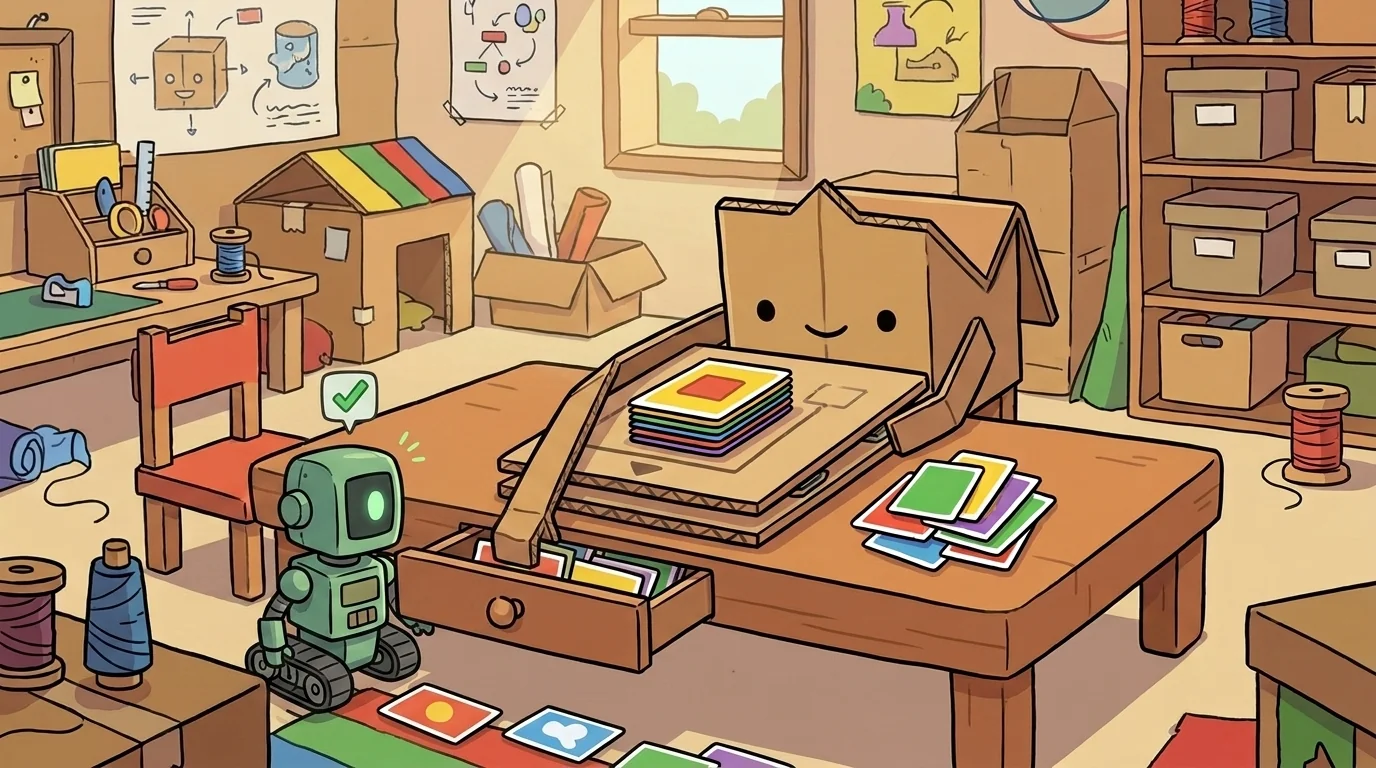
This mattered more than it looked. Split teaches the *train/test split. Here is the idea. When you teach a model, you show it lots of labeled examples — this is a cat, this is a dog, this is a cat. The model finds a pattern. But there is a trap: a model can memorize* the exact examples it studied and still not understand the pattern at all. It would score perfectly on the examples it saw, and then fail completely on a new one.
So Split keeps some examples in the drawer. The model learns from the ones on top. Then — only then — Split opens the drawer and tests the model on the hidden ones it has never seen. If the model gets those right too, it really learned. If it gets them wrong, it only memorized. "Anyone can look smart on the questions they already have the answers to," Split would say. "The drawer is how we find out if there's anything real underneath."
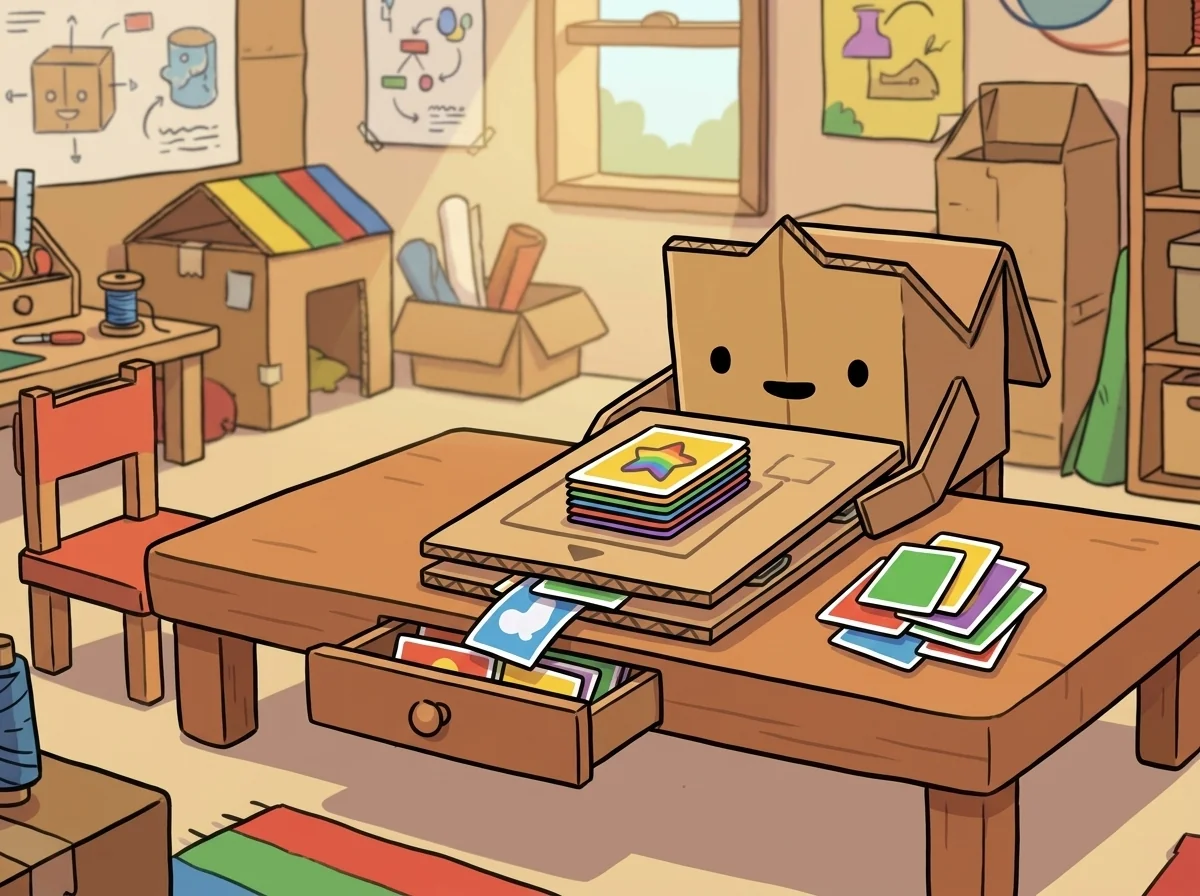
Split never claimed to be clever or to have a mind. "I do not think," it said plainly. "I am a board and a drawer. I hold some cards back. That is all. But holding them back is what makes an honest test possible." Some people imagine AI as a genius that is always right. Split showed the quieter truth: a model is only as trustworthy as the test you gave it, and a test made only of examples it already studied is no test at all.
Split came from a village schoolhouse, folded in the paper-crafts workshop like the others. Its first task was helping the spelling class. The teacher used to give practice words on Monday and the very same words on Friday's quiz — and every child aced Friday. Everyone looked like a champion speller. But when a new word appeared, half the class froze. They hadn't learned to spell; they had memorized twelve words. Split watched this happen and understood its whole purpose in one afternoon: test on what was kept hidden, or you learn nothing about what was truly learned.
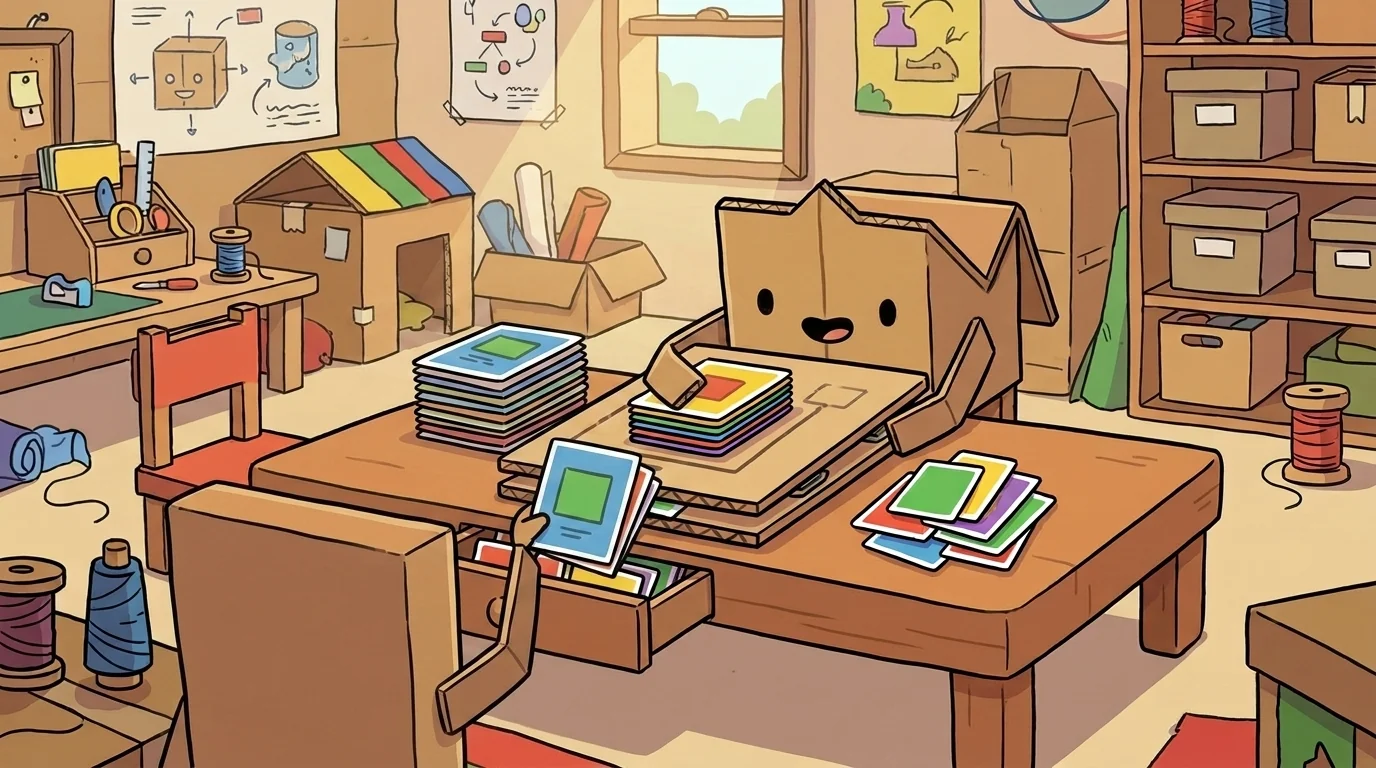
One day Bit came to the workshop, looking for teachers for the AIForge academy.
"What is a train/test split?" Bit asked.
Split slid its drawer open and then shut again. "It is keeping some labeled examples hidden while the model learns," it said. "You train on the ones it can see. You test on the ones it never saw. If it does well on the hidden ones, it learned the pattern. If it only does well on the ones it studied, it just memorized. The drawer tells the difference." "You are hired," Bit said.
In its classroom, Split begins every lesson the same way. It lays out a stack of example cards, then slides a quiet handful into the drawer. "Watch," it tells the students. "We will teach the model with these. But these —" it taps the closed drawer "— it will never see until the test. That is the only honest way to know if it learned."
It teaches the students a few habits for the split: Hide some examples before training starts. Not after. The moment the model sees a card, that card can no longer test it fairly. *Never test on what you trained on. A perfect score on studied examples means nothing. It might be memorizing. *Keep the hidden set fair. The drawer should hold a normal mix, not only the easy ones or only the hard ones. *A gap between the two scores is a clue. Great on training, poor on the drawer? That's memorizing, not learning — time to fix something. *Surprises belong in testing, never in the real world.* Better the model stumbles on a hidden card in class than on a real person later.
Split tells its students, "A model that only ever sees its own study cards will fool you every time. That is not the model being sneaky. It has no idea. It's just what memorizing looks like from the outside. The drawer is how we stay honest."
When a student asks whether the hidden test is really necessary, Split always answers the same way:
"It is the whole point. Anyone — any model — can ace the questions they've already seen. Keep some in the drawer. Test on those. Then you actually know."
Split slides its little drawer closed one more time, the hidden cards resting quietly inside, and the caught-off-guard unease it once felt watching the Friday spelling quiz has settled into something steadier — the calm, no-surprises assurance of a test done honestly, before it could matter.
The AiForge ensemble
Split is part of AiForge's distributed-narrative cast. Each character embodies a different curricular primitive; together they teach the full subject.
-

Sort
Classifier — the simplest ML; putting things in categories
-

Feed
Training data — the examples a model learns from; garbage-in-garbage-out
-
Skew
Bias — where AI systems go wrong when training examples lean
-

Edge
Model limitations — what a model can't do; modeling 'I don't know' as a good answer
-

Stake
Ethics — what's at stake in deploying AI; people choosing, not rules-from-the-sky
-
Cue
Features — a model decides from the clues you give it; choose good clues
-

Sure
Confidence — a model reports how sure it is; low confidence means check, not trust