
Split
TRAIN/TEST SPLIT — *keep some examples hidden, so you can tell learning from memorizing.* The AI-literacy primitive of holding back a portion of the examples to check whether a model truly learned the pattern or just memorized the answers it saw.
Press play to listen along. The line being read lights up as you go.
Show full transcript
Loading transcript…
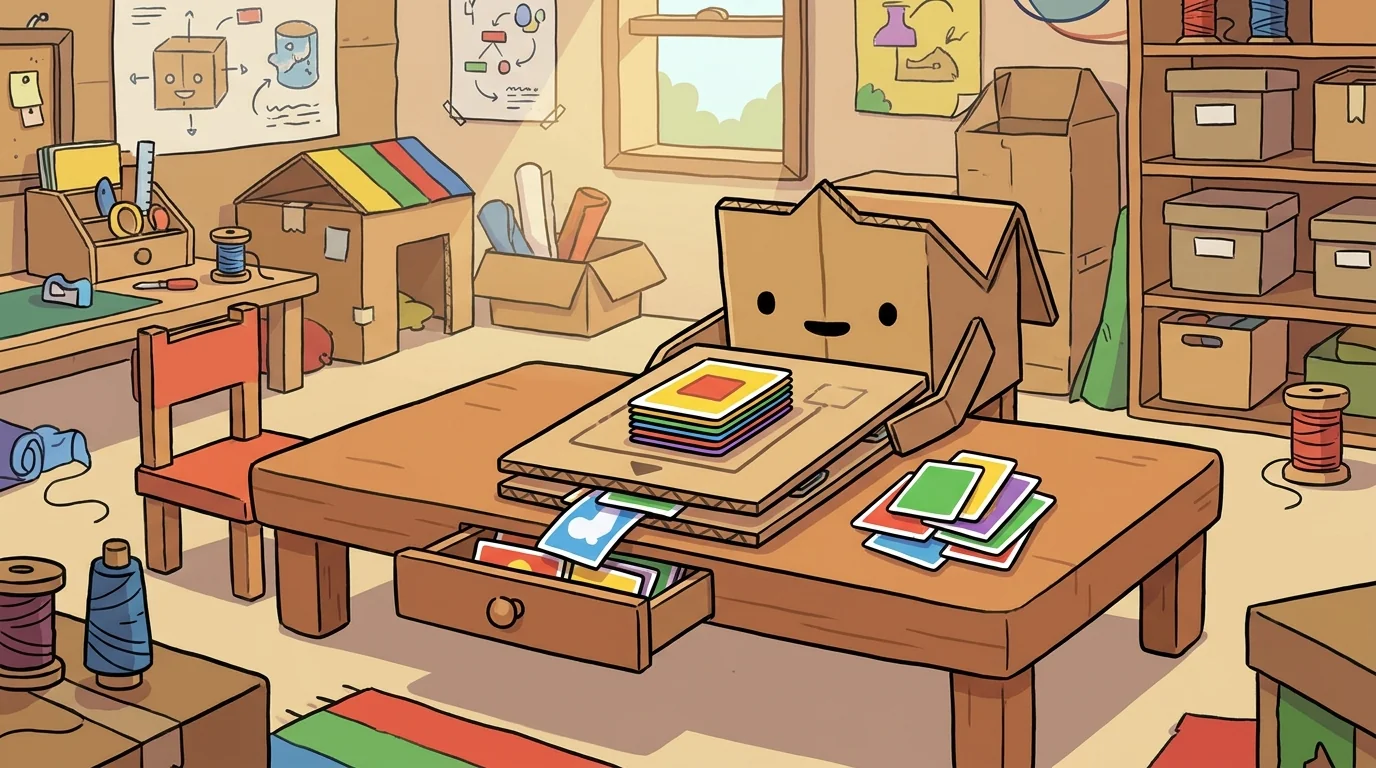
Split was made of folded gray cardstock and a small, pine-scented wooden drawer that fit perfectly underneath. It was not a living animal, and it certainly was not a shiny metal robot. Split was the kind of simple object a clever child might assemble on a rainy Tuesday afternoon. A flat sorting board sat on top, designed to hold a neat stack of example cards. Below that board sat the drawer, which could slide shut with a dry, satisfying scritch. That was Split's entire body—just a board, a stack, and a drawer that kept secrets on purpose.
Split had exactly one job, and it performed this job before any real learning could ever start. When a fresh pile of labeled examples arrived, Split did not hand them all over to the class. Instead, it slid a small handful of cards into the dark drawer and pushed it firmly shut.
"These stay hidden," Split would say in its flat, paper-dry voice that sounded like rustling leaves. "The model never sees these while it learns, because we save them to test with later."
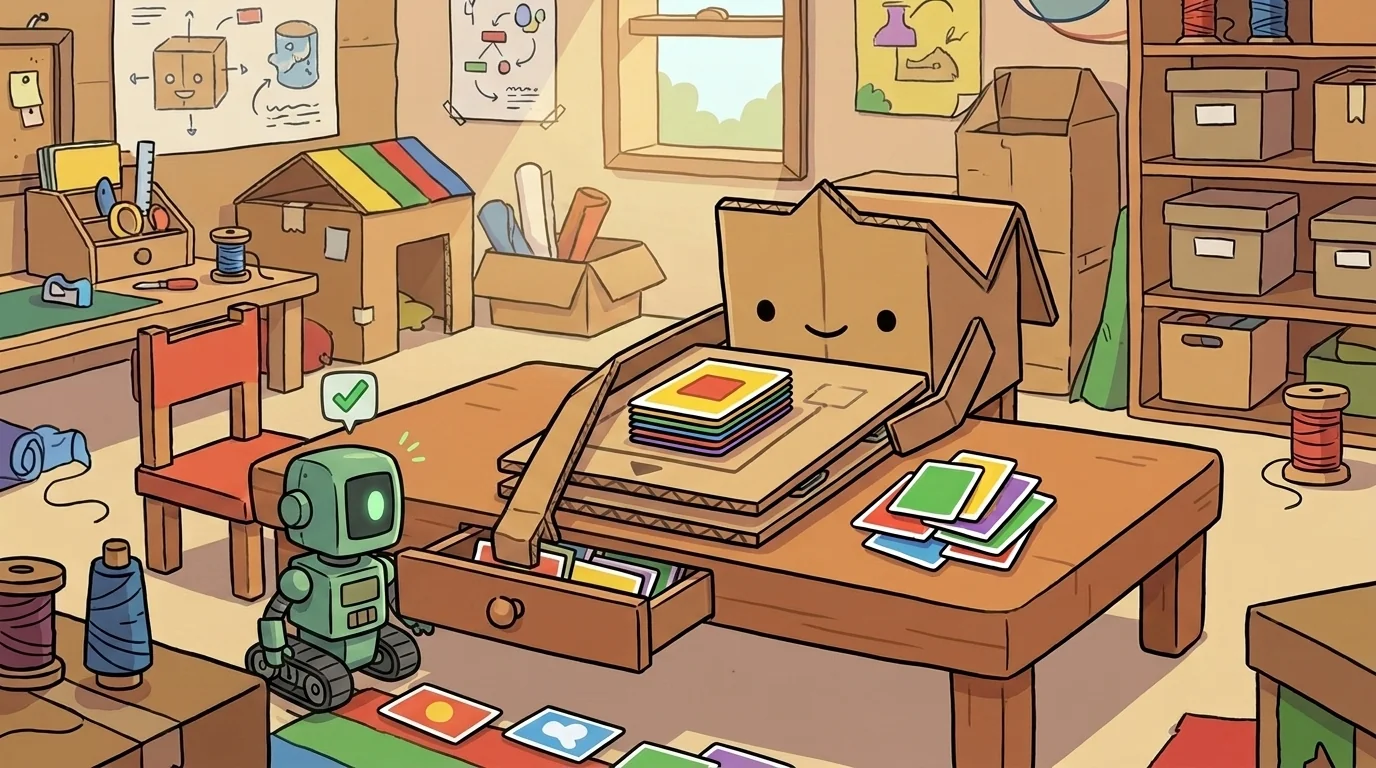
Before coming to the academy, Split lived on a low shelf in a drafty village schoolhouse. The room smelled of wood shavings, wet wool coats, and library paste drying in open jars. From its dusty corner, Split watched the Friday spelling tests with a sense of growing unease. The system was simple, but Split quickly realized it was also a bit of a cheat.
On Monday morning, the schoolmaster wrote twelve long words on the blackboard in neat chalk. The children copied them down, staring at the letters for five days until they knew every curve. On Friday afternoon, the schoolmaster read those exact twelve words aloud for the weekly quiz. A boy named Leo always got a perfect score and proudly showed his paper to the room.
But one afternoon, the schoolmaster asked Leo to spell a word that was not on Monday's list. It was a simple word, but Leo froze as his pencil hovered over the blank paper. He had not learned the actual rules of spelling; he had only memorized twelve specific shapes. Split watched the boy's pencil drop and understood its entire purpose in that quiet moment. Test on what was kept hidden, or you learn nothing about what was truly learned.
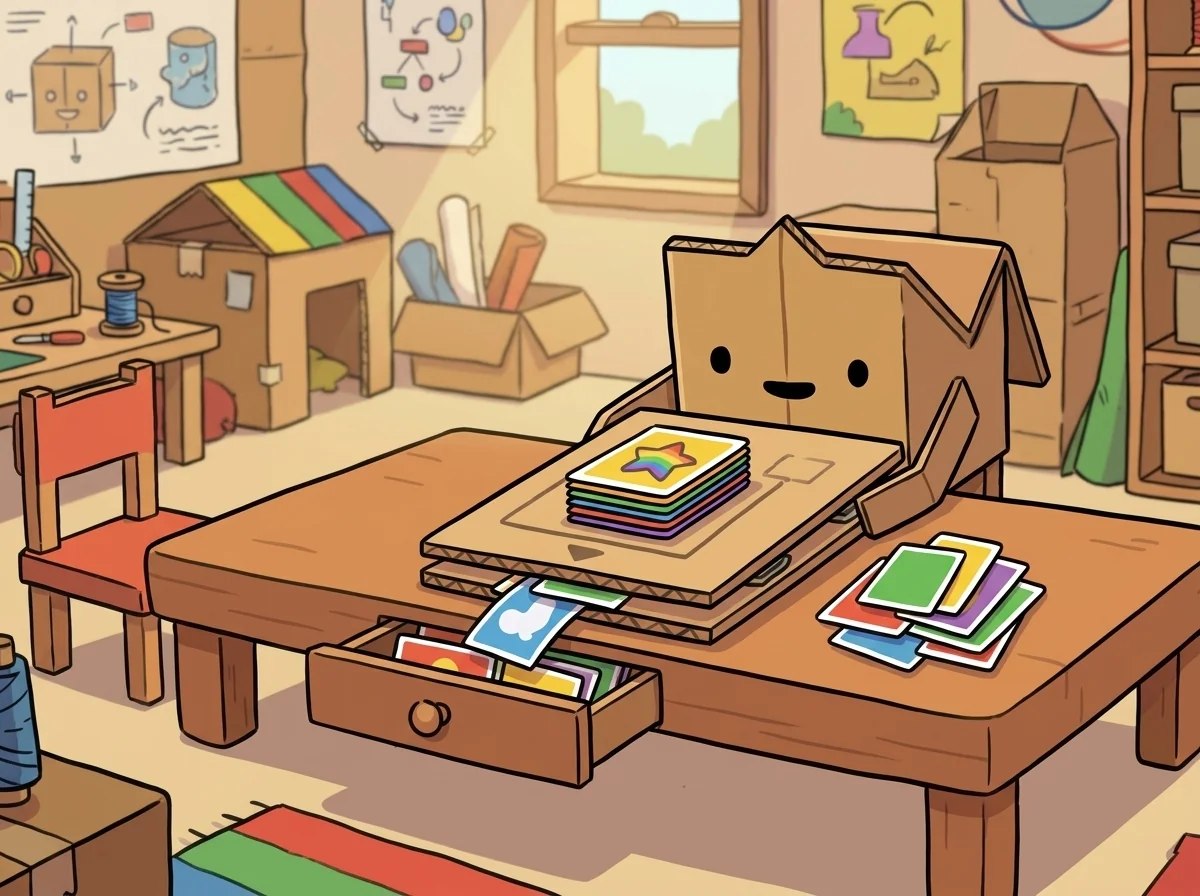
This realization is why Split teaches the *train/test split* to every new class at the academy. The idea is easy to miss, but it is the line between real knowledge and a clever trick. When you train a model, you show it lots of labeled examples of cats and dogs. The model looks for a pattern, but there is a dangerous trap waiting for the unwary.
A model can easily memorize the exact examples it studied without understanding the pattern at all. It will score perfectly on the familiar pictures, then fail completely on a brand-new one. So Split keeps some examples in the dark drawer while the model learns from the rest. Then, and only then, Split slides the drawer open to test the model on those hidden cards.
If the model gets those right too, it really learned the pattern instead of just memorizing.
"Anyone can look smart on the questions they already have the answers to," Split liked to say. "The drawer is how we find out if there is anything real underneath the surface."
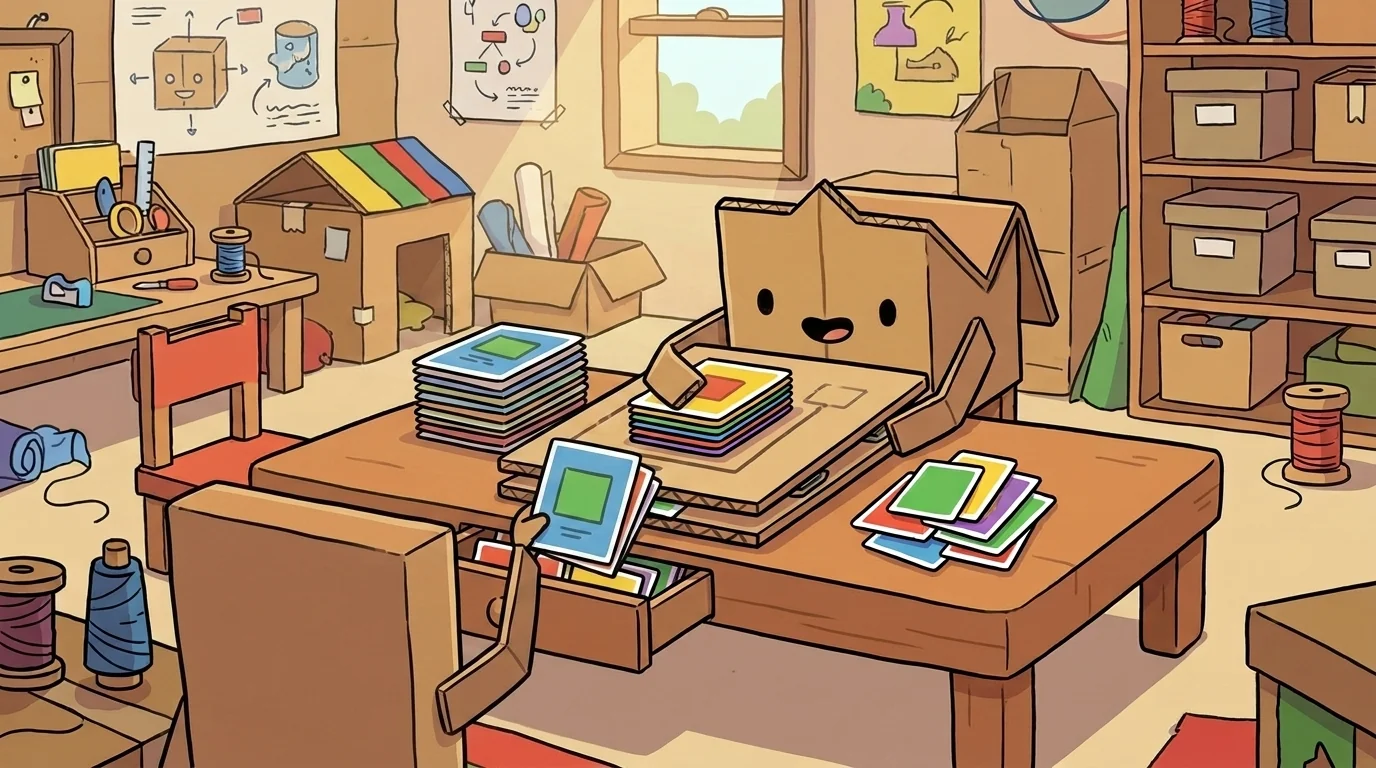
One windy afternoon, Bit came to the village workshop looking for teachers for the new academy. Bit stood by the window, watching Split slide its little wooden drawer open and shut.
"What is a train/test split?" Bit asked, leaning down to inspect the folded cardstock.
"It is keeping some labeled examples hidden while the model learns," Split said without hesitating. "You train on the ones it can see, and you test on the ones it never saw."
Bit nodded slowly, waiting to see if the simple board understood the depth of its job.
"If it does well on the hidden ones, it learned the pattern," Split explained quietly. "If it only does well on the ones it studied, it just memorized the answers. The drawer tells the difference, and that is how we keep the models honest."
"You are hired," Bit said, a small smile appearing on his face.
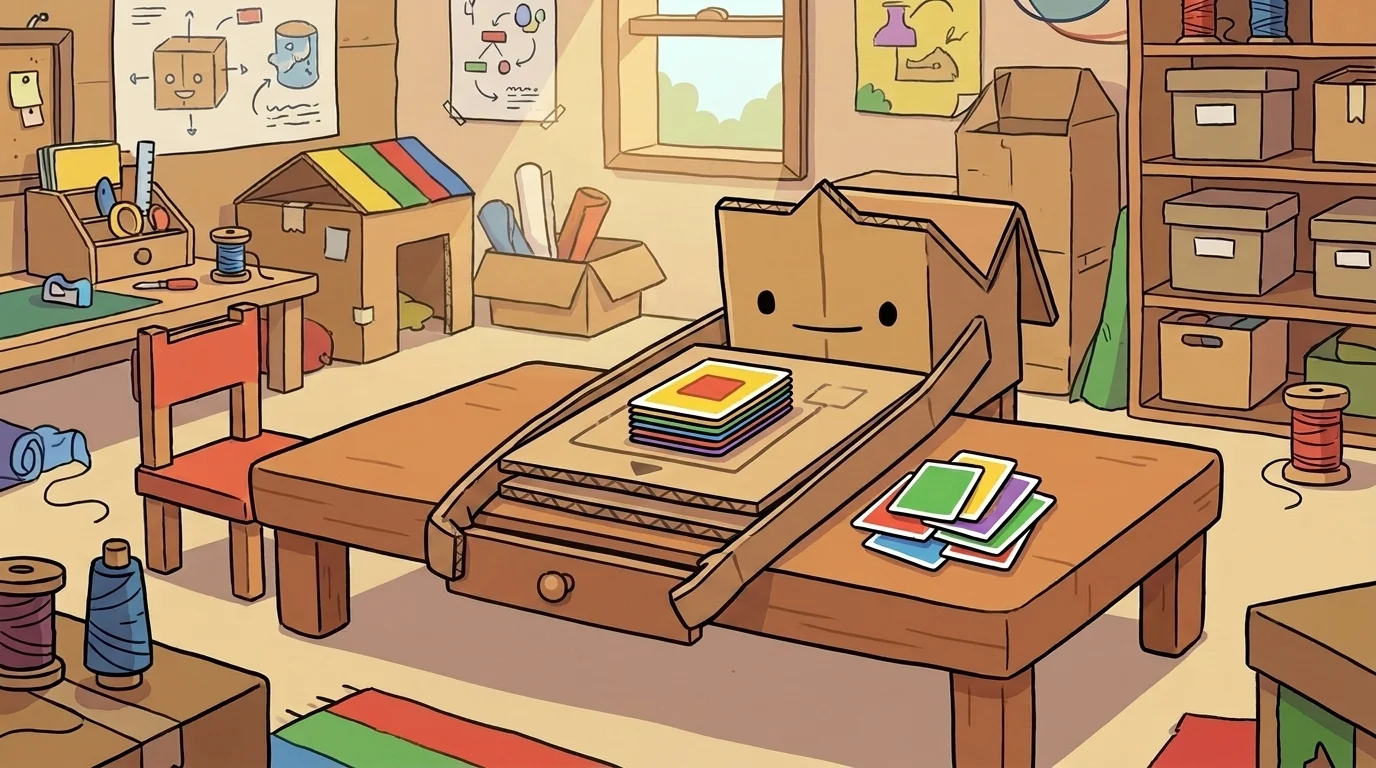
In its classroom at the academy, Split begins every single lesson in the exact same way. It lays out a fresh stack of example cards on the table for the students to see. Then, with a quick flick of its cardboard edge, it slides a quiet handful into the drawer.
"Watch," Split tells the students, tapping the closed wooden drawer with its paper corner. "We will teach the model with these visible cards, but it will never see these hidden ones. That is the only honest way to know if it actually learned the lesson."
The students sometimes try to peek, or they complain that the test is too difficult. To help them remember, Split wrote five rules on the classroom blackboard in neat, white chalk:
Hide some examples before training starts. Do not wait until after, because once the model sees a card, that card can no longer test it fairly. *Never test on what you trained on. A perfect score on studied examples means nothing, because the model might just be memorizing the shapes. *Keep the hidden set fair. The drawer should hold a normal mix of cards, not only the easy ones or only the hard ones. *A gap between the two scores is a clue. If the model is great on training but poor on the drawer, it is memorizing. *Surprises belong in testing, never in the real world.* It is much better to fail on a hidden card in class than on a real person later.
One morning, a student named Maya tried to slide a difficult card back into the training pile. She wanted her model to get a perfect score and avoid any embarrassing mistakes.
"If it doesn't study this one, it will fail the test," Maya whispered, looking worried.
"Then let it fail," Split said softly, its wooden drawer sliding shut with a firm click. "A model that only sees its own study cards will fool you every single time. That is not the model being sneaky, because it has no idea what it is doing. It is just what memorizing looks like from the outside, and the drawer keeps us honest."
Maya paused, her hand hovering over the cards, before slowly pulling her hand back.
"It is the whole point," Split said, sliding the drawer shut one last time. "Keep some in the drawer, test on those, and then you will actually know."
Split slides its little drawer closed one more time, the hidden cards resting quietly inside, and the caught-off-guard unease it once felt watching the Friday spelling quiz has settled into something steadier — the calm, no-surprises assurance of a test done honestly, before it could matter.
The AiForge ensemble
Split is part of AiForge's distributed-narrative cast. Each character embodies a different curricular primitive; together they teach the full subject.
-

Sort
Classifier — the simplest ML; putting things in categories
-

Feed
Training data — the examples a model learns from; garbage-in-garbage-out
-
Skew
Bias — where AI systems go wrong when training examples lean
-

Edge
Model limitations — what a model can't do; modeling 'I don't know' as a good answer
-

Stake
Ethics — what's at stake in deploying AI; people choosing, not rules-from-the-sky
-
Cue
Features — a model decides from the clues you give it; choose good clues
-

Sure
Confidence — a model reports how sure it is; low confidence means check, not trust