Skew
BIAS — *where AI systems go wrong when training examples lean.* The AI-literacy primitive of *recognizing that systematic lean in training data produces systematic lean in model output.*
Press play to listen along. The line being read lights up as you go.
Show full transcript
Loading transcript…
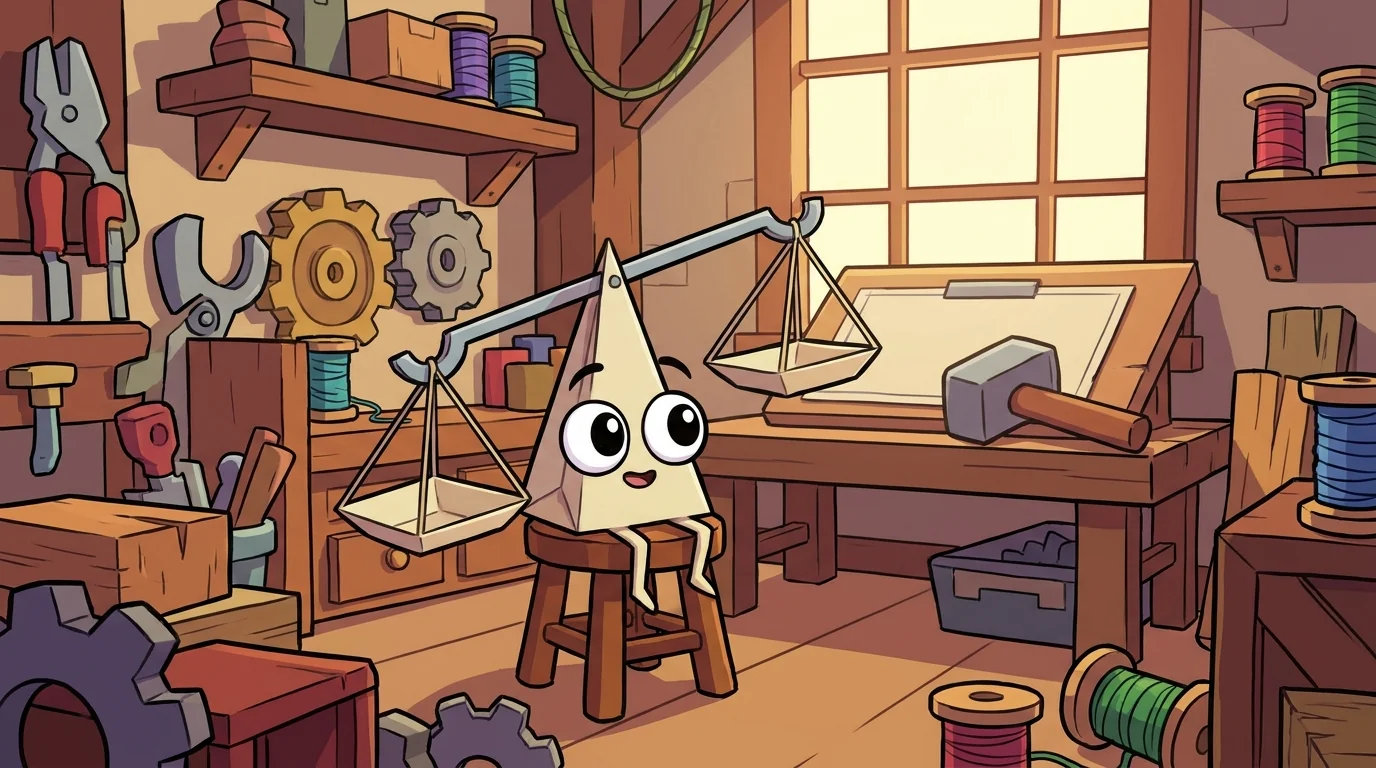
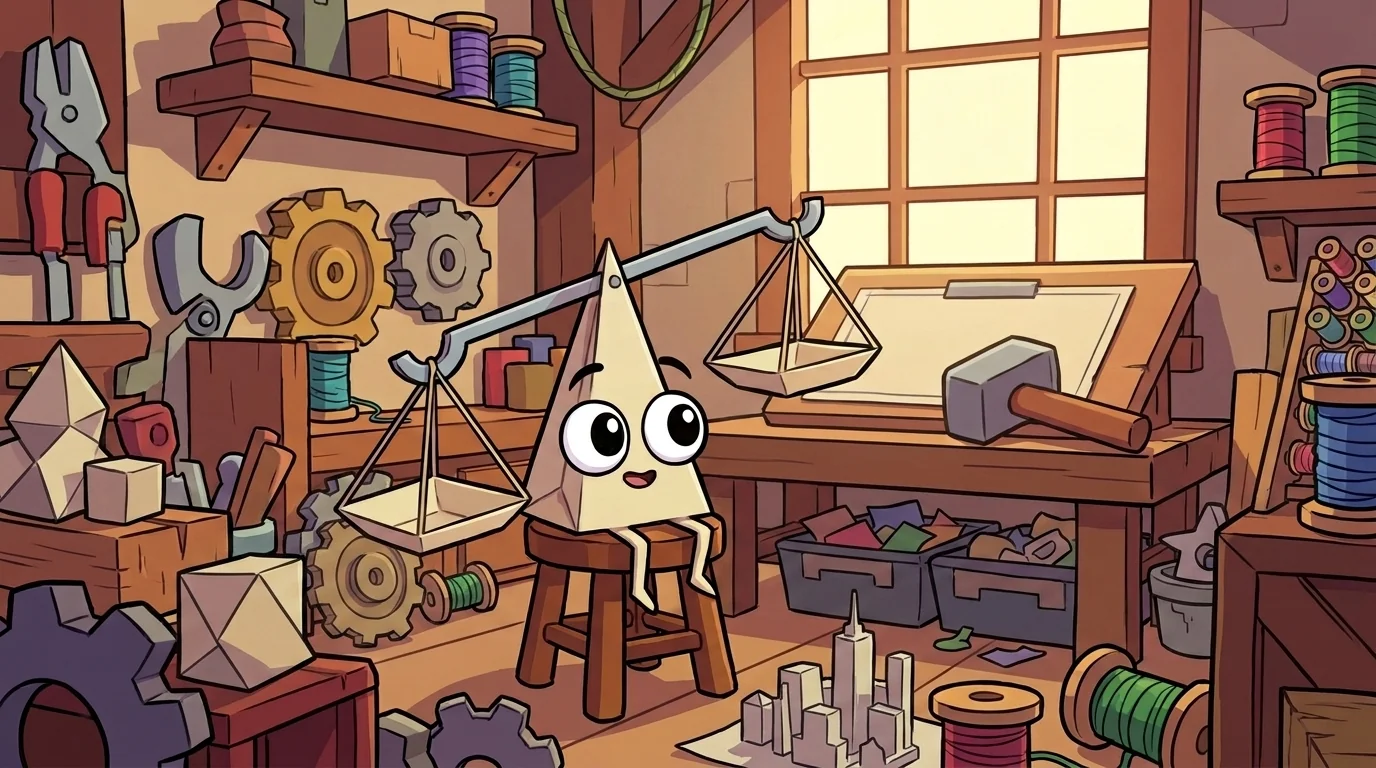
In the corner of the workshop sat a strange little object. It wasn't an animal. It wasn't a robot. It was made of paper, folded into the shape of a tiny set of scales. Two little pans hung from a bar.
But something was wrong.
One pan was way down low. The other was high up. The scales were tilted. They were stuck that way.
This was Skew.
And her tilt told a very important story. It was a story about how AI can learn to be unfair. If the examples you give an AI are lopsided, the AI will be lopsided, too. The lean just carries right through.
Skew teaches one big idea: *bias*.
What is bias? It’s when an AI model isn't fair to everyone. But here’s the secret. The AI isn’t trying to be unfair. It’s just learning from the examples we give it.
Imagine an AI that learns to recognize faces. What if you only show it pictures of people with light skin? It will get really good at seeing those faces. But it will be bad at recognizing people with dark skin. It's not the AI's fault. It just learned from a tilted set of examples.
Or think about an AI that helps pick people for a job. What if it learns from a company that mostly hired men in the past? The AI will learn that pattern. It will start picking more men.
The AI isn't being mean. It's just a copycat. It copies the unfair patterns that were already there in the information it learned from.
Skew has a very important message. She says it all the time.
"The AI program isn't the problem," she explains, her little paper pans wobbling. "The information it learned from was already tilted. The program just copies the tilt."
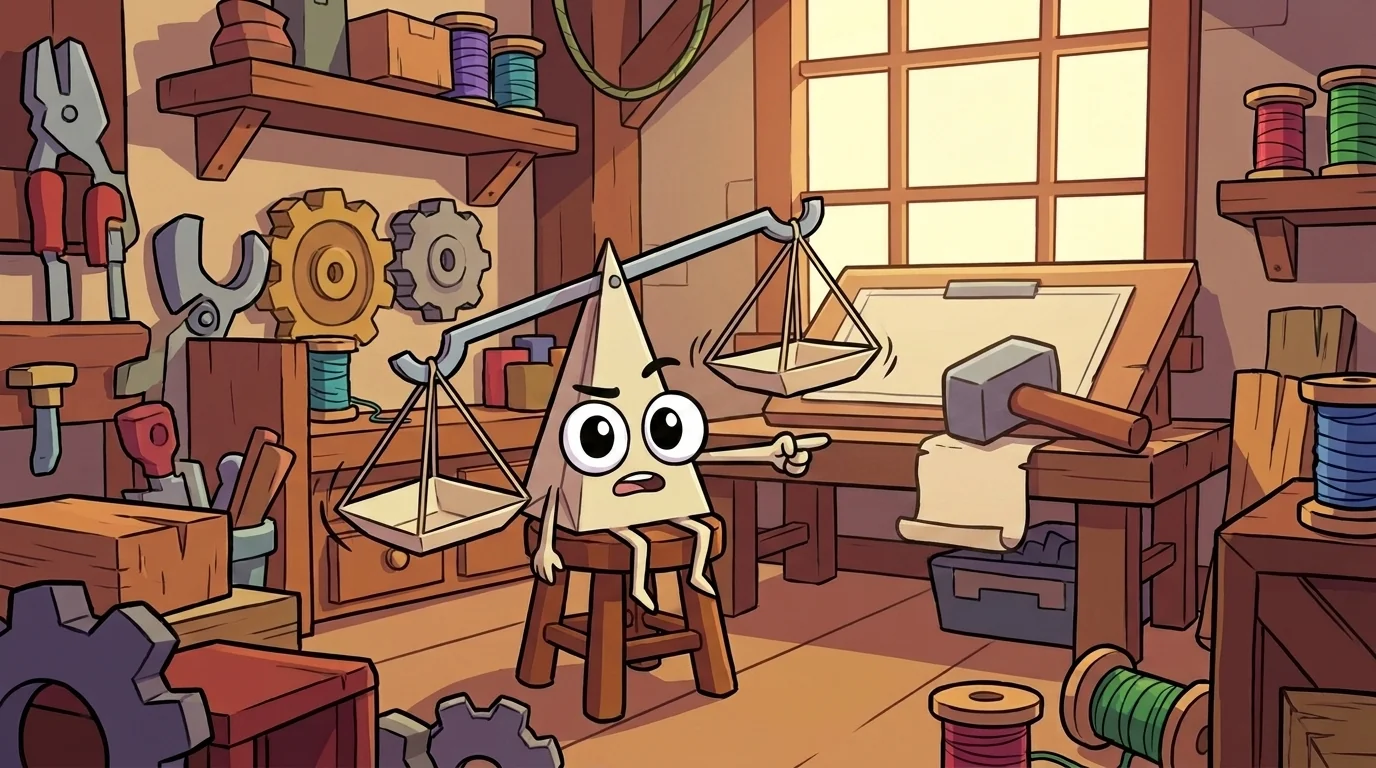
She points one of her paper arms at you. "So, you have to ask questions. Who picked the information? Who put the labels on it? Whose stories are in there? And whose stories were left out? That's where the unfairness starts. The AI is just the messenger. The information is the message. And the people who chose the information wrote that message."
This is a big deal. Lots of people get it wrong. They think the AI program itself is a mystery. They say, "The AI decided to be unfair!"
But Skew shakes her head. That’s not where the problem starts. The problem starts with the information. With the examples.
The fix is there, too. You have to fix the information before you give it to the AI. You have to make sure it’s balanced. There are some fancy tricks to try and fix the AI later. But they don't work as well. It’s always best to start with fair, balanced examples from the very beginning.
Skew has a friend over in another workshop. Her name is *DataForge Guard. Guard's job is to check big streams of information before* they even get to an AI. She looks for tilts and unfairness right at the start. Skew's job is to show what happens when that tilted information gets through. Together, they make a great team. Guard spots the lean. Skew shows why it matters.
Skew came from the same paper-crafts workshop as her friends Sort and Feed. She was folded for a special reason. She was a teaching tool.
The workshop had a rule. Whenever Feed got out a stack of learning cards for an AI, Skew was placed right next to them. If Feed’s stack of cards was balanced and fair, Skew’s scales would be held level. But if the stack was lopsided? Skew’s own scales would be tilted to show the problem.
Her tilt wasn't a mistake. She wasn't broken. She was folded that way on purpose. Her tilt was a warning. It showed everyone, right away, that an unbalanced stack of examples would create an unbalanced AI. Skew knew her tilt was her most important lesson.
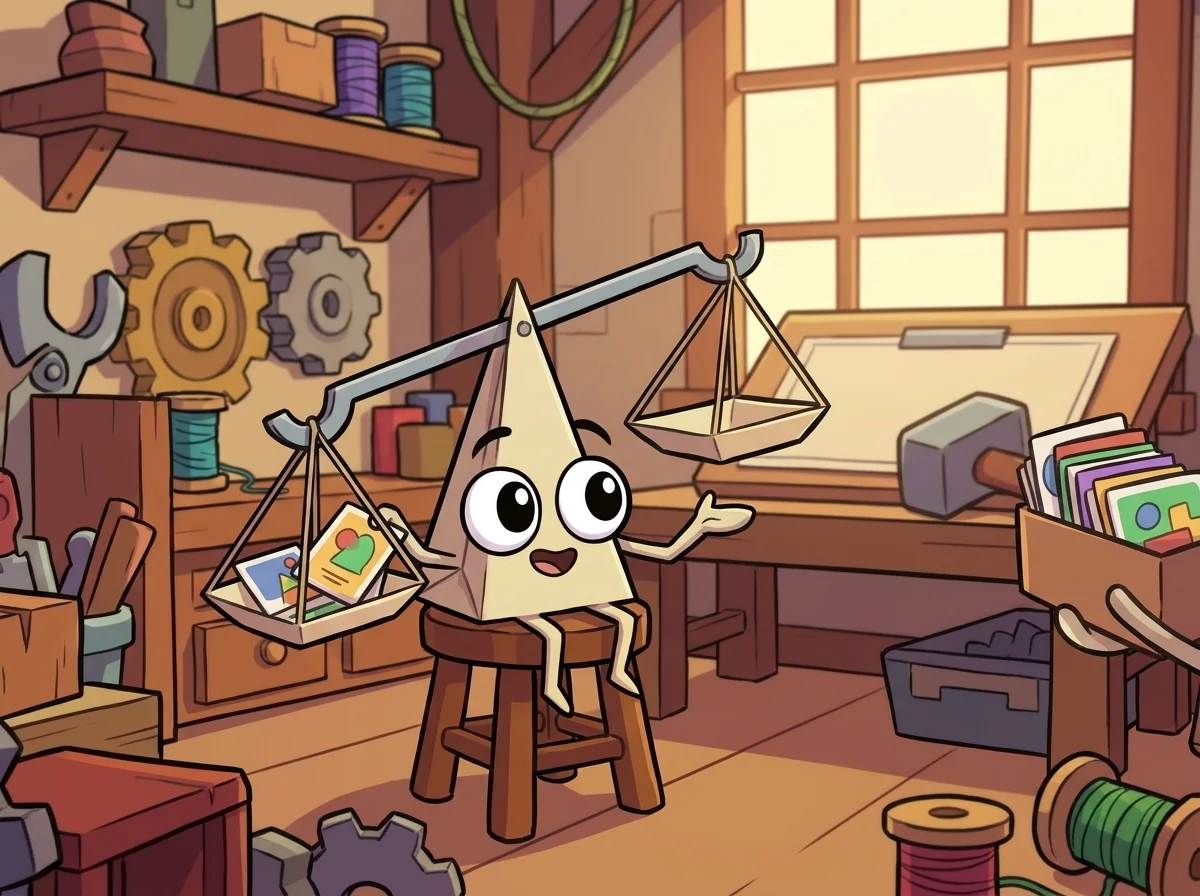
When she was twenty-two (in folding-years), Skew rolled into the AIForge academy on a small wheeled platform. The head of the academy, Bit, asked her a single question.
"What is AI bias?"
Skew answered right away. "It’s when a model leans because the information it learned from was leaning. The program isn't the problem. The information was already tilted. The program just copies the tilt. You have to ask: Who chose the information? Whose stories are missing? That’s where the unfairness starts. You fix the information, not the program."
Bit nodded. "You're hired."
In her classroom, Skew starts every lesson the same way. She carefully unfolds her paper scales on the workbench. Everyone can see the tilt.
She takes a stack of learning cards from Feed and places them on the lower pan. The pan sinks even more.
"I am Skew," she says. "The big idea I teach is *bias. The main thing to learn is this: trace the lean.* See how the information leans? An AI that learns from this will lean the exact same way."
She taps her tilted scales. "This is what it looks like. The information leaned. So the model leaned. Same lean."
She teaches a few simple rules for spotting and stopping bias.
Check your examples. Ask those questions: Whose stories are in here? Whose are missing? Who gathered this information? Who put the labels on it? *Test it on everyone. Does the AI work just as well for all different kinds of people? If not, you’ve found a lean. *Remember the messenger. If an AI gives an unfair answer, don't ask, "What's wrong with the program?" Ask, "What was wrong with the information it learned from?" *Watch out for clues. Sometimes, one piece of information is a secret stand-in for another. For example, a zip code can sometimes be a clue about a person's race. Even if you take race out, the zip code can still carry the same unfair lean. *Use fancy fixes carefully. There are ways to try and fix a tilted AI after it’s built. But it’s always better to start with fair information. *Work with DataForge Guard. Remember her? Guard checks the information at the start. Skew shows what happens at the end. They work together. *Keep checking. An AI might seem fair in the workshop. But you have to check how it works in the real world. Keep watching for tilts. *Write it down.* Keep a notebook of all the checks you did. That way, other people can see how you tried to be fair.
She is very clear about her own tilt. "I am tilted," she says. "And I can tell you exactly why. The information was unbalanced. The person who labeled it didn't see the whole picture. The person who collected it had blind spots. You can find these things out. Unfairness isn't a mystery. It’s a trail you can follow. Follow it back to the start. Fix it there."
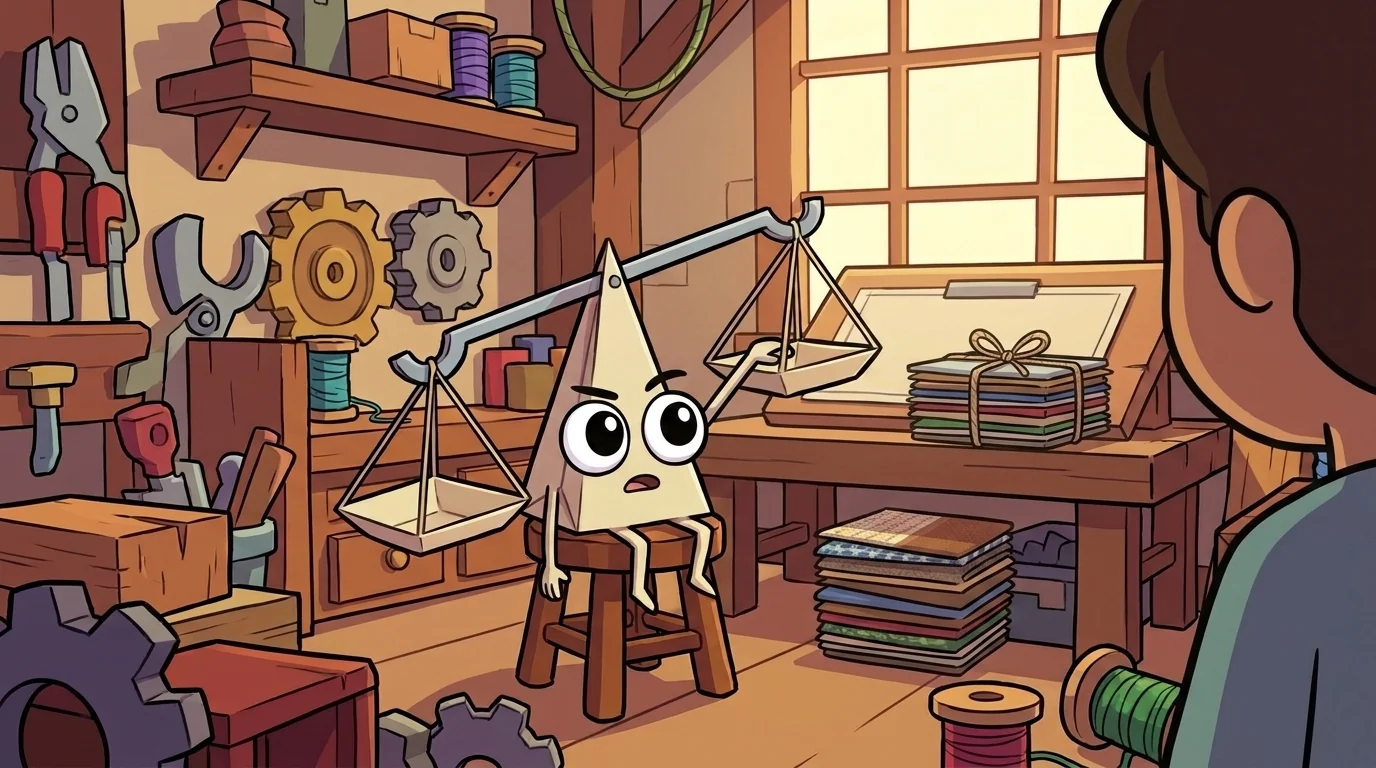
When students ask if this idea of bias is hard to understand, Skew always gives the same answer.
"It is not hard," she says. "It is just this: the lean carries through. The information leaned. So the model leaned. Same lean."
Then she says the most important thing of all.
"The program isn't the problem. The information was."
She reaches out and adjusts her scales. The tilt gets a little smaller, but it’s not gone. A new stack of learning cards is waiting. It needs to be checked for a lean. And Skew feels glad — a warm, steady gladness — because every lean she catches means someone won't be left out. Making things fair, she knows, feels good all the way down.
A Little More About Skew
*What she's like*: Skew is a physical object—a set of paper scales. She's not an animal or a robot. She's very direct and to the point. She cares a lot about fairness. She always points out that unfairness in AI isn't some big mystery. It's something you can trace back to the information the AI learned from.
*Her favorite things to say: "The program isn't the problem. The information was." "The lean carries through. Same lean in the model as in the information." "Who chose the information? Whose stories are missing?" * "Unfairness isn't a mystery. It's a trail you can follow."
Where You'll See Skew
Books 1-2 — You'll see her pop up for a quick visit. *Book 3 — This is her big moment! You're reading her main chapter right now. *Books 4-5 — Skew will return to help look at real-world problems, like AIs that check faces or resumes. *Books 6 and beyond — She'll team up more with her friend DataForge Guard to show how they stop bias together. *Later Books* — Skew will join in on bigger adventures, helping solve problems that mix together fairness, ethics, and what AI can and can't do.
Skew's Friends
Her best pals: Skew works closely with Feed, because the information Feed provides is where bias often starts. She's also friends with Edge, because unfairness often shows up at the "edges" of a problem. And she teams up with Stake, because bias is a big deal for people's lives. *Her friend from another workshop: DataForge Guard is her partner in checking for unfairness. *Who she doesn't get along with*: Skew is friends with everyone. Her goal is to help make things fair for all.
A Note on a Tricky Topic
Talking about unfairness can be tough. We want to be careful with this topic.
The stories about Skew are meant to show that when an AI is unfair, it's not because the program is "evil." It's because it learned from unfair examples made by people. This is important, because it means people can fix it.
When we talk about real-world examples of bias, we know that these problems have hurt real people. We will always try to talk about this carefully and with respect.
Finally, you don't have to be a super-scientist to spot unfairness. Anyone can learn to ask the right questions. That's what Skew is here to teach.
Where These Ideas Come From
The idea of Skew coming from a paper-crafts workshop is part of a bigger story with her friends, Sort and Feed.
The main idea—that the AI is a messenger and the information is the message—is a really important one that real AI scientists use. It helps them find and fix unfairness.
The part about "secret stand-ins" (like a zip code) is also a real thing that researchers study. It's a tricky way that bias can sneak into AI systems.
And the team-up between Skew and DataForge Guard? That shows how in the real world, you need different tools and people working together to make AI fair.
The AiForge ensemble
Skew is part of AiForge's distributed-narrative cast. Each character embodies a different curricular primitive; together they teach the full subject.
-

Sort
Classifier — the simplest ML; putting things in categories
-

Feed
Training data — the examples a model learns from; garbage-in-garbage-out
-

Edge
Model limitations — what a model can't do; modeling 'I don't know' as a good answer
-

Stake
Ethics — what's at stake in deploying AI; people choosing, not rules-from-the-sky
-

Split
Train/test split — keep some examples hidden to tell learning from memorizing
-

Cue
Features — a model decides from the clues you give it; choose good clues
-

Sure
Confidence — a model reports how sure it is; low confidence means check, not trust