Clutch
cardinality — touch each once, and the last count tells how many in all
Press play to listen along. The line being read lights up as you go.
Show full transcript
Loading transcript…
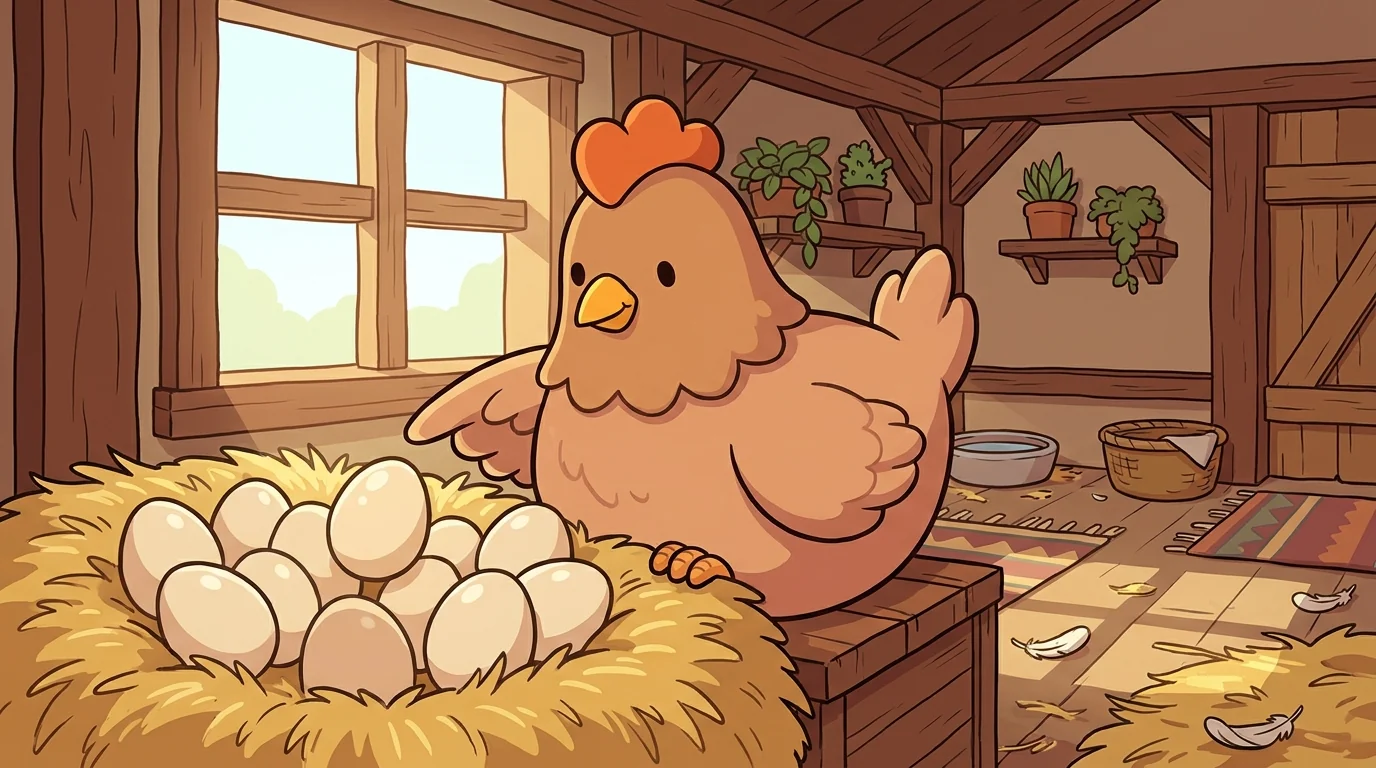
Clutch was a soft brown hen with a nest full of eggs. Every morning she liked to count them. But Clutch had learned the careful way: touch each egg one time, say one number for each touch, and never skip and never double.
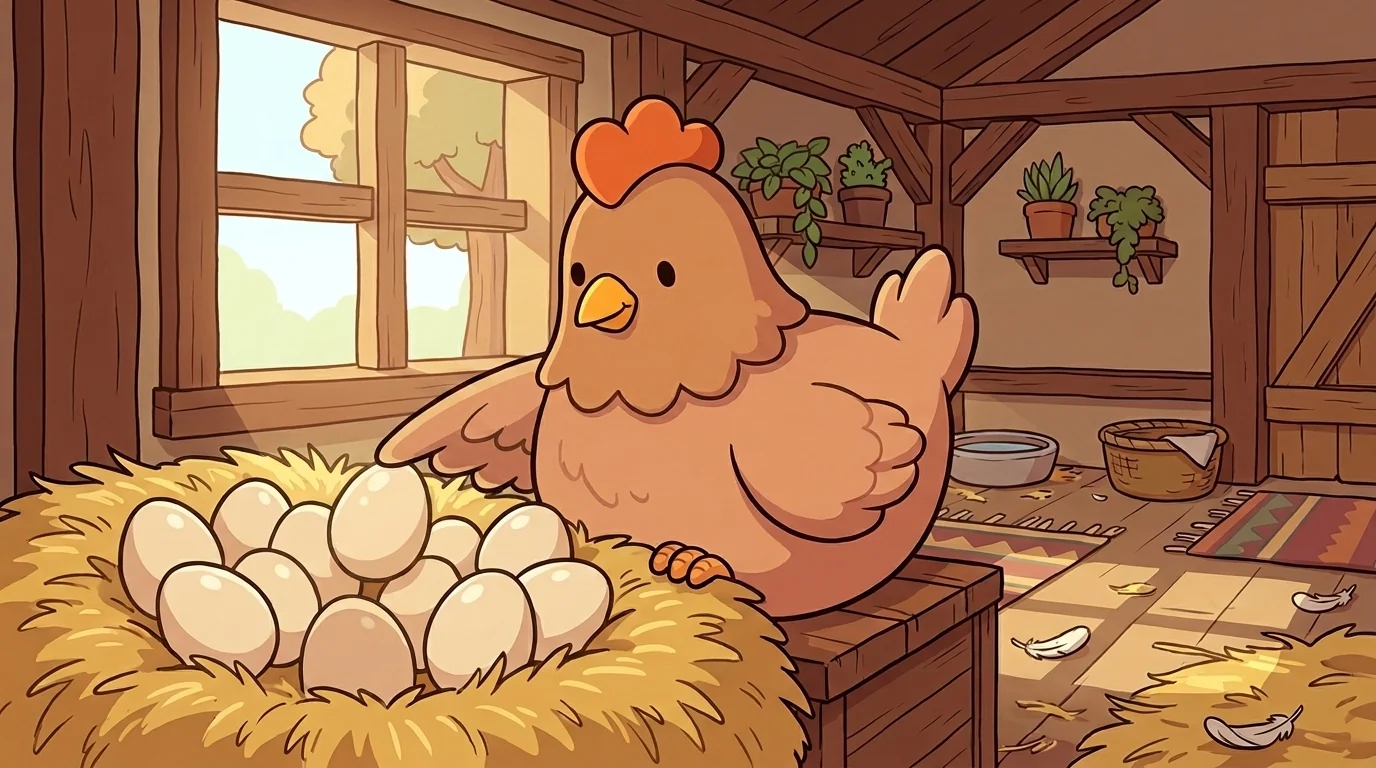
"One," Clutch said, touching the first egg. "Two," the next. "Three." One touch, one number. Her wing moved slow so she wouldn't miss any or count one twice. Each egg got exactly one number, and each number got exactly one egg.
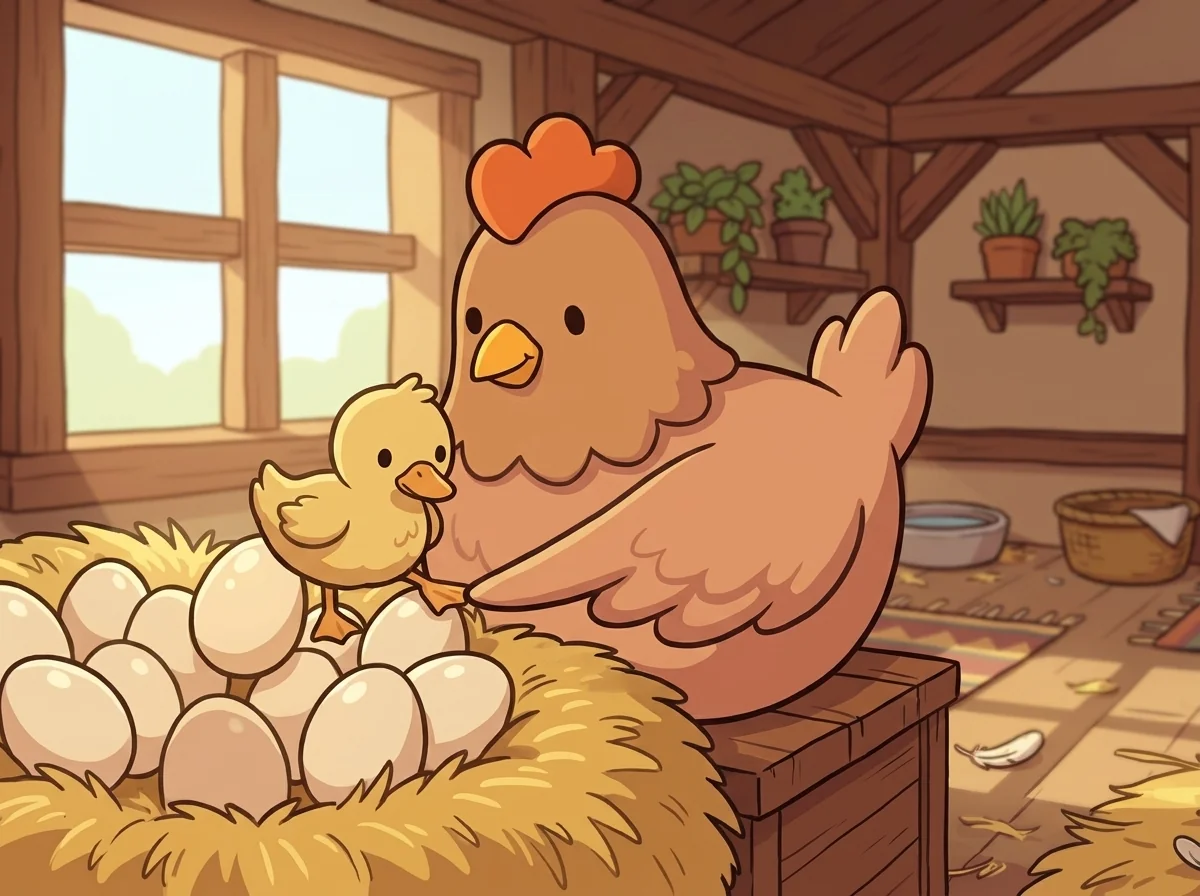
A duckling watched and counted too fast — "One-two-threefour!" — pointing at nothing. "Slow down," Clutch said kindly. "One touch, one number." They tried together, gently tapping each egg. This time every egg got its own turn.
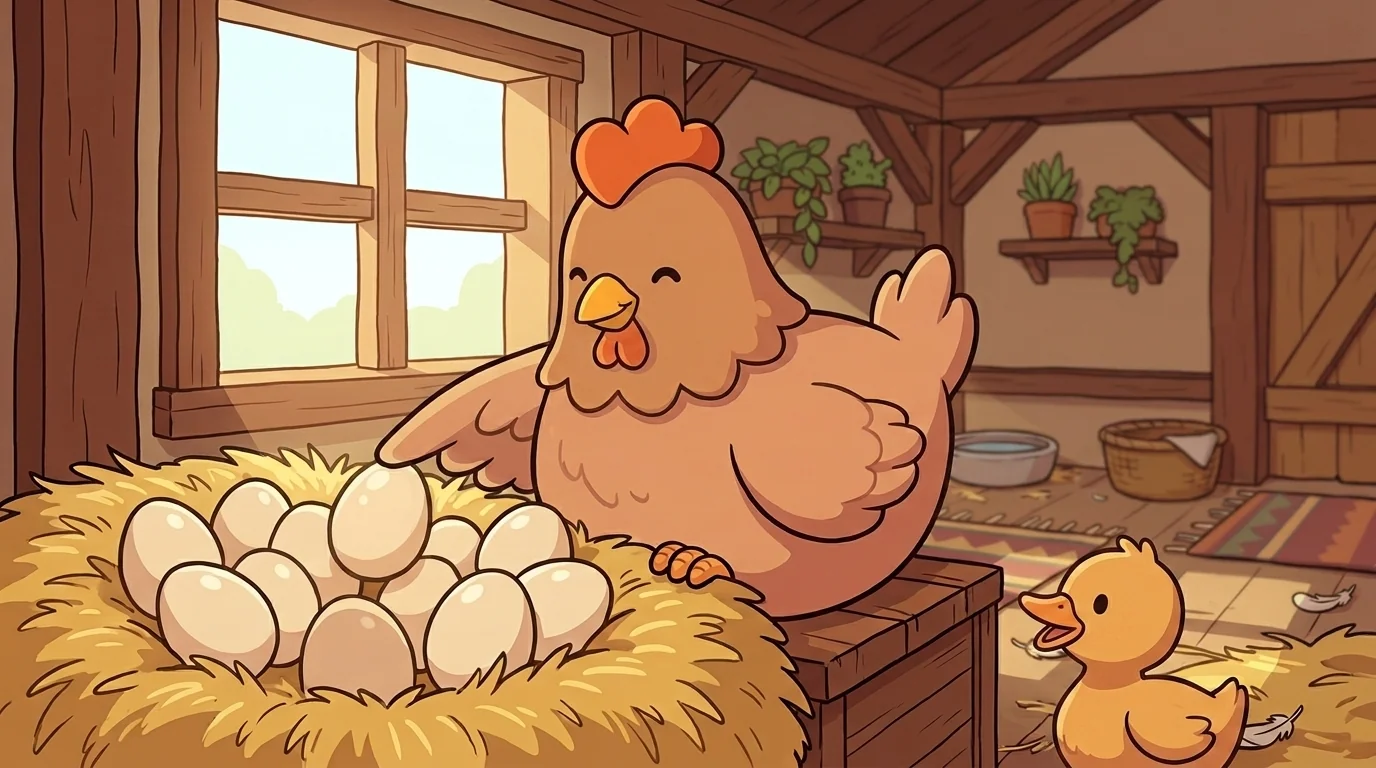
When Clutch touched the last egg, she said "five." Then she paused. "So how many eggs in all?" the duckling asked. Clutch smiled. "Five. The last number I said — that's how many there are." She didn't have to count again. The last count was the total.
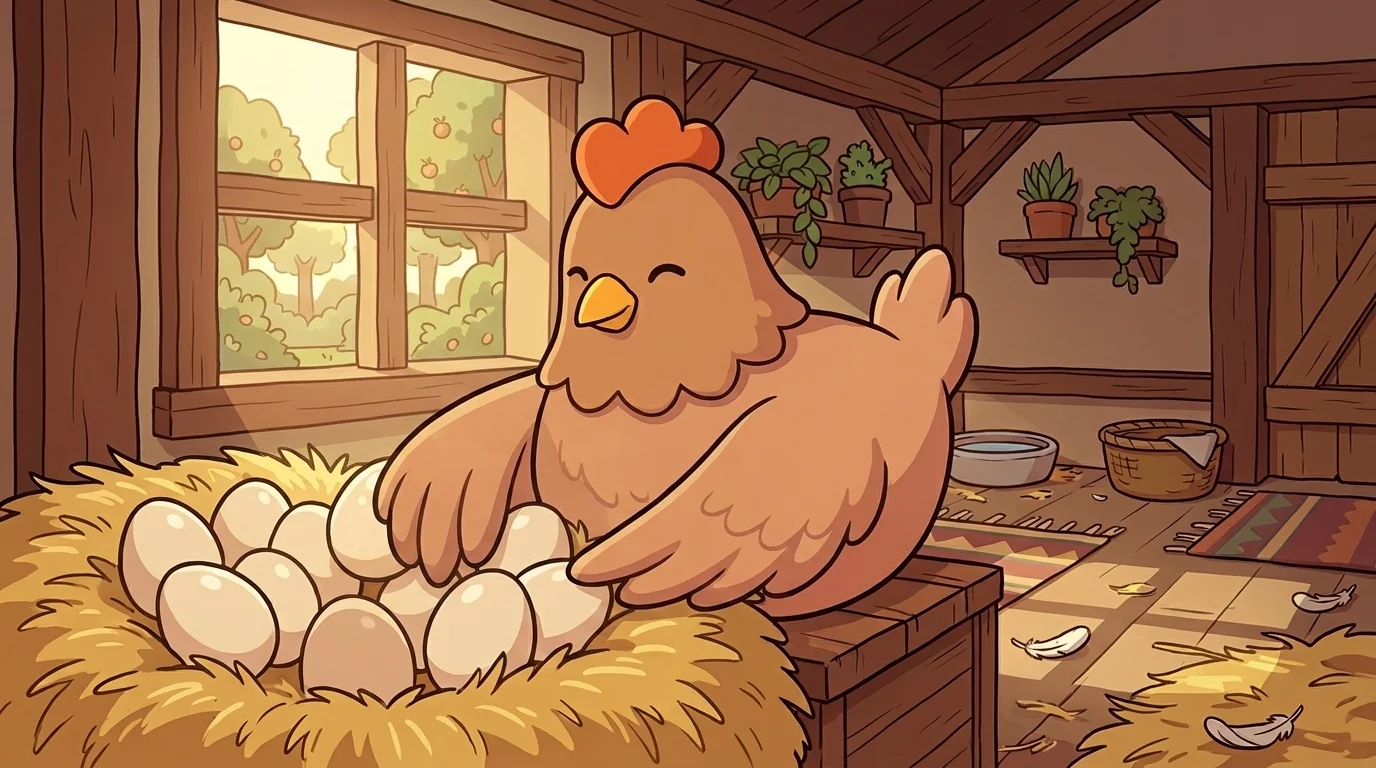
That evening Clutch tucked her wing over all her eggs. She had counted them one by one, careful and true, and landed on five. Five eggs, warm beneath her.
She didn't need to count them one more time to feel sure. She already knew how many she had — and how much she loved every single one.
The TallyTots ensemble
Clutch is part of TallyTots's distributed-narrative cast. Each character embodies a different curricular primitive; together they teach the full subject.
-

Ribbet
Mental number line / magnitude (hero) — a frog who hops the linear 1→10 lily-pad path; farther along IS more (the Ramani–Siegler core)
-

Dottie
Subitizing — a ladybug whose back-spots you know at a glance, without counting; instant recognition IS subitizing
-

Wriggle
The successor principle — a caterpillar who grows one segment when you add one and sheds one when you take one; ±1 IS the next/previous number