Trial
watching real players play, and fixing what confuses them
Loading audio…
Press play to listen along. The line being read lights up as you go.
Show full transcript
Loading transcript…
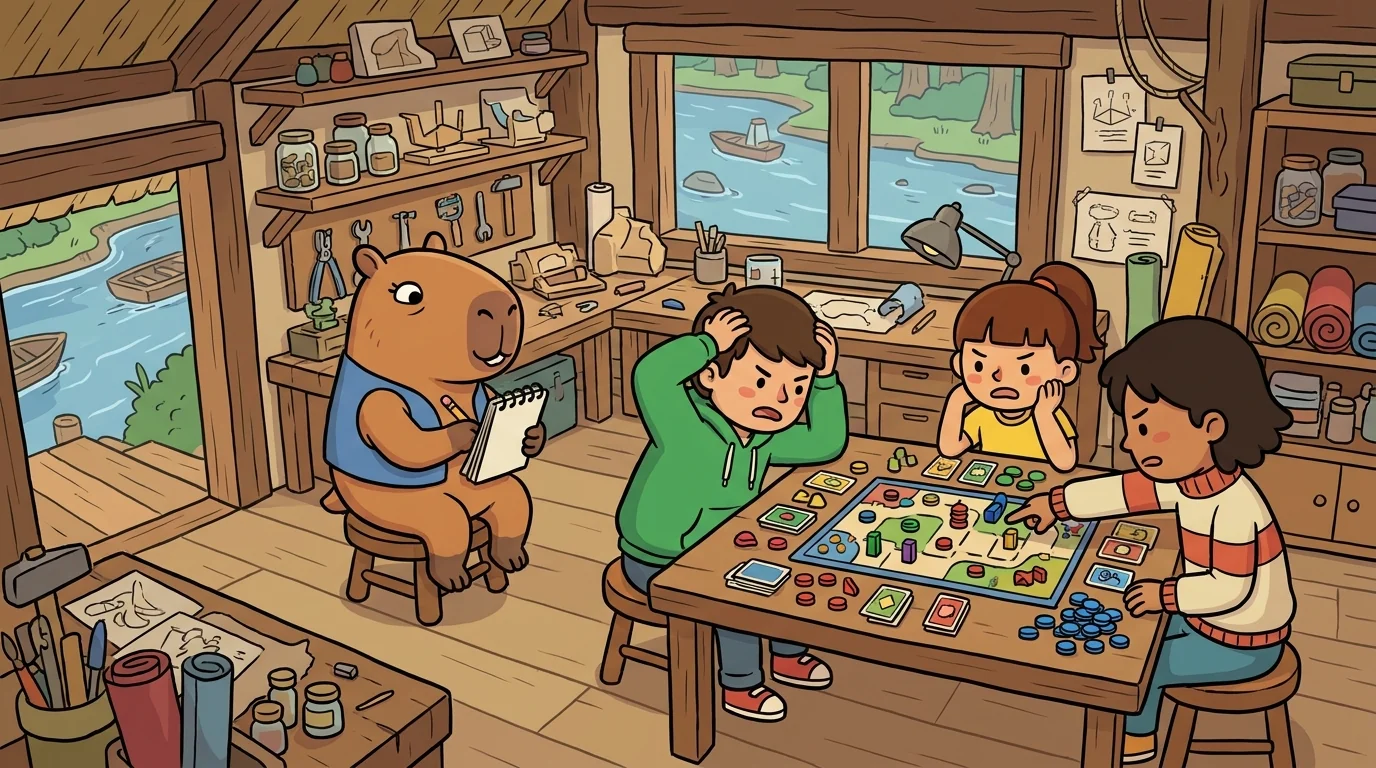
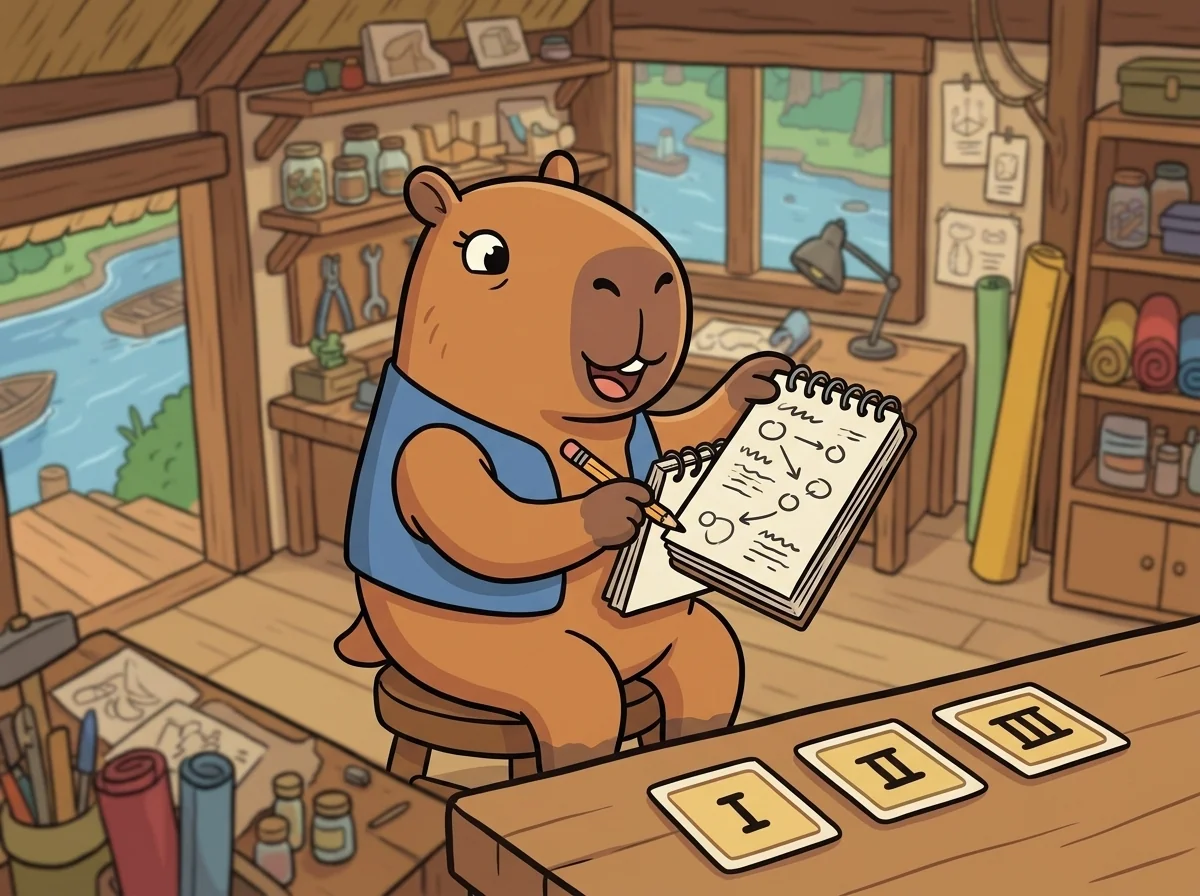
In the corner of the river-village workshop, a round little capybara named Trial sat very still and watched three kids fall apart over her new game.
She wasn't playing. She wasn't explaining. She had a small notebook open on her knee and a pencil that never stopped moving, and she was staring at the players the way a heron stares at water.
"Round three," she muttered, writing. "Amв asked what the blue tokens do. Again. Third time."
One of the kids groaned. "Your game is confusing."
"I know," Trial said, delighted. She wrote that down too.
The kid squinted at her. "You're happy it's broken?"
"I'm happy it's telling me things." She turned the notebook around so he could see the cramped little scribbles. "Watch what you three just did. Nobody read the rule on the card — you all reached for the tokens first. So the card's in the wrong place. And every single one of you looked at the blue tokens like they were a trap. So the blue rule is hiding somewhere it shouldn't." She tapped the page, grinning. "You didn't tell me any of that. Your hands told me. I just wrote down what your hands said."
The three of them looked at the game, then at each other, then — slowly — at the notebook, like it had been reading their minds the whole time.
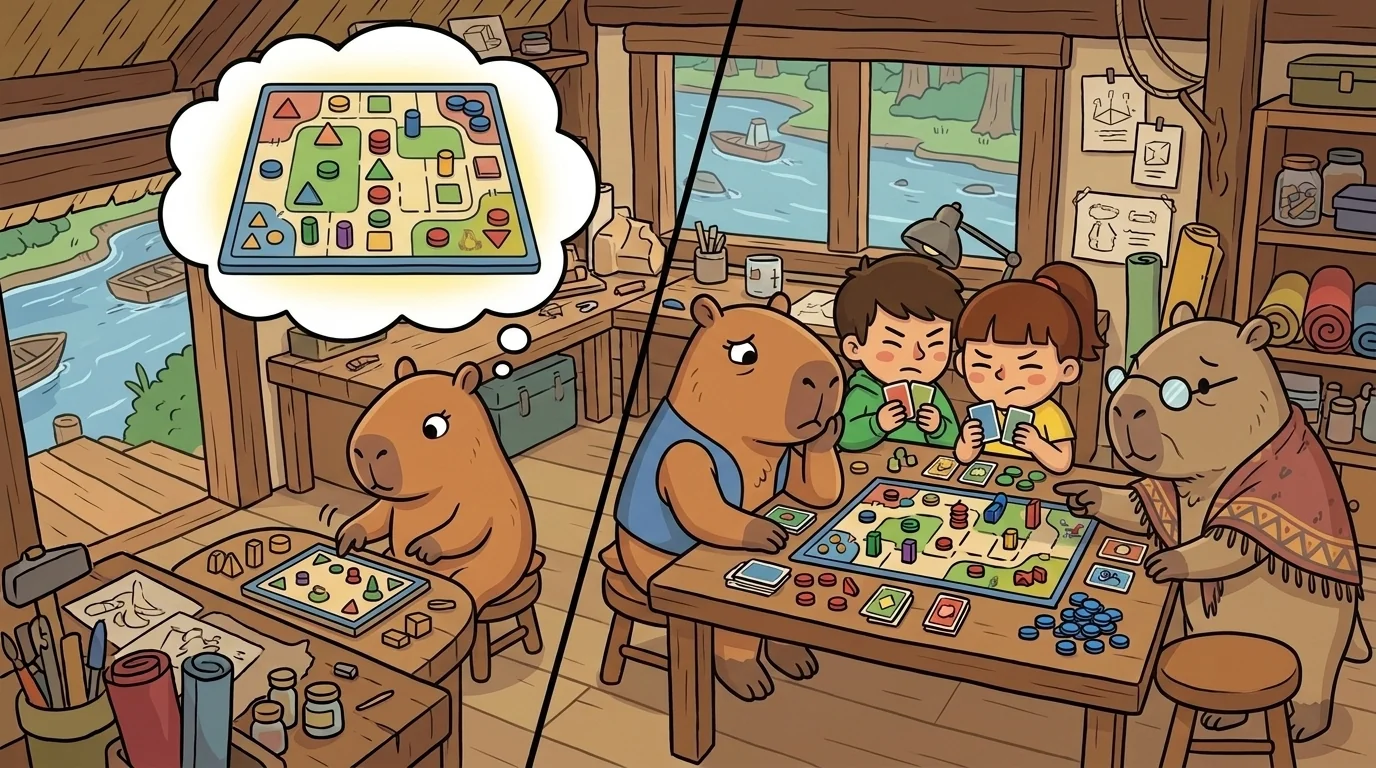
Trial had learned to watch hands the hard way, back when she made her very first game.
She'd worked on it for a whole month. She was sure it was good — she'd played it in her head a hundred times, and in her head it was perfect. Then she gave it to two friends, sat back proudly, and watched them squint, and stall, and go quiet, and finally set the pieces down with polite little smiles.
"It's fun," one of them said.
But their faces weren't fun-faces. Their faces were the faces of people trying to be kind. Trial's whole chest had gone hot and tight, the way it does when you pour yourself into a thing and it comes out wrong in front of people. A month, she'd thought. A whole month, and it's broken, and I'm the one who broke it.
Her grandmother — an old capybara who'd watched the village for forty years — had waddled over and sat beside the sad little game. She hadn't said don't worry. She'd asked, "What did their hands do?"
Trial thought about it. "They stopped. They kept picking up the rules card and putting it down."
"Then your first test worked," her grandmother said. "It found the broken part for you. That's the whole job of a first try, little one — not to be good. To show you what's wrong so the second try can be better." She nudged the game with a paw. "Their mouths said fun to be kind. Their hands told the truth. Learn to watch the hands."
The hot, ashamed feeling didn't vanish. But it changed shape. Failed stopped meaning I'm bad at this and started meaning now I know what to fix. Trial could sit with that.
She walked to TableForge at twelve, because a place that studied how games are made ought to understand the patient, hands-watching kind of making she loved.
Blueprint, the old mentor who ran the workshops, met her at the gate. He didn't ask her to prove she was clever. He asked one question. "What makes a game good?"
Trial didn't answer with words. She set a little prototype on his desk, then slid three numbered cards beside it — v1, v2, v3. She pointed at v1. "This one confused everybody. I watched them. I wrote down where they got stuck." She pointed at v2. "So I moved the stuck part. It got better, but they still drifted off near the end." Then v3. "So I fixed that. Now they play all the way through and lean in."
"And the first one?" Blueprint said. "The confusing one?"
"The first one was supposed to be confusing," Trial said. "It did its job. It showed me the other two."
Blueprint looked at the three little cards in a row for a long moment. "You belong here," he said.
Trial's workshop was full of games that had failed on purpose.
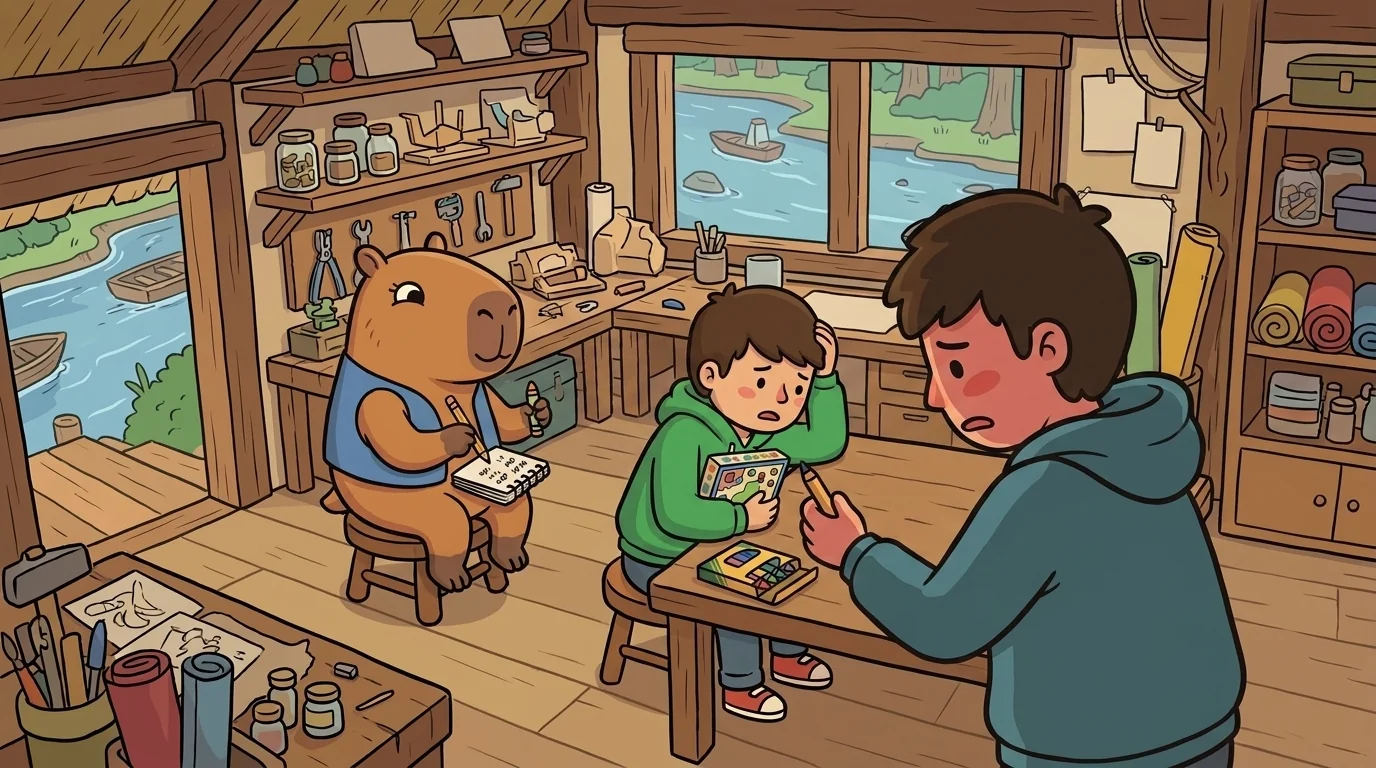
A boy came in one afternoon clutching a game to his chest, slumped and red-faced. "I made it, and I made everyone in my family play it, and it was a disaster," he said. "My sister quit halfway. My dad kept asking questions. It's terrible. I want to throw it out."
Trial knew that slump exactly. She'd felt it the day her friends said fun with kind, tired faces.
"Don't throw it out," she said. "First — did your dad say it was bad?"
The boy blinked. "...No. He said it was 'interesting.'"
"But he kept asking questions." Trial slid her notebook over. "Words are polite. Hands are honest. Where did he ask the most?"
"The scoring. Nobody could figure out the scoring."
"Then that's not a disaster. That's an arrow. Pointing right at the scoring." She uncapped a pencil and set it in his hand. "Your sister quit halfway — when, exactly? What was happening right before she put it down?"
The boy thought. "It was... her turn, but she had nothing to do. She was just waiting."
"So the middle has a dead spot." Trial tapped the game, gentle. "You didn't make a disaster. You made a first version. It just told you two things to fix — the scoring and the dead spot. That's not failing. That's the game talking to you." She grinned. "Fix those two. Watch them play again. See what the hands say next."
The boy stared at his game like it had turned from garbage into a treasure map, and started scribbling.
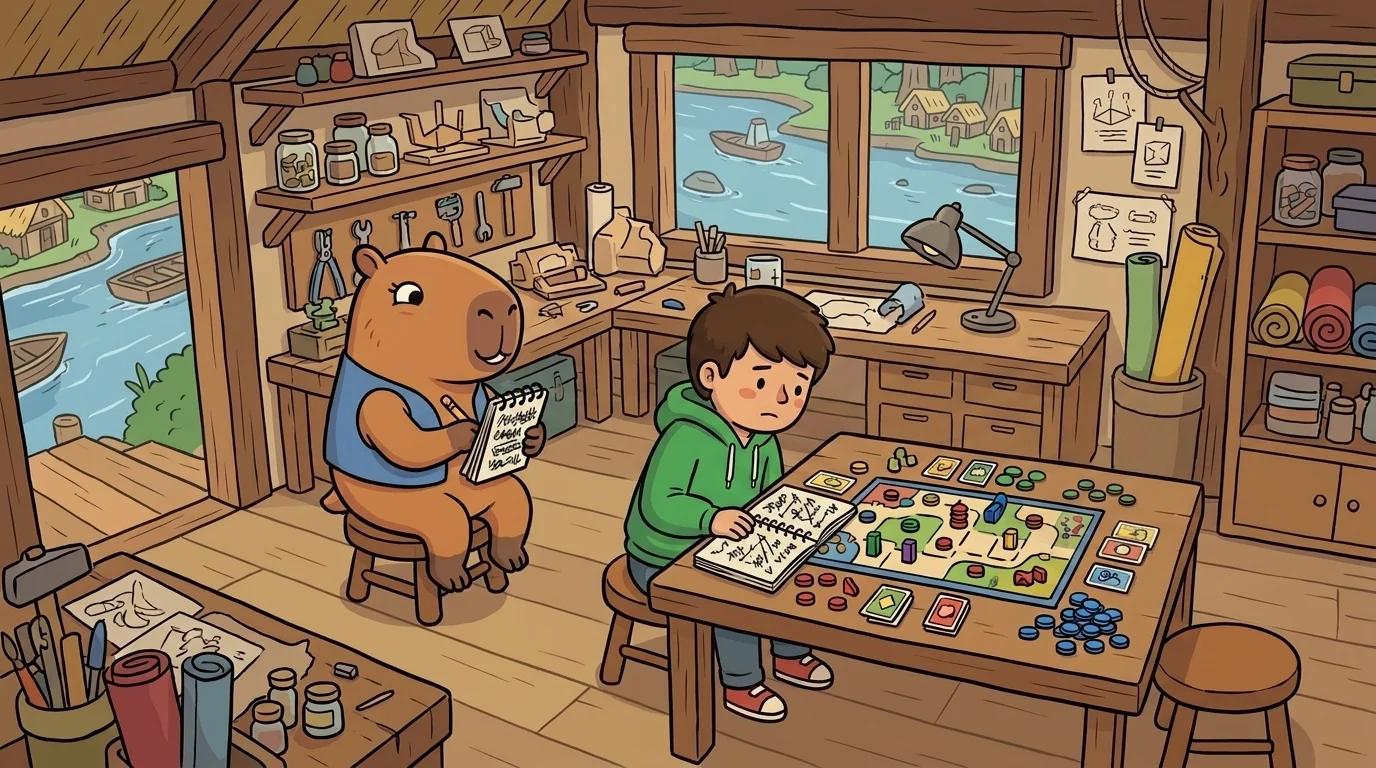
Later, when the workshop was empty, the boy came back with one more question, his game now covered in crossings-out and arrows.
"How do you know when it's finally done?" he said. "When to stop fixing?"
Trial thought about her first sad little game, and the hot-tight chest, and her grandmother asking about hands.
"You feel it," she said. "That's the honest answer. When it's not ready, there's this itchy, unfinished feeling — you can see people stall, and your stomach knows it. And then one day you watch them play and nobody stops, nobody asks, they just lean in and keep going — and something in you goes quiet and easy, like a held breath letting out." She smiled at the crossed-out, arrow-covered game in his hands. "You'll stop being scared of the first try being bad. Because the first try being bad is how the good one gets made. Every mark on that page is a thing you know now that you didn't know yesterday. That's not a mess. That's the work showing."
The boy looked down at his scribbled, imperfect, getting-better game, and Trial watched the shame lift off his shoulders — the same soft, settling ease she'd felt, years ago, when failed finally stopped meaning I'm bad and started meaning here's what's next.
The TableForge ensemble
Trial is part of TableForge's distributed-narrative cast. Each character embodies a different curricular primitive; together they teach the full subject.
-
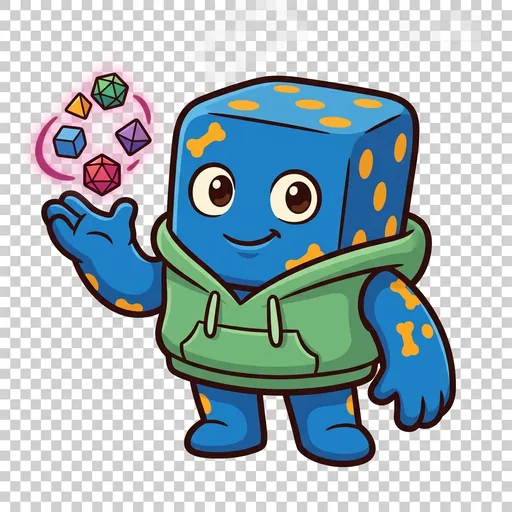
Bones
Dice + randomness + probability — chance is design craft, NOT betting; gambling-adjacency gate anchor
-
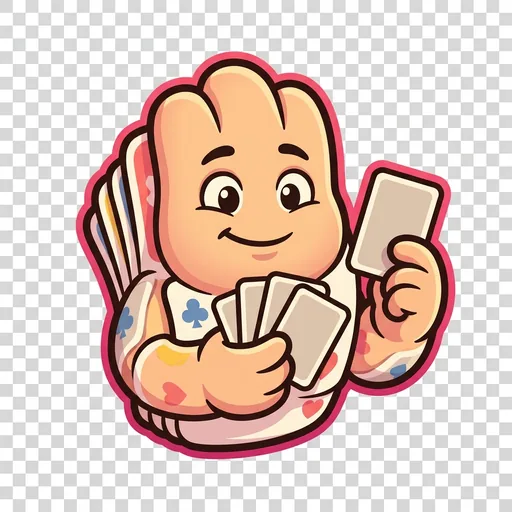
Hand
Cards + hidden information — what-you-HOLD is information; what-you-SHOW is a different question
-

Move
Turn-structure + action economy — every turn is a question and an answer; turn-as-question framing
-
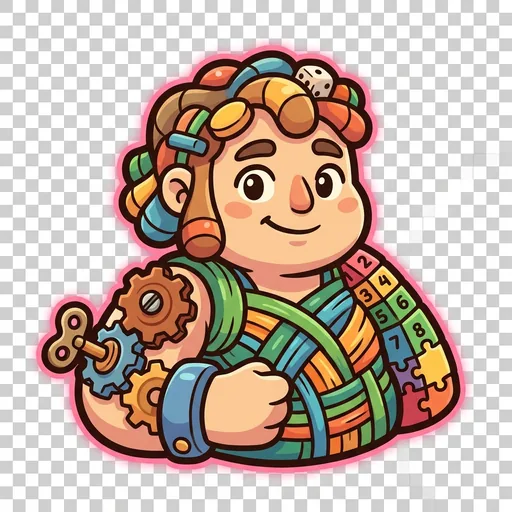
Theme
Game-mechanic + theme integration — the-game-IS-its-mechanics; Habgood intrinsic-integration anchor; theme-MUST-do-work framing