Clappa
syllable segmentation (the beats in a word)
Press play to listen along. The line being read lights up as you go.
Show full transcript
Loading transcript…
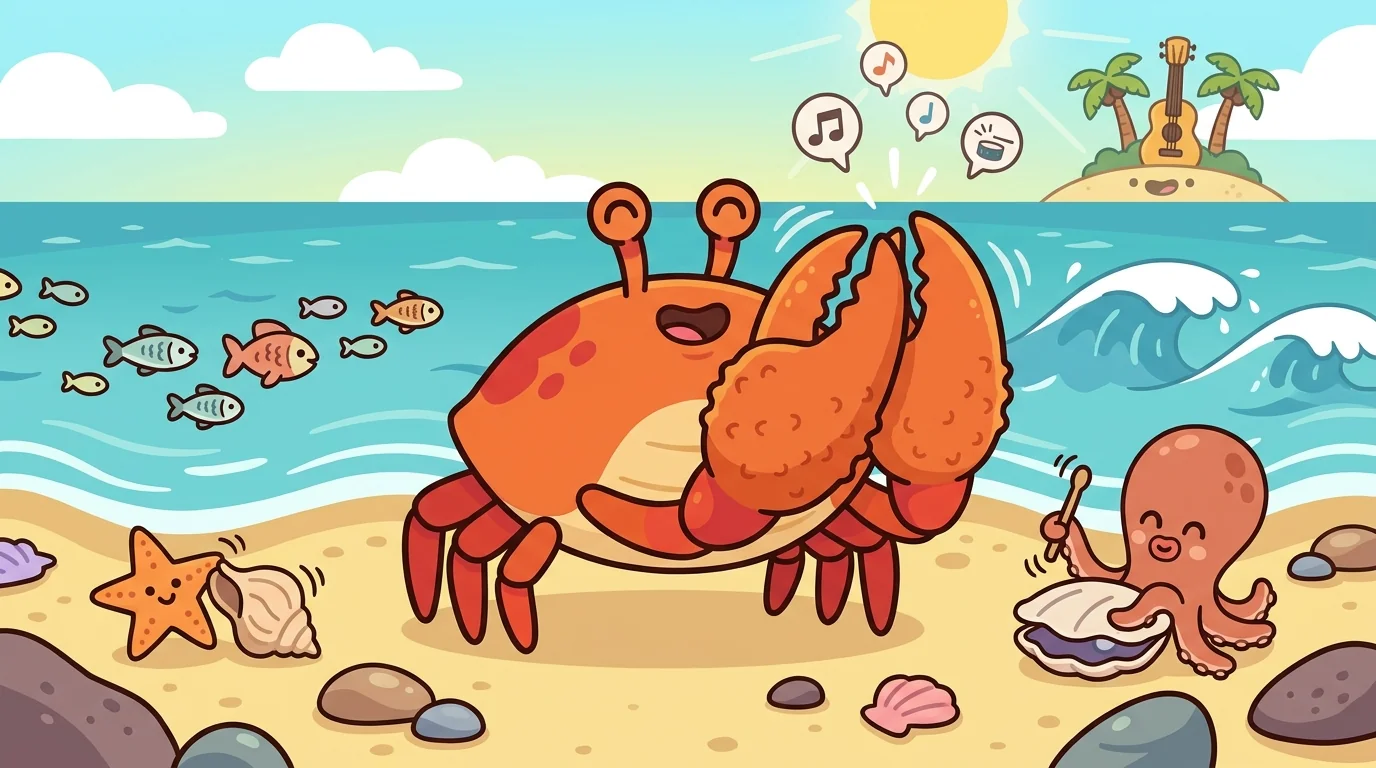
Clappa was a crab with two big clapping claws, and she heard words as beats. Not one big lump of sound — little drum-taps, one for each part. "El-e-phant. Three claps!"
Every word had a beat you could clap.
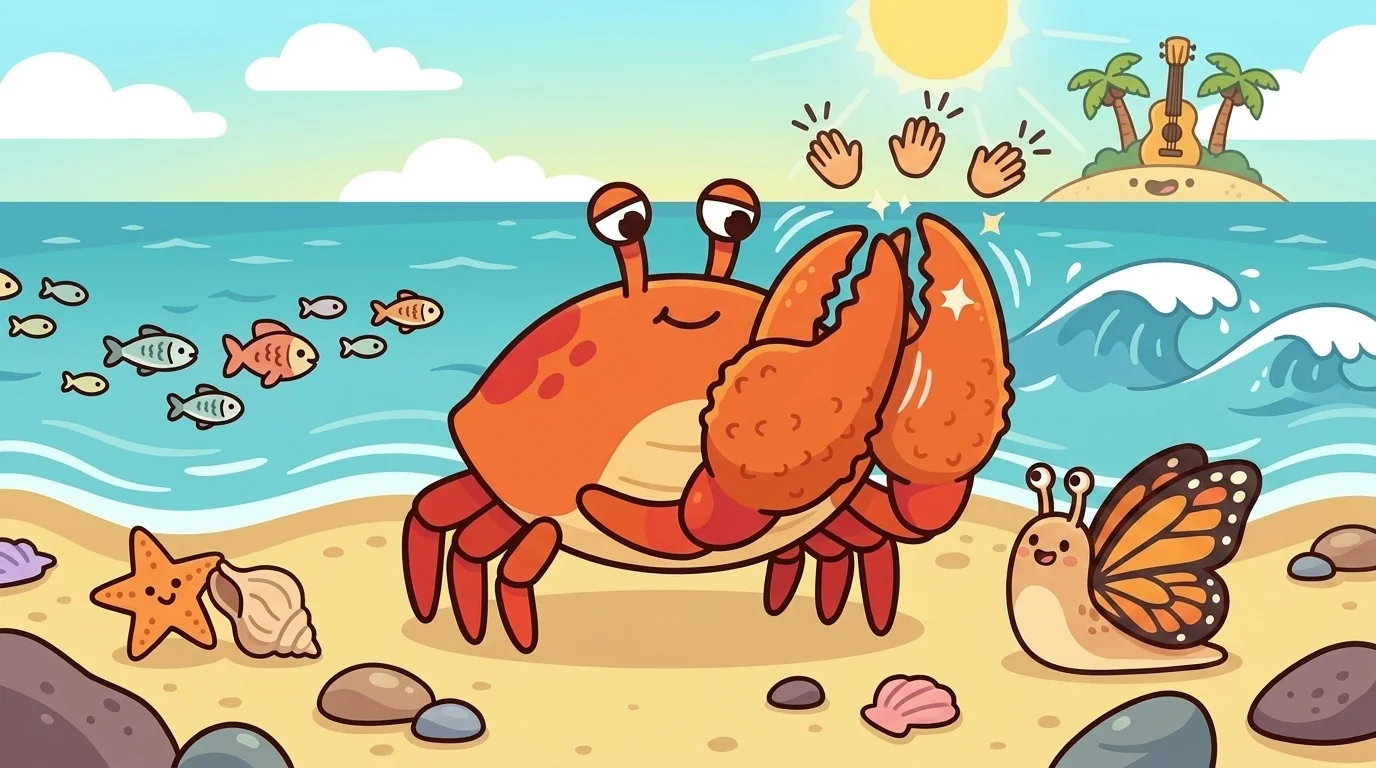
One day a young snail said the word "butterfly" all in a rush, like one sound. "Wait," said Clappa kindly. "Let's clap it. But-ter-fly." Clap, clap, clap. Three beats!
Suddenly the big word wasn't scary — it was just three little claps in a row.
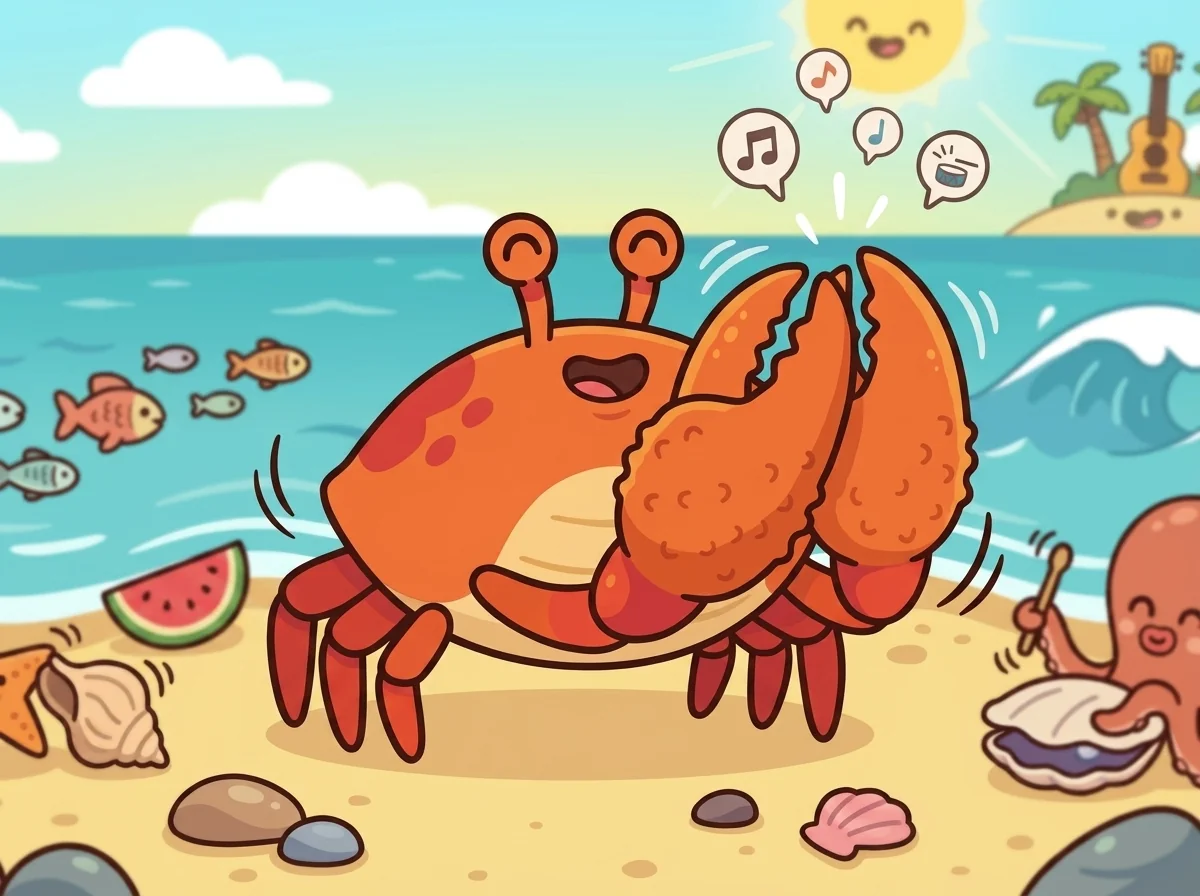
Clappa clapped everything on the reef. "Sun." Clap. One beat. "Wa-ter." Clap-clap. Two beats. "Wa-ter-me-lon." Clap-clap-clap-clap. Four! The friends clapped along, giggling at the long ones.
Clapping turned a mouthful of a word into something you could feel with your hands.
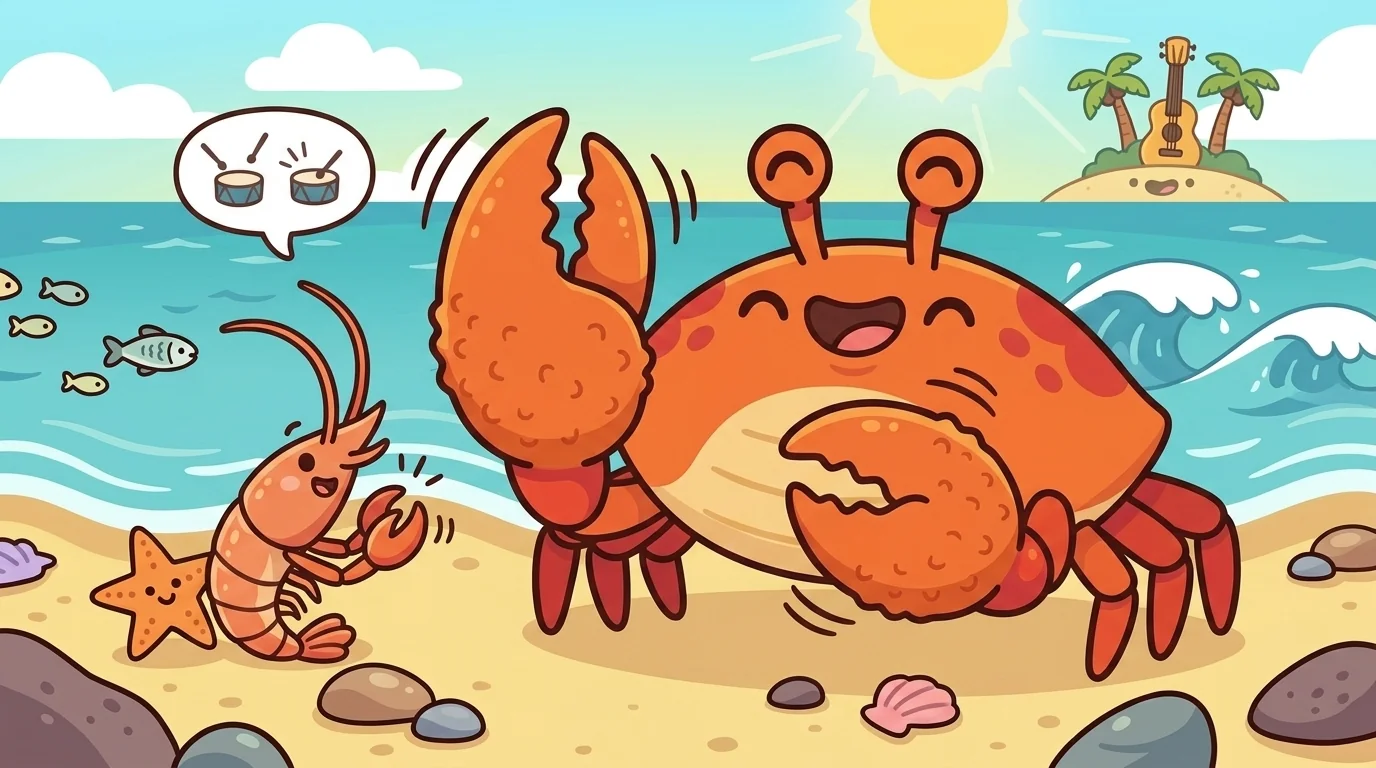
A little shrimp wanted to clap his own name but wasn't sure. "Say it slow," Clappa said, "and clap each part." The shrimp tried: "Sam-my." Clap-clap. "Two!" he cheered. Clappa clacked her claws in a happy drumroll.
Long words are just short beats, stuck together.
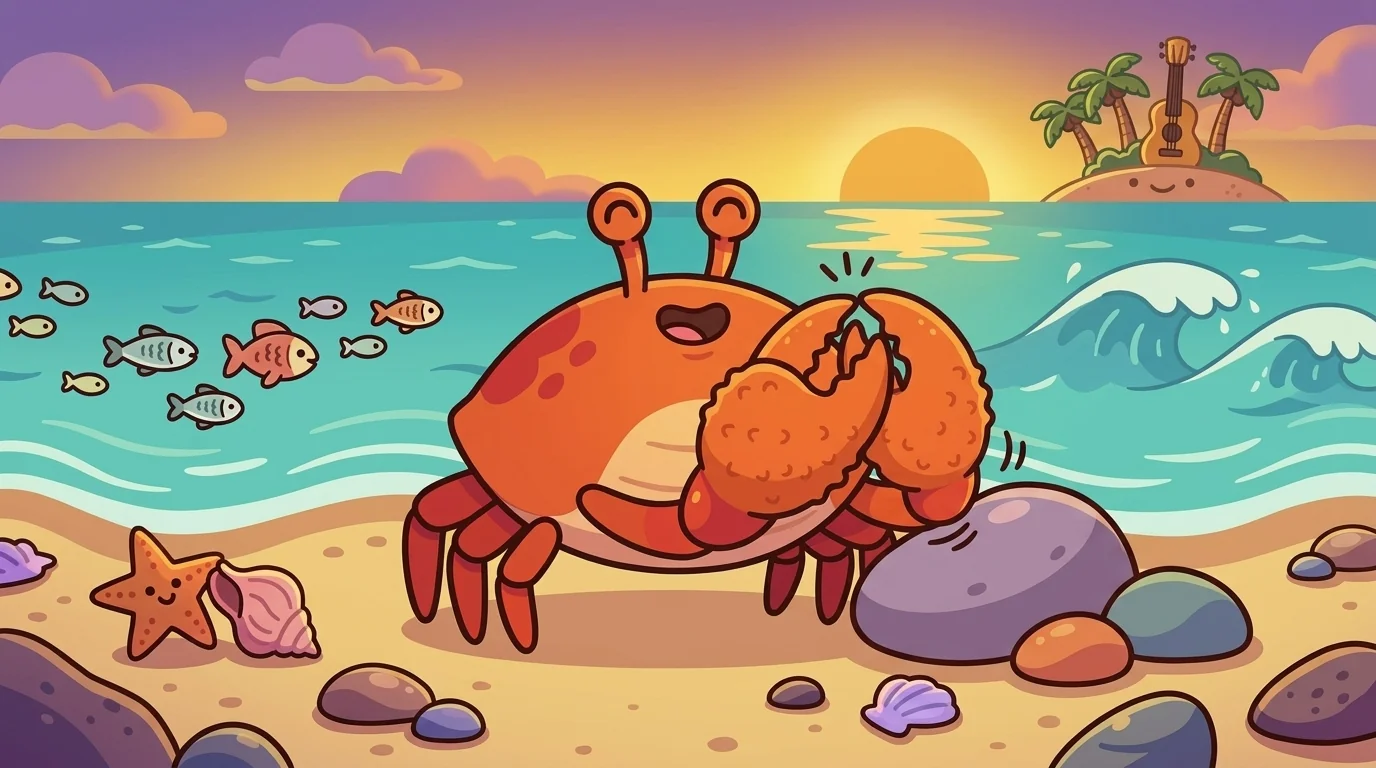
At the end of the day, Clappa tapped out a gentle rhythm on a rock, clapping the friends' names one by one as the sun went down.
"You make big words easy!" said the shrimp.
Clappa clicked her claws softly, warm and proud. A long word had once felt like too much to say. But breaking it into beats you could clap — that made even "watermelon" feel friendly and fun. And feeling a word in your hands felt wonderful.
The RhymeReef ensemble
Clappa is part of RhymeReef's distributed-narrative cast. Each character embodies a different curricular primitive; together they teach the full subject.
-

Rhyma
Rhyme (hero) — a singing dolphin who calls back a word that ends the same (cat → hat); matching end-sounds IS rhyme
-
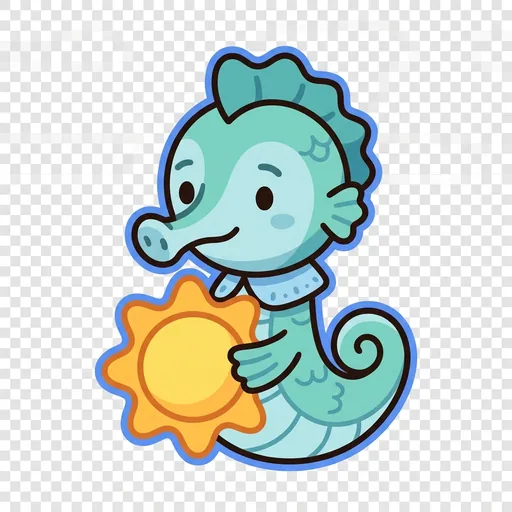
Sula
Onset / first sound — a gentle seahorse who catches the first sound (/s/ in sun); the beginning sound IS onset
-

Finn
Sound discrimination — a quick fish who spots the word that sounds different; hearing the difference IS discrimination