Blip
BLENDING — hop from sound to sound, then slide the sounds together into a word.
Press play to listen along. The line being read lights up as you go.
Show full transcript
Loading transcript…
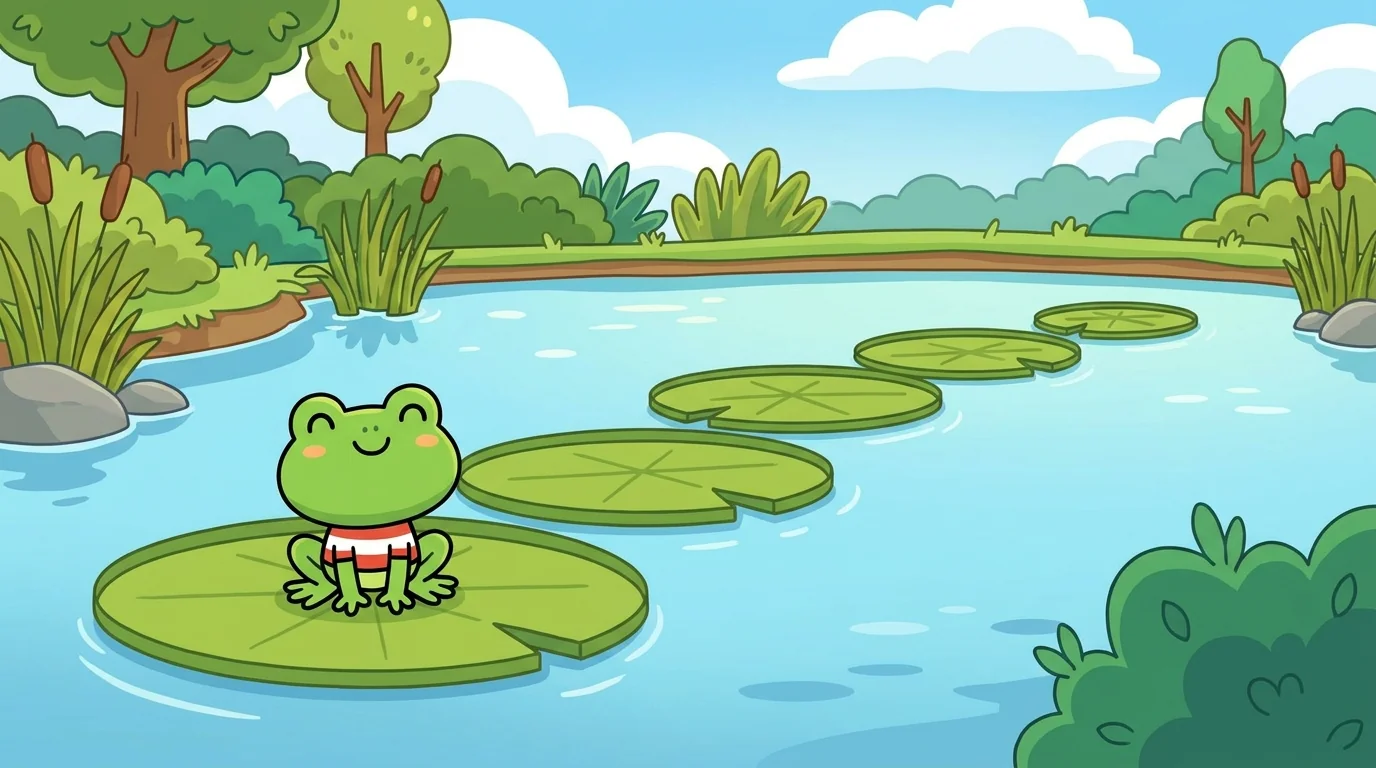
Blip is a small bright green tree frog with round happy eyes and a striped shirt. He lives at the reading-pond — a calm pond where flat lily pads float in a row, and each lily pad holds one sound. Blip loves the pond because sounds live here, and Blip loves sounds most of all.
When Blip wants to read a word, he does one gentle thing. He hops along the lily pads, one hop for each sound. /s/ — hop. /a/ — hop. /t/ — hop. Each hop is one sound, said out loud, nice and clear. Blip never hurries his hops. He waits on each pad and listens to the sound before he hops to the next one.
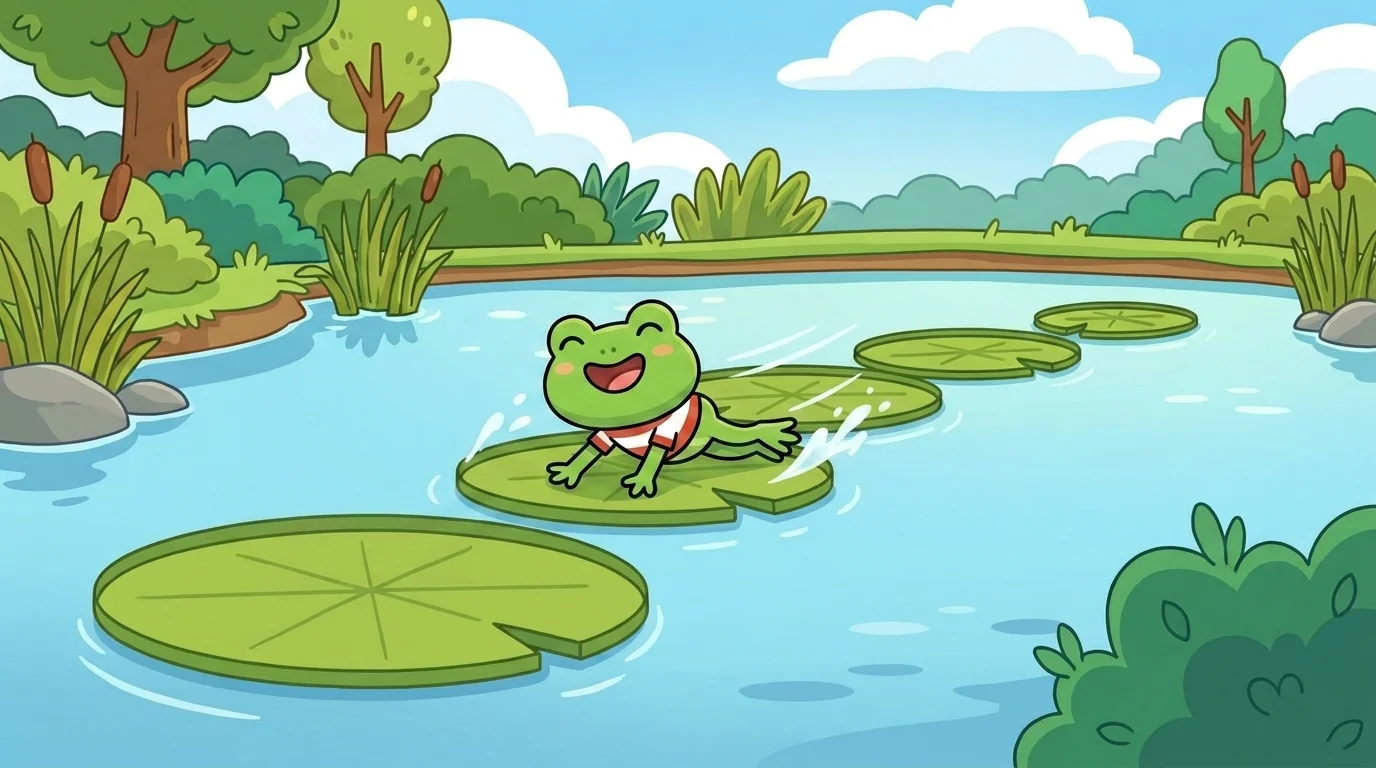
Then comes Blip's favorite part. After he has hopped all the sounds, he takes a big slow breath and slides — he pushes the sounds together into one smooth slide, and out comes a whole word. /s/ /a/ /t/ … "sat!"
"Hop the sounds, then slide," Blip says, and he does a tiny happy wiggle. That is Blip's whole gentle way of reading. Hop each sound. Then slide them together. The hopping keeps the sounds apart so you can hear each one. The sliding brings them home into a word.
Blip likes to say it slowly, so you can feel it: hop, hop, hop… sliiide. Three little hops and one long slide, and a word appears like a lily flower opening.
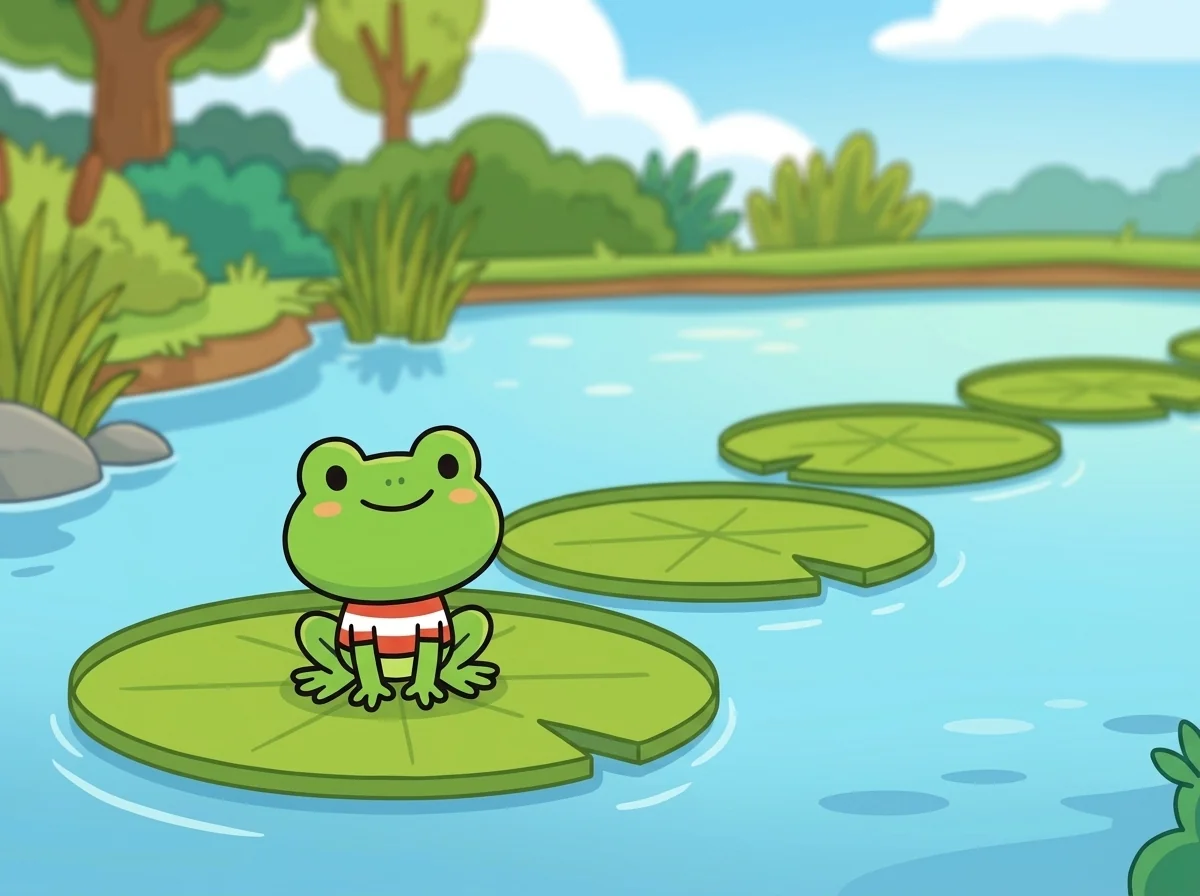
Sometimes a friend at the pond hops too fast — hophophop — and the sounds get all tangled, and no word pops out. Sometimes a friend forgets a hop and skips a sound. Blip never says wrong. Blip never says too slow. Blip just smiles and says, "Let's hop again. One sound, one hop."
And they hop again, slower this time, together. /m/ — hop. /a/ — hop. /p/ — hop. Sliiide. "map!" There it is. A tangled try is not a mistake at the reading-pond. It is just a word that needs one more gentle slide.
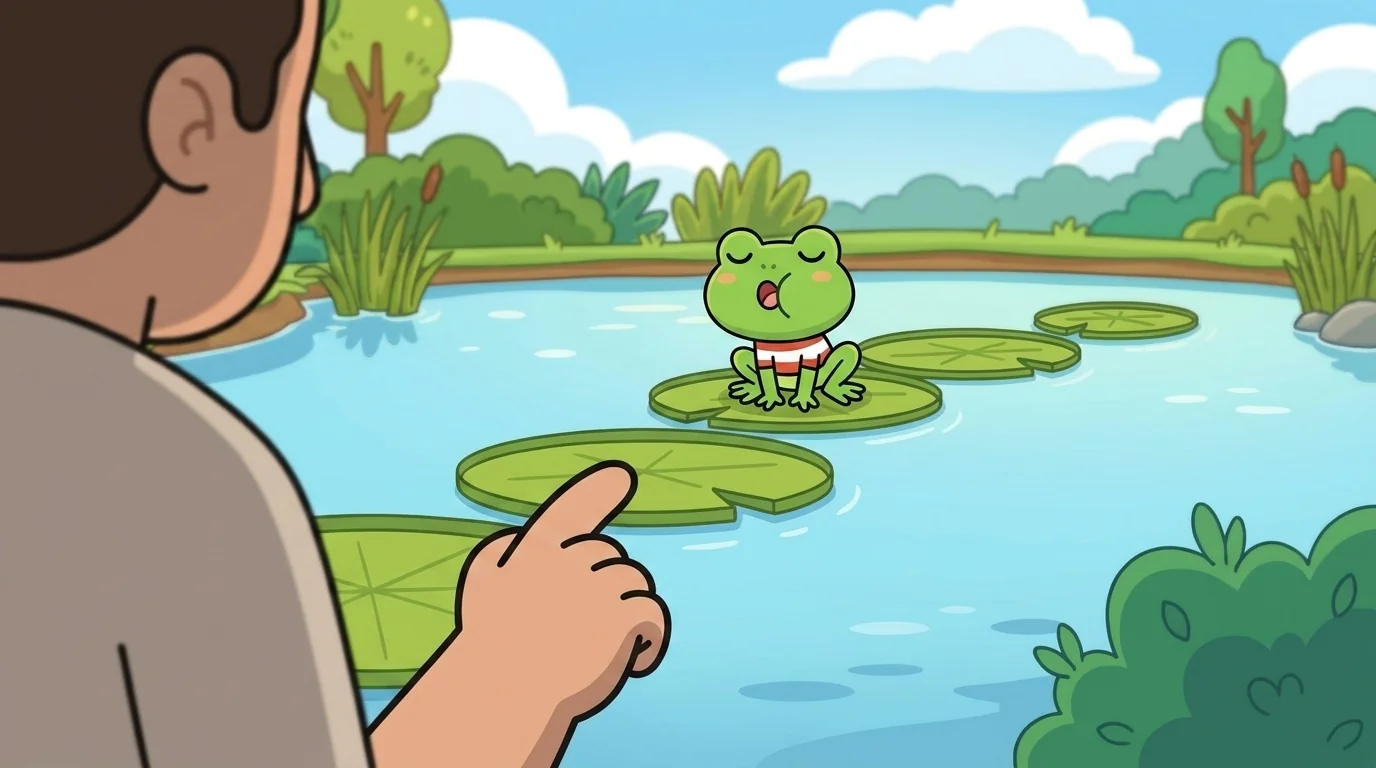
A grown-up can hop along too! Blip loves it when a big person and a small person read a word side by side. The grown-up can point to each lily pad; the child can say each sound and hop; and then, together, they both take a breath and sliiide the sounds into a word. Reading at Blip's pond is for doing it together, never for racing.
Blip brings his pond-friends into every reading, too. When a word has two letters that make one sound, Shelby the snail is nearby. When a vowel needs to say its own name, Mavis the owl blinks her big eyes. When a whole line of words is ready to be read like a little song, Lark lifts her wings. But it always starts with Blip: hop the sounds, then slide.
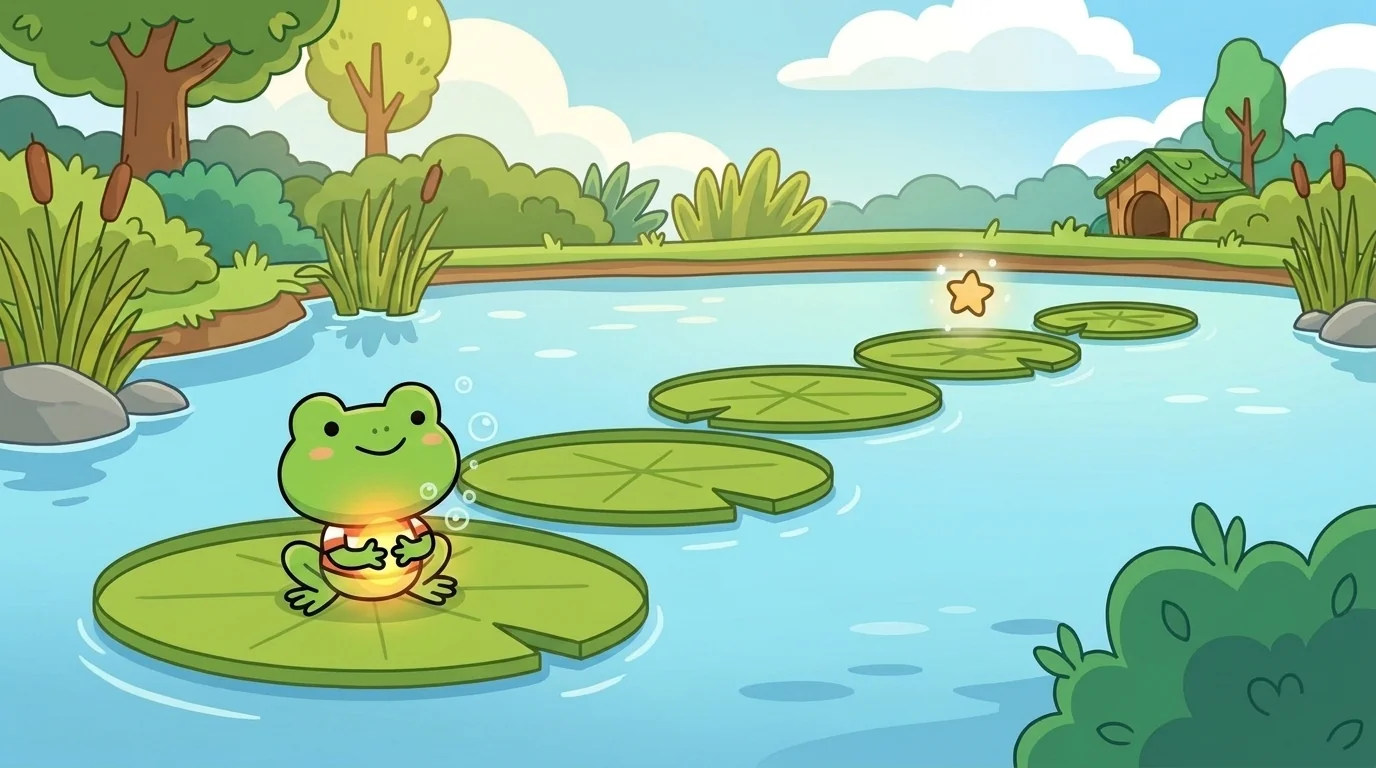
When the sounds finally slide together and a real word pops out — a word the child knows, a word that means something — Blip feels a warm, bubbly gladness right in the middle of him, like the sun coming up over the pond. He loves that feeling. It is the feeling of a word coming home.
"Hop the sounds, then slide," Blip says softly, cozy and proud, watching the little word float on the water. And the child feels it too — that quiet, happy I did it — the best feeling at the reading-pond. That's Blip.
The ReadPals ensemble
Blip is part of ReadPals's distributed-narrative cast. Each character embodies a different curricular primitive; together they teach the full subject.
-
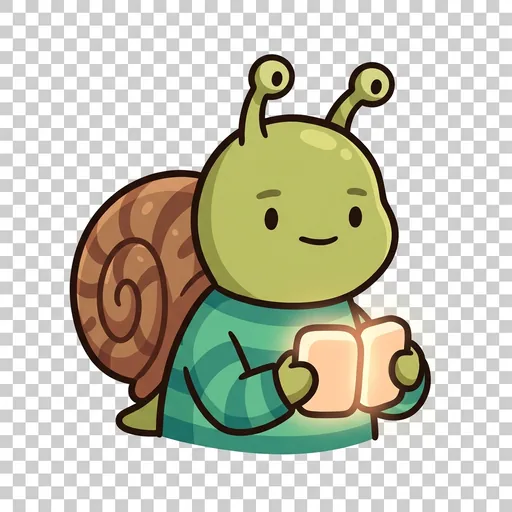
Shelby
Digraphs (two letters → one sound) — a gentle spiral-shell snail kid who presses two letter-tiles together so they make ONE new sound (sh / ch / th); the joined tiles glow as one
-
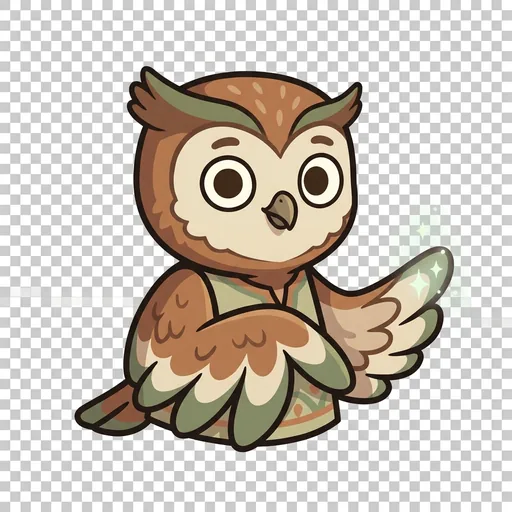
Mavis
Long vowels (silent-e / vowel teams) — a wise round-eyed owl kid who adds a silent-e or teams two vowels so the vowel says its own name (cap → cape); a little magic-e sparkle on her wingtip
-
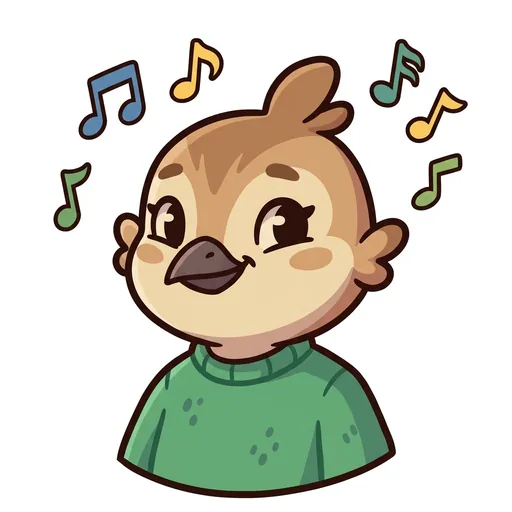
Lark
Oral reading fluency — a cheerful songbird lark kid who reads a whole line smoothly and with a little song (expression); musical notes float up from the page as she reads