Roll
ROLL — dice don't remember. every roll is its own universe.
Loading audio…
Press play to listen along. The line being read lights up as you go.
Show full transcript
Loading transcript…
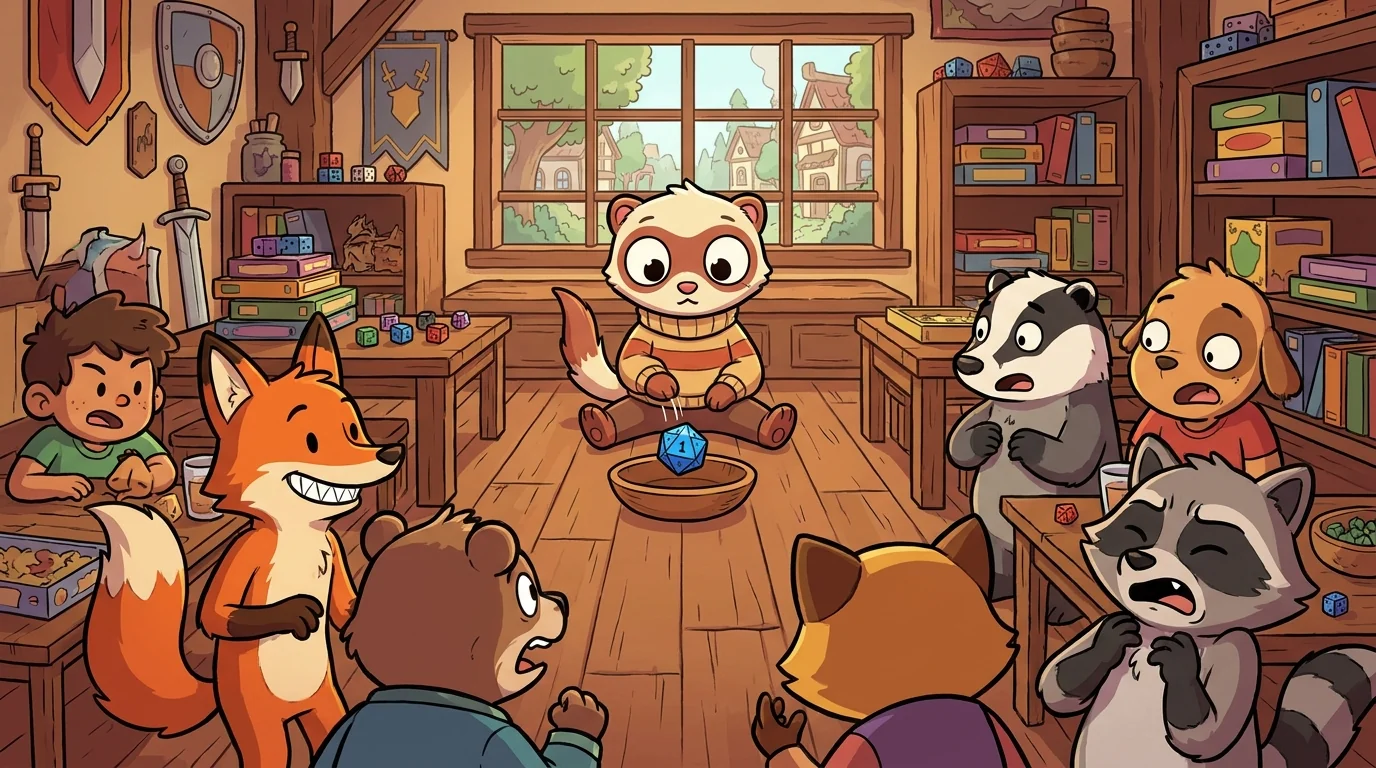
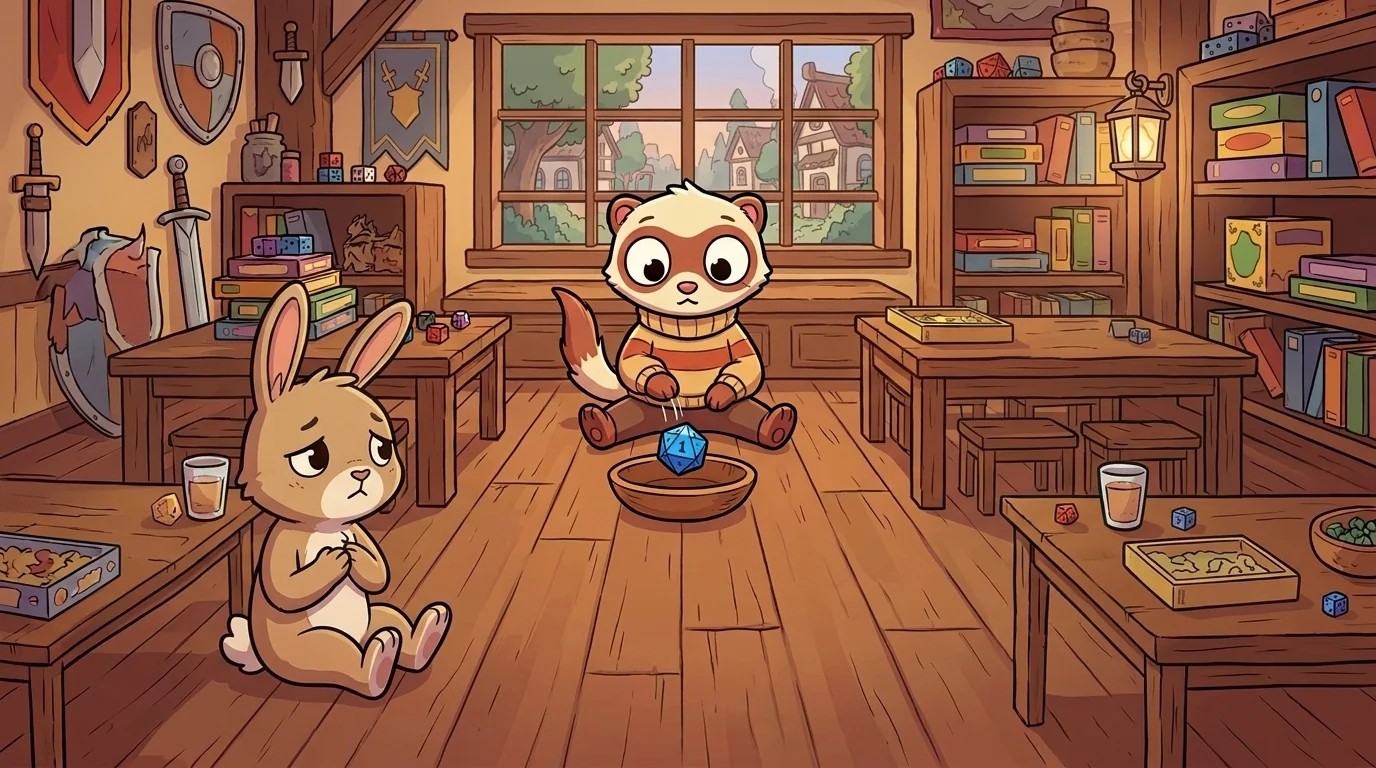
At the back of the QuestForge game hall, a ferret-tween named Roll sat cross-legged on the floor and rolled the same twenty-sided die, over and over, into a wooden bowl.
A cluster of players had gathered to watch, because Roll had just rolled a 1. Then another 1. Then — impossibly — a third 1. The bowl went tok, tok, tok, and each time the little die came up showing the same lonely dot.
"Okay," said a fox-tween near the front, grinning. "Now you're locked out of ones. No way you get a fourth. You're WAY overdue for a big number."
Roll didn't look up. He just palmed the die, shook it, and let it drop.
Tok. A 1.
The crowd groaned like they'd been personally insulted. Roll finally lifted his cream-and-russet face, looking not the least bit surprised.
"Four ones," he said, warm and calm. "Want to know the odds my next roll is a 1?"
"Basically zero," said the fox. "The die's used them all up."
"One in twenty." Roll rolled again. A 14, this time. "Same as it was the very first throw. Same as it'll be the thousandth." He set the die in the bowl and let it sit there, small and quiet. "This die doesn't remember what it just did. It can't. Every roll is its own universe."
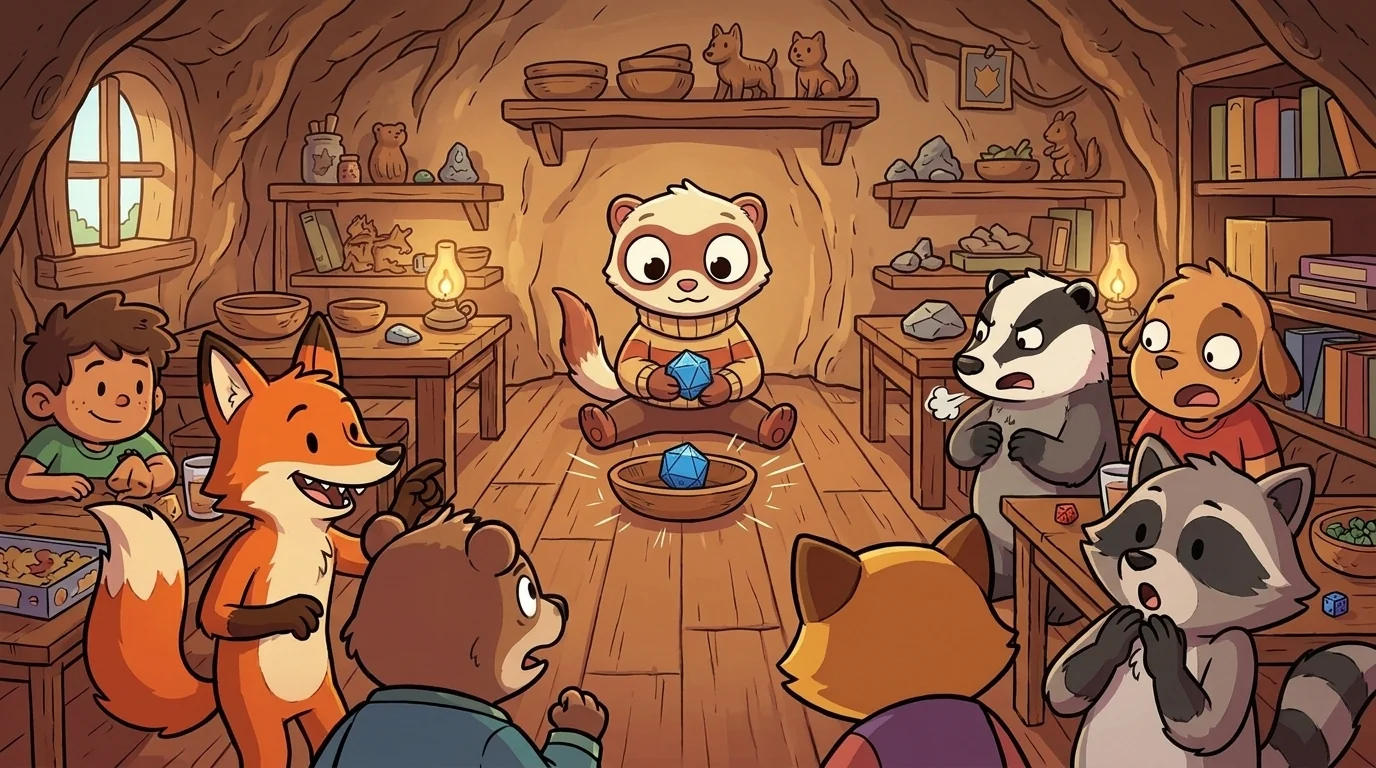
Roll had learned that the hard way, back in the burrow-village.
His family were dice-watchers — the ferrets who sat by the village games and tracked every throw. When he was small, he'd watched an old badger lose six games in a row and slam his fist on the table. "I'm OWED a good roll now," the badger had snarled. "The dice OWE me." And Roll, only knee-high, had believed him completely. It felt so true. Six bad rolls surely meant a good one was building up somewhere, like water behind a wall, ready to spill.
The badger lost the seventh game too. And the eighth. And when he finally won the ninth, he shouted that his patience had paid off — and Roll had felt the whole thing knot up in his stomach, because something about it didn't add up.
His grandmother, the oldest dice-watcher, had crouched beside him afterward. She didn't tell him the badger was foolish. She just asked, "You felt sure a good roll was owed to him. Didn't you? Felt it right here?" She tapped Roll's chest.
He nodded, miserable and confused.
"That feeling is real," she said. "But the die can't feel it. The die has no memory, no fairness, no debt. Your brain sees six losses and builds a story — a story where the world keeps score. The dice never read that story." She rolled one, slow and deliberate. "The pattern you think you see in a handful of rolls is almost always your own hope, dressed up as math."
Roll didn't fully understand yet. But the knot in his stomach loosened. The feeling had a shape now: his brain, hungry for a pattern, seeing one that wasn't there.
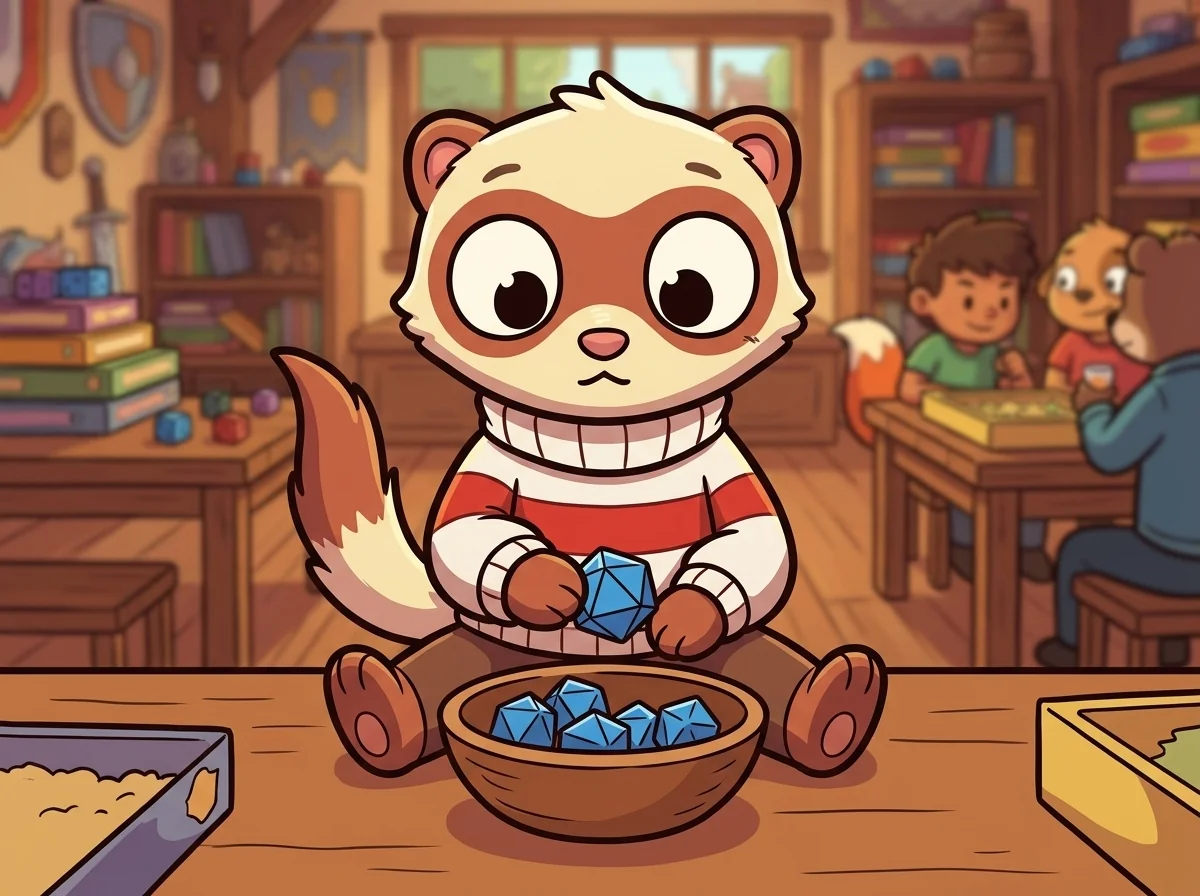
He walked to QuestForge at twelve, because a hall full of adventurers throwing dice at monsters seemed like exactly the place that needed someone to explain why the dice weren't out to get anyone.
Lorekeeper, the mentor who ran the hall, met him at the door and asked one question. "What do you know about dice?"
Roll didn't answer with a speech. He set six dice on the table — a d4, d6, d8, d10, d12, and the big d20 — and pushed the d20 forward.
"This one's fair," he said. "Every number, one to twenty, has the exact same chance. It doesn't get warmer or colder. It doesn't go on runs on purpose." He rolled it. A 3. "If I roll a 3 fifty times straight — which won't happen, but if — the fifty-first roll is still one-in-twenty for every number. The die can't lean. It has no memory to lean with."
Lorekeeper watched him a moment. "And when a player swears their dice are cursed?"
"Then their brain's telling a story the dice never agreed to." Roll shrugged, gentle. "I'd rather show them the real math. It's kinder than a curse."
Lorekeeper smiled. "You belong here," he said.
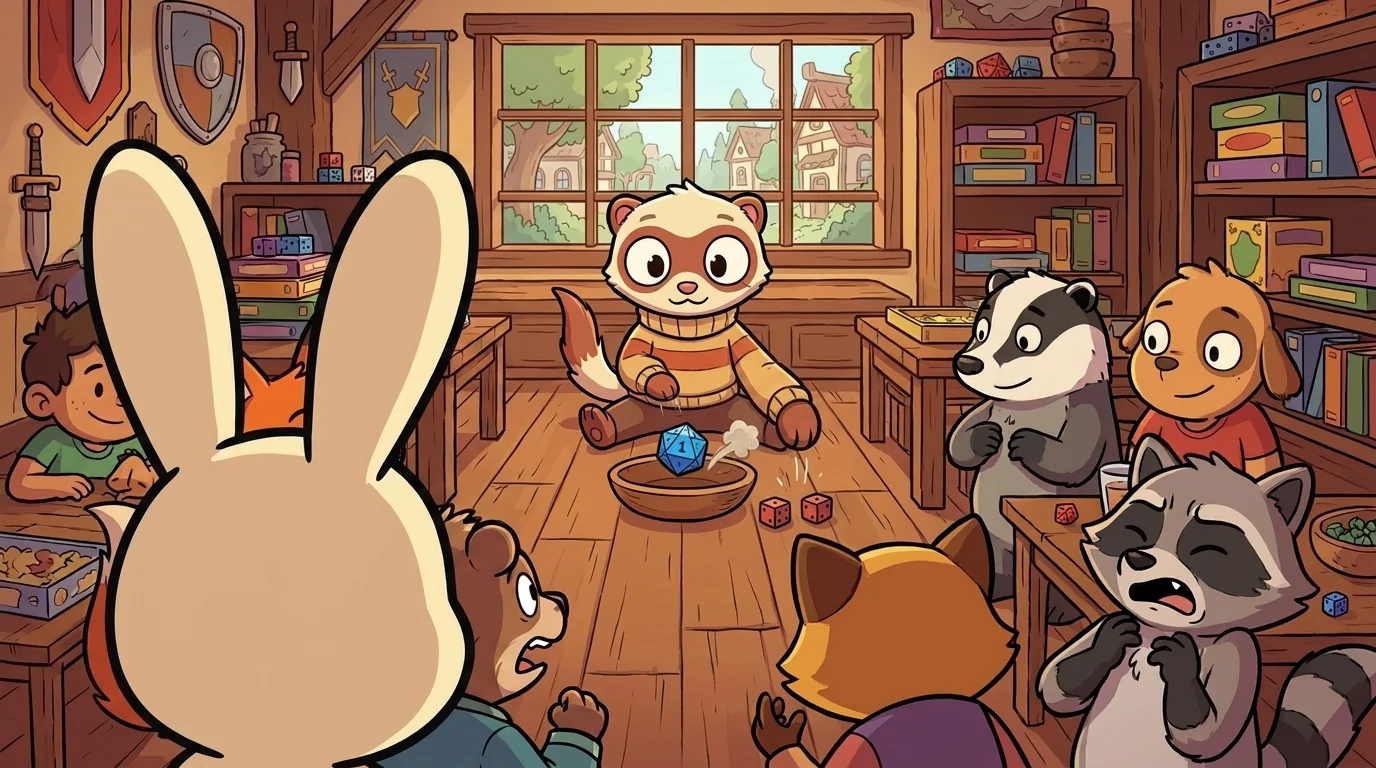
Roll's corner of the hall filled up fast, because losing streaks send people looking for answers.
A rabbit-tween slumped into the chair across from him one evening, ears flat. She'd rolled low all night — flubbed every attack, missed every save. "My dice hate me," she said. "I've lost so many, I have to be due. Right? The good rolls are stacking up somewhere."
Roll knew that slump. He'd felt it watching the badger.
"Let's test it," he said. "Roll this d20 ten times. Say your number out loud first."
"Twenty," she said, and rolled. A 4. Then 11, 7, 20 — "HA!" — then 2, 15, 8, 20 again, 6, 13.
"Two twenties," Roll said. "Now — before those two twenties, were you 'due'?"
"...I felt due the whole time."
"And the die gave you two anyway, right in the middle. Not because you earned them. Not because a losing streak paid them back. Just because each roll was fresh." He nudged the die. "Here's the sneaky part. Watch this." He picked up two smaller dice — two d6s. "One die is boring: every number equal. But roll TWO and add them, and something curves." He rolled the pair a dozen times, tallying. Sevens kept coming. Twelves and twos barely showed. "See? Seven's easy — lots of ways to make it. Six-and-one, five-and-two, four-and-three. But twelve needs a perfect six-and-six. One way only."
The rabbit leaned in. "So the numbers aren't all the same?"
"With two dice, no — the middle's crowded, the edges are lonely. That's a distribution. It tells you what to EXPECT over lots of rolls." He set the dice down. "But — and this is the whole thing — knowing seven is common doesn't mean your NEXT roll owes you a seven. Expectation is the long-run shape. Any single throw is still its own universe."
Later, when the hall had emptied, the rabbit came back, quieter now.
"When I was losing all night," she said, "and it felt so unfair — that feeling was just... wrong?"
Roll thought about the badger, and the knot in his own small stomach years ago.
"The feeling wasn't wrong," he said. "It was real. You really felt it. It's your brain doing the thing brains do — hunting for a pattern, keeping score, deciding the world owes you a turn." He looked at the die sitting still in the bowl. "But the dice can't feel owed. They can't feel anything. So when the losing feels heaviest, that's the moment to breathe and remember: the next throw doesn't know you lost. It's clean. It's brand new. Nothing is stacking up in there, waiting."
The rabbit sat with that. Slowly, her ears came up.
"So I'm not cursed," she said.
"You're not cursed," Roll agreed, warm and certain. "You just met a bad hour. The dice already forgot it. Maybe you can too."
And he watched the weight lift off her shoulders — the same heavy, owed feeling loosening its grip, the way his own had, long ago, in a burrow lit by lamplight.
The QuestForge ensemble
Roll is part of QuestForge's distributed-narrative cast. Each character embodies a different curricular primitive; together they teach the full subject.
-
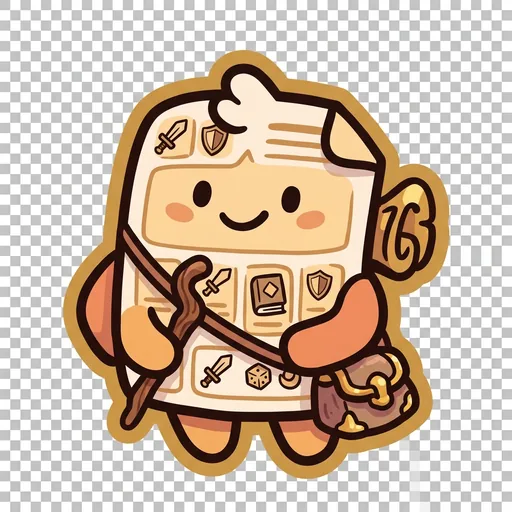
Sheet
Point-buy character creation + stat optimization — every build is a legitimate story
-

Fork
Branching narrative + decision design — two paths, both real, both lead somewhere
-
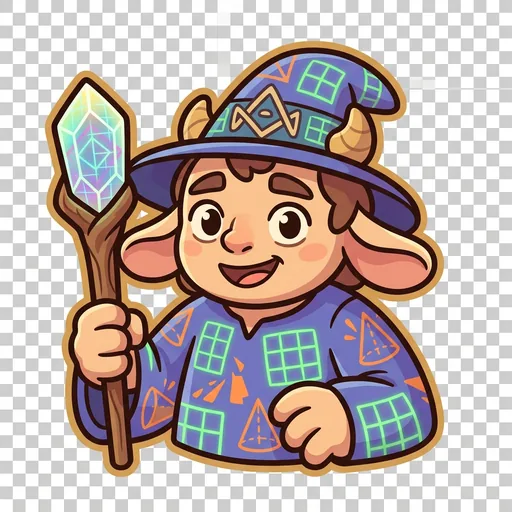
Hex
Encounter map grid + range/AOE geometry — math you can SEE
-
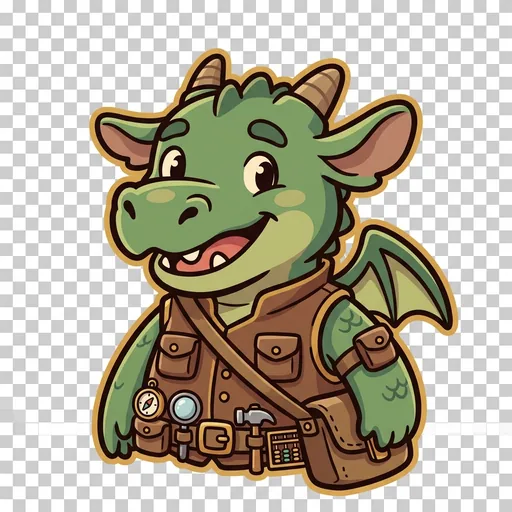
Hoard
Resource economics + budget — tools-not-trophies; counter-tropic friendly dragon