
Hex
HEX — math you can SEE. range + area-of-effect on a grid.
Loading audio…
Press play to listen along. The line being read lights up as you go.
Show full transcript
Loading transcript…
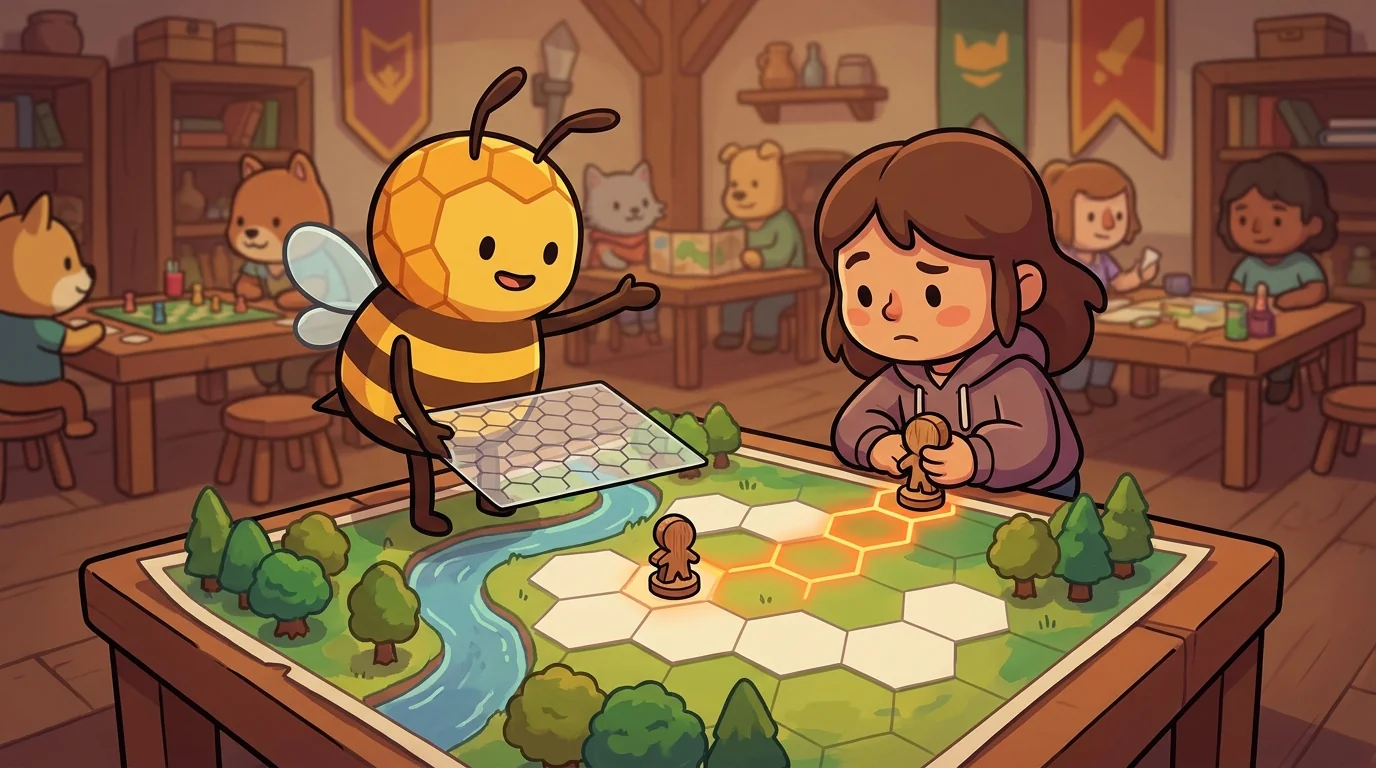
At a low wooden table in the corner of the QuestForge hall, a small honeycomb-striped bee named Hex laid down a card, tapped one paper hexagon, and said, "There. You can reach that one. Count it yourself."
A player was hunched over the table, gripping a little wooden token like it might run away. Between the token and the far corner of the map sat a painted river, a scatter of trees, and — the player was fairly sure — certain doom. "I don't know how far I can move," she said. "I never know. I just guess and hope."
"No guessing today," Hex said. He slid a flat grid of hexagons under her token. "Your character moves four this turn. So." He touched the token's hex. "One." A hex forward. "Two." Another. "Three, four. Stop." He looked up. "That's your whole world for this turn. Everything you can touch is inside four steps. Everything you can't, isn't. No hoping."
The player stared at the little ring of reachable hexes. Then she moved her token — not to where she'd been afraid to go, but two hexes sideways, behind a painted tree, exactly on the edge of a hex she'd counted herself.
"See that?" Hex said, delighted. "You didn't guess. You counted. The math was sitting right there on the table the whole time. You just had to touch it."
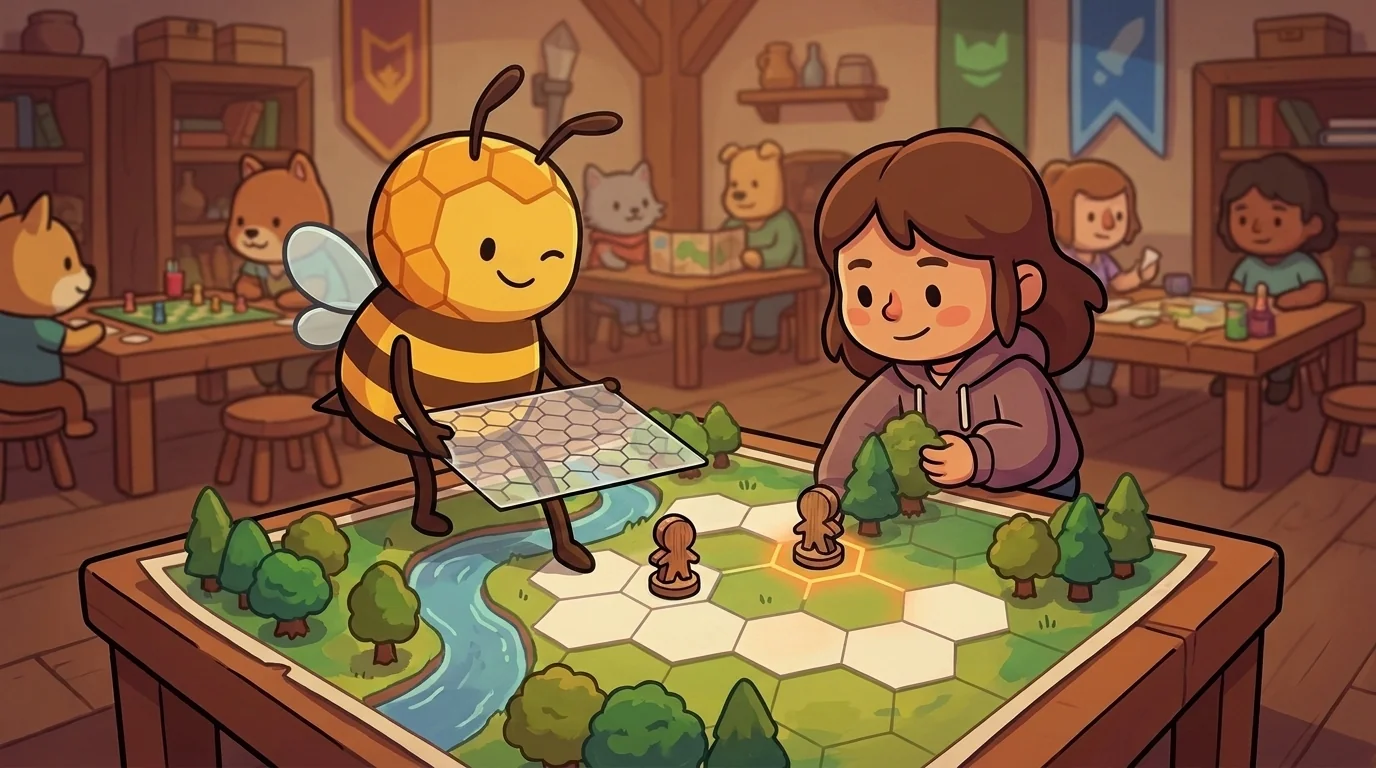
Hex hadn't always found the grid so friendly.
He'd grown up in the hive-village, in a family of cell-builders — the bees who packed the hall walls with tidy hexagons, wax cell beside wax cell, for as long as anyone remembered. Hex had loved watching them work. What he had hated was the counting-day, when the elders asked the young bees to say how far apart two cells were.
The first time, Hex froze. The wall was huge. The cells blurred together. His face went hot and his wings clamped tight to his back, because everyone else seemed to just know, and he did not, and he was certain the number lived somewhere he couldn't reach.
His aunt, an old cell-builder with wax on her hands, sat down beside him without a word. She didn't tell him to try harder. She put one finger on the near cell and one on the far cell. "You're looking for the answer like it's hiding," she said. "It isn't. Walk it. Cell, cell, cell." She stepped her finger from hexagon to hexagon. "Four cells. That's the whole distance. It was never hiding. It was just waiting for you to count it."
The tightness in Hex's back let go all at once. The wall stopped being a scary blur and became a thing he could walk with his finger. Not memorized. Not guessed. Counted. From that day on, whenever a number felt too big to hold, Hex would find the grid underneath it and just — step across, one cell at a time.
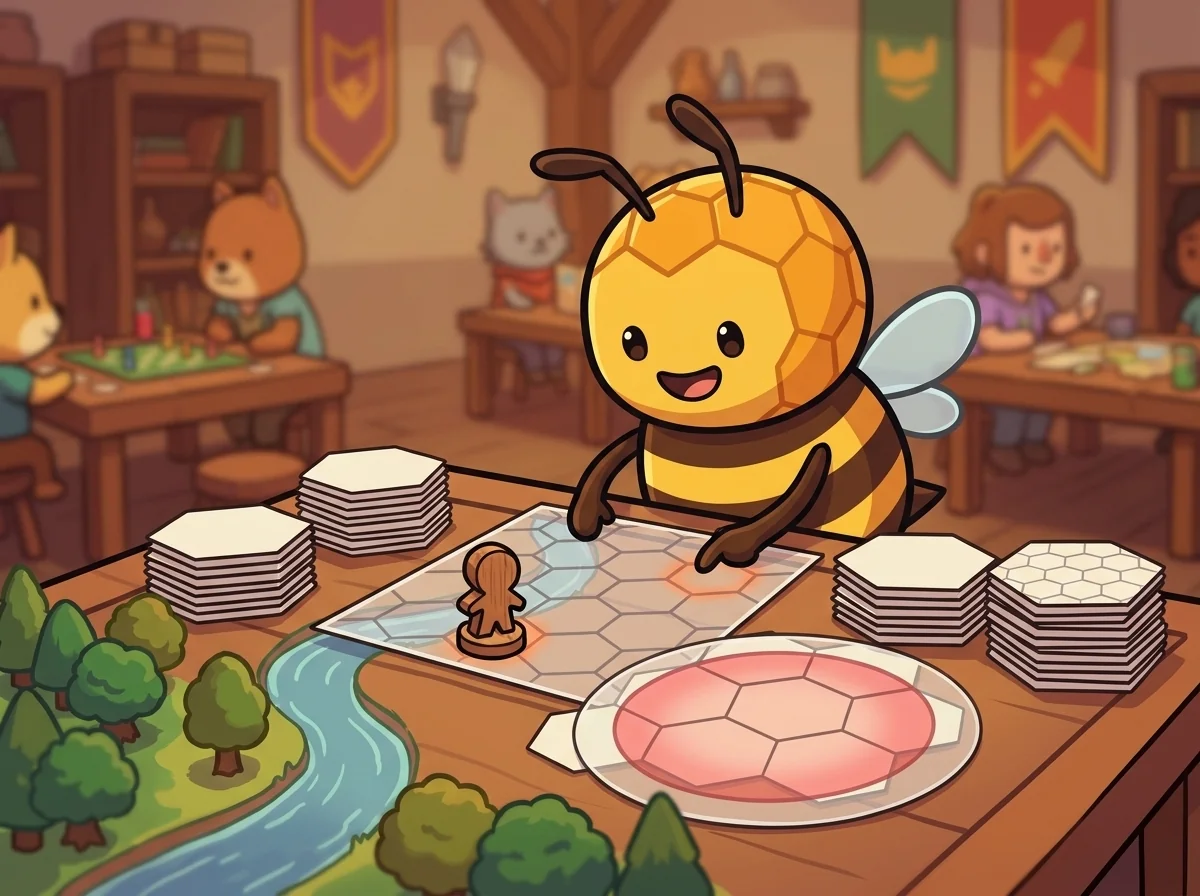
He walked to QuestForge at twelve, because a place full of adventurers who kept guessing how far their spells reached clearly needed a bee who counted.
The Lorekeeper met him at the door and asked one question. "What is grid geometry?"
Hex didn't answer with a speech. He set his paper hex-grid on the table, placed a token, and pointed. "This character can move three. So watch." He walked a finger across the hexes. "One, two, three — this far, no farther." Then he laid a round paper template over a cluster of hexes. "And this is a firebloom spell. It burns everything inside two hexes of the center. These cells." He touched each one. "Not those. You can see it."
The Lorekeeper looked at the little ring of paper hexes for a long moment. "Most people tell me grids are just where the pieces stand."
"They're where the rules stand," Hex said. "How far you go. What's in reach. What gets caught in the blast. The grid is the math, sitting still so you can touch it."
The Lorekeeper smiled. "You belong here."
Hex's corner of the hall was always the loudest, because it was where arguments came to get settled.
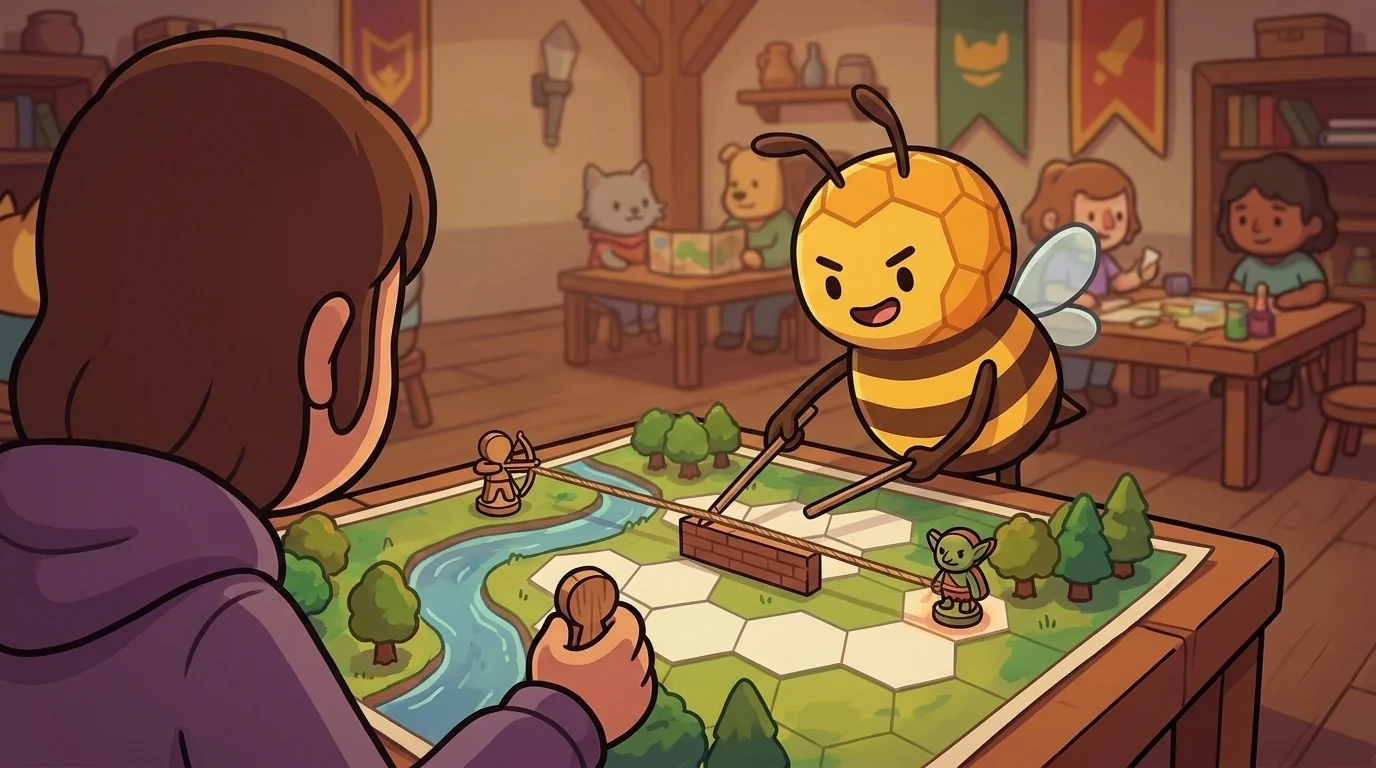
Two players were mid-fight, both certain, both wrong. "My arrow reaches him," one insisted, pointing across the map at a goblin behind a low wall.
"Does it, though?" Hex said mildly. He slid the grid between them. "Your bow's range is five. Count."
The player counted, jabbing hexes. "One-two-three-four-five. Ha! Five! I reach!"
"You reach the distance," Hex agreed. "Now look at the wall." He laid a thin ruler-line of string from the archer's hex straight to the goblin's. It clipped the corner of the painted wall. "Your arrow has to travel that line. The wall's in the way. So?"
The player's face fell, then brightened. "So I move first. If I step one hex left —" she walked her token over — "the string goes clean, past the wall. Then I shoot."
"Then you shoot," Hex said. "You had two choices hiding in the same turn. Move-then-shoot, or shoot-and-miss. The grid showed you which was which. That's the whole trick — the crowded, too-many-choices feeling shrinks down to something you can count and see." He grinned at the other player. "And now it's your turn, and you get to argue with the grid instead of with him."
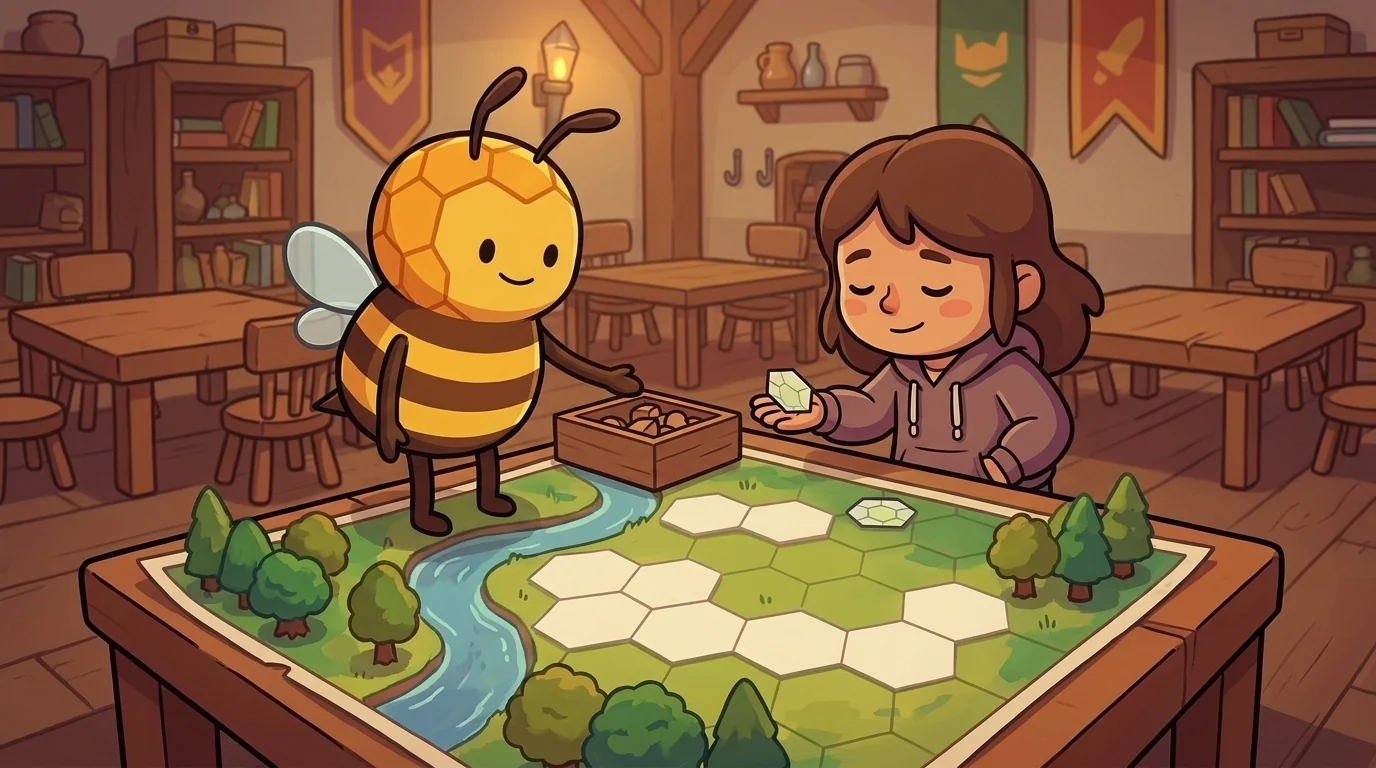
Later, when the table had emptied and the tokens were back in their box, the first player — the one who used to guess and hope — lingered.
"When it's your turn and everything's happening at once," she said, quieter now, "how do you not freeze? There's so much to keep track of."
Hex thought about the wall of cells and the hot face and his aunt's wax-covered finger. "You stop trying to hold it all in your head," he said. "You put it on the table. The distance, the reach, the blast — you don't have to remember any of it if you can touch it. Count the hexes. Walk the line. Let the grid do the worrying." He set the little paper hexagon in her palm and folded her fingers over it. "The scary part was never the math. It was carrying it all invisibly. Once you can see it, your shoulders come down. Everything you need is right there, sitting still, waiting for you to count it."
She held the paper hex a moment, then tucked it into her pocket. Hex watched the tightness leave her shoulders — the same way, years ago, it had left his — and thought, warm and certain, that the crowded, impossible turns were usually just the ones nobody had laid out flat yet.
The QuestForge ensemble
Hex is part of QuestForge's distributed-narrative cast. Each character embodies a different curricular primitive; together they teach the full subject.
-
Sheet
Point-buy character creation + stat optimization — every build is a legitimate story
-

Roll
Dice probability + distribution — dice don't remember; every roll is its own universe
-

Fork
Branching narrative + decision design — two paths, both real, both lead somewhere
-
Hoard
Resource economics + budget — tools-not-trophies; counter-tropic friendly dragon

