
Ask and Answer
antecedent and consequent phrasing — a first phrase poses a musical question (it climbs and ends unresolved, hanging in the air); a second phrase answers it (echoing the shape but landing home); two phrases balanced as question-and-answer make a whole musical sentence
Press play to listen along. The line being read lights up as you go.
Show full transcript
Loading transcript…
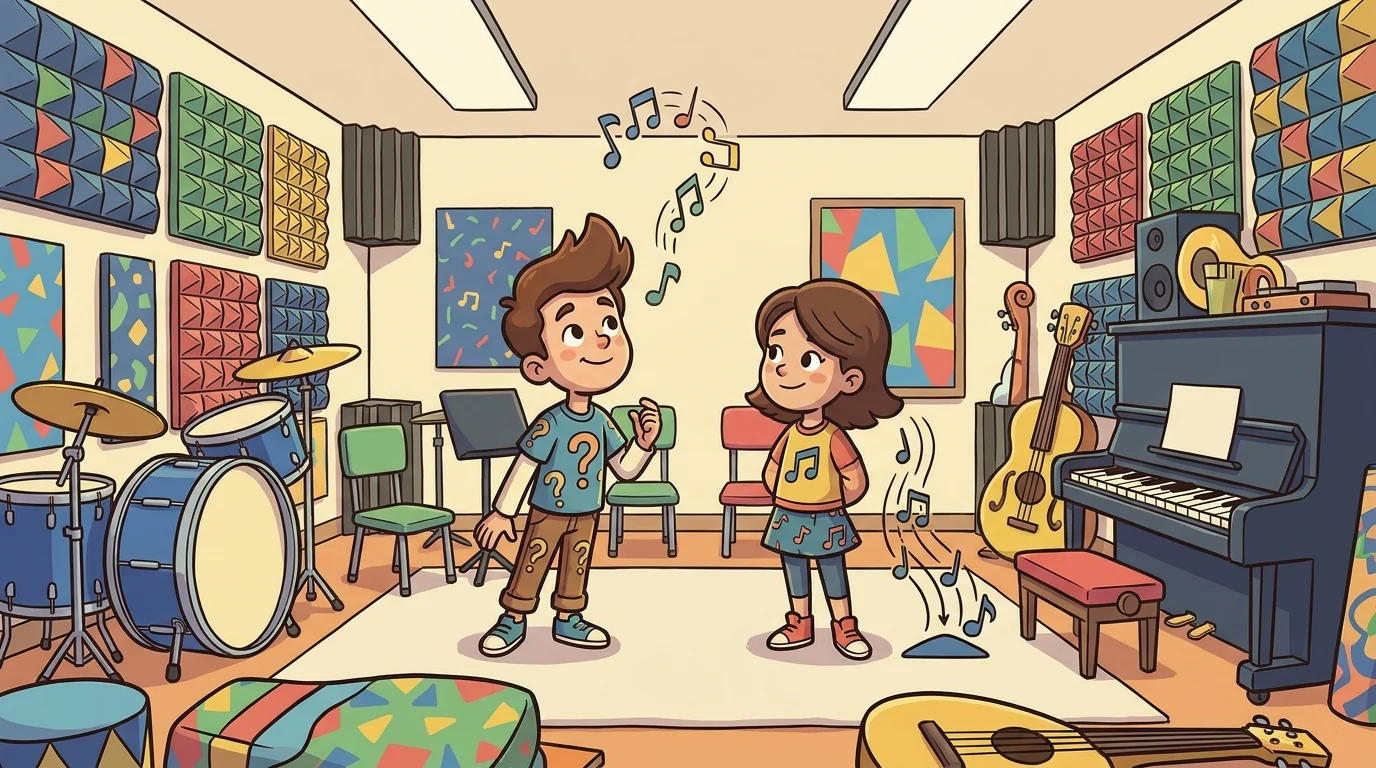
Two phrases lived in the MotifLab practice room, and they were forever finishing each other's sentences — because, in fact, that was the only thing either of them knew how to do.
Ask went first. He always went first. His little melody would climb upward, hopeful and curious, four bars of notes that stepped higher and higher — and then he'd stop, right in the middle of the air, on a note that felt distinctly unfinished. Not wrong. Just... open. Like the top of a question mark. When Ask finished his phrase, the whole room would tilt its head and wait, because he'd so clearly asked something that everyone leaned in for the reply.
Answer came second. Her melody sounded like Ask's — the same rhythm, the same shape, a familiar cousin of a tune — but where Ask had climbed and hung, Answer curved back down and settled, landing on the home note with a soft, satisfying click. "...and that's the answer," her phrase seemed to say. Alone, Ask was a question with no reply, and Answer was a reply to nothing. Together, they were a whole musical sentence: a thought completed.
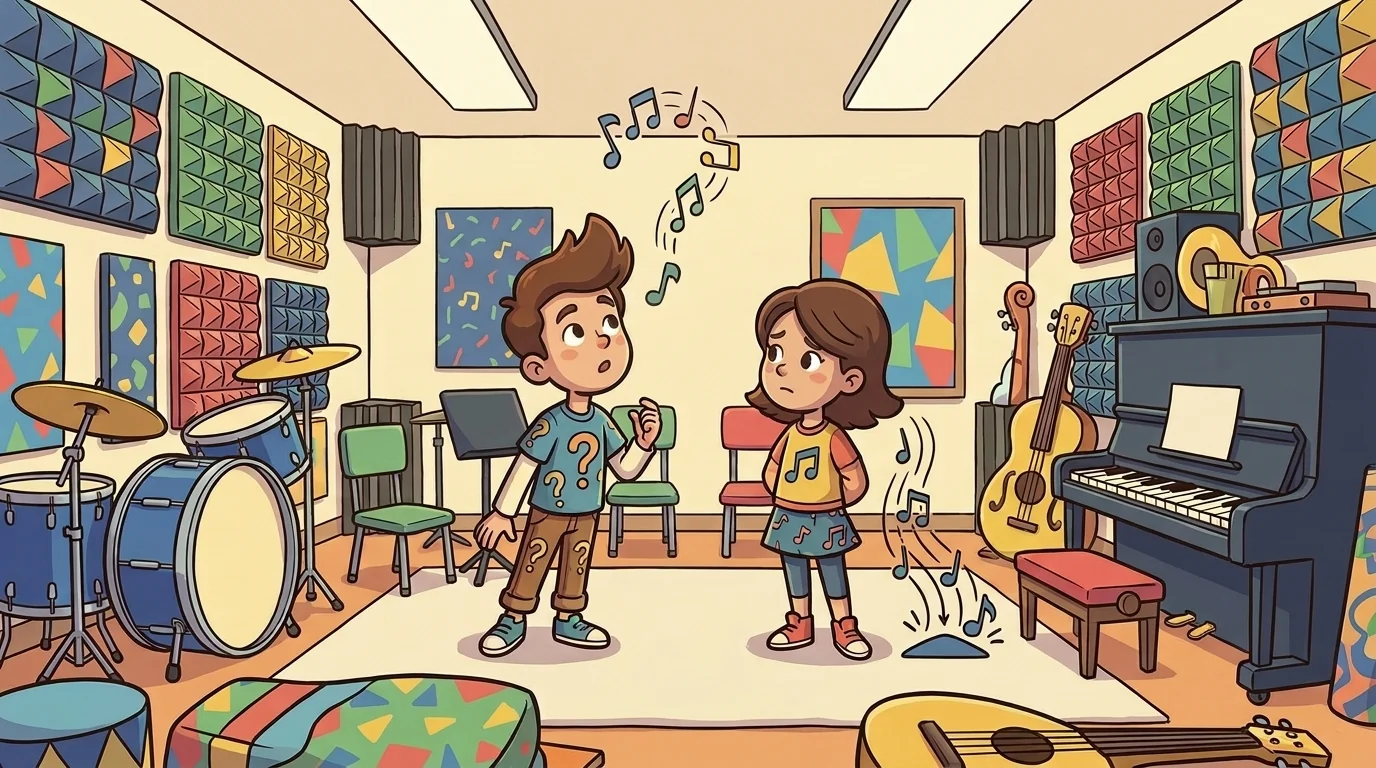
A young composer named Wren had written eight bars of melody, and something about it felt lopsided, though she couldn't say why.
"That's because you wrote two asks," said Answer, kindly. "Both your phrases climb up and hang. It's like someone asking you a question, and then, before you can reply — asking you a second question. It never lands. It just keeps hanging." Wren played it again and, sure enough, her tune felt like a staircase with no landing, climbing and climbing into nowhere. It made her a little anxious, honestly, the way an unfinished question does.
"Let me try the second half," Answer said. She took Wren's second phrase and bent its ending downward, curving it home. Suddenly the eight bars balanced — a rising question, a settling reply — and Wren felt the lopsided anxiety smooth right out into something whole.
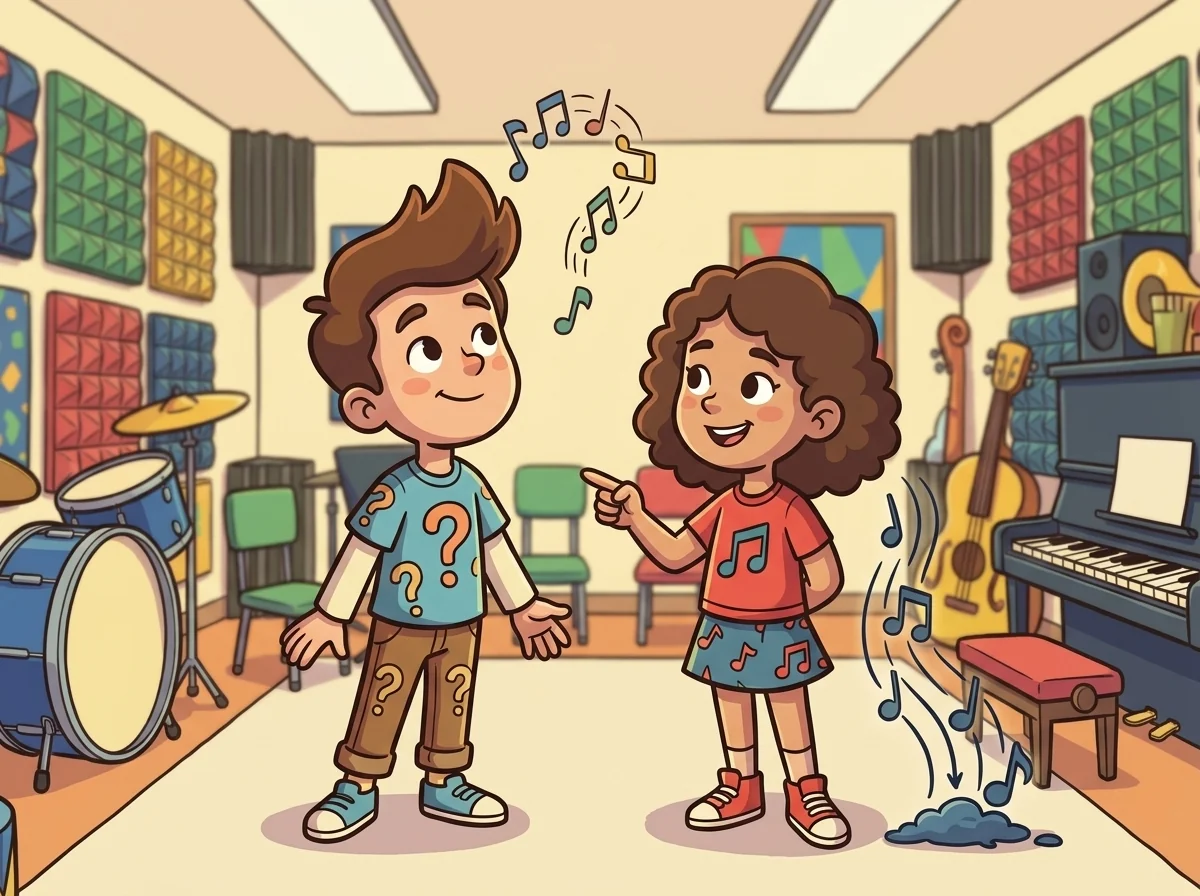
But Answer was quick to point at her partner. "Don't think I'm the important one," she said. "Without Ask, I'm nothing. I'm an answer to a question nobody posed."
To prove it, she played her settling phrase all by itself, with no question before it — and it was strange and empty, a reply floating in space, a "yes" with no one having asked "will you?" Ask laughed his hanging little laugh. "And without her," he said, "I just dangle forever." He played his climbing phrase alone, and it hung there, open and open and open, until the room squirmed. The point landed for Wren: a musical sentence needs both halves. One opens the thought; the other closes it. A question needs its answer, and an answer needs its question, or neither means much of anything at all.
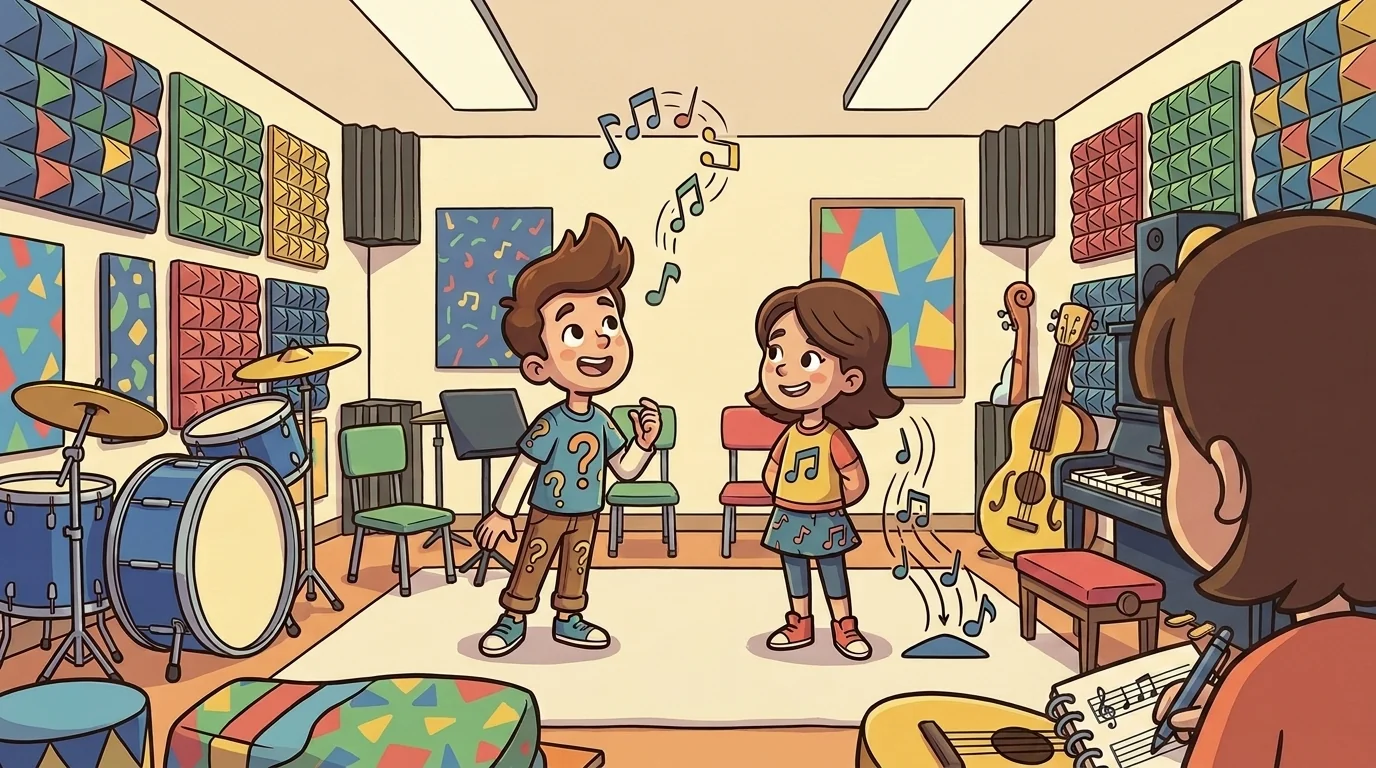
So Wren rewrote her melody as a real conversation.
Four bars that climbed and asked — the room leaning in — and then four bars that echoed the shape and curved gently home, landing on the note that felt like rest. Ask, then Answer. Question, then reply. The tune that had felt lopsided and anxious now felt balanced and whole, like a sentence that started with a capital letter and ended with a period. Wren played it three more times just to feel the click of the two halves fitting together, that little tumble of open... and closed, and each time the room tipped its head at Ask's question and then nodded, satisfied, at Answer's reply.
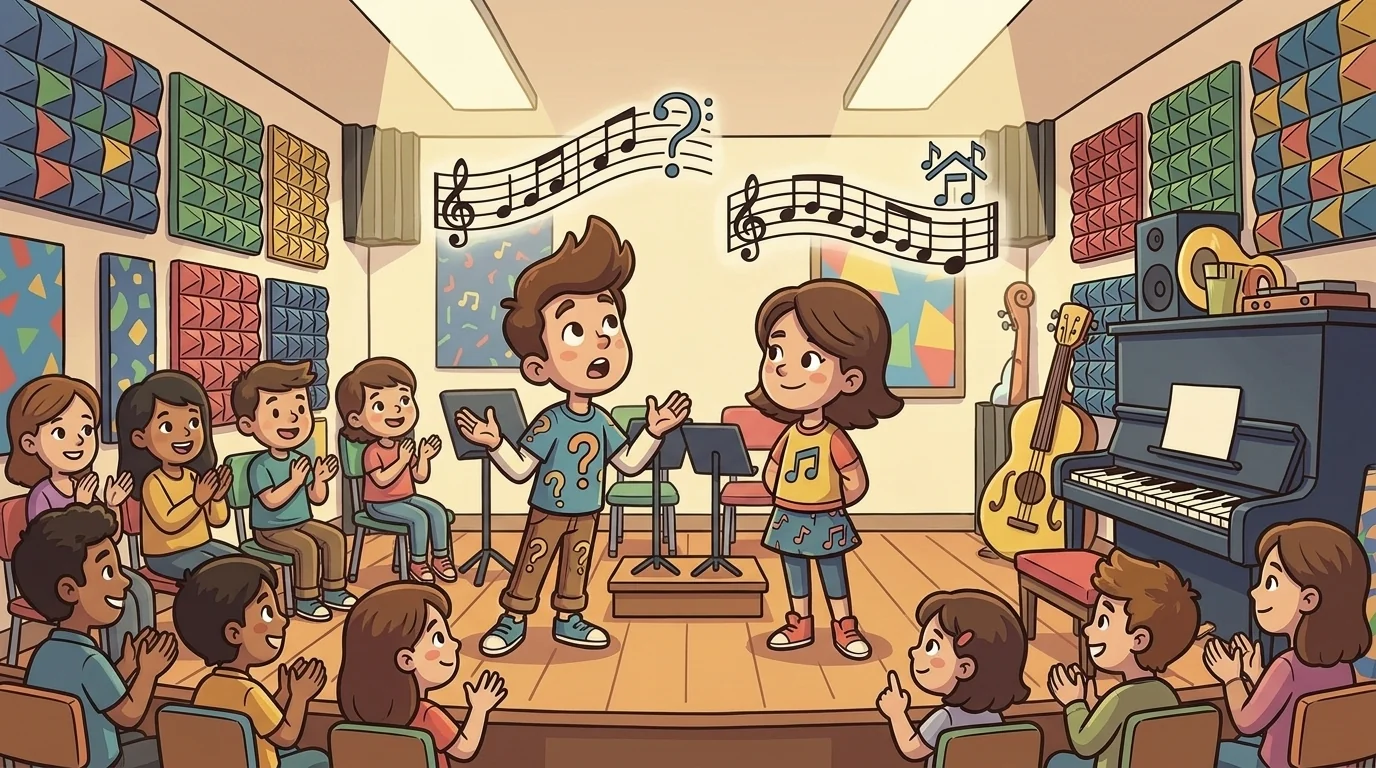
At the class recital, Wren's melody asked its question and answered it, and afterward a younger kid raised his hand and said the tune had felt like it was "talking to itself, but nicely."
Wren grinned, because that was exactly it — and she felt the quiet, glowing satisfaction of two halves she'd built to fit, clicking into one complete thought right there in front of everyone. Up on the staff, Ask and Answer took their places, four bars and four bars, and Ask lofted his hopeful climbing question into the air one more time. The room held the open hush for just a moment. And then Answer curved warmly home and closed it, and the whole thing rested there, finished and full, a small musical conversation that knew, at last, how to reach its own ending.
The MotifLab ensemble
Ask and Answer is part of MotifLab's distributed-narrative cast. Each character embodies a different curricular primitive; together they teach the full subject.
-

Trill
The motif itself — visual posture shifts as the motif develops, inverts, fragments
-

Meld
Harmony — notes that bloom underneath to support the melody
-

Thrum
Bass — the deep low foundation the whole song stands on
-

Clap
Rhythm — the steady beat pattern the song walks on
-

Twine
Counter-melody — a second tune that weaves against the main one
-

Surge
Dynamics — how loud and soft; how a song breathes
-

Ply
Texture — how many layers sound at once; thick or thin
-

Tint
Timbre — the color or flavor of a sound
-

Nest
Key — the home note the song keeps returning to
-

Wend
Cadence — how a phrase comes to rest; the song's punctuation