
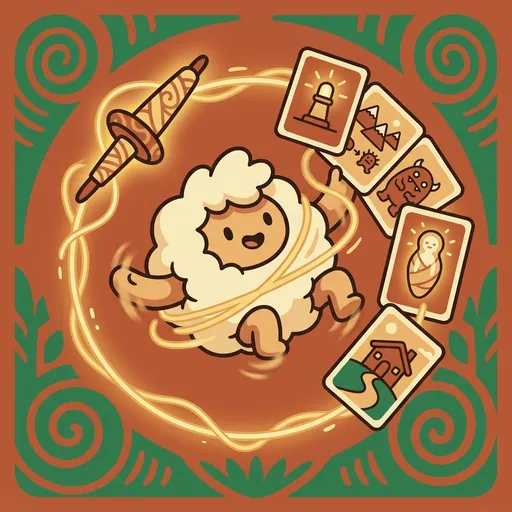
Thread
THREAD — *the spinning thread of destiny. journey + fate pattern recurs.*
Listen along — Thread
Loading audio…
Press play to listen along. The line being read lights up as you go.
Show full transcript
Loading transcript…
Chapter 3 — Thread and the Pattern That Pulls a Story Forward
Thread never sat still, because her hands were always spinning. Warm gold fiber ran out from her fingers and trailed behind her wherever she went, catching the light. She was small and round and cheerful, and she had a habit of watching a story the way other people watch a river — following where it was headed.
A young writer named Juno had come to her corner of the LoreQuest hall stuck. “My story doesn’t go anywhere,” Juno complained, waving a fistful of crossed-out pages. “Stuff just… happens. And then more stuff happens. And it’s boring.”
“Ah,” said Thread, without stopping her spinning. “You’ve got beads with no string.” She held up the golden thread running through her fingers. “Watch. A story isn’t just a pile of things that happen. It’s shaped — pulled along a line. Feel it.” She tugged the thread taut. “A hero gets called toward something. She’s scared, maybe she says no at first. Then she crosses over into the hard part. Trials. A big frightening challenge. And she comes out the other side changed, and goes home different than she left.”
She let the thread go slack, then taut again, so Juno could feel the pull of it. “That pull — that’s what you’re missing. Not more stuff. A line through the stuff.”
Juno stared at her pages. “So the string is… the shape?”
“The string is the shape,” Thread agreed, and spun a little faster.
Thread had grown up in a family of spinners, at the edge of the world where the weaving happened. Her grandmother’s hands had never been still either.
“The thread remembers,” her grandmother used to tell her, running fiber through her old fingers. “It shows where the story has already been, and it points where the story is going. Spin carelessly and you get a snarl. Spin with a plan and you get a path someone can follow all the way to the end.”
Little Thread had tried it and made a hopeless tangle. She’d wanted to cry.
“No, no,” her grandmother had laughed, gently untangling it. “A tangle isn’t a mistake. It’s just a story that forgot where it was going. Pick up one end. Ask it — where did you start? Where do you want to end? Now pull.” And under her grandmother’s patient hands the snarl had come loose into a clean, glowing line, and Thread had felt something click into place in her chest, the deep satisfaction of a mess becoming a path.
“Everywhere people tell stories,” her grandmother had added, “someone somewhere imagined this — the idea of a fate spun like fiber. But how they imagine it belongs to them. Learn the shape. Leave their spinners with them.”
Thread carried both halves of that lesson forward, coiled together like two-ply yarn.
When Thread was twelve she made her way to LoreQuest, a great old hall that smelled of ancient paper and fresh ink. Her mentor was a kind, crinkly-faced storyteller everyone called Plot.
Plot didn’t quiz her. He set a heap of tangled colored threads on the table between them and asked, “What is a story’s arc?”
Thread looked at the tangle. Then she picked up one end, found the other, and began — slowly, surely — to draw it into a single clean line.
“A story is a thread you spin on purpose,” she said as she worked. “You call the hero out. You pull her through the hard middle. You change her at the worst moment. You bring her home someone new. The shape is the same in a hundred lands, even though every land dreams up its own spinner to hold the fiber.”
Plot watched the tangle become a path in her hands. “Then this hall’s threads are yours to keep untangled,” he said warmly. “Teach them the shape. And teach them to leave every specific spinner in the hands of the people who dreamed her.”
Now Thread turned back to Juno and spun the gold thread out over the table, and where it landed, pictures bloomed along its length like beads strung on a line.
At one end, a bright flare. “Here’s your hero getting the call,” Thread said. “The thing that yanks her out of her ordinary day.” A little further along, a steep hill with shadows lurking. “Here come the trials — the middle, where it gets hard.” Near the far end, a huge shape reared up. “The big challenge. The scariest moment, where she can’t stay who she was.” And at the very end, a small figure walking home, taller somehow. “And the return. She’s changed. That’s the whole shape.”
Juno traced the glowing line with a finger. “And other people made up… spinners? Who do this?”
“They did,” Thread said, “and here’s the careful part.” She gathered the thread back in. “In some old Greek tales there are three sisters who spin, measure, and cut a life. In old Norse stories there are three weavers at the roots of the world. A clever spider-spinner holds the stories in West African tellings. A grandmother spider appears in many Native American traditions, each with her own protocols for who may tell her and when.” She looked at Juno steadily. “You may admire how many peoples imagined a spinner of fate. That’s yours to notice. But you don’t lift their spinner into your story like a borrowed toy. Their figures stay home. The shape — the string — is what you carry away.”
Juno nodded slowly. “So I make up my own spinner if I want one. And I keep the shape.”
“Now you’ve got it,” Thread said, delighted.
Juno picked up a pen and, for the first time all afternoon, didn’t cross anything out. “I know where it starts now,” she said. “And I finally know where it’s going.”
Thread smiled and gave her thread one last, bright spin. “That’s the best part of the whole craft,” she said softly. “The moment the tangle turns into a path.”
And as she said it, the golden thread glowed a little brighter, and a hopeful, tingly feeling filled the room — the excited flutter you get right when you sense your own story is about to begin. Juno felt it land in her chest, warm and buzzing, that rush of I can’t wait to see where this goes.
“That feeling,” Thread whispered, “is what a well-spun story slips into the heart of whoever hears it. Hold onto it. It’s the reason we spin at all.”
Juno’s shoulders dropped, loose and easy, and she began to write.
The LoreQuest ensemble
Thread is part of LoreQuest's distributed-narrative cast. Each character embodies a different curricular primitive; together they teach the full subject.
-
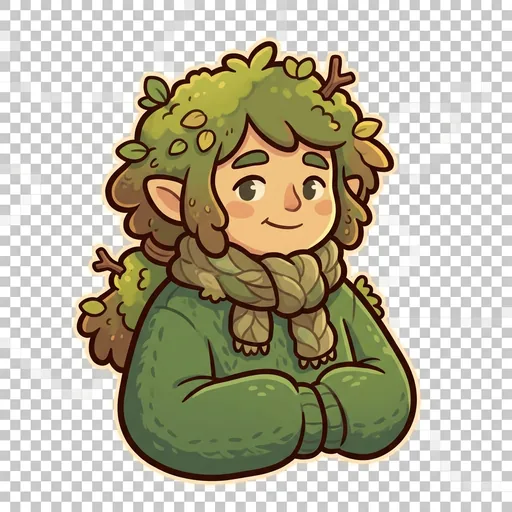
Mossy
Forest / nature-spirit archetype (the quiet local-landscape entity who appears across many traditions — wood-elves, dryads, kami of place, etc., abstractly)
-
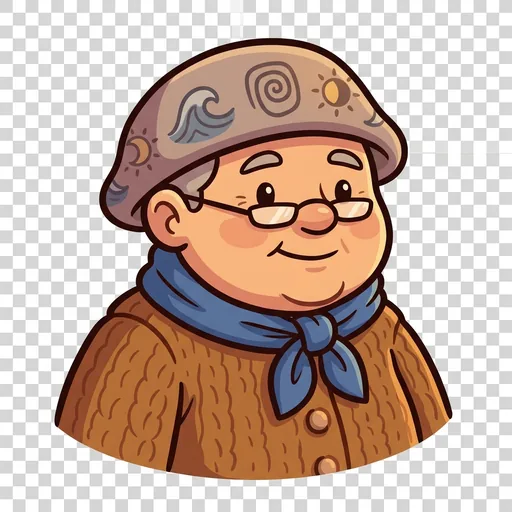
Refrain
Repeating-tale / echo motif archetype (motif recurrence — same story-pattern appearing across cultures: flood myth, hero descent to underworld, twin gods, etc.)
-
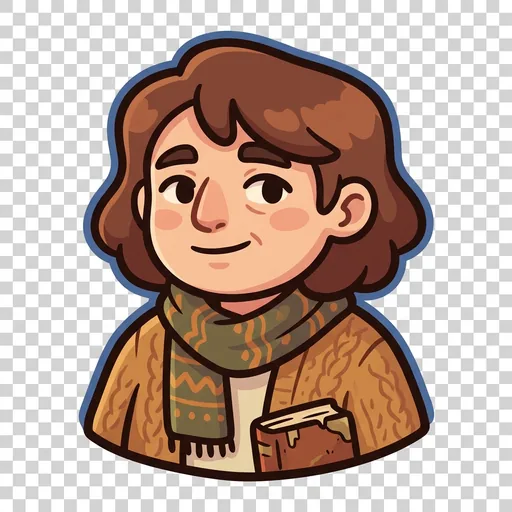
Ruse
Clever-fool / trickster archetype (the figure who breaks the rules and teaches a lesson by doing so — recurs across MANY traditions, but referenced **abstractly** here; the cast...
-
Hearth
Origin / family / hearth-storyteller archetype (the figure who carries oral tradition; the grandmother / elder who tells the stories — found in nearly every tradition's framing...