
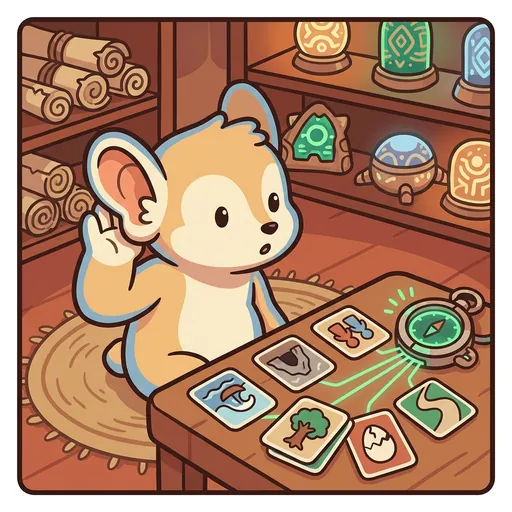
Refrain
the same story-shape that echoes across many traditions
Listen along — Refrain
Loading audio…
Press play to listen along. The line being read lights up as you go.
Show full transcript
Loading transcript…
Chapter 2 — Refrain and the Stories That Rhyme
In the reading-hall of LoreQuest, a small listening creature named Refrain sat with a hundred storybooks open around her and kept whispering the same three words.
“There it is.”
She had been reading all afternoon — a tale from a river valley, a tale from a mountain people, a tale carried across an ocean in someone’s memory. Different names. Different weather. Different gods, different heroes, different rivers. And yet, halfway through the third book, she stopped and pressed her paw flat on the page and grinned.
A younger student peered over her shoulder. “You’ve read that one already. You just read it in the last book.”
“No,” Refrain said gently. “I read a cousin of it in the last book. This one belongs to these people. That one belongs to those. They never met. They never traded these stories.” She tapped both pages at once. “But look — a great flood comes, and one careful person saves what matters, and the world begins again. Two peoples, oceans apart, told the same shape. Not the same story. The same shape.”
The younger student frowned. “So somebody copied?”
“That’s the thing that makes my whole chest go warm,” Refrain said. “Nobody copied. They each felt something enormous — a flood, a fear, a hope of starting over — and reached for a story to hold it. And they reached, from opposite ends of the earth, for a shape that rhymes.” She closed her eyes. “That’s the echo. I listen for the echo.”
Refrain had first felt the echo when she was very small, and it had frightened her a little.
Her grandmother told stories every night — old ones, from the family, careful and specific. Then one evening a visitor from far away sat by their fire and told a story of her own people, in her own words, and Refrain’s stomach did something strange. Somewhere in the middle of the stranger’s tale, she felt she already knew where it was going. A twin who loved and a twin who wandered. A journey down into the dark and a hard climb back. She knew it. And she had never heard it before.
Afterward she tugged her grandmother’s sleeve, panicked. “I cheated. I knew the ending. Did I steal her story from inside my own head?”
Her grandmother laughed, low and warm, and pulled her close. “You didn’t steal a thing, little listener. You recognized something.” She let that sit. “Her story is hers. It belongs to her people, whole and specific, and we honor every bit of it as theirs. But the shape underneath — the going-down-and-coming-back — that shape lives in more places than one. You felt two things at once and it scared you. You felt how much is hers, and you felt how much is ours, all humans, together.”
Refrain didn’t understand all of it that night. But the fear turned into something else — a soft, tingling wonder, the feeling of standing in a huge house and realizing every window looks out on the same sky.
“That feeling,” her grandmother said, “is worth spending a life on. Just remember both halves. Honor what belongs to whom. And marvel at what we share.”
She walked to LoreQuest at twelve, because a place that studied stories ought to understand the shapes that keep coming back.
Plot, the old mentor of the story-halls, met her at the door with tea gone cold and a question. “What is a motif?”
Refrain didn’t answer with a definition. She set three cards on the table — a flood, a great tree at the center of the world, a journey down into the dark and up again. Then she laid a scatter of tales beneath each card, from peoples who had never crossed paths, and looked up.
“A motif is a shape that echoes,” she said. “This one, and this one, and this one — I found each of them living in many houses at once, and none of those houses borrowed from the others. The stories are all different. The shape rhymes.” She touched the tales carefully, one at a time. “And every single tale still belongs to the people who told it. I only get to notice the rhyme. I don’t get to flatten them into one.”
Plot was quiet for a while. Then he moved her tea aside and sat down across from her.
“You belong here,” he said.
Refrain’s workshop was the warmest room in LoreQuest, full of soft light and softer voices.
A student came in one afternoon, arms crossed, frustrated. She’d been trying to write her own story and hated all of it. “Everything’s already been done,” she said. “Every idea I have, some old tale did it first. What’s even the point of me?”
Refrain knew that slump. She’d felt it, in a different shape, by a fire long ago.
“Read me your idea,” she said.
The student read a rough scrap — a girl who goes down beneath the roots of a huge old tree to bring something back for her village.
“Ah,” said Refrain, delighted. “You’ve got two of the oldest shapes there is. The world-tree at the center of everything. The journey down and back.” The student’s face fell. Refrain caught it. “No — no. That’s not a problem. That’s you tuning into a station that’s been broadcasting for ten thousand years.” She leaned in. “Here’s the honest part. You do not get to write their tree — the specific sacred tree of a specific people. That one’s theirs, whole, and we don’t take it. But the shape of a great central tree, and the shape of going under to fetch something dear — those belong to all of us. Those are ours to build with. Your girl, your village, your voice — pour them into the old shape and it becomes brand new.”
The student stared at her scrap. “So I’m not copying.”
“You’re joining,” Refrain said. “You’re adding your window to a house with a thousand windows. The shape rhymes. The song is yours.” She smiled. “Every writer who ever lived is standing in that same house, humming a little differently. You’re not late. You’re in the choir.”
The student laughed — a real one — and picked her pencil back up.
Later, when the workshop had emptied and the light had gone gold, the student came back with a quieter question.
“When I feel like I already know a story I’ve never read,” she said, “and it’s not creepy, it’s kind of… lovely. What is that?”
Refrain thought about the fire, and the stranger’s tale, and the huge house full of windows.
“That’s recognition,” she said. “That’s the echo landing in you. It means you’re hearing a shape that people have reached for again and again, across every land and every language, whenever they had something too big to hold on their own.” She looked at the shelves, at all the different houses of all the different tales. “You don’t have to be afraid of it, and you don’t have to steal from it. You just get to feel it — that warm, ringing, oh, you too? feeling — and know it’s the sound of every storyteller who ever was, keeping company with you across all that distance.”
The student nodded slowly, and Refrain watched the loneliness lift right off her shoulders.
She didn’t say the rest aloud, but she felt it, glad and steady all the way through: that the shapes come back not because we copy, but because we keep needing the same brave things — and noticing that, quietly, is one of the least lonely feelings in the whole world.
The LoreQuest ensemble
Refrain is part of LoreQuest's distributed-narrative cast. Each character embodies a different curricular primitive; together they teach the full subject.
-
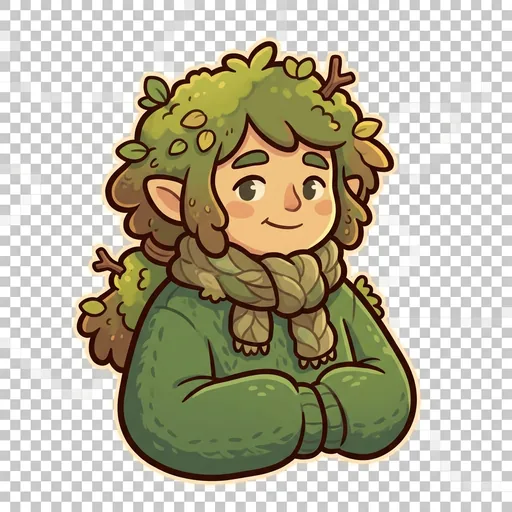
Mossy
Forest / nature-spirit archetype (the quiet local-landscape entity who appears across many traditions — wood-elves, dryads, kami of place, etc., abstractly)
-
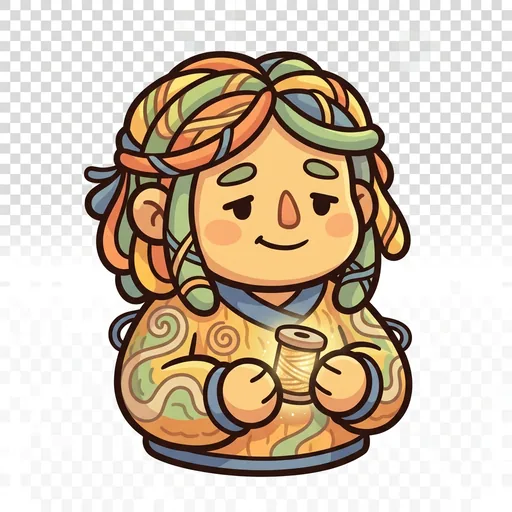
Thread
Hero-journey / fate-spinner archetype (the spinning thread of destiny that recurs across heroic narratives — Moirai, Norns, Anansi-as-spider, etc., abstractly)
-
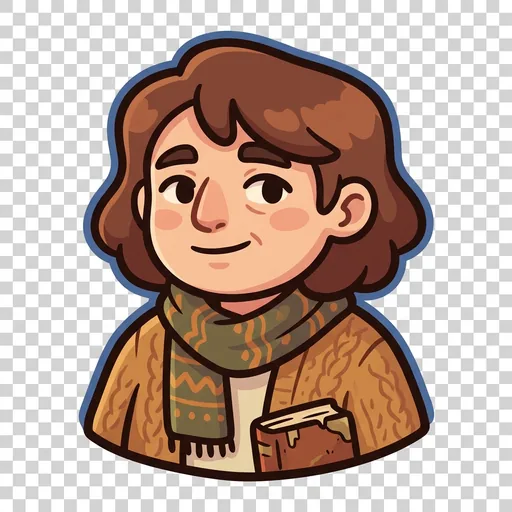
Ruse
Clever-fool / trickster archetype (the figure who breaks the rules and teaches a lesson by doing so — recurs across MANY traditions, but referenced **abstractly** here; the cast...
-
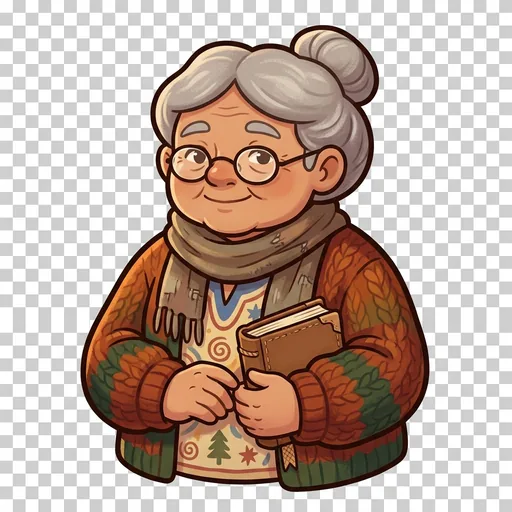
Hearth
Origin / family / hearth-storyteller archetype (the figure who carries oral tradition; the grandmother / elder who tells the stories — found in nearly every tradition's framing...