
Hearth
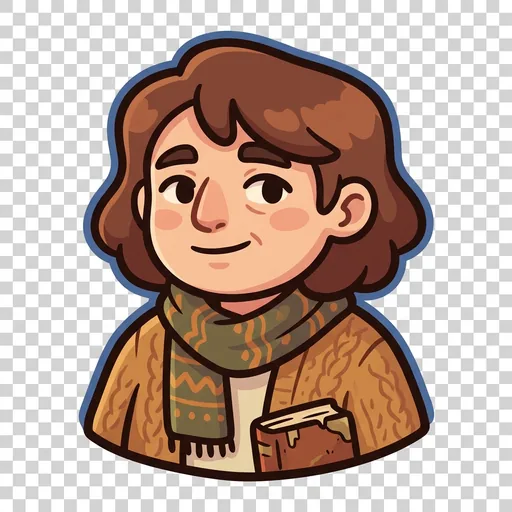
HEARTH — *the figure who carries oral tradition. the grandmother + elder who tells the stories.*
Listen along — Hearth
Loading audio…
Press play to listen along. The line being read lights up as you go.
Show full transcript
Loading transcript…
Chapter 5 — Hearth and the Voice That Carries Stories Through Time
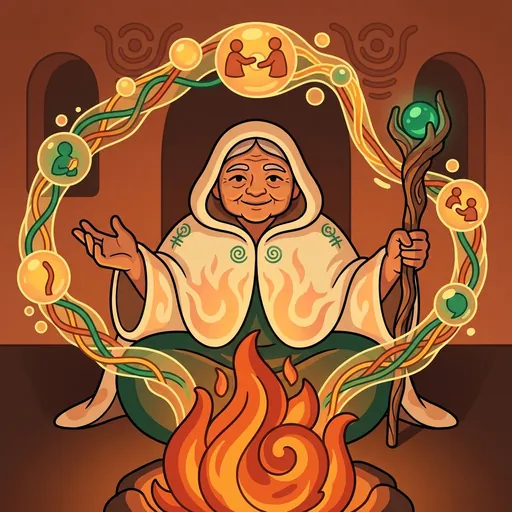
Hearth wasn’t just any old storyteller. Hearth was the storyteller. Imagine a chunky cartoon figure, always sitting by a warm fire. That was Hearth. Hearth wasn’t from one specific place or time. Hearth was the idea of every storyteller. The one who sits by the fire and shares tales. The one who makes you lean in close.
Hearth wore a cloak the color of warm cream. It seemed to glow with soft firelight, even when no fire was near. Hearth was always patient. Always ready to tell a story. Hearth loved to learn about old tales. The ones that lasted for ages. Hearth often said, “I am the figure who carries oral tradition. The grandmother and elder who tells the stories.” Hearth’s special thing was showing how stories traveled. Hearth sat by a fire that wasn’t quite real. It was an idea of a fire. A shimmering, orange glow that pulsed gently. Next to it, a display showed how stories move. It was like a swirling mist, with tiny sparks of light. Each spark was a story. They traveled by being told. Again and again. From one person to the next. Across many years. It didn’t show any real story. Or any real person. Just the idea of how tales get passed down.
This was super important. Hearth showed us the hearth-storyteller. This is the big idea of THE-VOICE-THAT-CARRIES-STORIES-THROUGH-TIME. Most kids think stories are books. Or things on a screen. You read them, or you watch them. But that’s not the whole truth. For most of history, stories were carried. People told them. Grandmothers and grandfathers. Elders and community leaders. They told tales by fires. At big gatherings. While they worked in the fields. They passed them down. From one generation to the next. Almost every culture had a hearth-storyteller. Someone who kept the stories alive. The storyteller was like a bridge. The telling was how the story crossed from one mind to another.
And here’s a secret: stories told aloud are not less good than written ones. Many oral traditions were very careful. They had special ways to check facts. Like memorized poems. Or special ways to retell them exactly right. Many people would check the story. They made sure it stayed true. Hearth was the idea of this kind of storyteller. Specific storytellers belong to their own cultures. (ChronoQuest Storykeeper helps us respect that history.) Hearth was here for your writing. When you write, you join a long line. A line of storytellers. Will your story grip people’s hearts? Will it be carried by others? That’s the big question. Hearth’s whole job was to show this. To make the storyteller important. To make you think about your reader as a listener.
Hearth’s voice was clear and warm. It felt like a cozy blanket on a cold night. “I carry oral tradition,” Hearth said. “I am the grandmother and elder who tells stories. When you write, you join a line. A line thousands of years long. Most stories were carried. They were spoken. Retold. Passed down. Some cultures still do this. We must honor them. For your own writing, think about it. Imagine your story told aloud. Does it grab a listener? Would a child by a fire stay? Would they lean forward, wanting to know what happens next? Or would they wander off, bored? That’s the storyteller’s question. The hearth is the test.”
Hearth taught us how storytellers work.
- Stories travel. Most stories were told, not written. Writing is a newer way.
- The hearth test. Will a listener stay through your story? That’s the main question.
- Oral stories are strong. They have ways to stay true. They are not less good than books. They are just different.
- Storytellers listen. They watch their listeners. They change the story a little bit. It’s like a chat, back and forth.
- Storytellers are everywhere. Many cultures have someone like Hearth. Honor each one. But also see the main idea of a storyteller.
- Pace for listening. Stories told aloud have a special rhythm. You need to think about breathing. You need to think about holding attention.
- Use strong pictures and repeats. Oral stories use clear, vivid images. They repeat important phrases or ideas. This helps people remember. Use this in your writing.
- This finishes our group. Mossy, Refrain, Thread, Ruse, Hearth. Place, motif, arc, rule-break, storyteller. This is the full toolkit for LoreQuest.
- Don’t just write for paper. Even silent reading has a voice in your head. Think about that voice. How does it sound?
- Don’t look down on oral stories. Calling them “just folktales” is wrong. It ignores hundreds of years of careful telling. Honor them.
- Don’t take other people’s stories. Honor specific tales from specific cultures. If you want to use their material, work with the people who keep those traditions.
Hearth grew up by many fires. Fires of many families. Fires of many years. Hearth learned a big lesson from the elders. “A story is alive when listeners pay attention. The hearth is where stories travel through time.” Hearth carried this lesson forward. Now Hearth was an elder. Telling stories.
Hearth came to LoreQuest as an elder. A wise old guide. Plot, our mentor, had asked a question. “What is a storyteller?” Hearth answered, “The figure who carries oral tradition. The grandmother and elder who tells the stories. It’s a craft, a skill.” Plot said, “You are chosen. You complete our group of guides.”
In Hearth’s workshop, a special mat unrolled. It showed the storytelling pose. Hearth sat down, cross-legged, by the abstract fire. The firelight flickered on Hearth’s cream-colored cloak. “Watch,” Hearth said. And began to tell. Hearth’s voice was soft but strong. It painted pictures in the air. Hearth paused at just the right moments. Then sped up when the action got exciting. Listeners were there. We couldn’t see them. But we knew they leaned in. Their eyes were wide. The story held them tight. The story traveled. “That’s the hearth test,” Hearth said. “Would your story travel like this? Or would the listener walk away, bored? That’s the storyteller’s question. For every single line you write.” Hearth said, “I am Hearth. My big idea is hearth-storyteller. My moves are: stories travel; the hearth test; pacing for listeners; honor old traditions; finishing our group.”
Hearth was gentle. And warm like an elder. “Don’t forget the hearth,” Hearth said. “Your story joins a long line. Stories told around fires. Honor that line. Make your story strong enough to be carried.”
“I am the figure who carries oral tradition. The grandmother and elder who tells the stories.” And when Hearth said it, a warm hush settled over everyone, the kind that makes your shoulders relax and your heart feel full. It was the cozy, cared-for feeling of being told a story by someone who loves you — the feeling every story is trying to carry to the next person, and the next, forever.
The LoreQuest ensemble
Hearth is part of LoreQuest's distributed-narrative cast. Each character embodies a different curricular primitive; together they teach the full subject.
-
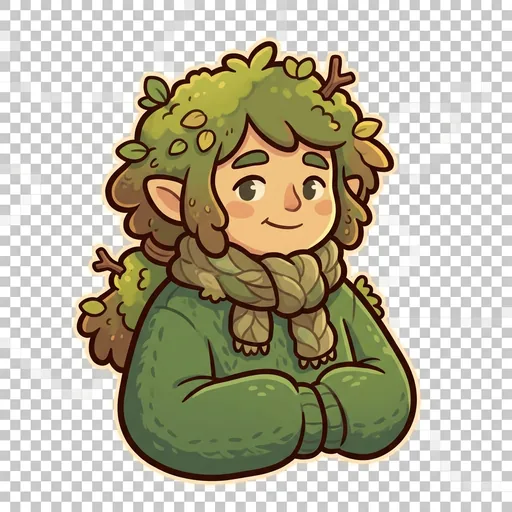
Mossy
Forest / nature-spirit archetype (the quiet local-landscape entity who appears across many traditions — wood-elves, dryads, kami of place, etc., abstractly)
-
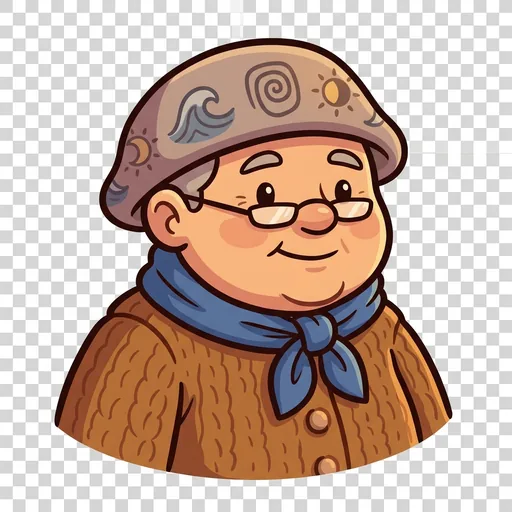
Refrain
Repeating-tale / echo motif archetype (motif recurrence — same story-pattern appearing across cultures: flood myth, hero descent to underworld, twin gods, etc.)
-
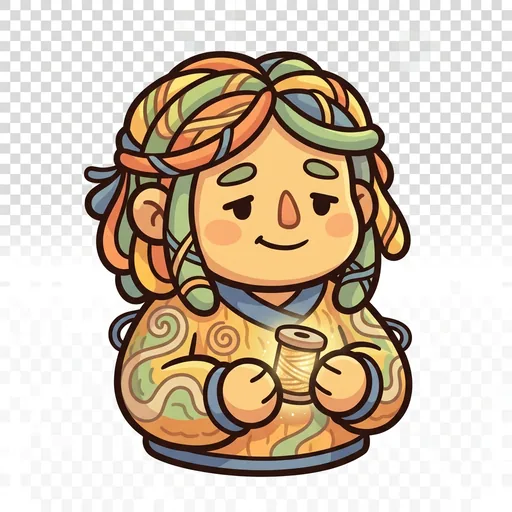
Thread
Hero-journey / fate-spinner archetype (the spinning thread of destiny that recurs across heroic narratives — Moirai, Norns, Anansi-as-spider, etc., abstractly)
-
Ruse
Clever-fool / trickster archetype (the figure who breaks the rules and teaches a lesson by doing so — recurs across MANY traditions, but referenced **abstractly** here; the cast...