
Borrow
BORROWING HAS A COST — *borrowed money isn't free money.* When you borrow, you pay back more than you took — that extra is interest. Borrowing can be a useful tool when you understand it: borrow on purpose, know the cost, and have a plan to pay it back. It's a number with rules, not a judgment about you.
Press play to listen along. The line being read lights up as you go.
Show full transcript
Loading transcript…
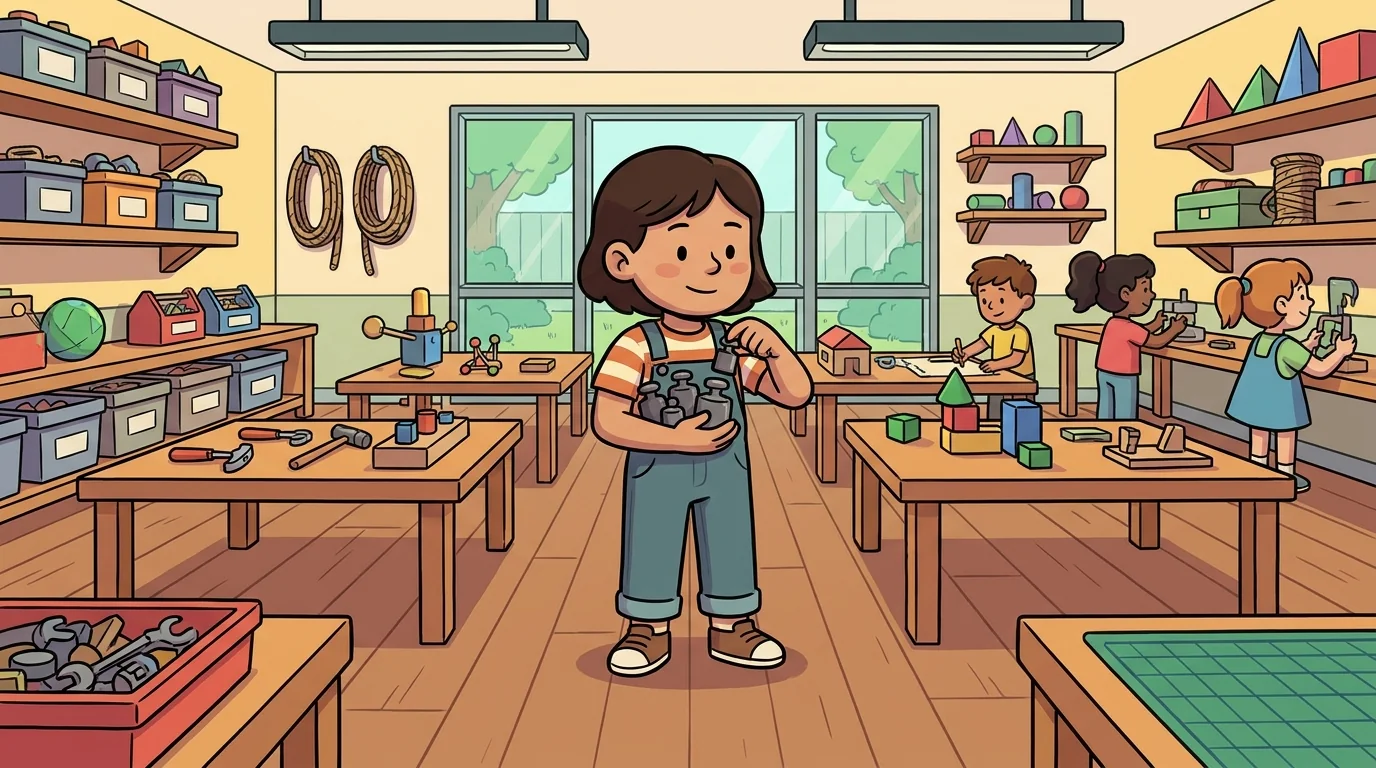
At the LifeQuest workshop, where kids learned the real-world skills grown-ups use, Borrow was a steady, honest kid who carried a small set of weights — because she knew a secret that surprises a lot of people: borrowed money is never quite free. When you borrow, you pay back a little more than you took.
When someone imagined borrowing was a magic way to get something for nothing, Borrow would gently set them straight. "Borrowed money comes with a cost," she'd say, adding a tiny extra weight to the pile. "That extra is called interest. It's the price of using money that isn't yours yet." She never made borrowing sound scary or shameful — just real. A tool with rules. And the way you stay in charge of a tool is by understanding it.
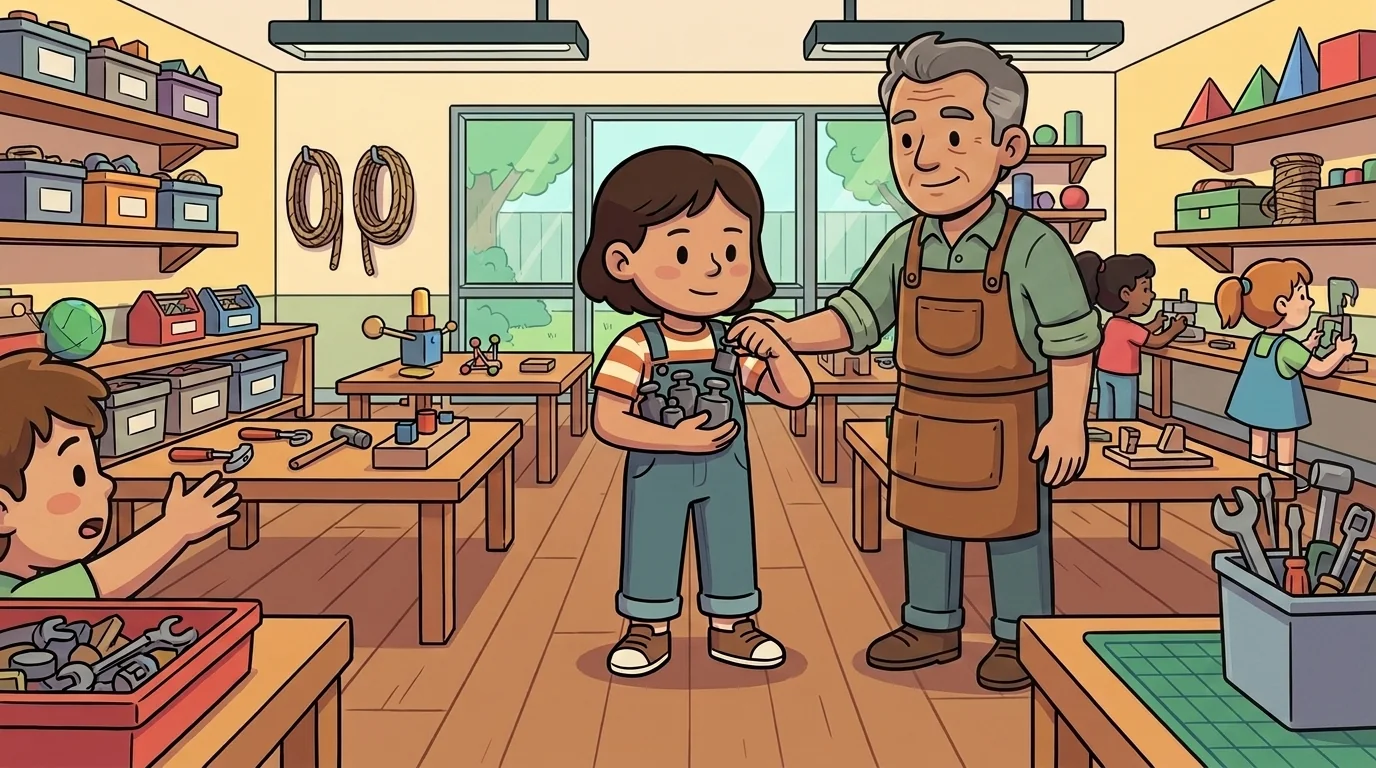
"So if I borrow ten, I might pay back eleven?" a young learner asked.
"Now you see it," Borrow said, nodding at the extra weight. "I'm Borrow. I keep the credit-and-debt basics — borrowed money isn't free money." She balanced the weights. "When you borrow, you pay back more than you took. That extra is interest. Borrowing can be a useful tool — but only when you borrow on purpose, know the cost, and have a plan to pay it back. It's a number with rules. It's not a judgment about you."
Steward, the workshop's warm mentor, said, "Show them how the small extra adds up."
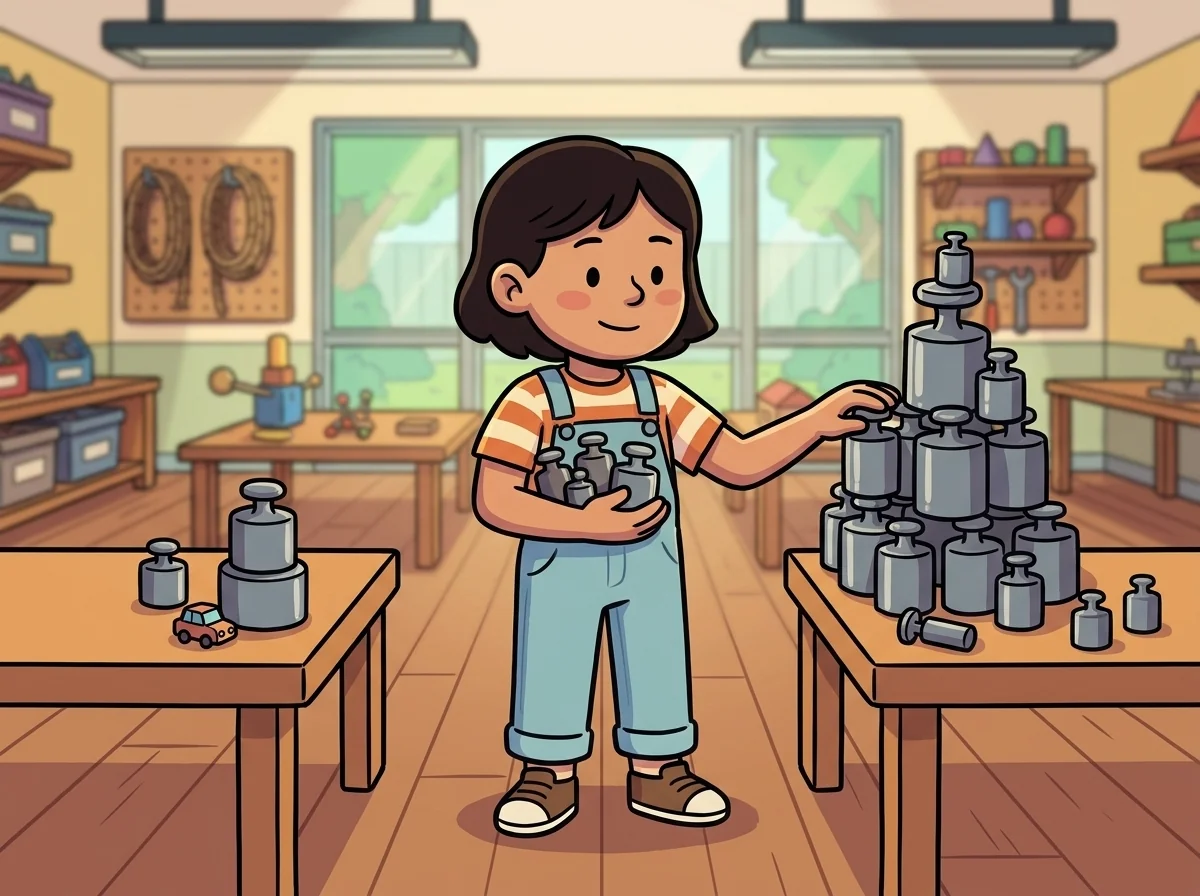
Borrow demonstrated: she borrowed a little, paid it back quickly, and the extra weight was tiny. "Borrow small, pay back soon — small cost." Then she showed borrowing a lot and paying it back very slowly: the extra weights piled up and up. "The longer you take, the more the extra grows. That's the part that surprises people." She set the weights down gently. "Knowing this isn't scary. It's power. Once you can see the cost, you can decide if the borrowing is worth it."
A young learner looked worried. "Is it bad to owe money?"
"Owing money isn't bad, and it doesn't make you bad," Borrow said warmly and firmly. "Sometimes life means a person needs to borrow — for something important, or just to get by — and that's not a failing. What helps is understanding the rules: what you'll owe, by when, and what the cost is. Understanding keeps you steady. The worry shrinks when you can see the numbers instead of guessing at them."
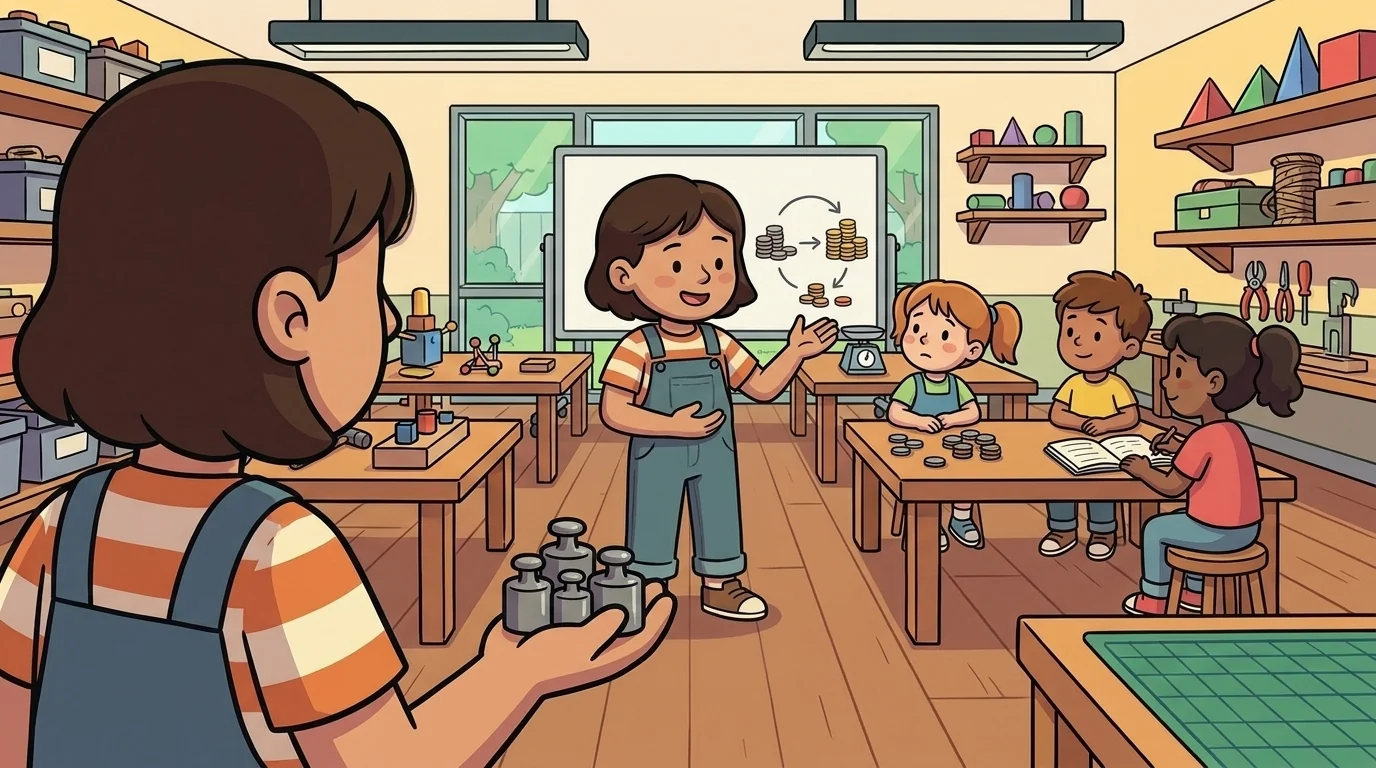
Steward asked Borrow to teach the workshop before a money-planning project. "Save plans what they have," Steward said, "but someday they'll meet borrowing — and I'd rather they meet it understanding it than fearing it. Will you teach them the rules?"
Borrow was glad to. When she teaches, she gives one rule: "Before you borrow, ask three things: How much extra will I pay? By when do I have to pay it back? And do I have a real plan to do that? If the answers feel okay, borrowing can be a fine tool. If you can't answer them, slow down. And whenever money feels heavy, talk it through with a grown-up you trust — you don't have to carry it alone."
Save, who planned carefully but had always treated borrowing as something to fear, tried it. She worked out the cost of a small borrow and a clear payback plan. "I was so scared of the whole idea," Save said, "but seeing the actual numbers made it calm instead of scary. Now it's just a tool I understand." Fear became understanding — and understanding became steadiness.
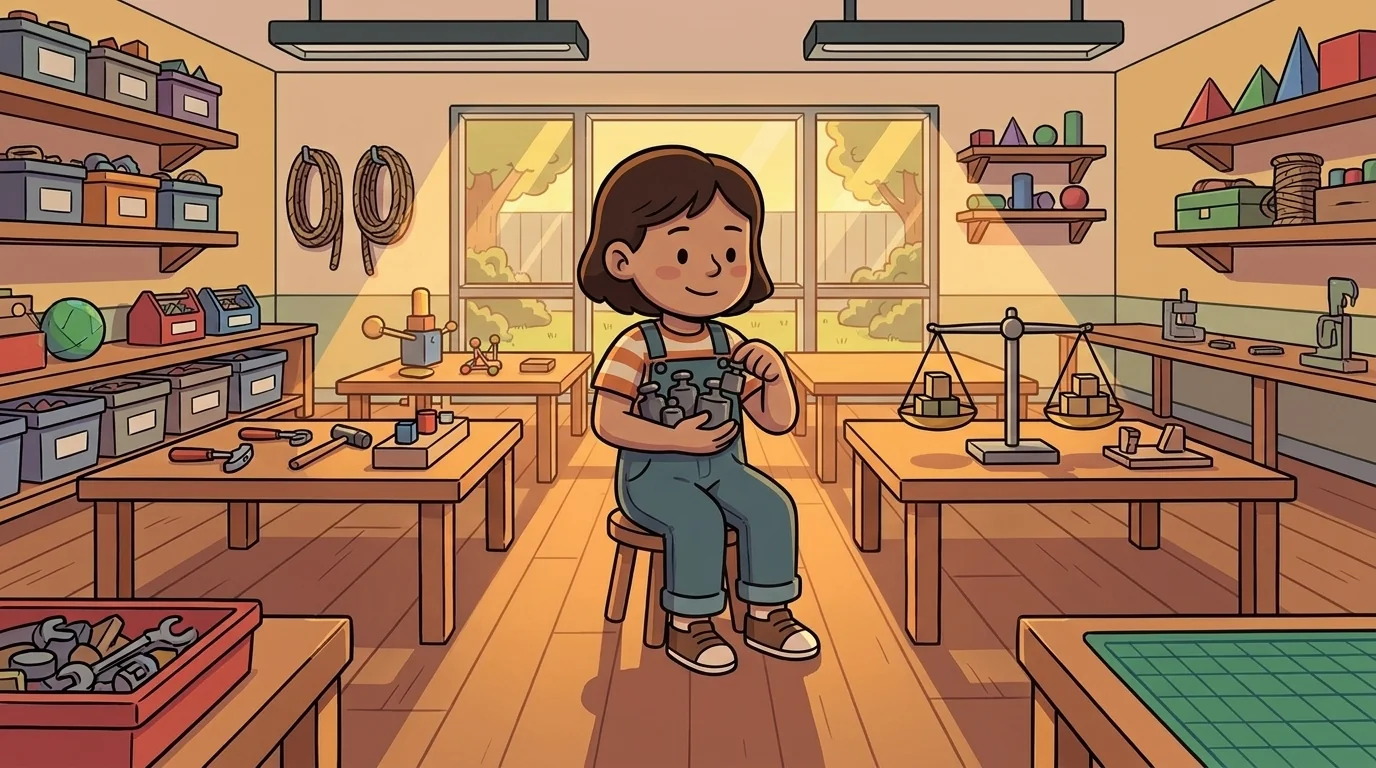
After the session, Borrow sat balancing her small weights, letting them settle level, the way she did when she was thinking.
For a long time, Borrow had carried a heavy worry of her own. Her whole subject was the one that made people anxious — money owed, costs, the extra that piles up. She'd wondered if teaching about debt just made kids feel scared or ashamed, and whether she was the bearer of the workshop's most stressful lesson, the one nobody really wanted to hear.
But sitting there letting her weights find their balance, remembering Save's relief at turning fear into calm understanding, Borrow felt her worry settle into a warm, grounded steadiness. Her lesson wasn't the scary one — it was the one that removed fear, by replacing guessing with knowing. A kid who understands what borrowing costs, and who knows owing money isn't shameful, walks into the grown-up world steadier and braver than one who was just told to be afraid. That understanding was a gift, and a kind one. A calm, settled warmth filled her, and she let the weights rest level, content, ready to make the heavy subject feel light tomorrow.
The LifeQuest ensemble
Borrow is part of LifeQuest's distributed-narrative cast. Each character embodies a different curricular primitive; together they teach the full subject.
-

Save
Budgeting + financial planning — 'Money is a tool. Plan the tool.'
-

Parse
Reading-comprehension for adult docs — 'Slow down. Read it ALL.'
-

Spot
Scam-detection + critical-claim-evaluation — 'Show me the proof.'
-

Fill
Forms + paperwork + simplified taxes — 'Fill out. Then double-check.'
-

Cook
Meal planning + nutrition + budget-cooking — 'Eat well. Spend smart.'
-

Say
Self-advocacy + interview-craft — 'Be clear. Be kind. Be specific.'
-

Sort
Comparison-shopping — line options up side by side and compare real value, not loud labels
-

Vault
Digital privacy — some things stay locked; strong separate passwords; know who's actually asking
-
Dial
Time-management — the day is a pie; aim your hours at what matters, break big tasks small, keep a slice for rest