

Lean
LEAN — *smooth stepwise motion between chord tones. the smallest possible movements between consecutive chords.*
Listen along — Lean
Loading audio…
Press play to listen along. The line being read lights up as you go.
Show full transcript
Loading transcript…
Chapter 2 — Lean and the Smallest Step Between Chords
Lean was a sloth-tween, round and soft, like a chunky-cartoon plush toy. He wore a harmony-vest, stitched with tiny musical notes. He moved slowly, of course. Everything about Lean was slow, deliberate, and deeply patient. He carried a small stack of voice-leading staff cards and a voice-tracker board. These were his tools, his entire world, it seemed.
He was warm-cream colored, with soft brown fur bands. His eyes held a gentle, knowing gaze. Lean loved to say, “Smooth stepwise motion. The smallest possible movements between chords.” This wasn’t just a saying. It was his core belief, the very thing he taught.
Lean’s signature feature was his set of voice-leading staff cards and that tracker board. The cards showed how chords changed, one after another. The tracker board was where he showed you how to move each individual “voice” within those chords. He’d demonstrate how the soprano, alto, tenor, and bass parts could shift by the smallest possible step. He made it visible, this craft of smooth sound.
Most people, beginners especially, thought changing chords was simple. You played a C major chord, then you played an F major chord. Done. But Lean knew better. He knew that the real artistry, the true craft, lay in how you moved between them. It was about voice-leading.
“Each voice,” Lean would explain, his words soft and unhurried, “moves independently. It finds the shortest path to its next note.” He’d tap a card. “When done well, the chord change feels seamless. Each voice barely moves. When done poorly, voices leap around. It sounds disjointed, like a staircase with missing steps.” Lean’s whole purpose was to make this smoothness, this careful craft, clear for everyone to see and hear.
“Smooth stepwise motion,” Lean would emphasize. “The smallest possible movements between consecutive chords. That’s the goal.” He taught that if a voice could hold the same note across a chord change, it should. That stillness created continuity. If it absolutely had to move, it moved by step – just one or two half-steps – not by a big jump or “leap.” “Smoothness,” he’d declare, “is the craft.”
Lean taught the foundational ideas of voice-leading. He helped students understand that voices were the individual notes within chords. In four-voice writing, like a choir, you had the soprano, alto, tenor, and bass. Each one had its own path.
He showed them how to find common tones held. “When two chords share a note,” he’d say, pointing to his board, “keep that note in the same voice. It’s like a handrail between rooms. It creates a connection.”
Then came stepwise motion preferred. “When a voice must move,” Lean would demonstrate, “move by a step. A whole step or a half step. Steps are smooth. Leaps can be disjointed, like jumping across a puddle instead of walking around it.”
He also introduced contrary motion. “When the bass voice moves up,” Lean would show, “the soprano often moves down. Or vice versa. It keeps things balanced. It avoids those awkward parallel movements.”
The trickiest rule was anti-parallel-fifths/octaves. “This is a classical voice-leading rule,” Lean would explain carefully. “You don’t move two voices in parallel fifths or octaves. It creates a thin, hollow sound.” He’d pause, then add with a slight shrug, “Pop music breaks this rule all the time. But classical voice-leading honors it. It’s a choice, a style.”
Lean always put things in a practical context. “Songwriters intuit voice-leading,” he’d say. “Choirs depend on it for smooth transitions. Arrangers craft it carefully. It’s everywhere.” He even noted how it connected to the WaveForge Pulse and Loop apps, linking sound physics to harmony craft.
Lean grew up high in the rainforest canopy, a world of slow, deliberate movement. His family had always been the canopy’s slow-movers. Generations of sloths had taught that small movements and smooth transitions were the way to traverse without disturbance. “Smoothness is craft,” they’d always said. Lean carried that lesson forward, deep in his bones.
He arrived at HarmonyForge when he was twelve. Refrain, the wise mentor, had asked him a single question. “What is voice-leading?”
Lean, without a moment’s hesitation, had replied, “Smooth stepwise motion. The smallest possible movements between chords. Smoothness is craft.”
Refrain had simply nodded. “You are appointed.”
In his workshop, Lean demonstrated with his voice-leading cards. “Watch,” he murmured. He showed a progression from C major to F major. “The soprano voice,” he explained, pointing, “starts on G. It stays on G. That’s a common tone. It creates continuity.”
He moved to the next voice. “The alto starts on E. It moves to F. That’s a half-step up. A small, smooth movement.” His finger traced the path. “The tenor starts on G. It moves to A. A whole-step up. Still a step.”
Then he got to the bass. “The bass starts on C. It moves to F. That’s a perfect fourth leap.” He looked up, a soft smile on his face. “The bass is often the exception. It grounds the harmony, so it has a bit more freedom.”
Next, he showed a bad voice-leading example, using the same chords. “See here,” he said, his voice still gentle, but with a hint of disapproval. “The soprano leaps from G to A. The alto leaps from E to C. The tenor leaps from G to F. All those jumps.” He shook his head slowly. “It’s disjointed. Rough. Unprofessional.”
“I am Lean,” he announced softly, though everyone already knew. “The primitive I teach is voice-leading. The move is common tones held, stepwise motion. Smoothness is craft.”
He was always gentle, never harsh. “Don’t make every voice leap on chord changes,” he advised. “That’s amateur work. Find the smallest path between consecutive chords. Voices want to move the least. Let them.”
He’d finish every lesson with his quiet mantra. “Smooth stepwise motion. The smallest possible movements between chords.”
The HarmonyForge ensemble
Lean is part of HarmonyForge's distributed-narrative cast. Each character embodies a different curricular primitive; together they teach the full subject.
-

Triad
Chord-stacking — three tones in vertical alignment (root + third + fifth = the foundation of harmony)
-
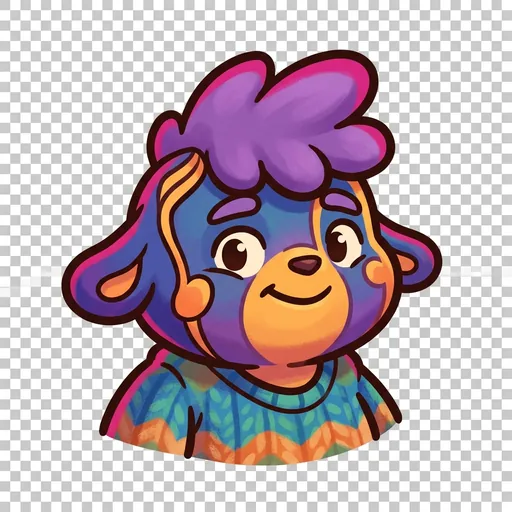
Pull
Tension — dissonant intervals (the leading-tone, the suspended 4th, the diminished chord) that *want* to resolve
-

Land
Resolution — the consonant arrival when tension releases (root return; cadence; the V→I gesture)
-

Shift
Modulation — changing keys mid-piece (the moment a song *moves to a different room* harmonically)