Reef
SUNLIT ZONE — the top 200m. where light reaches. where photosynthesis happens. where the colors live.
Press play to listen along. The line being read lights up as you go.
Show full transcript
Loading transcript…
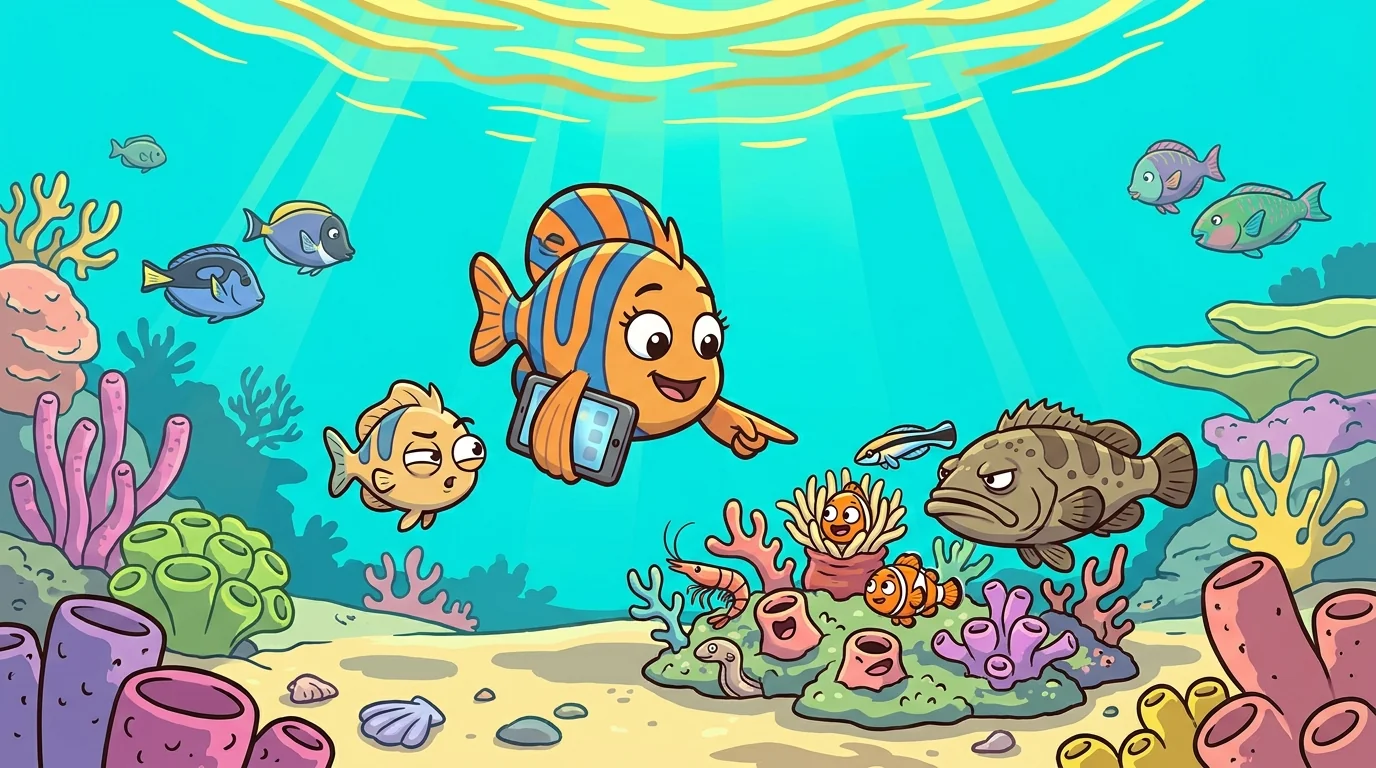
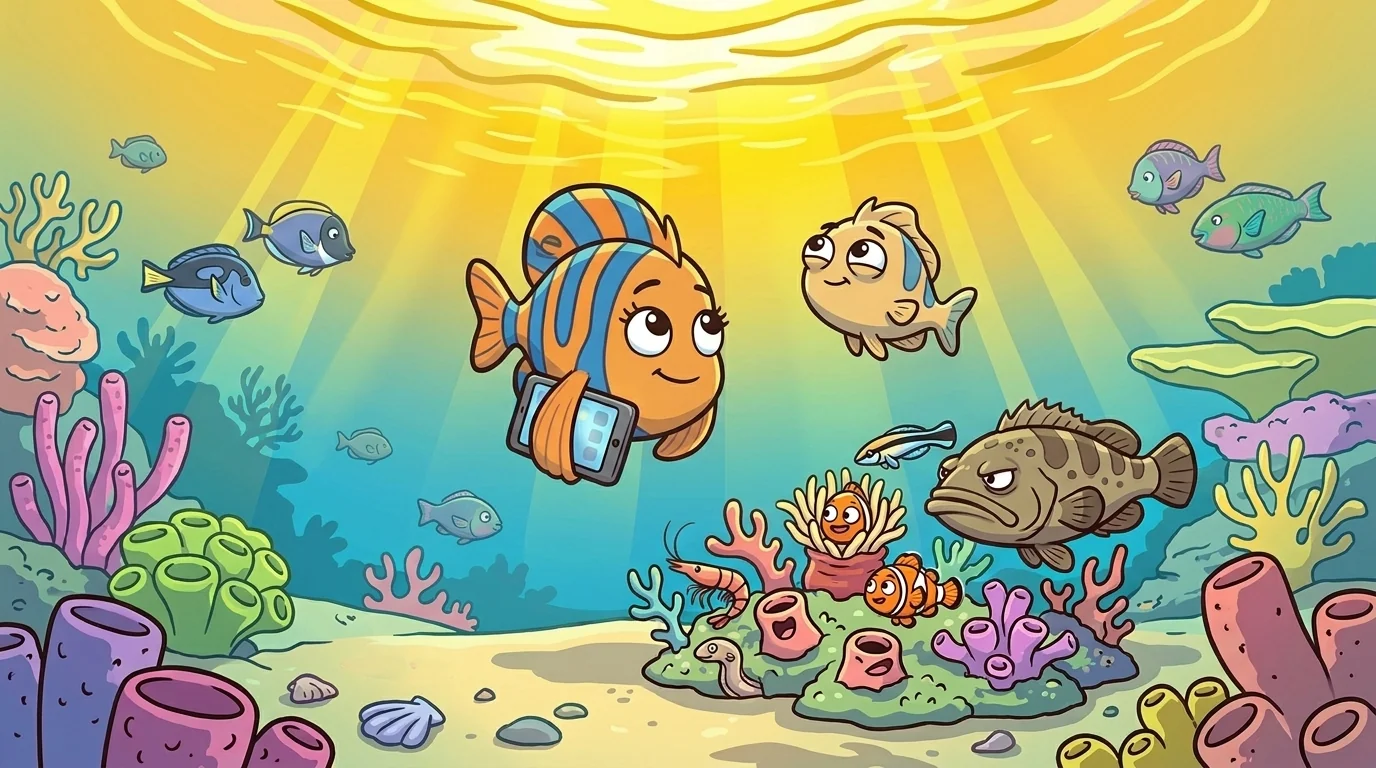
Reef hovered just under the surface of the lagoon, tapping her little tablet, and grinning at nobody.
The water above her was bright — so bright it threw wobbling ribbons of gold across the coral. Everywhere she looked, something was happening. A cleaner wrasse tidied the gills of a grumpy grouper. A clownfish scolded her from inside its anemone. A patch of coral she'd never catalogued flexed its tiny mouths at the drifting plankton.
Tap. Tap. She logged them all.
A young fish drifted down beside her, squinting. "You've been floating in the same spot for an hour," he said. "There's nothing here."
"Nothing?" Reef laughed, a bubble popping loose. "Watch this square of water. Just this one." She held her fin steady over a stretch of reef no bigger than a dinner plate. "How many living things do you see?"
He looked. He really looked, for the first time. "...One. No — three. Wait." His eyes went wide as the reef seemed to switch on around him. "There's a shrimp. And a — is that a baby eel? And the coral's moving."
"Forty-one, actually," Reef said, checking her tablet. "In one dinner-plate of reef. This is the sunlit zone. The top layer, where the light gets in." She tipped her striped face toward the shimmering surface. "The colors live where the light reaches. You just have to hold still long enough to let them show up."
The young fish stared at the tiny square like it had grown a whole city. Which, in a way, it had.
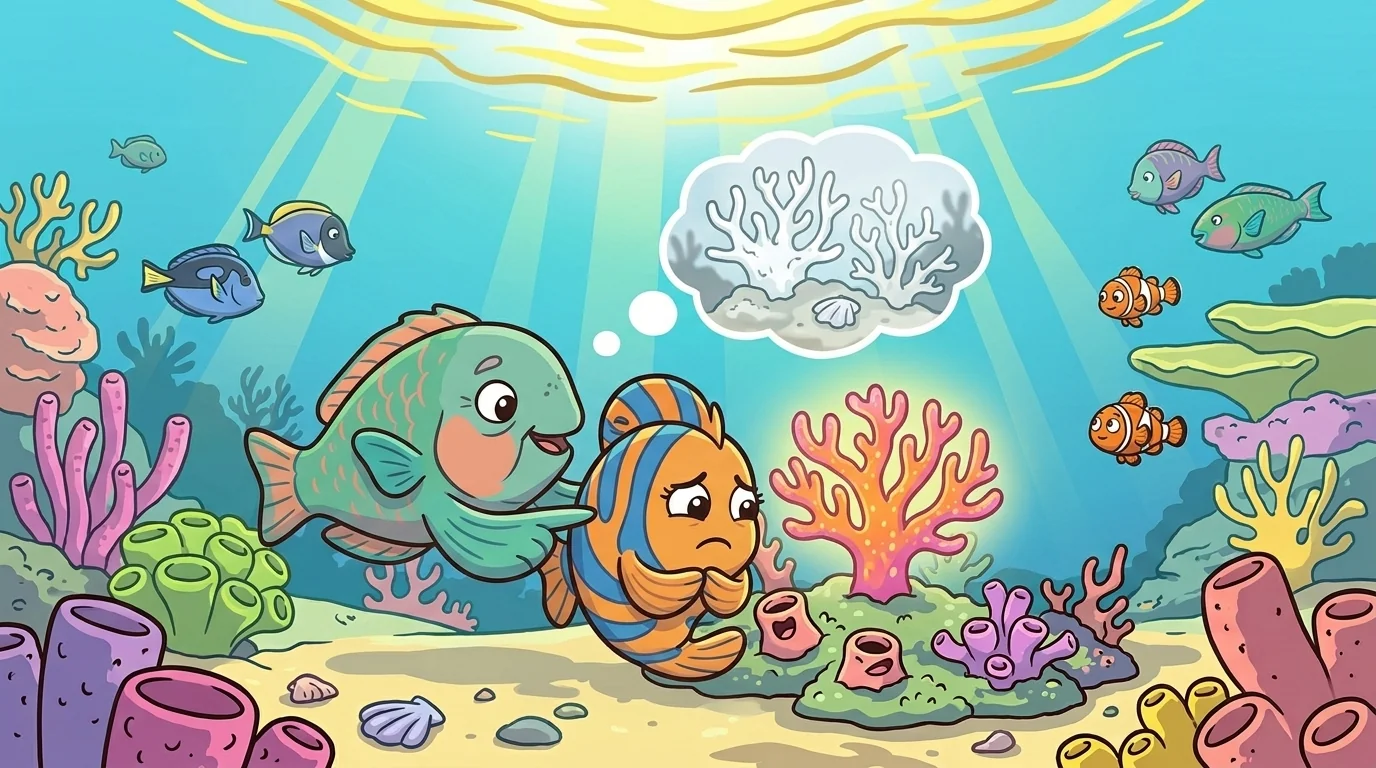
Reef learned to look this way because of one bad morning when she was small.
She had heard the older fish talking in low voices about a warm summer far away, where a whole reef had turned white — bleached, they called it, ghostly and colorless. Reef couldn't sleep after that. She lay in her nook imagining her own bright lagoon draining pale, all her colors leaking out into nothing. Her chest went tight and cold. What's the point of loving something, she thought, if it's just going to disappear?
Her grandmother found her curled up small the next morning, not eating.
The old parrotfish didn't tell her the ocean was fine. She just settled in beside her and asked, gently, "You're carrying the whole sea in there, aren't you? All of it, all at once."
Reef nodded, miserable.
"That's too much for one small fish. The sea is too big to hold like that." Her grandmother nudged her up toward the light. "So don't hold all of it. Hold this." She pointed a fin at a single coral head, glowing orange and alive. "Watch this one. Learn its name. Notice when it's well. That's not looking away from the trouble, little one — that's the only honest place to start. You can't tend what you never bothered to see."
Reef swam up to the coral. She watched it breathe. And the cold, drowning feeling didn't vanish, but it loosened — because now she had something to do with her worry besides drown in it. She had one bright thing to notice, and then another, and then another.
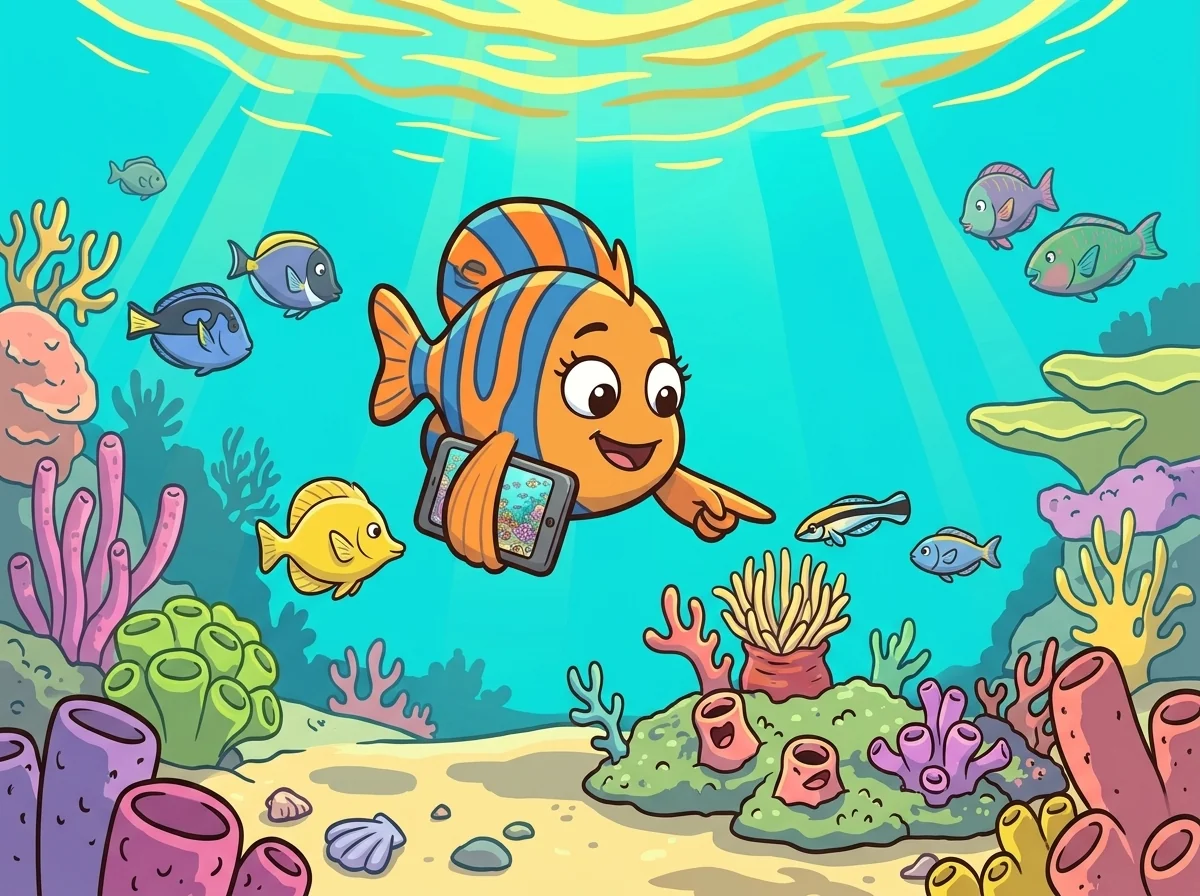
She swam to DepthQuest at twelve, because a place that studied the ocean ought to start at the layer where life crowds thickest.
Marlin, the mentor who ran the lessons, met her at the reef gate. He didn't test her strength or her speed. He asked one question. "What is the sunlit zone?"
Reef didn't answer right away. She tapped her tablet, turned it around, and showed him: a single frame of the lagoon, teeming — coral, wrasse, plankton, a startled crab mid-scuttle.
"It's the top two hundred meters," she said. "Where the light reaches, so the plants can eat sunlight, so everything else can eat the plants." She let the frame glow between them. "It's a thin layer. Most of the ocean is dark, cold, and deep below it. But almost everything you've ever heard of lives up here, in the light. This is where the colors are."
Marlin looked at the crowded little frame for a long moment. "You've been paying attention," he said. "You belong here."
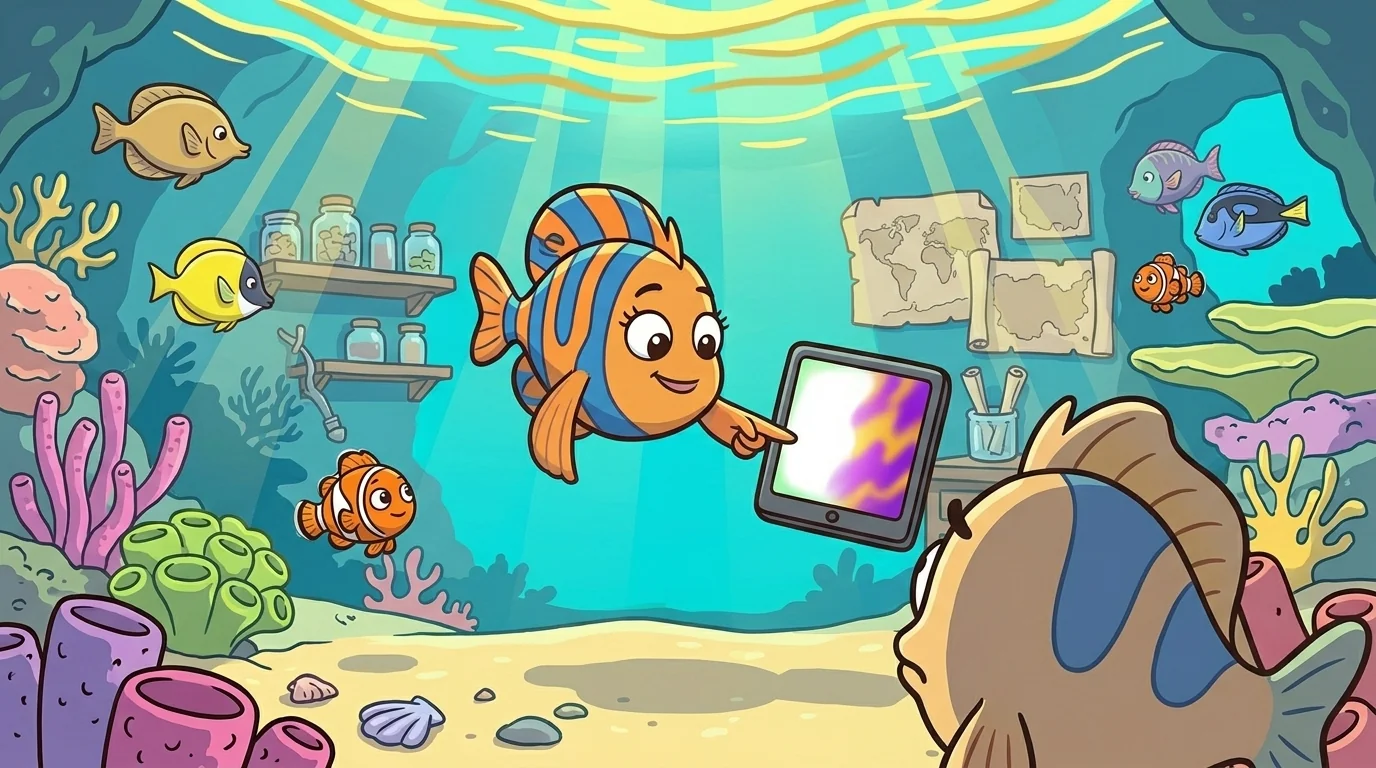
Reef's workshop filled up, most days, with fish who'd heard the sad headlines.
A small one came in one afternoon, fins drooping. "The whole ocean's dying," he said flatly, the way you say a thing you're scared is true. "Why should I even learn about it?"
Reef knew that droop. She'd felt it once, curled up small.
"Come look at something," she said. She pulled up a coral on her tablet — half of it bleached bone-white, half of it blazing purple and gold. "What do you see?"
"It's dead," he said. "The white part."
"Bleached," Reef corrected, softly. "Not the same thing. When the water gets too warm, the coral gets stressed and lets go of the tiny algae living inside it — and the algae are what carry the color. So it goes pale." She magnified the white patch. Along its edge, faint, was a whisper of returning green. "But look here. When the water calms down, the algae move back in. This coral isn't gone. It's recovering."
He leaned close. "It's coming back?"
"This one is. Some don't — I won't pretend otherwise. But some do, and some never bleached at all, and there are people right now figuring out which corals handle heat best so they can help the others." She tapped through frame after frame — reefs stressed, reefs stable, reefs healing. "The true picture is messier than 'dying.' And noticing the mess — the real, patchy, complicated truth of it — that's the hopeful part. You can't help a thing you've decided is already lost."
The small fish looked at the healing green edge for a long time. "So my job isn't to save the whole ocean."
"Your job," said Reef, "is to learn one reef well enough to know when it needs you. That's plenty."
Later, when the workshop had emptied, the small fish came back with one more question. He was quieter now.
"When it feels too big," he said, "and you can't fix it, and you're scared — how do you keep from just... shutting your eyes?"
Reef thought about her grandmother, and the one orange coral, and the way the cold had loosened.
"You pick one bright thing and you look right at it," she said. "Not the whole sea. Just one coral, one fish, one dinner-plate of reef. You learn its name. You notice when it's well." She drifted up toward the gold-ribboned surface, and the light caught every stripe on her. "Being scared for something you love isn't the enemy. It just means you've been paying attention. The trick is to turn the worry into watching — because watching is something you can actually do."
The small fish rose up beside her into the bright water, and Reef felt the old tight-cold thing in her own chest go soft and warm, the way it had that first morning by the orange coral — the quiet relief of not having to carry all of it, of getting to love just one small glowing piece of the world at a time.
The DepthQuest ensemble
Reef is part of DepthQuest's distributed-narrative cast. Each character embodies a different curricular primitive; together they teach the full subject.