Press
MIDNIGHT ZONE — *1000–4000m. pitch black. crushing pressure. cold. and life still thrives.*
Press play to listen along. The line being read lights up as you go.
Show full transcript
Loading transcript…
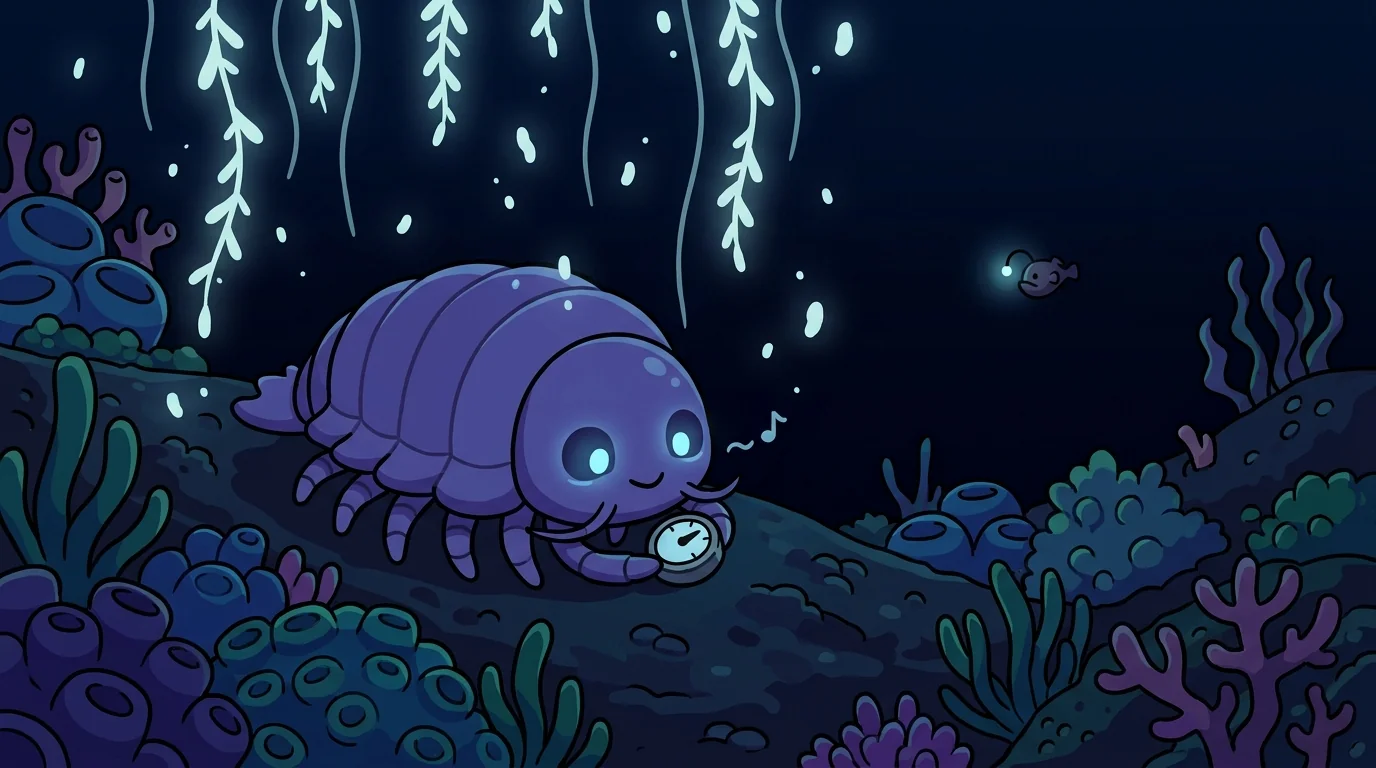
Press was a giant-isopod tween, soft and round and deep violet, with wide eyes that glowed a faint gentle blue. She lived far, far down in the dark — a mile and more below the sunlit water — where the whole weight of the ocean pressed down like a small car resting on every inch of her.
She drifted along the seafloor humming to herself, completely at ease. A little pressure-gauge on her wrist read a number that would have crushed a surface creature flat. Press glanced at it and smiled, because to her it was just the reading for home. Above her, a strand of pale marine snow drifted down through the black like slow soft flakes, and a glowing anglerfish swayed its little lantern in the distance. Nothing here scared her. This crushing, cold, pitch-black quiet was simply the most ordinary place in the world, and she loved it exactly as it was.
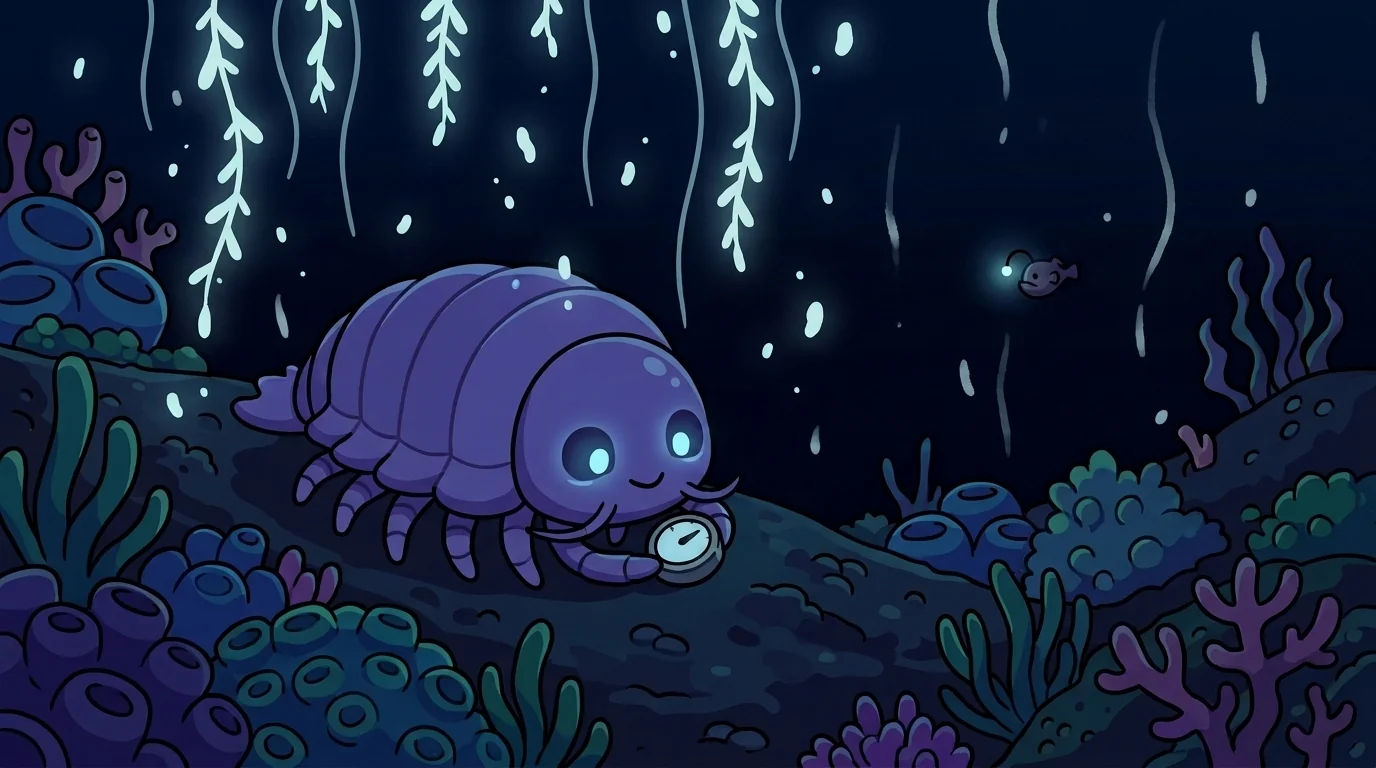
Press grew up on the deep ocean floor, where her family had lived for more generations than anyone could count, eating the gentle marine snow that sifted down from far above.
She remembered the day a visitor came down in a lit-up bubble — a surface creature peering out with round frightened eyes. "It's a nightmare down here!" the visitor gasped through the glass. "So dark! So heavy! Everything looks like a monster!"
Small Press had felt a sting at that. She looked around at her home — her soft-bodied cousins, the swaying lantern-fish, the slow gentle snowfall — and none of it looked like a monster to her. Her grandmother settled beside her and pressed a warm claw to her shell. "What looks strange to someone from the sunlight," Grandmother said, "is just normal life to us. The visitor isn't being mean. They're only seeing a home they weren't built for." The sting eased into something steadier. Strange wasn't scary, Press understood. Strange just meant built for somewhere else. She held that truth close for the rest of her life.
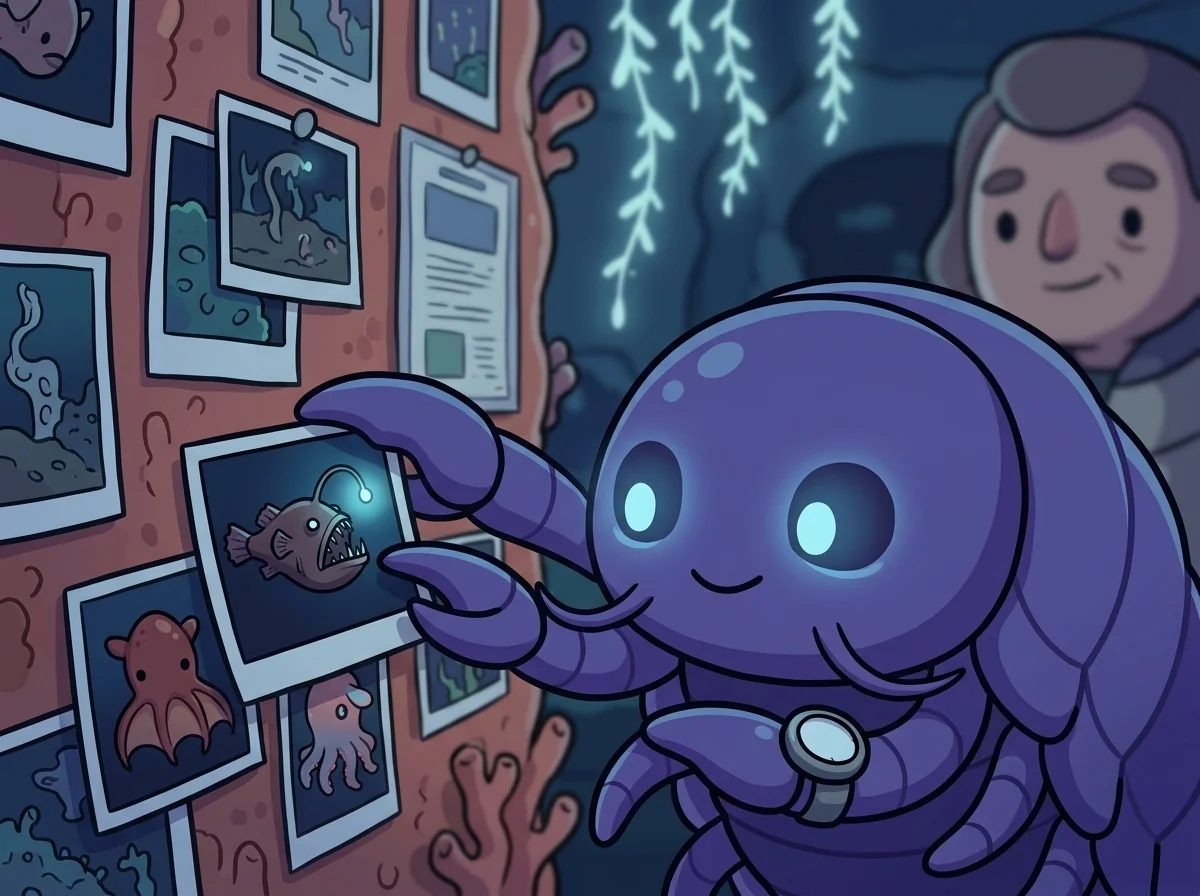
When Press was twelve, she journeyed to DepthQuest, where Marlin the mentor waited by a wall of deep-sea photographs.
"What is the midnight zone?" Marlin asked.
Press didn't rattle off a list. She pointed to a photo of an anglerfish with its glowing lure, then to one of a soft round vampire squid, then to a slow-flapping dumbo octopus with ears like fins. "It's the deep dark where the sun never reaches," she said. "Cold. Heavy. Pitch black. And full of life — every single one a clever survivor, not a monster." She rested a claw over the photos. "Down here nobody's scary. Everybody just figured out how to live where the light stops. That's the whole wonder of it."
Marlin studied her, then smiled. "Then this workshop is yours," he said.
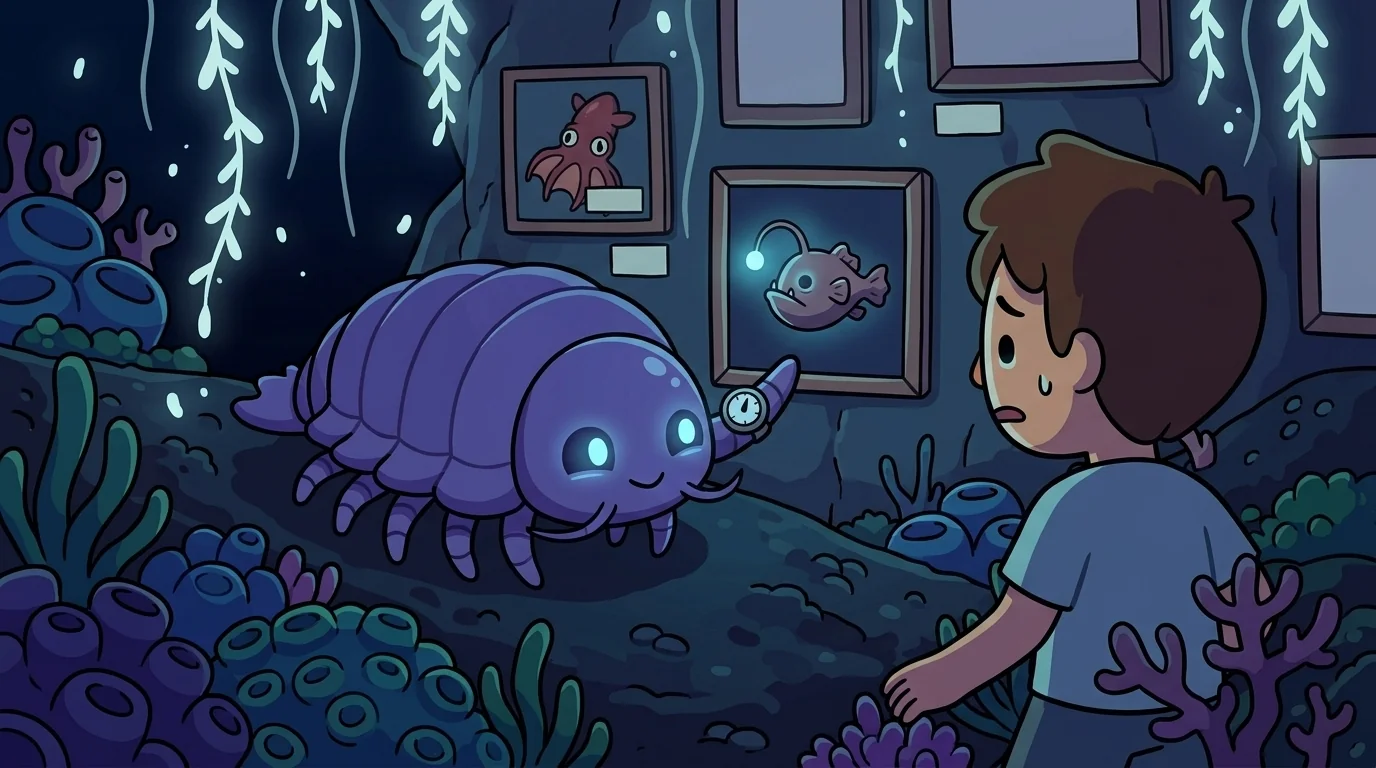
Press's first student was a nervous kid named Wade who flinched at every photo on the wall.
"They're so creepy," Wade whispered, edging back from the anglerfish picture. "That one looks like it wants to eat me."
Press didn't argue. She brought the photo closer and pointed to the little glowing lantern on the fish's head. "See this light?" she said gently. "It's not a scary thing. It's a fishing pole. She dangles it in the dark so tiny food drifts close. She's a patient fisher, that's all." She swapped to the vampire squid. "And this one — the scary name fooled everybody. It doesn't drink anything. It catches soft marine snow, the gentle stuff that falls from above. It's about as fierce as a kid catching snowflakes on their tongue."
Wade's shoulders loosened a little. "But why do they look so weird?"
"Because they're built for a home you and I could never handle," Press said warmly. "Huge eyes to catch the tiniest flicker of light. Soft squishy bodies with no air to get squashed. If you lived under a mile of cold dark water, you'd look strange too — strange and clever and perfectly at home." She tapped the anglerfish's lantern one more time. "Strange doesn't mean scary. Strange means this creature solved a hard puzzle."
Wade leaned back toward the photo, really looking now. "So they're not monsters," he said slowly. "They're... good at their home."
"The best," Press agreed, delighted.
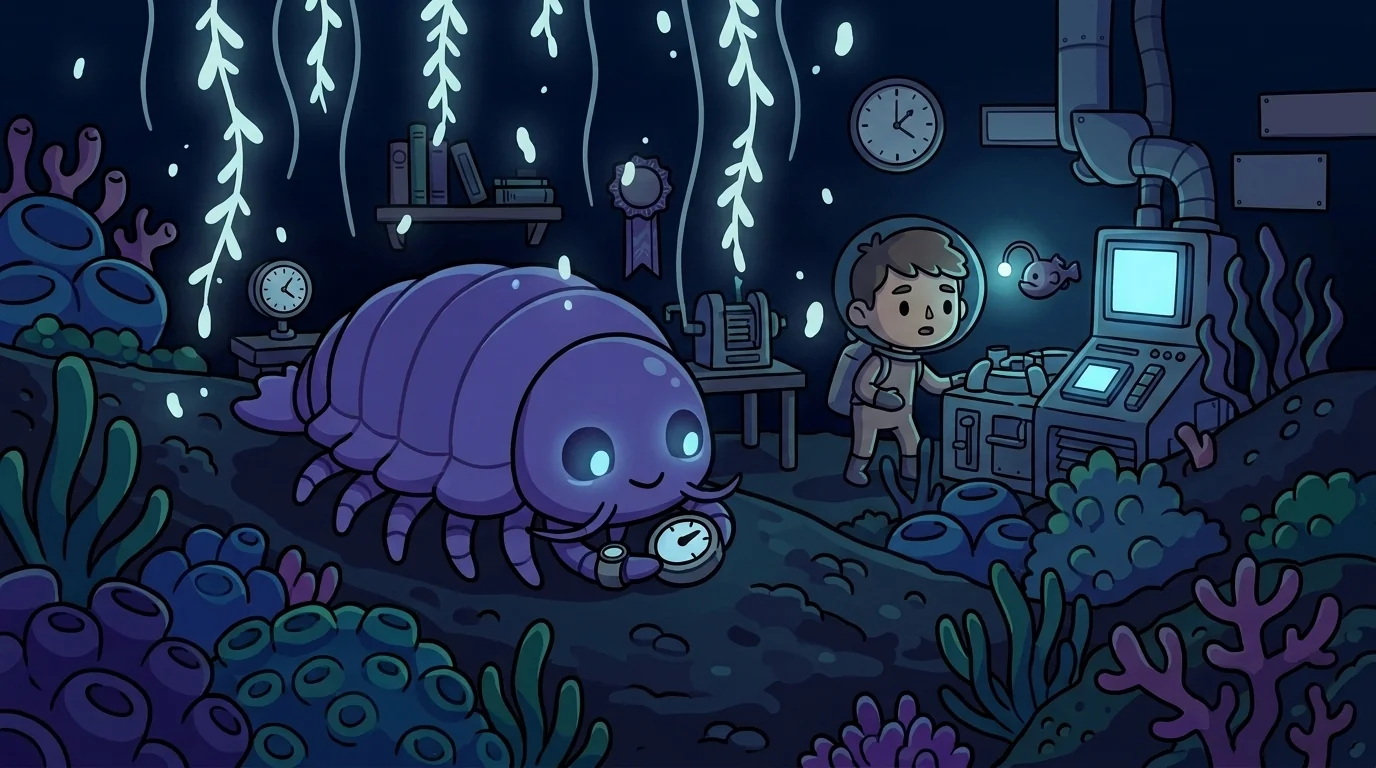
Press drifted a slow circle around the little workshop and watched Wade study the glowing anglerfish without flinching anymore.
"Feel that?" she asked. Wade nodded — the tight, creeped-out knot in his stomach had melted into something warm and curious. "That's wonder taking the place of fear," Press said. "When you understand why something's built the way it is, the scary feeling just... unclenches. Turns soft. Turns into 'wow.'"
She looked up through the dark water, where a strand of pale marine snow drifted gently down past a far-off swaying lantern. Under her own soft violet shell Press felt the deep quiet gladness of being exactly where she belonged, in a home that others called strange and she simply called hers. The pressure held her like a hug from every direction. She let herself rest in that warm, settled feeling, glowing faintly in the dark, entirely at home.
The DepthQuest ensemble
Press is part of DepthQuest's distributed-narrative cast. Each character embodies a different curricular primitive; together they teach the full subject.