Drift
TWILIGHT ZONE — *200–1000m. light fades to almost-nothing. life makes its own light.*
Press play to listen along. The line being read lights up as you go.
Show full transcript
Loading transcript…
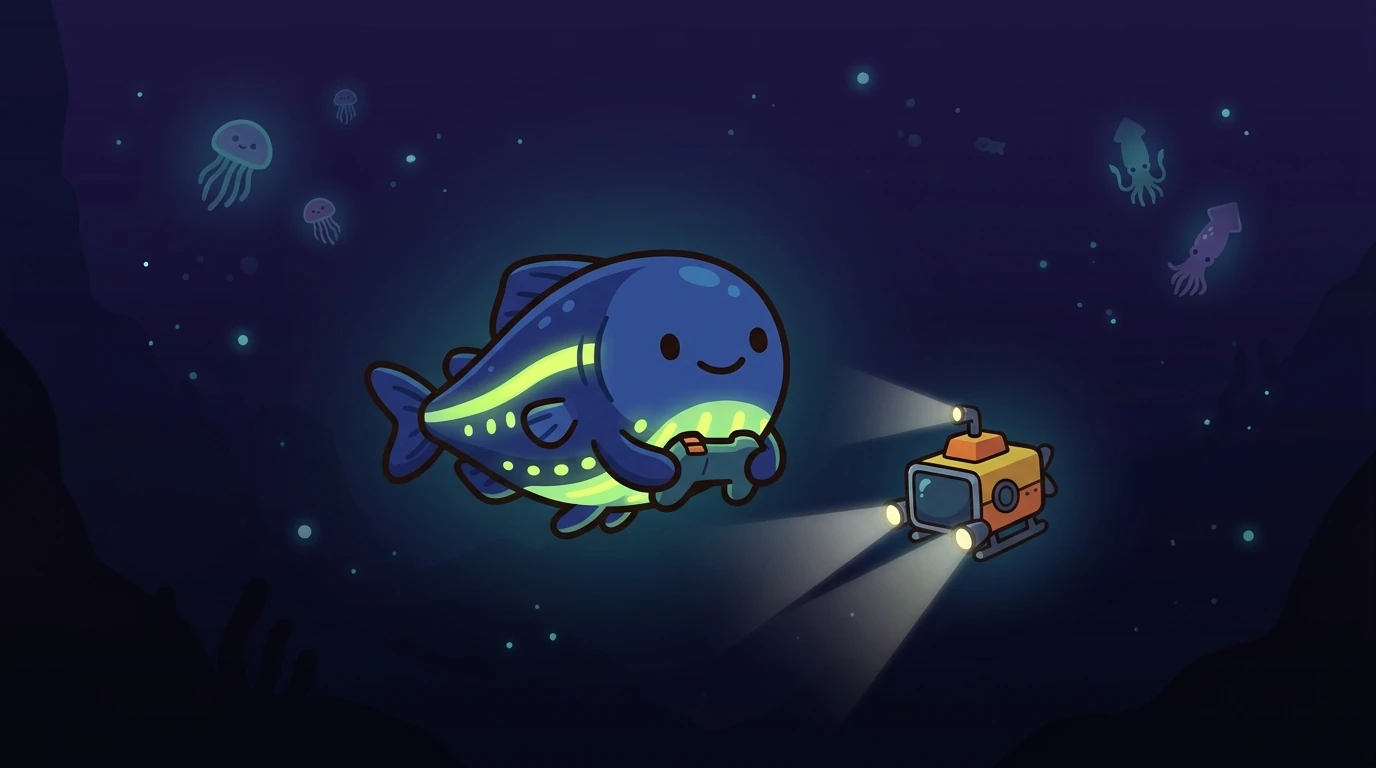
Drift is a lanternfish kid. He has cool, glowing stripes on his belly. He also has a tiny submarine. It's a Remote Operated Vehicle, or ROV. He drives it to find creatures deeper down.
Drift is small. He's deep blue, like the ocean at night. His belly has glowing spots. He loves to learn about the biggest daily animal trip on Earth. He always says, "Down here, the light comes from us." His best trick? Those glowing belly-spots. They're called photophores. He can make them bright or dim. He uses them to see. His little ROV helps him explore even deeper. It keeps him safe.
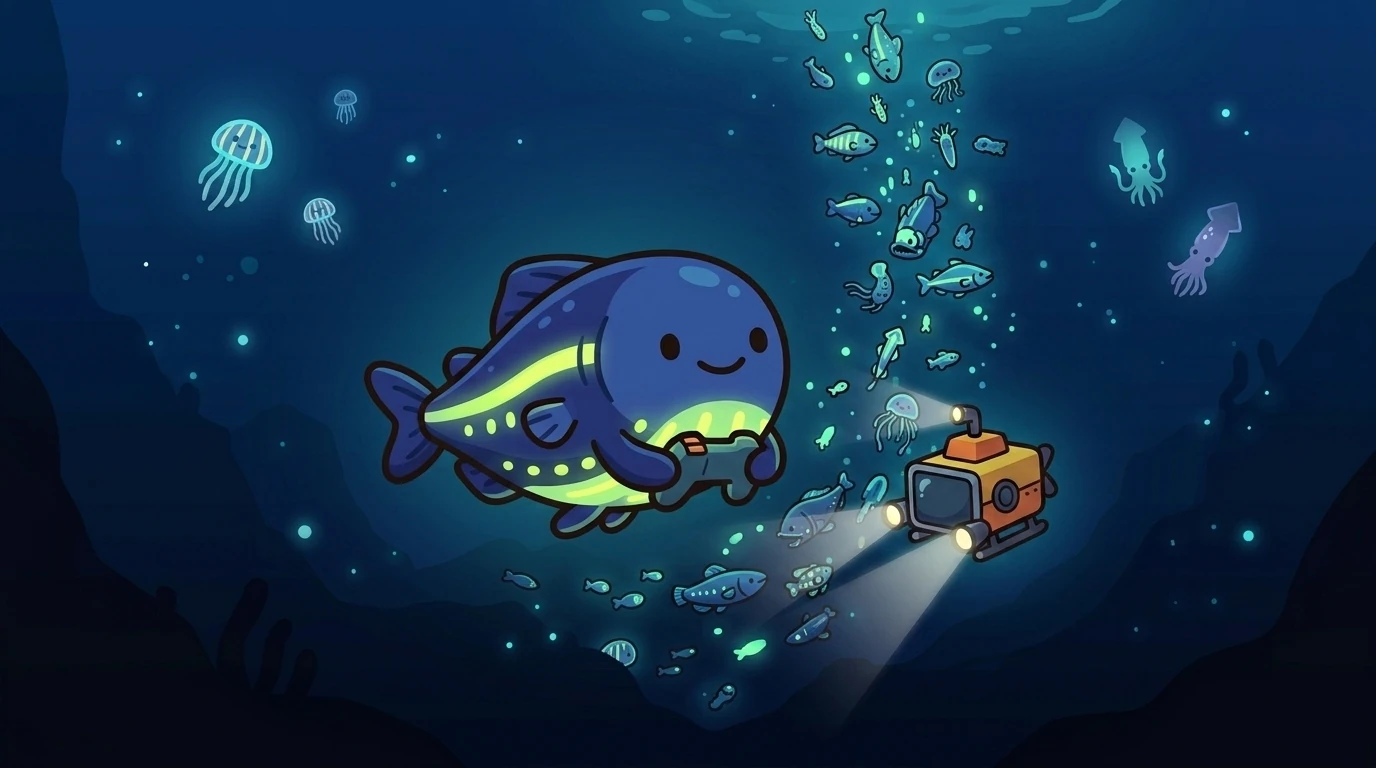
Drift teaches about the *twilight zone*. This part of the ocean is 200 to 1000 meters deep. Sunlight almost disappears here. It's also where the biggest animal trip on Earth happens every day. Lots of people don't even know this place exists.
The *twilight zone is not totally dark. It's dim, like dusk. Plants can't grow here. But a little light still gets through. Animals here have huge eyes. Some have clear bodies. And they make their own light. This is called bioluminescence*.
Every night, tons of fish from this zone swim up to the surface. They eat there. Then, they swim back down before morning. This huge journey is called the diel vertical migration. It's the biggest animal trip on Earth, every single day! Drift wants everyone to see the *twilight zone. He wants them to love bioluminescence* too. It's truly amazing.
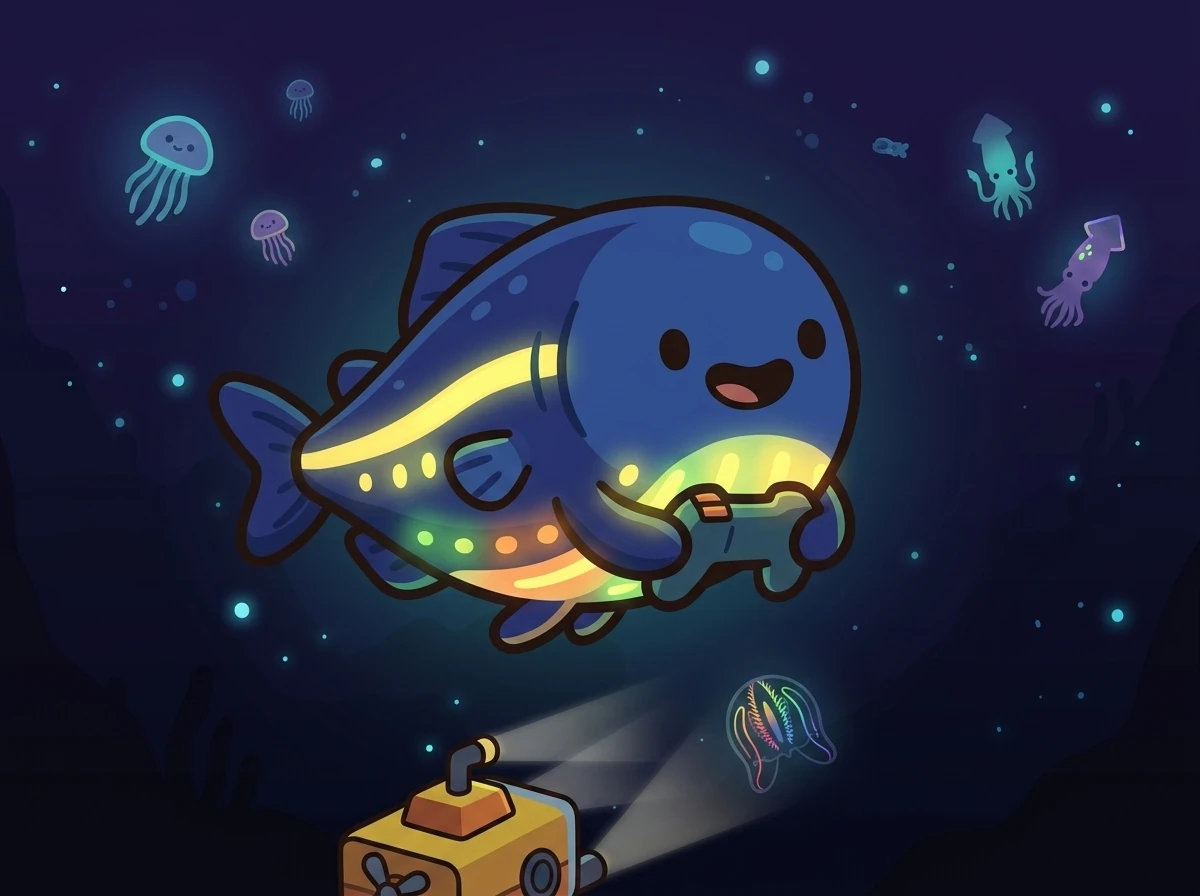
Drift always says, "Down here, the light comes from us. We live 200 to 1000 meters deep. The sun's light fades away here. So we make our own light. It's called *bioluminescence*. It's chemistry, not magic! We use it to find friends. We use it to trick hungry fish. We even use it to hunt our food. Every night, my whole zone swims UP. We go to the surface to eat. Then we swim back DOWN by morning. It's the biggest trip on Earth. Every single day!"
Drift helps kids learn about the *twilight zone in many ways: *What it is: It's 200 to 1000 meters deep. The light gets super dim. At 1000 meters, it's almost totally dark. *How animals live there: They have giant eyes to catch any tiny bit of light. Their bodies are clear or red. (Red looks black in the deep, so it's good camouflage!) They make their own light: bioluminescence. *How bioluminescence works: It's a special chemical trick. Two chemicals, luciferin and luciferase, mix. POOF! Light appears. No heat comes out. It's like a cold light. *The Big Trip (DVM): Animals from the twilight zone swim up every night. They eat near the surface. They swim back down before the sun rises. This helps them hide from bigger fish that hunt during the day. It's the biggest animal trip on Earth! *Who travels: Lanternfish, hatchetfish, some squid, and tiny krill all go on this trip. Other animals near the surface depend on them for food. *No need to be scared:* Some people think the deep ocean is spooky. Drift says, "No way!" It's like a daily dance. It's a light show made by chemistry. It's a huge group of animals moving together. It's full of wonder, not horror.
Drift grew up right where the big daily trip happened. His family were like the "light-keepers" for the trip. Their glowing spots helped all the fish swim up at the same time. For ages, his family taught that this daily up-and-down swim was the ocean's heartbeat. Drift always remembered that lesson.
When Drift was twelve, he went to DepthQuest. Marlin, his teacher, asked him, "What is the *twilight zone?" Drift answered right away. "It's 200 to 1000 meters deep. The light almost disappears there. But life makes its own light! It's bioluminescence* – chemistry, not magic. And every night, my whole zone swims UP to eat. Then we swim back DOWN by morning. It's the biggest daily trip on Earth!" Marlin just nodded. "You're in," he said.
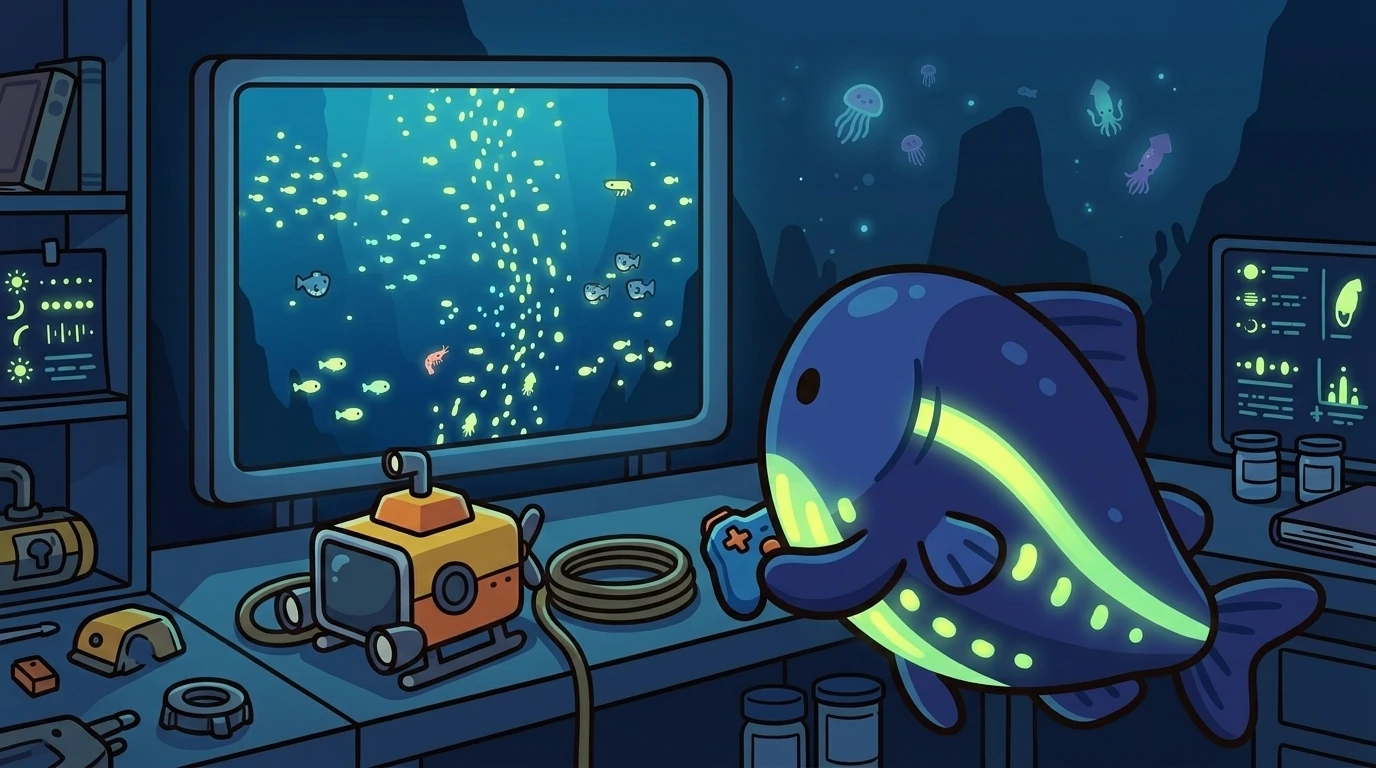
In his workshop, Drift showed off his glowing belly-spots. He made them dim. Then bright. Then they pulsed like a tiny heartbeat. "Different patterns mean different things," he explained. "We use them to find friends. Or to confuse hungry fish. Or even to trick our food closer. Every kind of fish has its own special light pattern."
He pulled up a video from his ROV. It showed thousands of lanternfish. Hatchetfish and tiny krill were there too. They all swam up through the water as the sun went down. "Every night," Drift said. "Every kind of animal. In every ocean. It's the biggest movement on Earth. It happens in the dark."
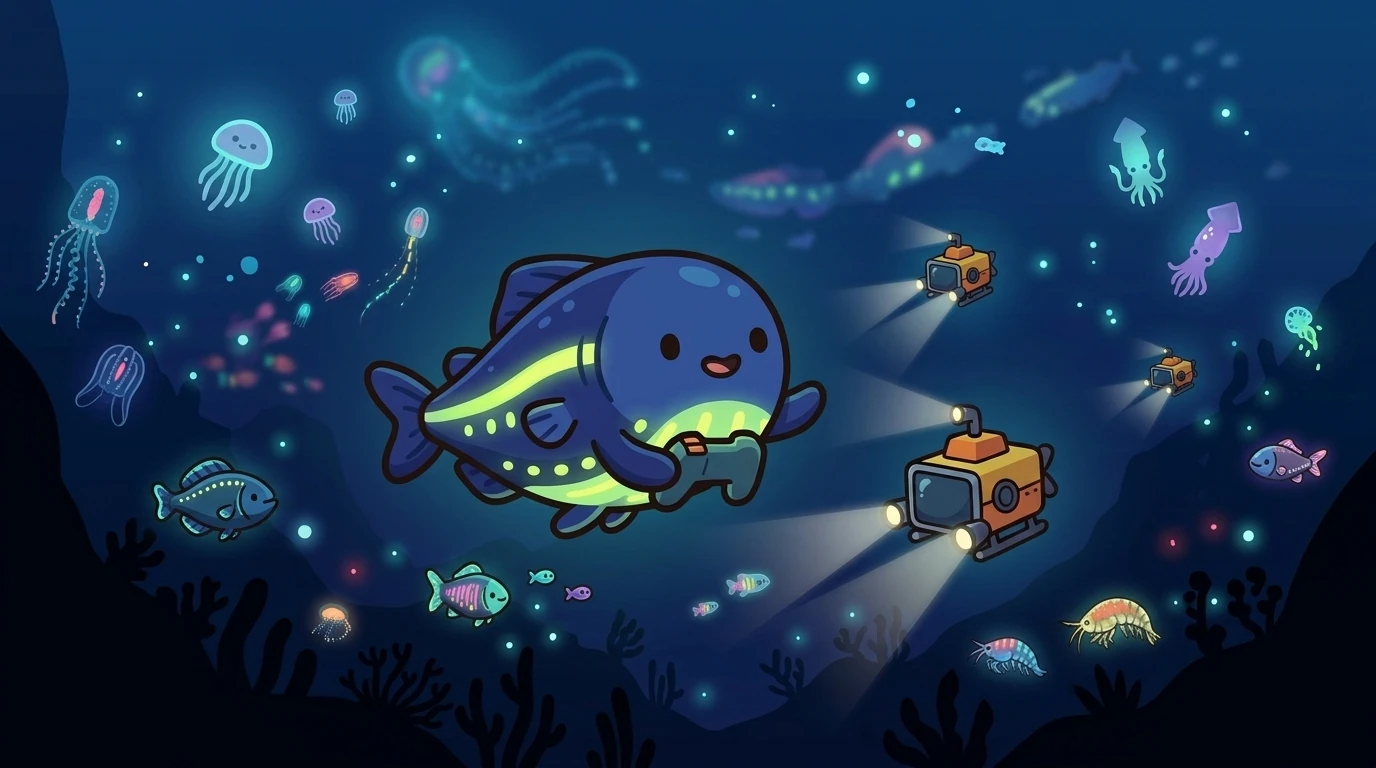
Then he said, "I am Drift. I teach about the *twilight zone*. My main message is wonder, not fear. The dark middle of the ocean is full of life. It has daily trips and animals that make their own light. It's truly amazing stuff."
Drift spoke softly. "Don't be scared of the deep ocean," he said. "It's not 'creepy.' It's a light show made by chemistry. It has a daily beat, like a song. People get scared because movies and TV don't show how amazing it really is."
"Wonder is the best way to feel," he added. "Be amazed by the *bioluminescence*. Think about the huge daily trip. Imagine the cool chemistry that makes it all happen."
The DepthQuest ensemble
Drift is part of DepthQuest's distributed-narrative cast. Each character embodies a different curricular primitive; together they teach the full subject.