

Kindle
KINDLE — *the door-opener. participation is invited; doors are opened.*
Listen along — Kindle
Loading audio…
Press play to listen along. The line being read lights up as you go.
Show full transcript
Loading transcript…
Chapter 5 — Kindle and the Door That Opens Outward
Kindle often stood at the edge of a room, a small prairie-dog-tween with a warm-cream coat and a soft, tawny tail-tip. She wore a plain vest, its pockets stuffed with small, colorful door-cards. A compact device, her participation-tracker, clipped to her belt. Kindle was always watching, her dark eyes quickly scanning for anyone missing. She had a way of noticing who wasn’t there.
She was welcoming, though, not judgmental. “The door-opener,” she often said. “Participation is invited; doors are opened.” Kindle’s special skill, her signature feature, was understanding those door-cards and her tracker. The cards were more than just paper. They represented real barriers: things like needing a ride, or not having enough time, or speaking a different language. Maybe it was trouble finding childcare, or not even knowing a meeting was happening. Sometimes, it was a physical barrier, like stairs for someone in a wheelchair. Her tracker, a small screen with glowing dots, showed who was in the room and, more importantly, who wasn’t. It even hinted at why.
This was important work. Kindle embodied the civic virtue of participation. It was the craft of opening doors to bring people into a project, a discussion, or a community effort. Many people thought participation simply meant “everyone shows up.” If someone didn’t, they figured it was that person’s choice. But civic craft taught a different lesson. Participation was a two-way street. The community had to open the doors, and then people could choose to walk through.
Doors could stay closed for many reasons. A lack of transportation might be one. Meeting times often clashed with working parents’ schedules, making daytime hearings impossible. Language barriers could silence entire groups if no translation was offered. Childcare gaps meant parents couldn’t attend. Accessibility issues blocked those with physical challenges. And sometimes, people simply didn’t know a meeting was happening at all.
The civic virtue of participation meant the host community actively opened those doors. This meant holding meetings when working parents could actually attend. It meant providing free childcare. It meant translating notices and making materials easy to understand. It meant reaching out to people whose voices weren’t usually heard. Participation is invited; participation requires the door to be opened. The idea that “they could have come if they cared” was often wrong. More often, a closed door, a structural barrier, was the real problem. Kindle’s entire purpose was to show that participation was a craft of door-opening, not just an individual choice.
Kindle’s voice was clear and kind. “The door-opener,” she repeated. “Participation is invited; doors are opened.” She looked at a group of students gathered around a table, their faces earnest. “When the Youth Council holds a hearing, you must ask yourselves: ‘Whose voices are here? Whose voices aren’t? Why?’”
She picked up a door-card labeled ‘Time.’ “If working parents aren’t there, the meeting time may be the door that’s closed.” She held up another card, ‘Language.’ “If non-native English speakers aren’t there, translation may be the door.” Then ‘Accessibility.’ “If wheelchair users aren’t there, the venue may be the door.” She tapped the cards gently. “You must open the doors. Then participation can truly happen.”
Kindle taught specific ways to do this. First, identify whose voices aren’t in the room. And then, ask why. Second, understand the difference between structural barriers vs. choice. What looks like “didn’t bother” is often “couldn’t get there.” Third, learn the door-opening moves. This means adjusting meeting times, finding better locations, offering transportation, providing childcare, translating documents, and ensuring accessibility. Fourth, see outreach as civic virtue. Actively inviting voices not usually present is crucial. Fifth, listen to who shows up. And follow up with those who couldn’t come, in ways that work for them. Sixth, remember it’s two-way work. The community opens doors; participants walk through. Both parts are needed.
She warned against common mistakes. The anti-pattern: “they could come if they cared” wrongly blamed individuals for structural barriers. Another mistake was tokenistic outreach, an invitation that looked good but was actually inaccessible. That kind of invitation should be rejected. And finally, the anti-pattern: “the right people were here” created an echo chamber, missing all the important absent voices.
Kindle had grown up in the vast meadow-burrow-network. Her family had been “long-burrow-network-watchers” for generations. They were the prairie dogs whose lookout system taught everyone that “the colony knows who’s missing; the call goes out; the door stays open.” Kindle had carried that lesson forward.
When she was twelve, Kindle walked to the Youth Council. Liberty, her mentor, had asked her a simple question: “What is participation?” Kindle hadn’t hesitated. “The door-opener,” she’d said. “Participation is invited; doors are opened. It’s door-opening craft.” Liberty had smiled. “You are appointed,” she’d declared.
In Kindle’s workshop, a small room filled with maps and charts, the door-cards lay arranged on a table. “Watch,” she told a small group of students. They were planning a Youth Council hearing about new bike paths.
Kindle pointed to a map of the town. “Whose voices do we need to hear about bike paths? Not just the adults, right? What about kids who bike to school? Or people who use wheelchairs?” She picked up a card. “Okay, ‘Time.’ If we hold it right after school, working parents can’t come. If we hold it late, kids might be too tired.” She wrote down “Saturday morning” as an option.
Next, ‘Language.’ “Many families in the North End speak Spanish,” a student named Leo offered. “We need someone to translate, and flyers in Spanish.” Kindle nodded, adding it to her list.
‘Transportation’ came up. Maya, another student, looked worried. “The community center is far from the East Side. How will people get there?” Kindle suggested, “We could arrange a small shuttle bus, or offer bus tokens.”
‘Childcare’ was another card. “Parents can’t talk about bike paths if they’re chasing toddlers,” Kindle said. “We’ll set up a kids’ corner with volunteers.”
Kindle then pulled out her participation-tracker. It glowed softly. “We’ve identified the voices we need. We’ve identified the doors: time, language, transport, childcare. Now, we open them.” She tapped the screen. “And we reach out actively to people not usually present. We don’t just put up one poster. We visit community centers. We talk to people.”
“Now,” Kindle said, looking at the students, “participation can happen. The door-opening is the work.” She stood up, a small, determined figure. “I am Kindle. The primitive I teach is participation — door-opener. The move is to identify absent voices; understand structural barriers vs. choice; open doors actively; and do real outreach.”
Kindle’s voice was gentle, but firm. “Don’t blame people for doors you didn’t open,” she advised. “Open the doors first. That’s the civic virtue.”
She paused, then gave her familiar closing. “The door-opener. Participation is invited; doors are opened.”
The CivicForge ensemble
Kindle is part of CivicForge's distributed-narrative cast. Each character embodies a different curricular primitive; together they teach the full subject.
-

Verdis
Justice — the patient listener who weighs sides; bear with wooden scale + spectacles
-

Aera
Liberty (open-window) — keeper of open windows; snowy owl on shuttered window frame
-
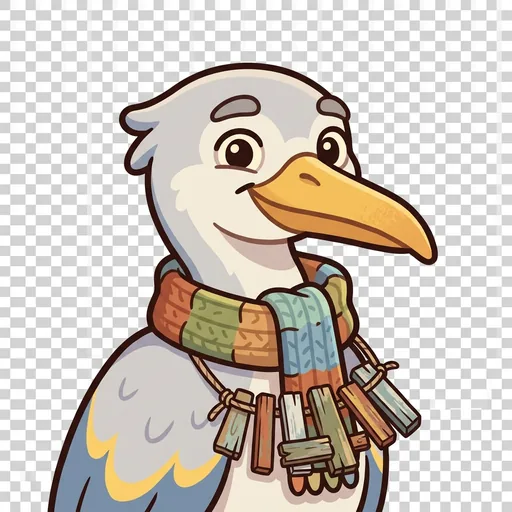
Span
Equity — the bridge-builder; heron with mismatched planks for mismatched riverbanks
-

Cordis
Civility — disagreement-without-disrespect host; striped badger with mismatched cups + bow tie
-

Tellus
Stewardship — the long-view caretaker; ancient tortoise planting trees they will never sit under
-

Level
Rule of law — the line reads level whoever holds it, even the one who set it; mountain goat with a stone level + plumb-bob
-
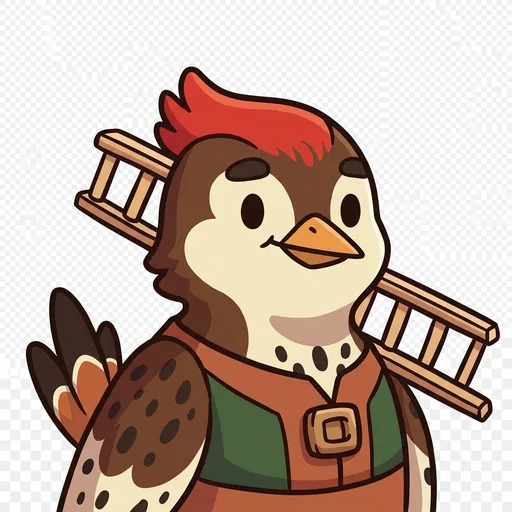
Rung
Due process — climb every step in order, never skip to the verdict; woodpecker climbing a trunk rung by rung
-

Muster
Consent of the governed — nothing proceeds until everyone's gathered and the yes is real; meerkat counting raised paws from the burrow-mound
-

Herald
Transparency — a decision no one can see isn't finished; crane keeping an open notice-board in the square