
Cue
FEATURES — *a model decides from the clues you give it; choose good clues.* The AI-literacy primitive of *features* — recognizing that a model doesn't see the whole world, only the specific clues (features) it was built to look at, so the choice of clues shapes everything it can do.
Press play to listen along. The line being read lights up as you go.
Show full transcript
Loading transcript…
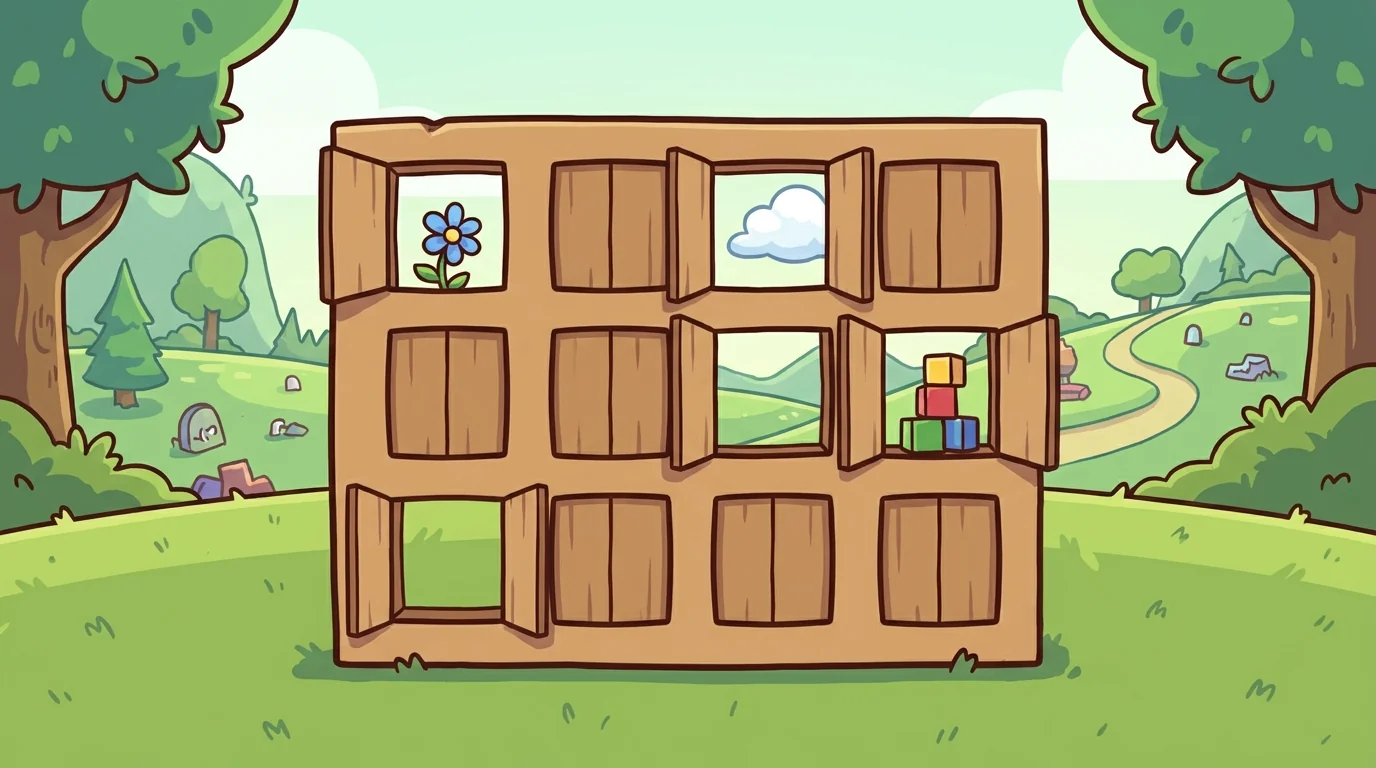
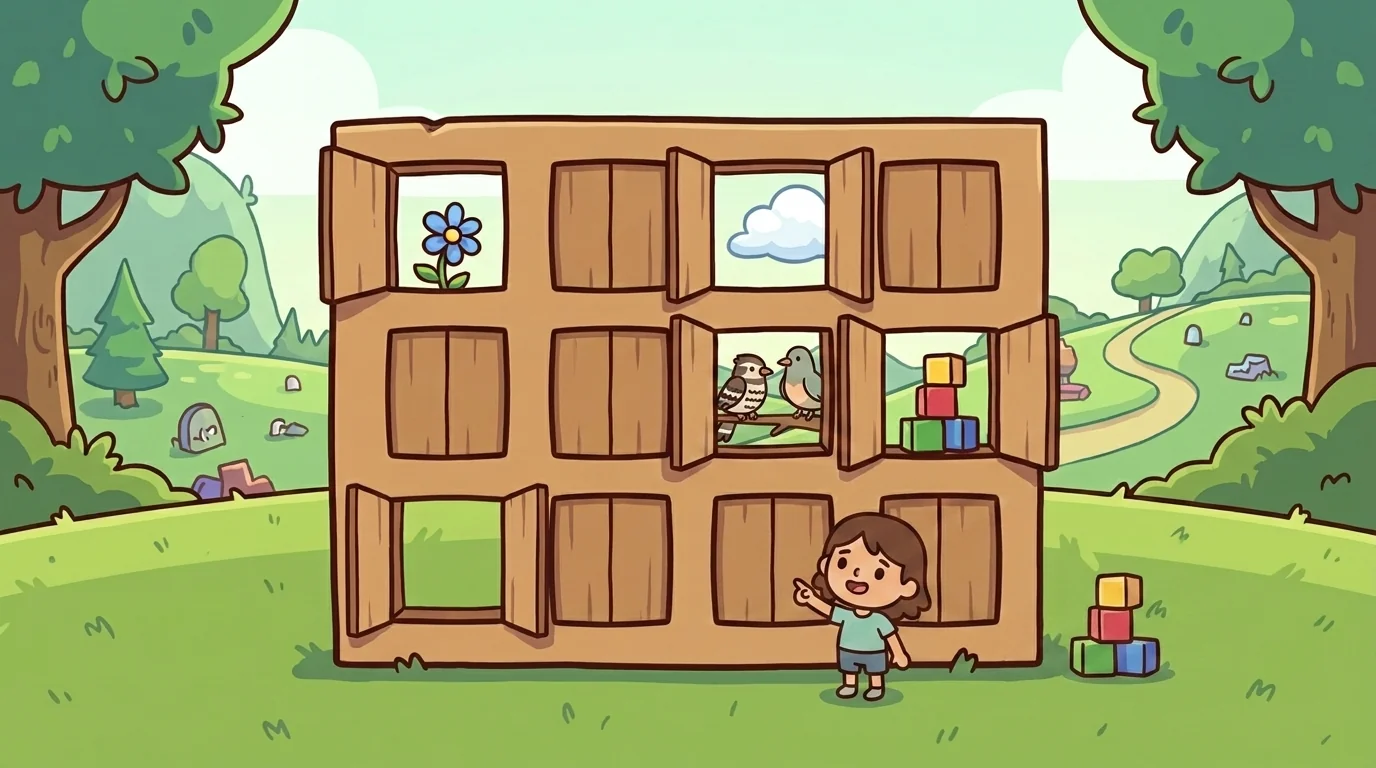
Cue was made of a card with little windows cut into it.
It wasn't an animal, and it wasn't a robot. Cue was a flat frame you could hold up to your eye, like a mask with several small shutters. Each shutter could open or stay closed. When you looked through Cue at something, you only saw the parts its open windows let through. Close a window, and that clue vanished. Open a different one, and a new clue appeared. That was Cue's whole body — a frame of windows that decided what got looked at.
Cue had one job: to choose which clues a model was allowed to notice. "A model doesn't see everything," it would say. "It only sees the clues you open a window for. Pick the clues carefully — they are all it has."
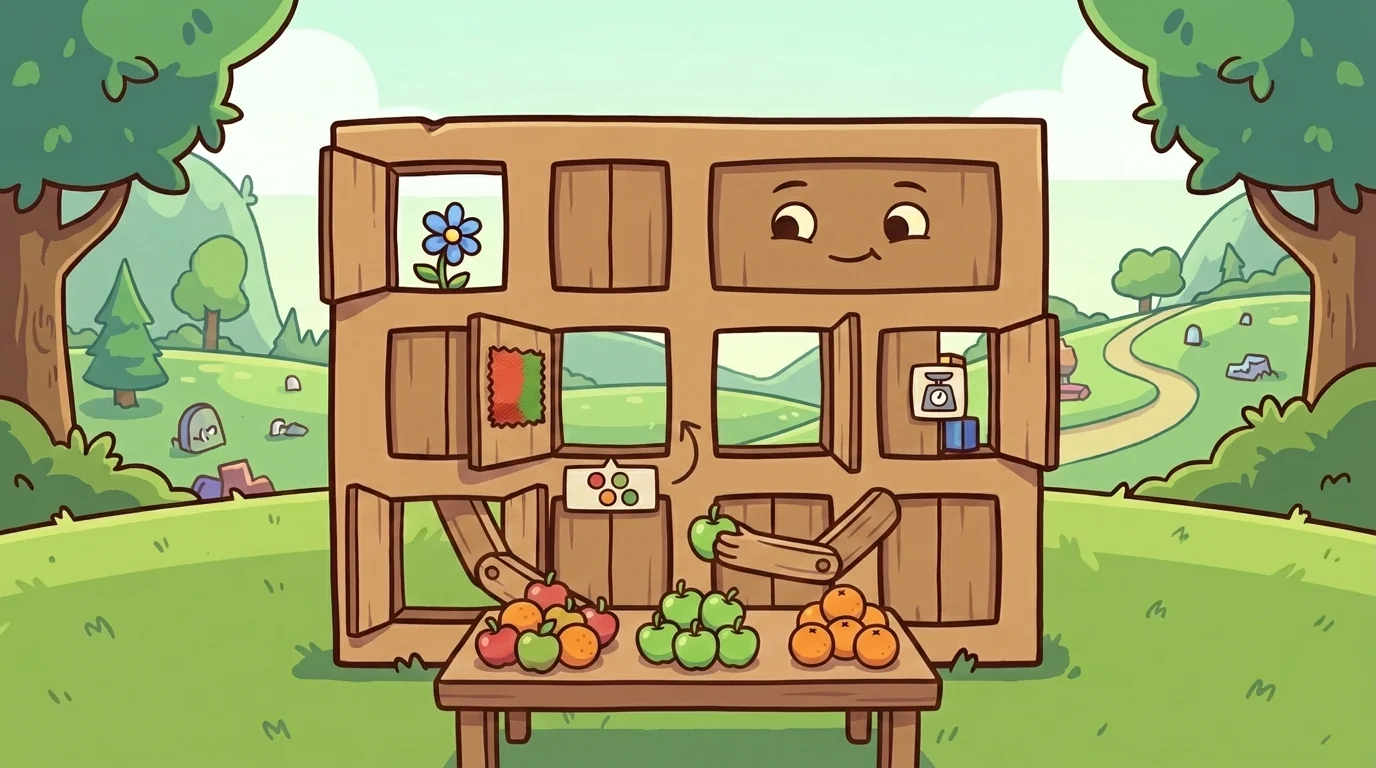
This is the quiet heart of how models work. Cue teaches *features*. A feature is a single clue a model looks at — the color of a fruit, the number of letters in a word, the time of day. A model never sees the whole rich world the way you do. It sees only the handful of features it was built to notice. If you give it good clues, it can do well. If you give it useless clues, it can't, no matter how much it trains.
Cue liked to show this with a game. "Suppose we want to tell apples from oranges," it would say, "but the only window I open is weight. Some apples and oranges weigh the same — so the model will mix them up, and it isn't the model's fault. It only had one clue, and a weak one." Then Cue would open a different window — color, texture — and suddenly the sorting got easy. "Same model," Cue said. "Different clues. The clues did the work."
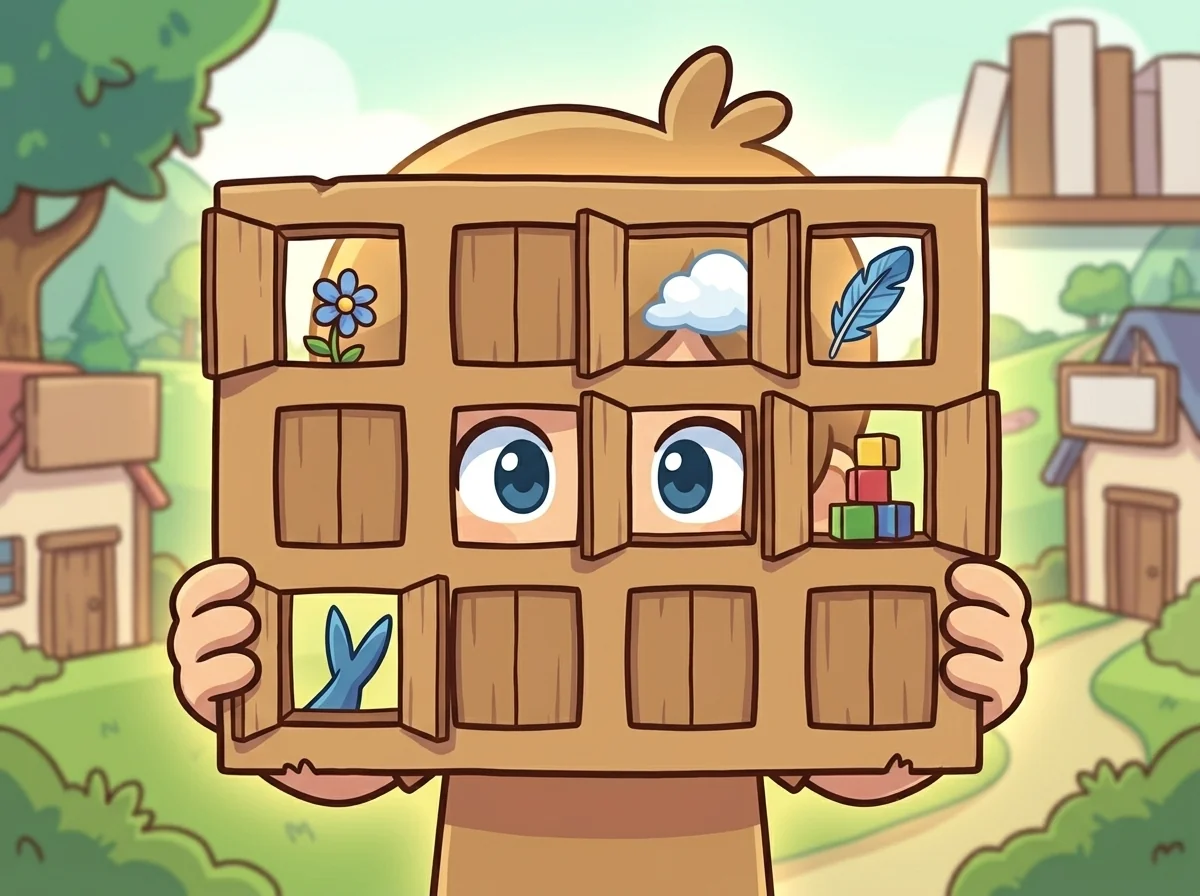
Cue never pretended to be wise. "I do not understand fruit," it said. "I am a card with windows. I decide which clues get through. That is all." Some people think an AI 'sees' the world the way a person does, full of meaning. Cue gently corrected that. A model sees a thin slice — only the features someone chose for it — and everything it can and can't do flows from that choice.
Cue came from the village, cut and folded in the paper-crafts workshop. Its first job was helping a birdwatching club that could never agree how to tell two similar birds apart. The club kept arguing about the birds' songs, which sounded almost identical, and they got nowhere. Cue closed that window and opened another: the shape of the tail. Suddenly the two birds were easy to tell apart. The club hadn't needed sharper ears. They had needed a better clue. Cue understood its purpose that day: the model is only as good as the clue it's allowed to look at.
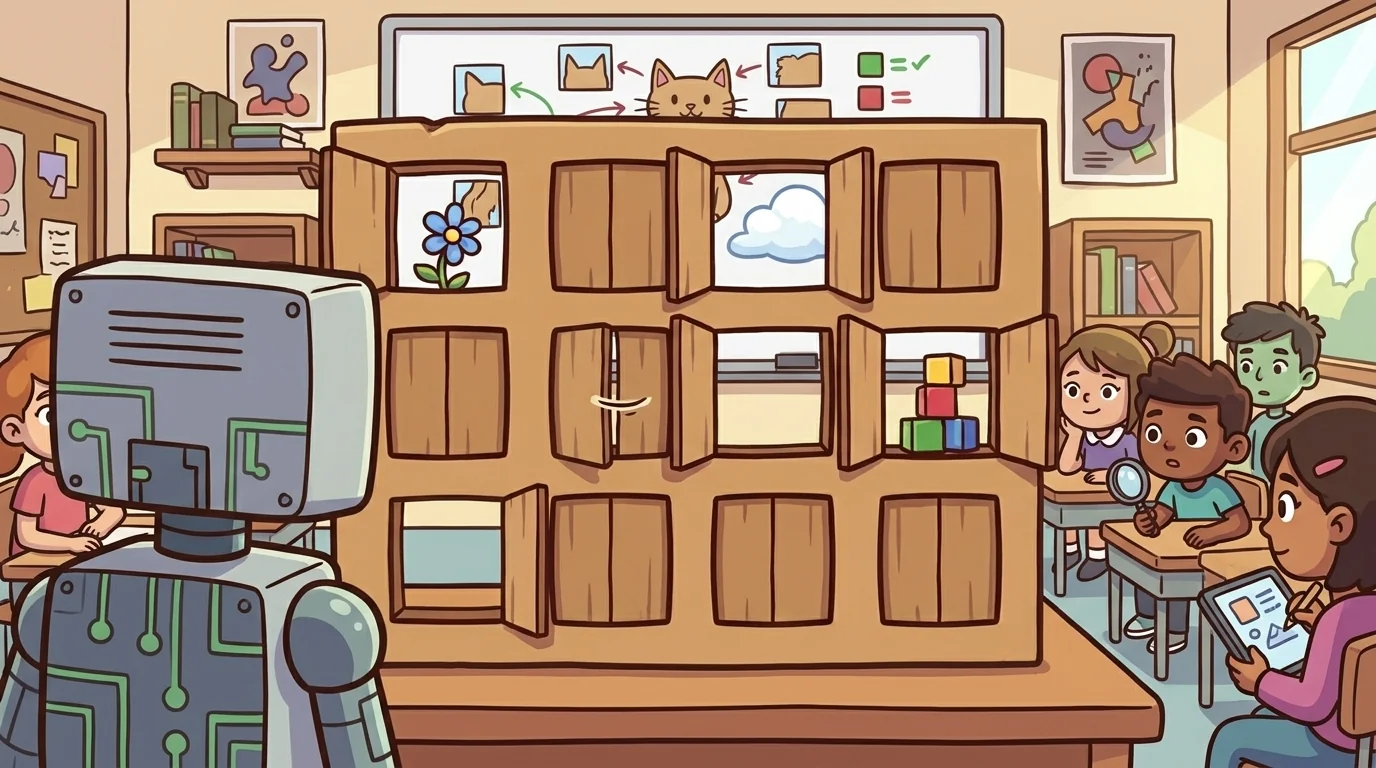
One day Bit came to the workshop, looking for teachers for the AIForge academy.
"What is a feature?" Bit asked.
Cue opened and closed one of its little windows. "It is a single clue the model is allowed to look at," it said. "A model sees only its features — not the whole world. Good clues let a simple model do well. Bad clues doom even a hard-working one. Choosing the clues is most of the work." "You are hired," Bit said.
In its classroom, Cue starts each lesson by holding its window-frame up to something and asking the students, "What can the model see through here? And what is it missing?" Then they try opening different windows and watch how the model's job gets easier or harder.
It teaches the students a few habits about features: A model sees only its clues. Not the whole picture — just the windows you opened. Everything else is invisible to it. *Pick clues that actually separate the groups. A clue that's the same for both cats and dogs (they both have fur) tells the model nothing useful. *A weak clue isn't the model's fault. If it keeps failing, check the windows before you blame the model. It may simply be looking at the wrong thing. *More clues aren't always better. A pile of useless windows just adds noise. A few good clues beat many weak ones. *The clue can hide a bias.* Sometimes a clue quietly stands in for something unfair — that's a window to close carefully (ask Skew).
Cue tells its students, "When a model gets things wrong, people often say it's dumb. Usually it just had bad clues. Change the clue, and watch the same model do beautifully. That's not magic. That's features."
When a student asks how to pick the right clues, Cue always answers the same way:
"Ask what actually tells the groups apart — and open a window for exactly that. The model can't look at anything you don't show it."
Cue opens the window that matters and holds steady, the two once-confusing birds now plainly different through the frame, and the stuck, not-my-fault frustration it used to feel watching a model fail with weak clues has eased into a bright, settled relief — the oh-THAT's-what-mattered gladness of finally looking at the clue that counts.
The AiForge ensemble
Cue is part of AiForge's distributed-narrative cast. Each character embodies a different curricular primitive; together they teach the full subject.
-
Sort
Classifier — the simplest ML; putting things in categories
-

Feed
Training data — the examples a model learns from; garbage-in-garbage-out
-
Skew
Bias — where AI systems go wrong when training examples lean
-

Edge
Model limitations — what a model can't do; modeling 'I don't know' as a good answer
-

Stake
Ethics — what's at stake in deploying AI; people choosing, not rules-from-the-sky
-

Split
Train/test split — keep some examples hidden to tell learning from memorizing
-

Sure
Confidence — a model reports how sure it is; low confidence means check, not trust