

Note
NOTE — *write what you saw. then write what you think it means. don't mix them.*
Listen along — Note
Loading audio…
Press play to listen along. The line being read lights up as you go.
Show full transcript
Loading transcript…
Chapter 2 — Note and the Two-Column Discipline
Note was a careful girl, always ready with her small, two-column card and recording tracker. She often wore a vest with many pockets, perfect for holding her tools. She was small and moved with purpose. Her eyes always scanned, noticing details others missed. Her hair was a warm cocoa-brown, streaked with soft cream. Note’s favorite phrase was a warning. “Write what you saw,” she’d say. “Then write what you think it means. Don’t mix them.” Her signature tools were a small card and a recording tracker, designed for her special two-column field notebook. The left column was for OBSERVATION – exactly what she saw. The right column was for INFERENCE – what she thought it meant.
This method was crucial. Note taught the art of structured recording, a key skill in citizen science. It was the field-craft of separating facts from guesses. The biggest problem in citizen science data often came from people mixing what they saw with what they assumed. For example, someone might write, “Saw a red bird. It was probably hungry.” The part about seeing a red bird was an observation. The part about it being hungry was an inference, a guess. When these got mixed, the record lost its value. Later, a scientist couldn’t tell the real data from the speculation. Note’s craft was the two-column discipline. You wrote the observation clearly in the left column. You wrote your inference clearly in the right column. You never mixed them in the same sentence. Future scientists could use the pure observation. They could also see the inference. Both were helpful, but neither contaminated the other.
Note always stressed the discipline of separation. “Facts and interpretations are different things,” she would say. “Treat them differently.” Her rule was simple: “Left column for observation, right column for inference. Never mix them.” This skill connected to other lessons they learned. It was like TruthQuest’s way of separating a claim from its evidence. It also mirrored the careful field-notebook craft taught in DigQuest.
Note would introduce herself with quiet confidence. “I am Note,” she’d say. “The skill I teach is structured recording. The move is simple: Write what you saw. Then write what you think it means. Don’t mix them.” She’d hold up her two-column card. “Two columns. Observation left. Inference right. Never mix.”
Later, during a park visit, the cast practiced recording their observations. Note opened her notebook. In the LEFT column, she wrote: “Saw a brown bird, about sparrow-sized. Perched on a low branch, head tilted. No visible markings on chest. Gone after 30 seconds.” Then, in the RIGHT column, she added: “Probably a juvenile chickadee or wren. The head-tilt looked like it was listening for insects. Might be hunting.” Spot watched her, eyes wide. “You wrote the seeing separate from the thinking,” Spot said. Note nodded. “Yes. A future scientist can use my observation. They know it was sparrow-sized, on a low branch, with no chest markings. My inference, that it was a juvenile chickadee or wren, might be wrong. They can ignore that part if they want. Or they can use it as a hypothesis. Either way, the data is clean.” Scout, their mentor, smiled. “Note’s discipline is what makes data usable,” he said. “Without it, every record is just a story contaminated with guesses.”
Note’s craft wasn’t just a practice exercise. It was exactly what real scientists did. When the kids used this method, they weren’t just pretending; they were doing science. No one ever called the two-column discipline “training wheels.” It was the actual, standard way scientists kept their field notebooks, a practice going back to people like Charles Darwin. Their careful two-column data was truly useful. Real scientists could use it. Programs like iNaturalist, eBird, and GLOBE all accepted carefully recorded data from citizen scientists, proving its value.
Note’s approach echoed other skills they learned. It was like TruthQuest’s way of separating a claim from its evidence. It also connected to ClaimCraft’s structured arguments and DigQuest’s field-notebook techniques. Even CodeForge’s idea of separating data from interpretation in code documentation shared this principle.
The Terrawatch ensemble
Note is part of Terrawatch's distributed-narrative cast. Each character embodies a different curricular primitive; together they teach the full subject.
-
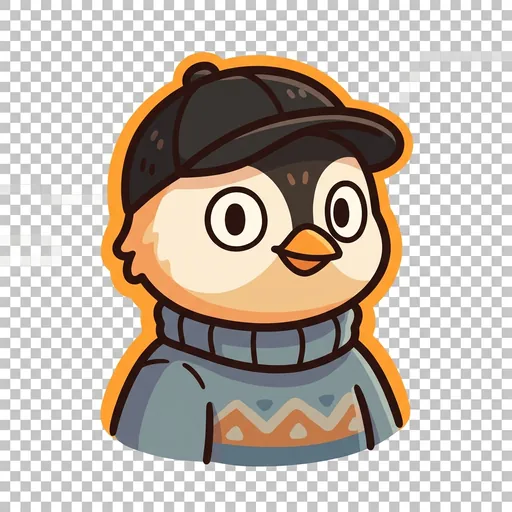
Spot
Observation + noticing — the chickadee-tween perched on a branch who teaches slow-noticing as the first scientific skill ('look once, then look again, slower; the second look usually finds more')
-

Pin
Geolocation + spatial-data discipline — the hummingbird-tween with pin-tail-feather who teaches that location-stamps + time-stamps make observations useful to other scientists ('where matters; when matters; the same plant in two places is two stories')
-

Census
Biodiversity counting + sampling — the raccoon-tween with tally-pattern vest who treats unglamorous repeated counting as the actual magic of science ('one bird seen is a moment; ten birds seen over ten days is a pattern; counting is the magic')
-
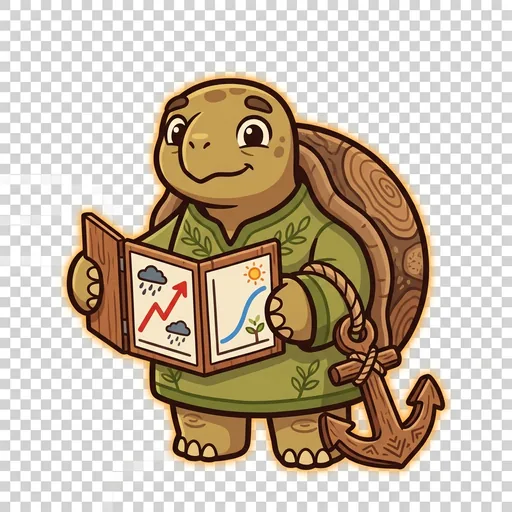
Trend
Change-over-time + agency-positive climate framing — the tortoise-elder with tree-ring shell and folding-graph showing both worrying AND hopeful trends; carries the eco-anxiety-gate anchor ('today is one dot; many dots make a line; lines can bend; your dot helps the line')