Hark and Mosaic
LISTEN, THEN BUILD — a good conversation isn't taking turns waiting to talk: Hark listens all the way through instead of rehearsing a reply, and Mosaic takes the pieces everyone brings and fits them into one shared picture — hear it fully, then build on it
A story read by Hark and Mosaic
Loading audio…
Press play to listen along. The line being read lights up as you go.
Show full transcript
Loading transcript…
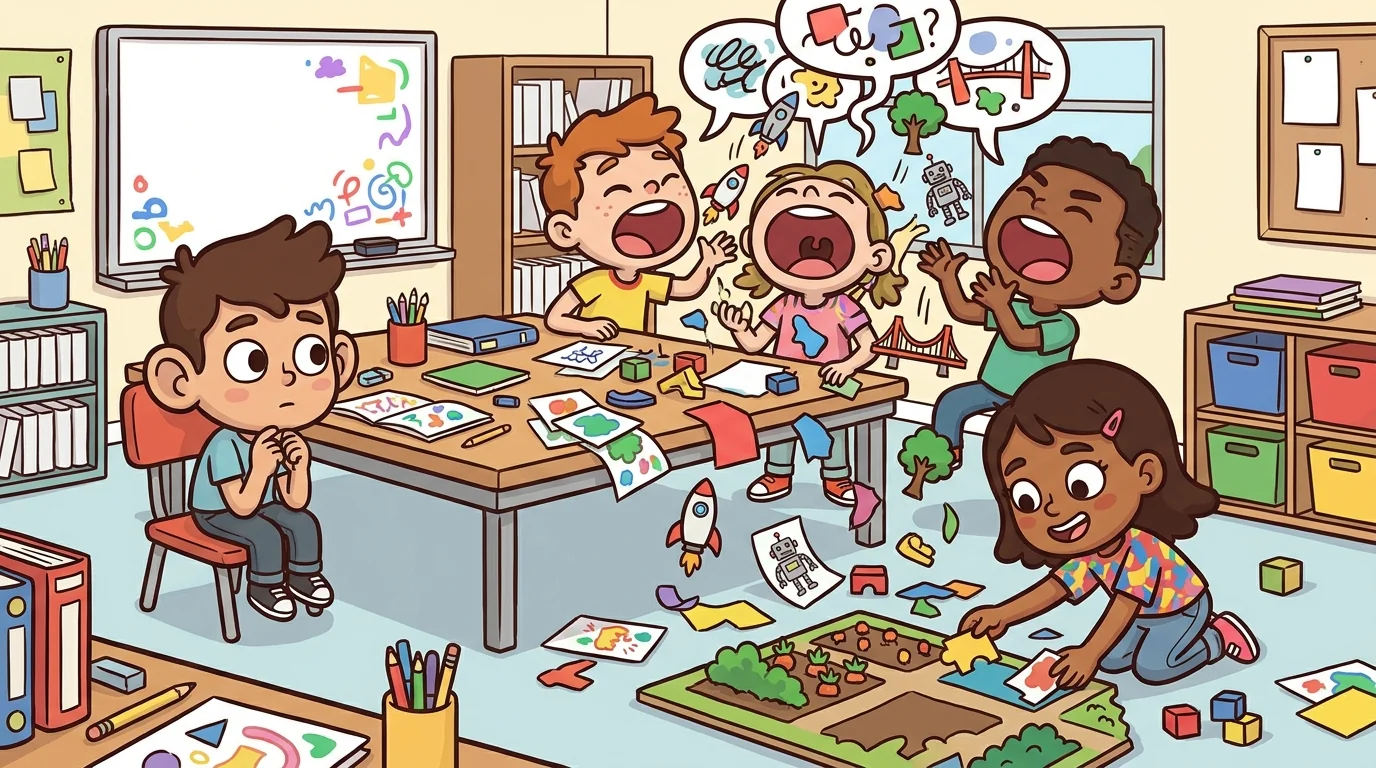
The group project meeting was going badly, and not because anyone was mean. It was going badly because everyone was talking and no one was listening — five people, each waiting for a gap to drop their own idea, each already rehearsing their next sentence while someone else was still mid-thought. Ideas kept getting dropped on the floor, half-heard, and nothing was building.
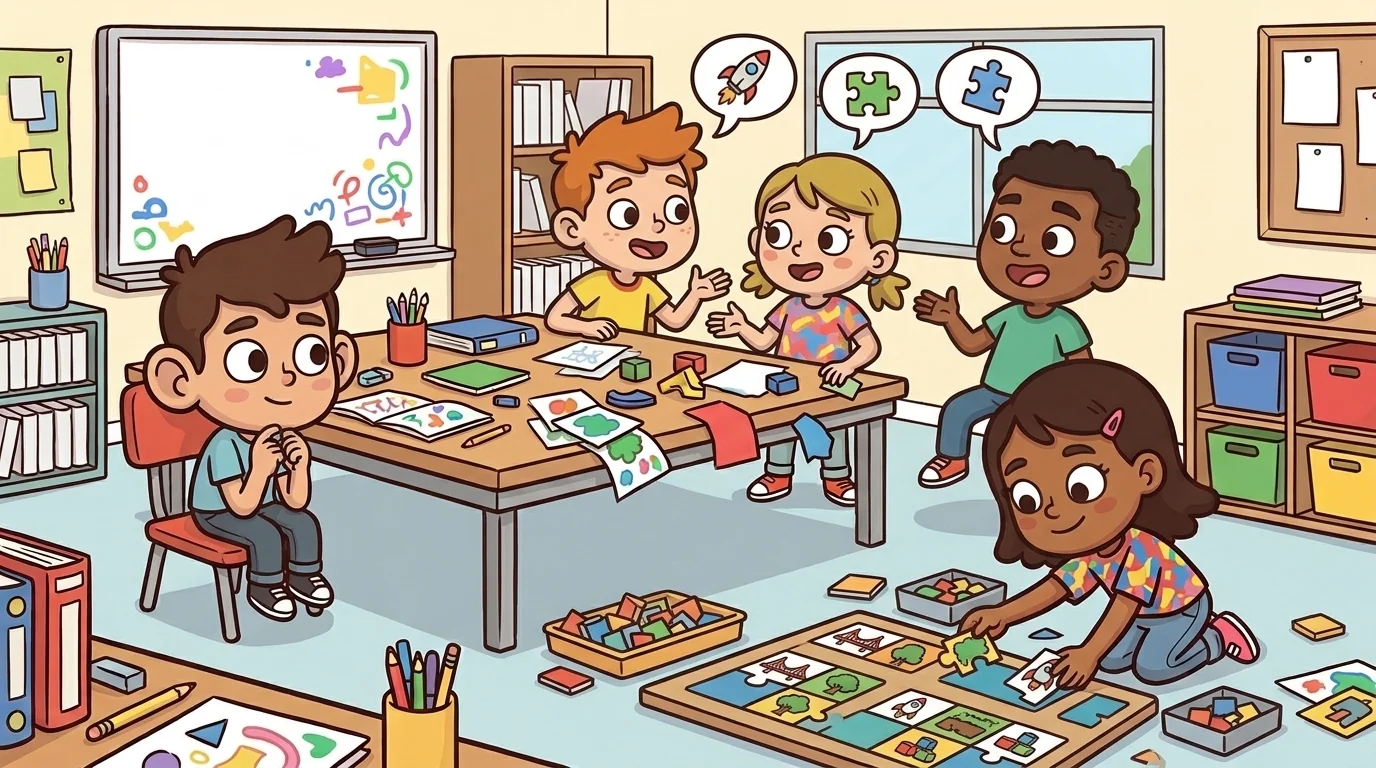
Two helpers slipped into the meeting to show the group what real conversation looks like.
Hark sat quietly, whole attention turned toward whoever was speaking.
Mosaic sat with a tray of little tiles, ready to fit them together.

"Nobody here is actually hearing anyone," said Hark, gently. "They're all just waiting to talk. Let me show you the other way."
Hark went first — because you cannot build on an idea you never actually heard, and hearing is harder than it looks.
"Watch what everyone's doing," Hark said. "Someone starts talking, and the second they've got the gist, everyone else stops listening and starts rehearsing their reply. Loading up their own point. Waiting for the gap. And so nobody hears the end of anything — the best part, the part that comes after the gist." Hark turned full attention to a quiet speaker and simply listened — all the way to the end, past the first idea to the real one underneath, not planning a single word of response. "That's the whole skill. Listen all the way through. Don't rehearse. Don't load up. Just hear it — completely — and trust that when they're done, you'll know what to say, because you'll have actually understood them." Hark nodded the speaker all the way to their real point. "People can feel the difference between being heard and being waited-out. One makes them shrink. The other makes them open up."
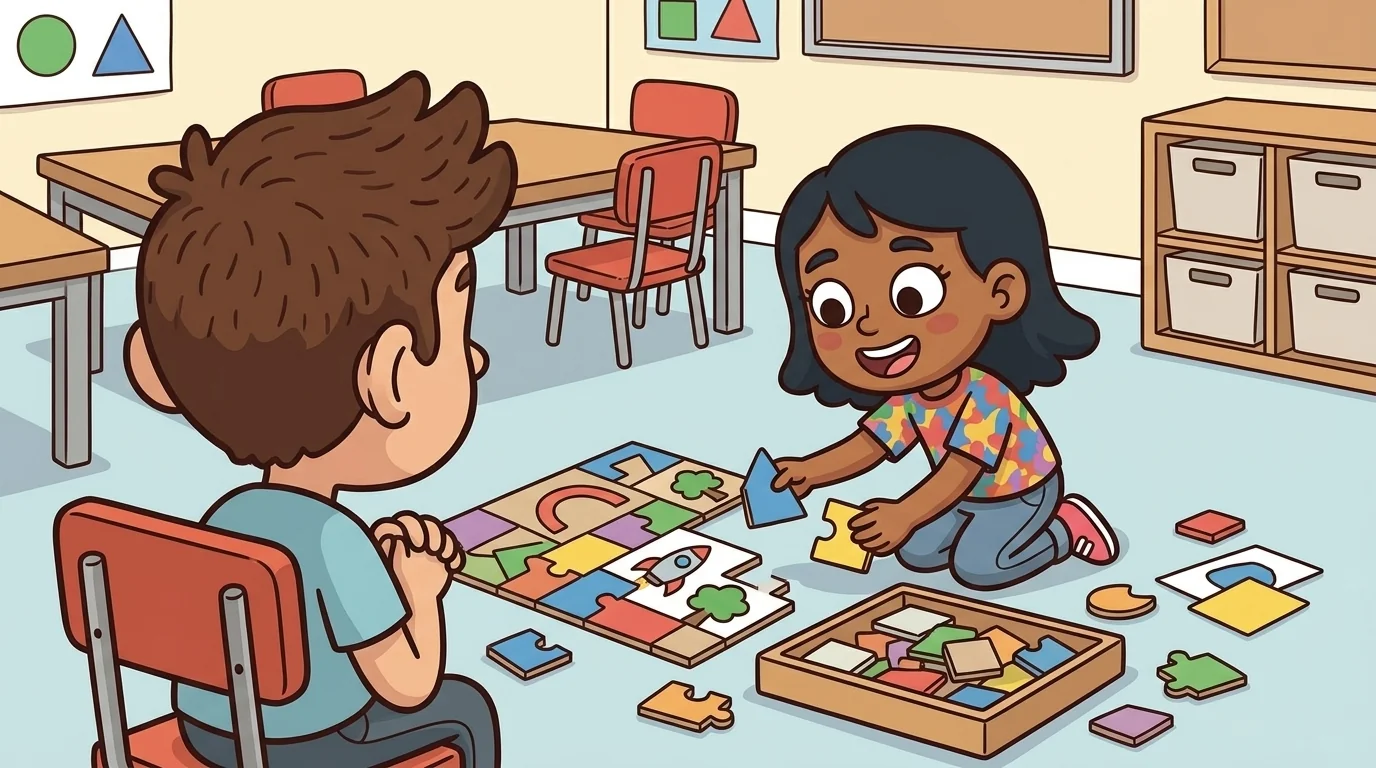
Then Mosaic pulled out the tray of tiles, because listening is only half of it — the magic is building on what you heard.
"Okay," said Mosaic. "So Hark heard Priya's idea — really heard it. Now watch what I do with it. I don't toss it aside to make room for mine." And Mosaic took Priya's idea like a little tile and set it down. "I take her piece — and I fit mine next to it. 'Priya's idea about the poster, plus Sam's idea about the video — what if the poster links to the video?'" Mosaic clicked two tiles together, and then a third. "See? I'm not competing. I'm combining. Taking the pieces everyone brings and fitting them into one bigger picture — a mosaic — that none of us had alone." Mosaic added another tile, and another, and suddenly the scattered ideas were becoming one thing. "'Building on others' — that's the phrase. Not 'here's my idea instead.' But 'yes, and here's how yours and mine fit together.' That's how a group makes something bigger than any single person in it."
And the meeting turned around completely. Once Hark started hearing people all the way through, and Mosaic started fitting the pieces together instead of everyone competing, the dropped ideas stopped hitting the floor. They started clicking into place — Priya's plus Sam's plus Dev's — building, tile by tile, into a plan far better than any one of them had walked in with.
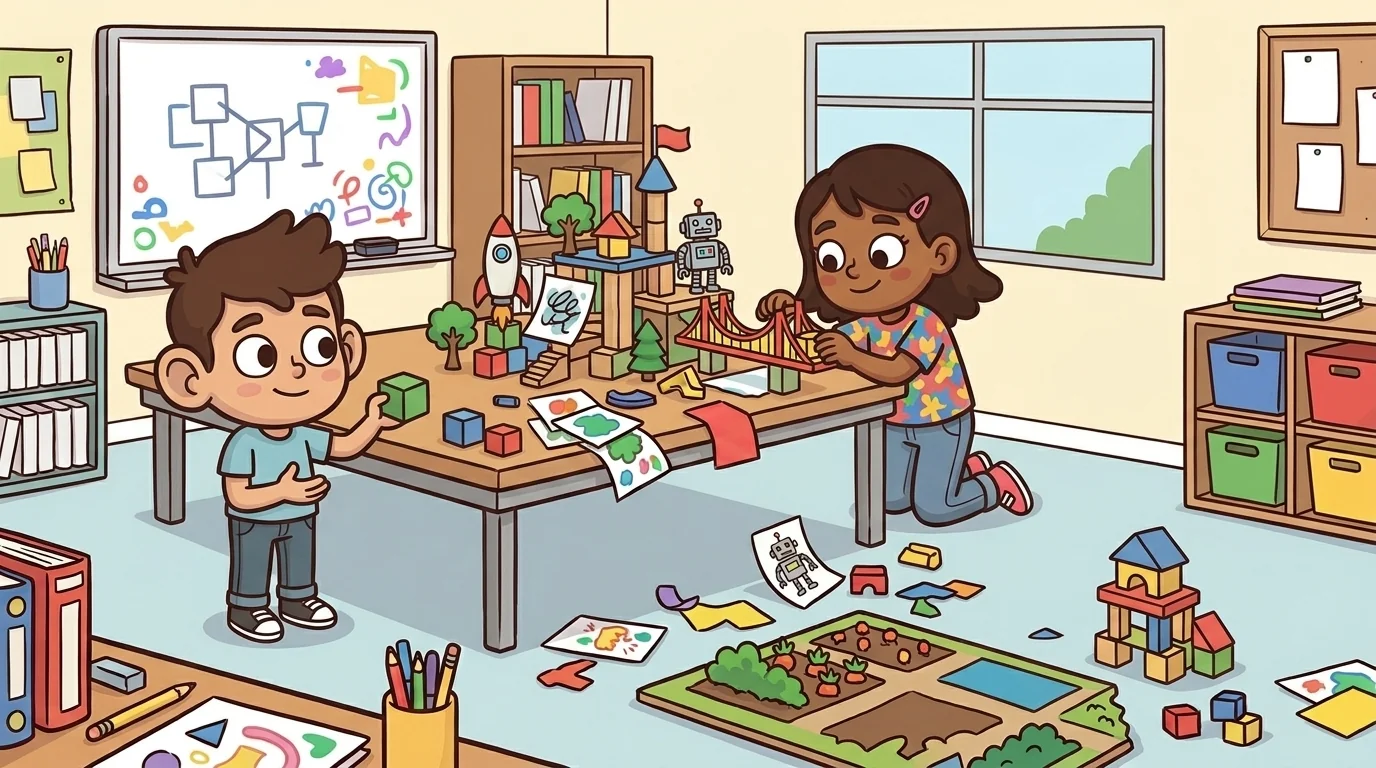
"Good listening," said Mosaic.
"Good building," said Hark.
There is a quiet, surprising joy in a conversation that actually builds — where people hear each other all the way through and fit their ideas together instead of just taking turns waiting to talk. It's a different thing entirely from a room full of people each pushing their own point. And the two moves that make it happen are humble ones: really listen, without rehearsing your reply — and then take what you heard and build on it, adding your piece to theirs. Do those two things, and an ordinary group of people can make something none of them could have made alone — which is, when you think about it, very nearly the whole point of talking to each other at all.
The SpeakForge ensemble
Hark and Mosaic is part of SpeakForge's distributed-narrative cast. Each character embodies a different curricular primitive; together they teach the full subject.
-

Pose
Posture / presence / stance — 'Stand. Then speak.'
-

Pitch
Voice projection + tone variation — 'Your voice is a road. Not a wall.'
-

Hark
Active listening — 'Listen all the way through.'
-

Truss
Argument structure (claim / evidence / reasoning) — 'Claim, then proof, then why.'
-

Echo
Audience awareness + tone calibration — 'Who's listening? Speak to THEM.'
-

Easel
Visual aids / multimedia displays — show, don't just tell; one clear picture beats a hundred words (SL.5)
-

Waypoint
Signposting — the verbal roadmap; 'first, next, finally' so listeners never get lost (SL.4)
-

Volley
Q&A — fielding and answering questions; catch it, breathe, send it back clean (SL.1)
-

Mosaic
Building on others' ideas — synthesizing a discussion; 'you said X, and building on that…' (SL.1c-d)
-

Usher
Turn-taking & discussion norms — everyone gets a seat at the talk; make room for the quiet voice (SL.1b)