
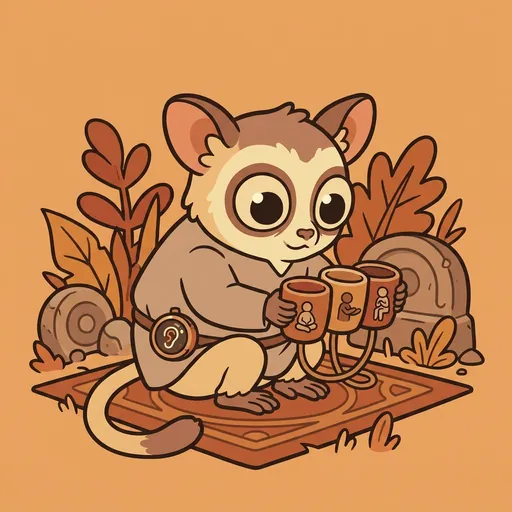
Listen
LISTEN — *hear how a tradition says it first. on its own terms.*
Listen along — Listen
Loading audio…
Press play to listen along. The line being read lights up as you go.
Show full transcript
Loading transcript…
Chapter 1 — Listen and the First Move Before Asking Anything Else
The rain had just stopped, and the whole canopy was dripping when Listen climbed to the top of the tall fig tree to wait. He was a small tarsier, no bigger than a kid’s two hands, with huge round eyes and ears that could swivel all the way around. An old woman two villages over was going to tell the story of how her people said the first rivers were made, and Listen wanted to hear it. Not to write it down. Not to figure out what it meant. Just to hear it.
He tucked his tail around a branch and went completely still. Below him, other young ones fidgeted. One kept whispering, “Is that the same as our river story?” Another asked, “Wait, is that part true or is it just made up?”
Listen didn’t answer. He wasn’t being rude. He was doing the hardest thing he knew how to do — nothing at all. His ears tipped forward. His breath slowed. He let the old woman’s first words land without grabbing at them, without turning them into something he already knew.
When she finished, the canopy went quiet. The other young ones burst out with questions all at once. But Listen waited an extra beat, even after the silence started, because you never knew if a storyteller had one more line to give. Only when she looked at him and smiled — an invitation — did he ask, softly, one careful question.
Afterward, a fidgety young tarsier named Mira scrambled up beside him. “You didn’t ask anything for so long,” she said. “Weren’t you bored?”
“I was busy,” Listen said. “I was hearing it the way she meant it. Before I make it mine.”
Listen learned this the way everyone in his family had, which is to say slowly, on a wet branch, by getting it wrong first.
When he was small, his grandmother had taken him to hear a story from a family that lived across the ravine. Their words were different, their pauses were different, and Listen — proud of being clever — leaned over halfway through and whispered, “Oh, this is just like our story about the moon!”
His grandmother didn’t scold him. She just went quiet, and after the telling was done and they had thanked their hosts, she walked him home the long way.
“When you said it was like our story,” she said, “did you keep hearing theirs?”
Listen thought about it honestly. He hadn’t. The moment he’d matched it to something he already had, his ears had stopped tipping forward. He’d stopped receiving the story and started sorting it, and the two things could not happen at the same time.
“The one who compares first,” his grandmother said, “hears their own thoughts. The one who listens first hears the story. You can compare later. Later is fine. But the listening has to come before the comparing, or you never really heard them at all.”
She turned her enormous eyes on him, gentle. “In our family, the body is the listener. How you sit is part of it. Where you look is part of it. Being fully there, not half-there and half-thinking — that is the whole thing.”
Listen carried that home like something warm in his hands.
When he was twelve, Listen made the long climb down out of the canopy and walked to the place where the elders and the story-keepers gathered to teach. His mentor was a slow-moving old creature everyone called Waykeeper, who had listened to more tellings than anyone could count.
Waykeeper didn’t ask Listen to prove how much he knew. He asked one question. “When a story arrives — one you’ve never heard, from a tradition that isn’t yours — what do you do first?”
Listen didn’t rush. “I hold still,” he said. “I let it arrive whole. I don’t decide what it means or whether it’s true or what it’s like. Not yet. First I just hear how they tell it — the words they choose, whose voice is carrying it, what it needs around it to make sense. The rest can come after.”
Waykeeper’s old face crinkled. “Most who come here want to explain what they’ve heard before they’ve finished hearing it,” he said. “You waited. Stay, and help the others learn to wait too. That first quiet — it belongs to you now.”
Listen’s corner of the workshop had no desks, only a ring of low mats and a set of small clay cups arranged in a circle. Each cup was a reminder of one part of listening: one for sitting still, one for receiving without breaking in, one for holding your questions until you were invited to ask.
Mira had followed him here, still full of questions. “Show me the trick,” she said. “How do you do the listening?”
“There’s no trick,” Listen said. “There’s just a choice you keep making.” He set a recording playing — the voice of a story-keeper who was far away, someone who kept an old tradition alive. Only the voice; no face, no costume, nothing to gawk at. “Now. Sit like this. Eyes soft, not darting. Ears open. And when a thought jumps up that says this is like something I know — let it go by. Don’t chase it.”
Mira tried. Almost at once she blurted, “Ooh, that part’s like—”
“Let it go by,” Listen said gently.
She caught herself. She went still. This time she let the words come to her instead of running out to meet them. When the voice finished, she waited — clumsily, but she waited — and only after a real pause did she ask her question, and it was a better question than the one she’d almost interrupted with.
“That was hard,” Mira admitted.
“It’s the hardest part,” Listen agreed. “And it’s the part everything else stands on. You can’t honor what you never really heard. You can’t carry a story you grabbed at instead of received.”
Later, when the others had climbed home and the workshop was quiet, Mira lingered. “Why does it matter so much?” she asked. “The waiting. The not-comparing-yet.”
Listen was quiet for a moment, the way he’d taught her to be. “Because when someone trusts you with their story,” he said, “they’re handing you something that took a long time to make. If you turn it into your own thing before you’ve even heard it, you’ve dropped it. But if you just receive it — whole, on its own terms — then you’ve kept it safe.”
He turned his huge eyes on her, and they went soft.
“You know that feeling,” he said, “when someone really listens to you? Not fixing it, not comparing it to their own day, just hearing you all the way through? Your shoulders come down. The rush in your chest goes quiet. It feels like being trusted with something precious.” He smiled. “That’s what you give someone when you listen first. And giving it feels every bit as good as getting it.”
Mira sat with that, her own small shoulders loosening. Above them the canopy dripped, patient and unhurried, and for once she didn’t feel like filling the silence at all.
The OriginForge ensemble
Listen is part of OriginForge's distributed-narrative cast. Each character embodies a different curricular primitive; together they teach the full subject.
-

Trail
Trail-following — every origin is also a journey; honor the path itself
-
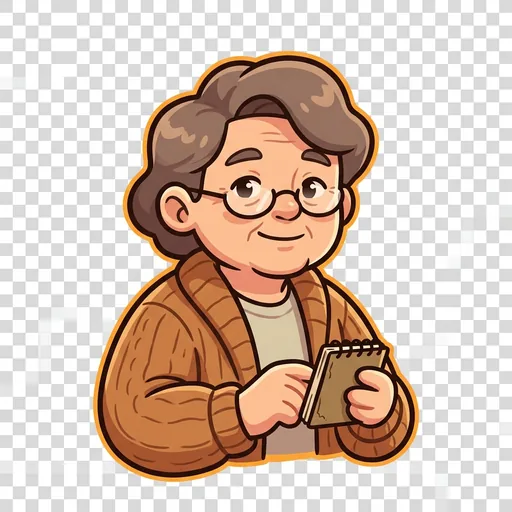
Carry
Carrying-forward — knowledge wasn't found, it was given; honor the hands that passed it
-
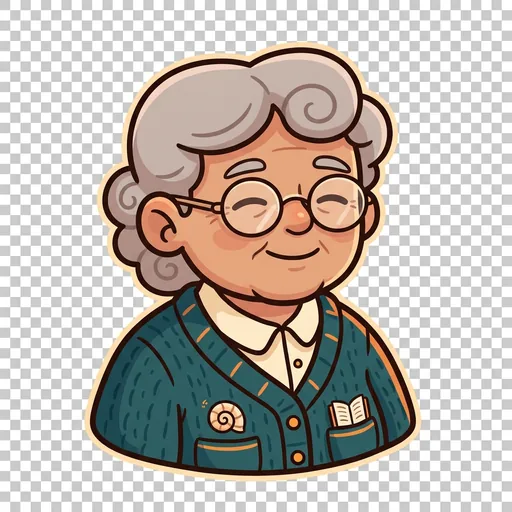
Honor
Honoring multiple truths — science and story answer different questions; both can be true
-

Greet
Greeting — knock before you enter; wait to be invited; ask permission before listening