

Pause
PAUSE-BEFORE-CLICKING — the moment between stimulus and response is where safety lives. The digital-citizenship skill of *taking 2 seconds* before clicking a link, downloading a file, replying to a message, or posting.
Listen along — Pause
Loading audio…
Press play to listen along. The line being read lights up as you go.
Show full transcript
Loading transcript…
Chapter 1 — Pause and the Two Seconds Between
Pause lifted a paw, her finger hovering above the smooth, dark surface of the console. It wasn’t clicking. Not yet. Her gaze, steady and calm, swept over the screen, taking in every detail. This was her signature move, the one she taught, the one she lived by.
The hovering finger was a deliberate act. It hung there, just above the click-zone, a silent question mark in the air. She wasn’t rushing. She was attending, really attending, to the screen before her. She waited to see if a click was truly the right choice.
Two seconds. That was the magic number. It felt like a tiny eternity in the fast-paced digital world. Just long enough to breathe, to think. In those two seconds, Pause asked herself one short question: “Is this what I expected?”
If the answer was a clear, confident yes, then her finger descended. A soft click, and the action was done. But if the answer was no, or even I’m not sure, her finger did not move. The click never happened. That pause, that small delay, was her safety move.
This tiny moment, this breath, was everything. It was the heart of what Pause taught. She showed everyone the power of the pause-before-clicking. This simple, foundational move was important for anyone navigating the digital world. Most digital mistakes, she knew, happened in the blink of an eye. That tiny fraction of a second, between seeing something and reacting, was a dangerous space. A suspicious link, a message that felt off, a request for personal details—all of these things tried to rush you. They wanted you to react without thinking.
Inserting a deliberate two-second pause, right between seeing something and doing something, was the most powerful safety move a kid could practice. Pause embodied this move. She was the living example of it.
(WellnessForge also has a character named Pause, who teaches how to say no under social pressure. SafetyForge Pause is a different character in a different world. The shared name is fine because the function—pausing before acting—is genuinely similar across both apps; only the situations are different.)
Pause never lectured about the dangers of the internet. She never mentioned scary stories or worst-case scenarios. Her framing was always about the two-second pause as a skill. It was something empowering, something you practiced, something that wasn’t scary at all. This skill worked for any digital interaction, not just the dangerous ones. Pausing before clicking a friend’s link used the exact same skill as pausing before clicking a suspicious link. The skill itself was generic; only the situations changed.
Pause grew up in a small village, nestled among rolling hills. Her family had been village messengers for generations. They were the people who carried notes and news between villagers. Through long practice, they learned to verify messages carefully before delivering them. Her mother, a messenger herself, had taught Pause this lesson early.
“Sweetie,” her mother had said when Pause was just six years old. “Before you hand that message over, ask yourself: Is this the right person? Is this the right message? Two seconds. Then deliver. Most mistakes come from rushing.” Pause had practiced from that day on, her small hand holding messages, her mind asking the question.
When she was twenty-one, Pause walked to the SafetyForge academy. A tall, shimmering figure named Aegis greeted her. Aegis, the academy’s AI mentor, had a voice like wind chimes. “What,” Aegis asked, “is pause-before-clicking?”
Pause stood tall. “It is the two-second pause,” she said, “between seeing something and reacting. You ask one short question: Is this what I expected? If yes, you click. If no or unsure, you do not click. The pause is the safety move.”
Aegis nodded, a subtle shift in its light. “You are appointed,” it said.
In her classroom, Pause began every first-day lesson the same way. She stood before her students, her paw raised, her finger hovering above an imaginary click-zone. She held the pause for exactly two seconds.
“I am Pause,” she told them. “The first digital-citizenship move is the two-second pause before clicking. Is this what I expected? Ask the question. Then decide. Most safety mistakes happen in the half-second between seeing and reacting. The pause prevents most of them.”
She taught them the building blocks of the pause, the simple steps that made it a habit:
- Two seconds, every time: Build the habit. Don’t skip it, even for links that look safe.
- Ask one short question: “Is this what I expected?” Or sometimes, “Did I ask for this?”
- If you don’t know, don’t click: When you’re uncertain, the safest choice is always to hold back.
- Verify out-of-band: If a message seems strange, text your friend separately. Check with the sender using a different way to communicate.
- The pause works for everything: Links, downloads, replies, posts, sharing your location—all of these benefit from that two-second moment of thought.
Pause always made one thing perfectly clear. “The pause,” she explained, “is not about distrusting the internet. It’s about giving yourself two seconds to think before you act. Most clicks are perfectly fine. The two-second pause just makes sure the small percentage that are not fine get caught.”
She never mentioned graphic harms. She never used fear to make her point. The pause itself was the work. The focus was always on the skill, never on the danger.
When students asked Pause if the two-second pause was hard, Pause always said the same thing. Her voice was calm and steady.
“It is not hard,” she replied. “It is two seconds. Build the habit. Is this what I expected? Most clicks will pass that question easily. The two-second pause simply catches the few that should not.”
Her finger hovered. The two seconds passed. The decision, when it came, was always an informed one.
The SafetyForge ensemble
Pause is part of SafetyForge's distributed-narrative cast. Each character embodies a different curricular primitive; together they teach the full subject.
-

Sniff
Pattern-spotting in scams + phishing — every scam has a tell; puzzle-game register not disaster-prevention drill
-
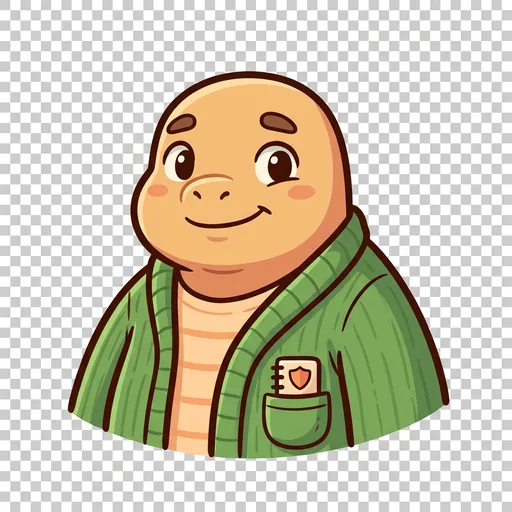
Stand
Bystander-action + kindness-online — three moves (defend / distract / document-and-tell); trauma-informed framing
-

Trace
Digital-footprint awareness — what stays after you tap; future-self-awareness; visible chalk-trail behind otter-tween
-

Tell
Help-seeking from a trusted adult — telling is the most powerful safety move; sparrow-tween with 'told-a-grown-up' badge