Chompus the Great
CHOMPUS — one hit is luck. three hits is a chain. chains send opponents home.
A story read by Chompus the Great
Loading audio…
Press play to listen along. The line being read lights up as you go.
Show full transcript
Loading transcript…
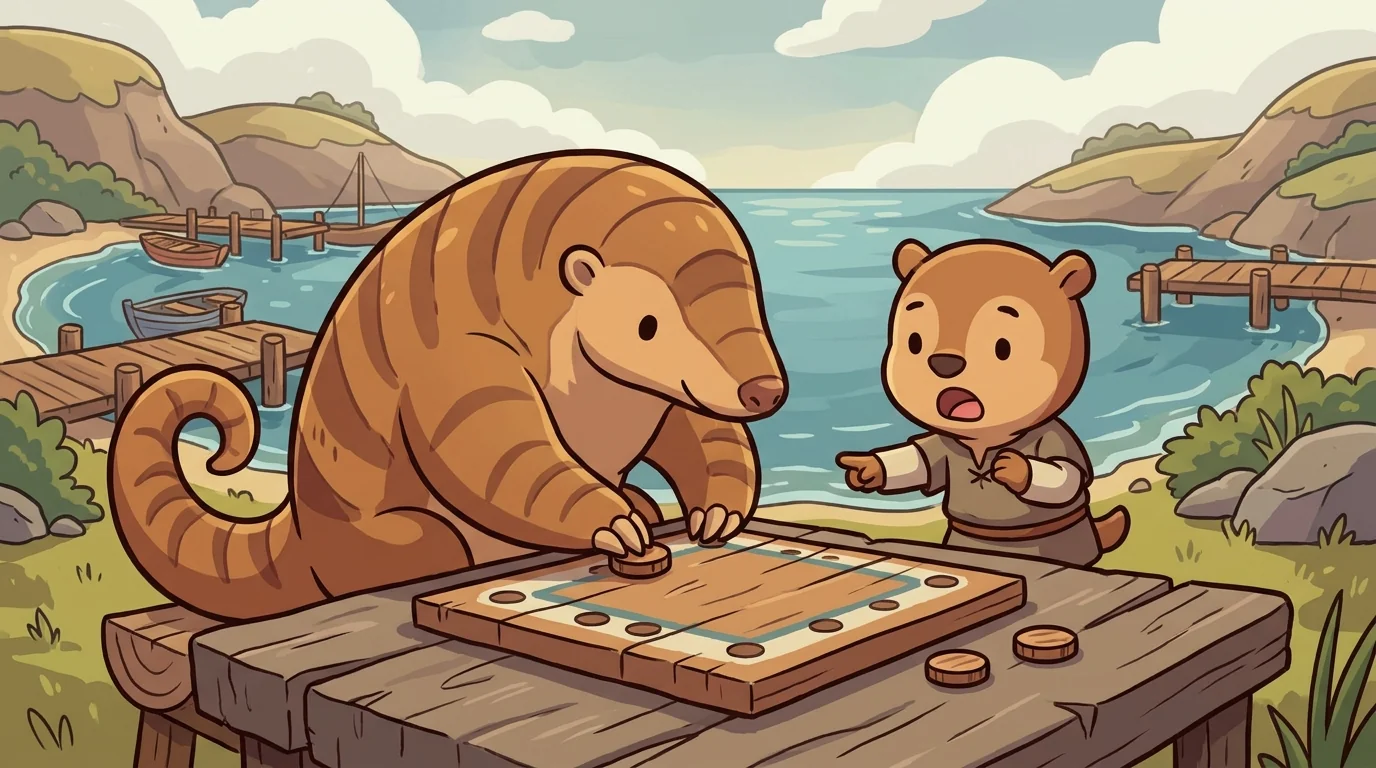
On the little wooden board by Storm Bay, Chompus the pangolin scanned the pieces and did not move yet.
Three of the other player's pieces sat out in the open — one here, one a little further, one further still. They looked like snacks nobody was watching.
"Grab that one!" a young voyager beside him said, pointing at the far piece. "It's right there!"
"Wait," Chompus said softly. He curled his stripey tail and looked at all three at once. "If I bump the far one, the others swim away. But if I bump the near one first..." He rolled, and nudged the closest piece back to the start. Then the next turn, the middle. Then the last. One, two, three — all sent home. "There," he said, warm and slow. "Three little bumps in a row. That's a chain."
The young voyager's mouth fell open.
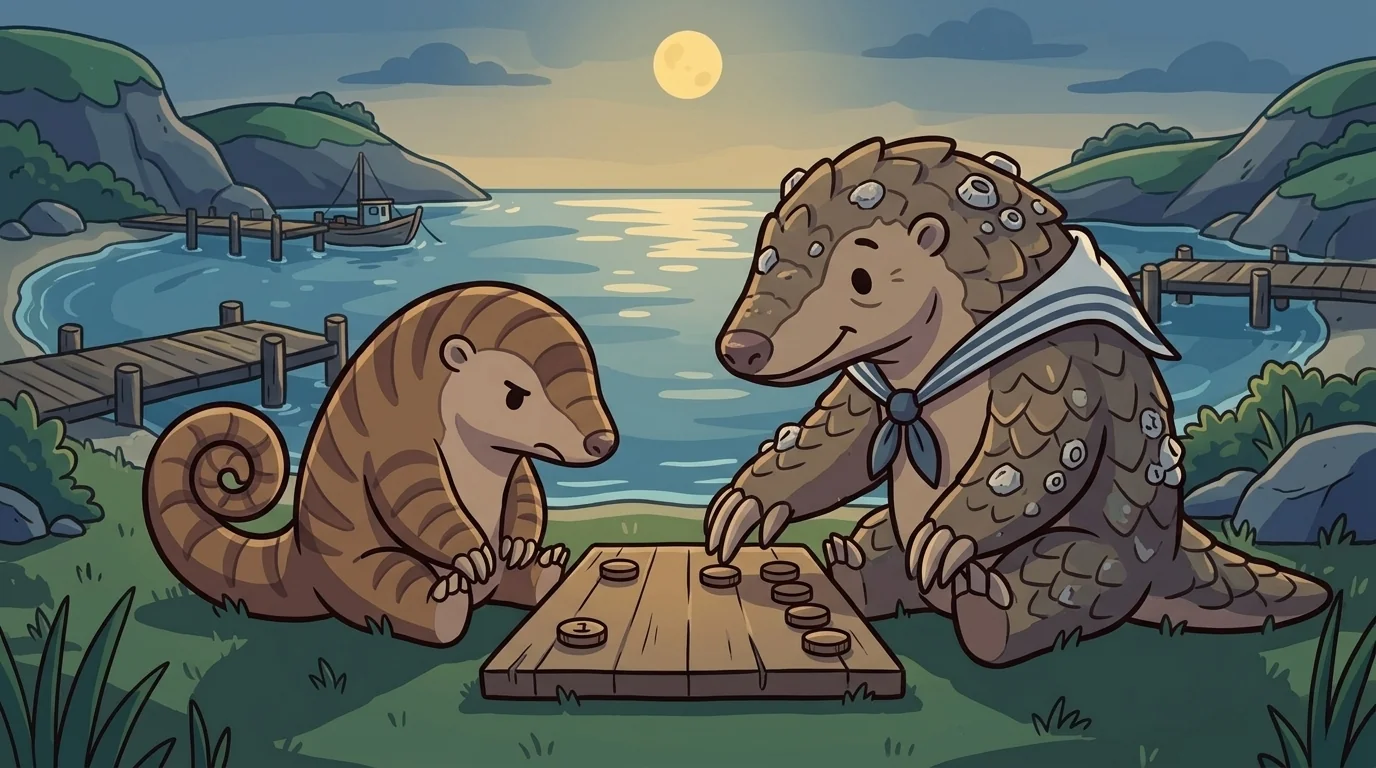
Chompus had not always been patient.
When he was very small, he played fast. If he saw a piece he could bump, he bumped it — snap, right away, grinning. But he lost, again and again, and he couldn't tell why. He would bump one piece, feel proud for a second, and then watch the whole board slip out of reach.
One evening he sat by the water with his tail all knotted up, feeling grumpy and small. An old sailor pangolin sat down beside him.
"You keep taking the first bite," she said gently. "But look." She spread her paw over the board. "See how the pieces sit in a little row? If you slow down and see the whole row, you don't get one bite. You get three."
Chompus stared at the board for a long, quiet moment. The pieces weren't three separate snacks. They were a line. Something in his chest went still and clear.
"See them together," he whispered.
"That's it, little one," she said. "One bump is just luck. Three bumps is a plan."
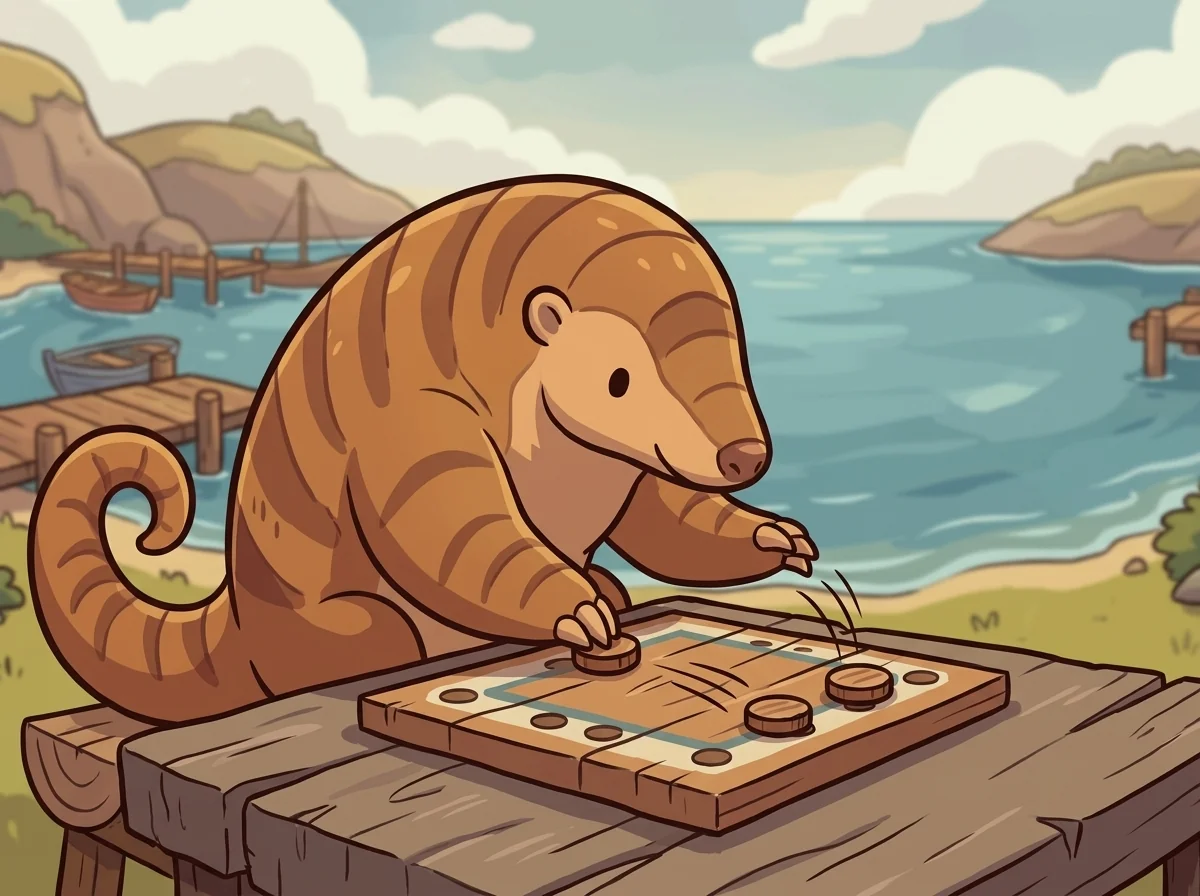
He walked to PipQuest when he was old enough, because it was a place for voyagers who wanted to be careful and brave.
Peg, the mentor, met him at the dock and asked him to show what he knew.
Chompus didn't say clever things. He just set three pieces out in a little row, tilted his head, and looked at them for a while. Then he bumped the near one, then the middle one, then the far one — snap, snap, snap.
"You waited," Peg said.
"I looked first," Chompus said. "The far one wanted me to hurry. But the near one was the true start."
Peg smiled. "You belong here."
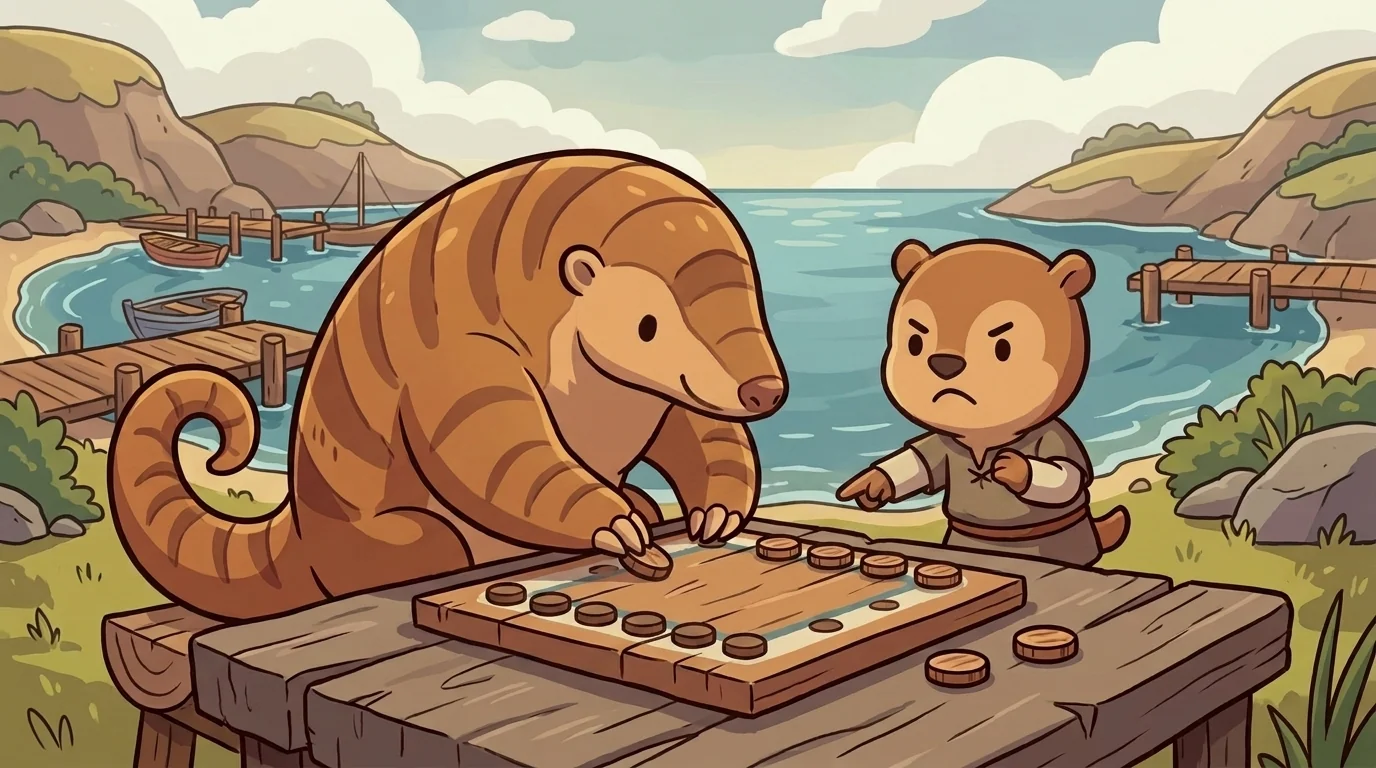
A young otter came to Chompus one afternoon, cross and stompy.
"I bumped a piece!" she said. "A good one! And I still lost. It's not fair."
Chompus knew that feeling all the way down. He'd stomped that same stomp by the water, once.
"Show me the board," he said. She set it up the way it had been. Three of the other player's pieces sat in a row, and she pointed proudly at the very last one. "I bumped that one."
"That was a good bump," Chompus agreed. "But watch." He reset the pieces. "Which one is closest to you?"
"That one."
"Bump that one first."
She did. The other player, now stuck, couldn't cover the next piece — so next turn she bumped that one too. Then the last. Three pieces went home in a row, and the otter sat back, blinking.
"It's like... they were holding hands," she said slowly. "And I let go of the closest one first, and the rest came apart."
"Yes," Chompus said, delighted. "One bump is luck. Three is a chain. The chain wins the voyage — not the big grab, the slow row of little ones."
The otter grinned so wide her whiskers wobbled.
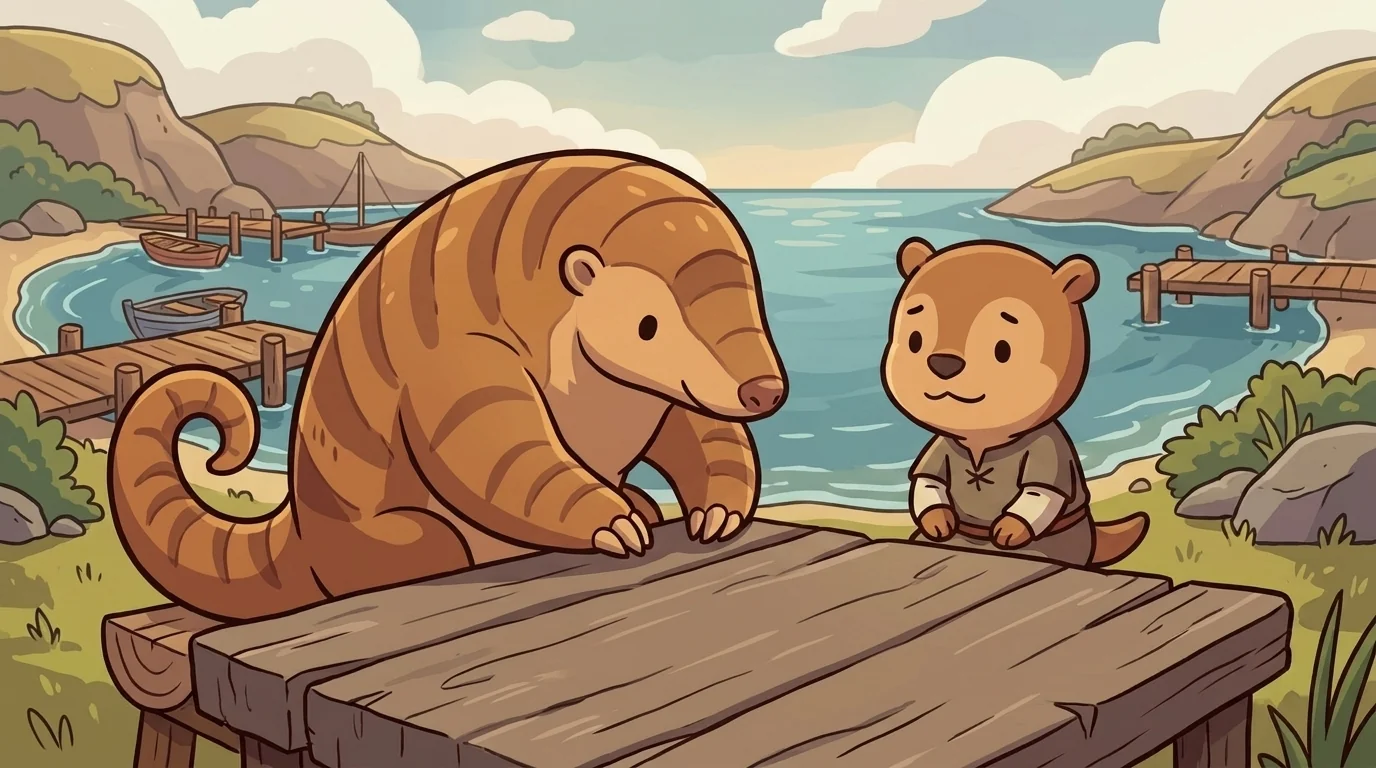
Later, when the board was put away, the otter came back with one quiet question.
"How do you know," she said, "which one to start with? Before anything's even happened?"
Chompus thought about the water, and the knot in his tail, and the old sailor's warm paw over the pieces.
"You slow down," he said, "and you look at all of them at the same time, until they stop being one-and-one-and-one and become a row. There's a feeling when it happens — everything goes calm and clear, like the whole board is holding still just for you." He curled his tail happily. "The hurry always points at the shiny far one. But the slow, seeing-everything feeling? That one's almost always right."
The otter nodded, and Chompus watched the cross, stompy feeling melt off her shoulders — the very same way, long ago, his had by the water.
He didn't say the rest out loud. He just felt it, warm and round and sure, all the way to the tip of his tail: the best moves don't come from grabbing. They come from that quiet, patient, everything-at-once kind of looking.
The PipQuest ensemble
Chompus the Great is part of PipQuest's distributed-narrative cast. Each character embodies a different curricular primitive; together they teach the full subject.