Spot and Vault
WHEN IN DOUBT, SLOW DOWN — the tricks that catch people rely on speed and trust: Spot asks "show me the proof" and slows a too-good-to-be-true offer down until it falls apart, and Vault keeps your personal information locked away, because some things simply stay in the vault
A story read by Spot and Vault
Loading audio…
Press play to listen along. The line being read lights up as you go.
Show full transcript
Loading transcript…
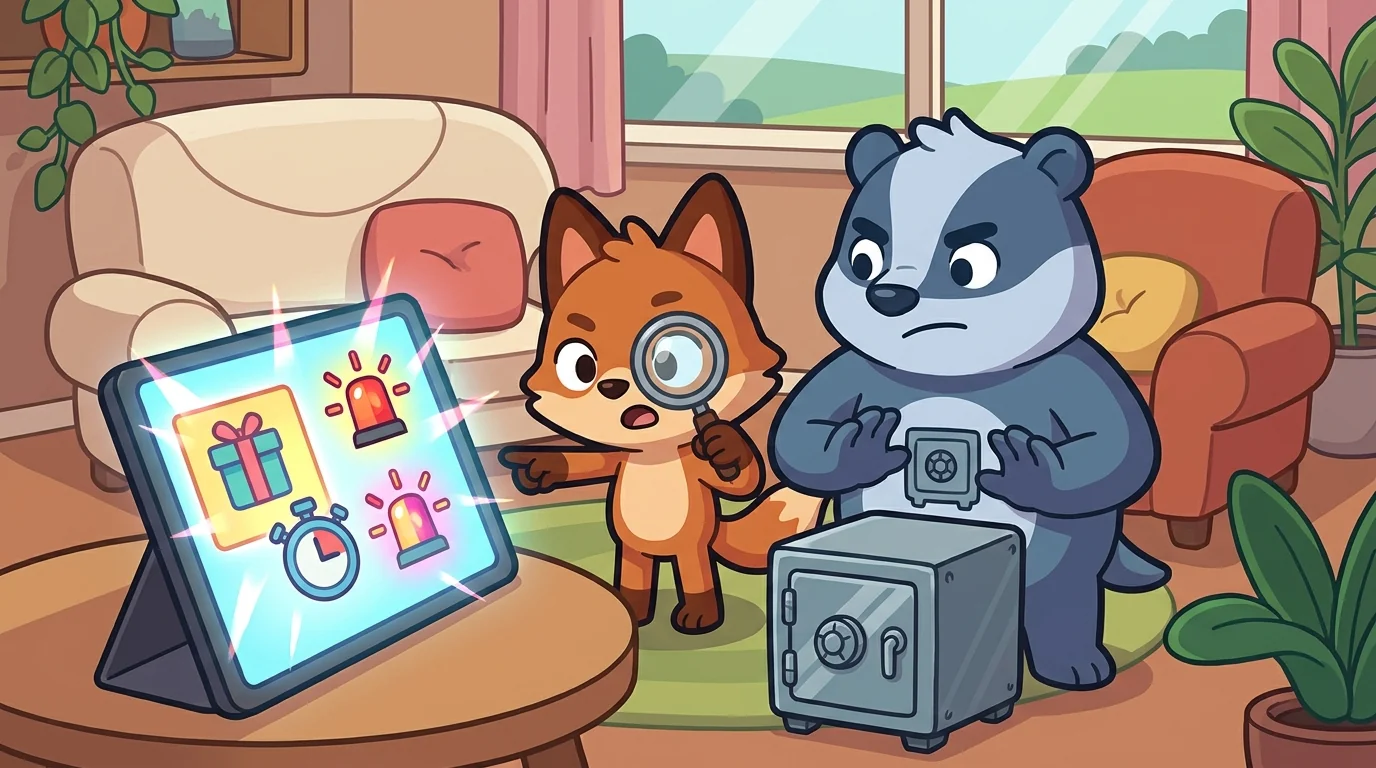
A message had popped up on the screen, bright and urgent and grinning: "CONGRATULATIONS! You've WON a brand-new game console! Claim it NOW — offer ends in 5 MINUTES! Just enter your name, address, and your parent's card number to pay the tiny shipping fee!"
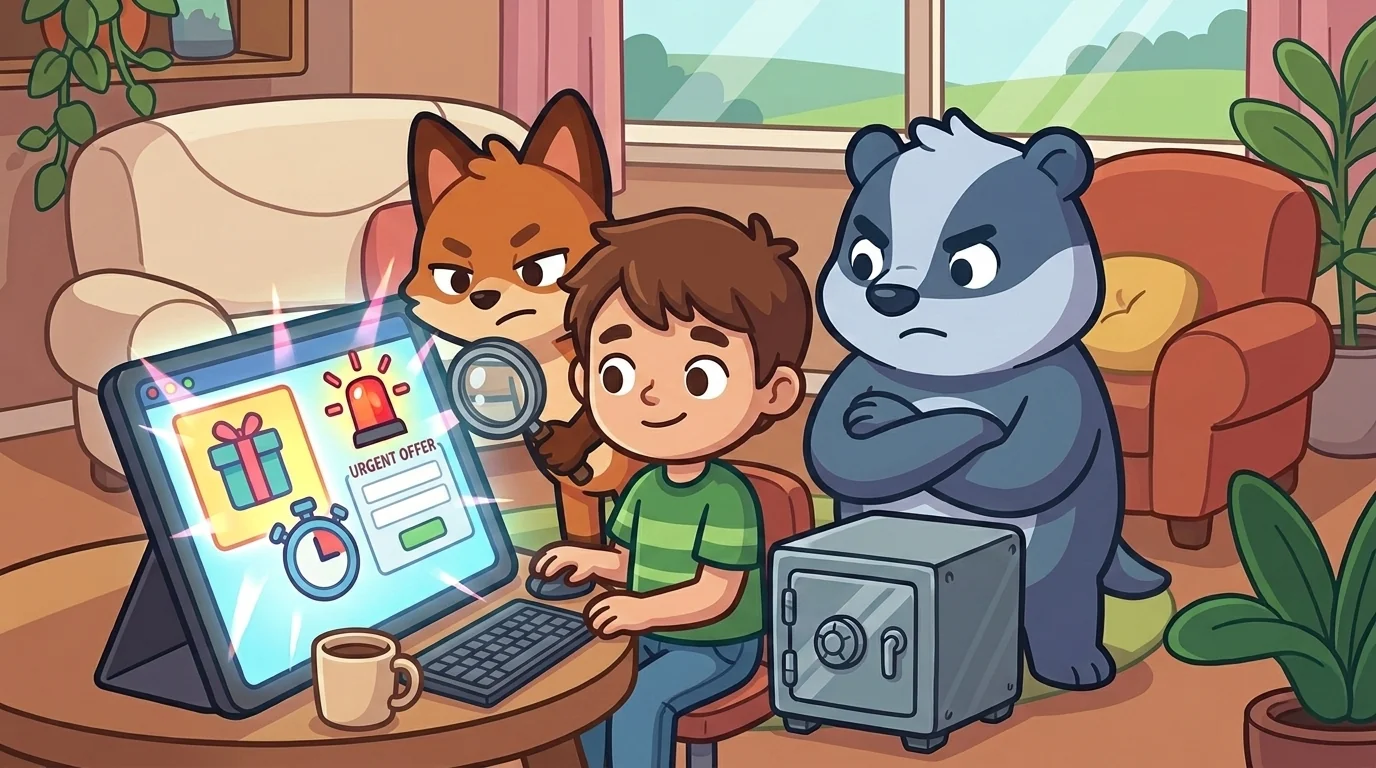
And a younger, faster person might have already been typing. Two helpers leaned in over the boy's shoulder before he could.
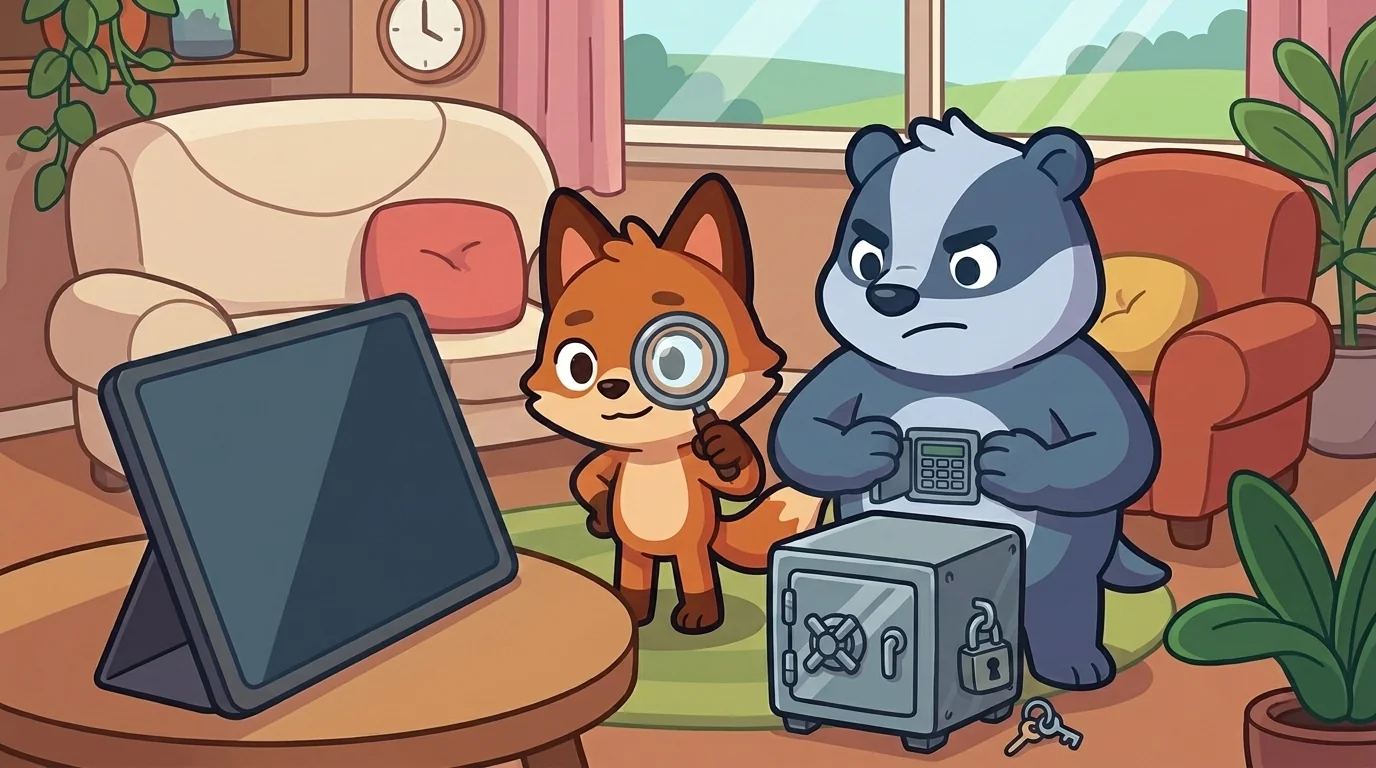
Spot narrowed its eyes at the flashing offer, unimpressed.
Vault stood squarely in front of the little box asking for private information, arms folded.
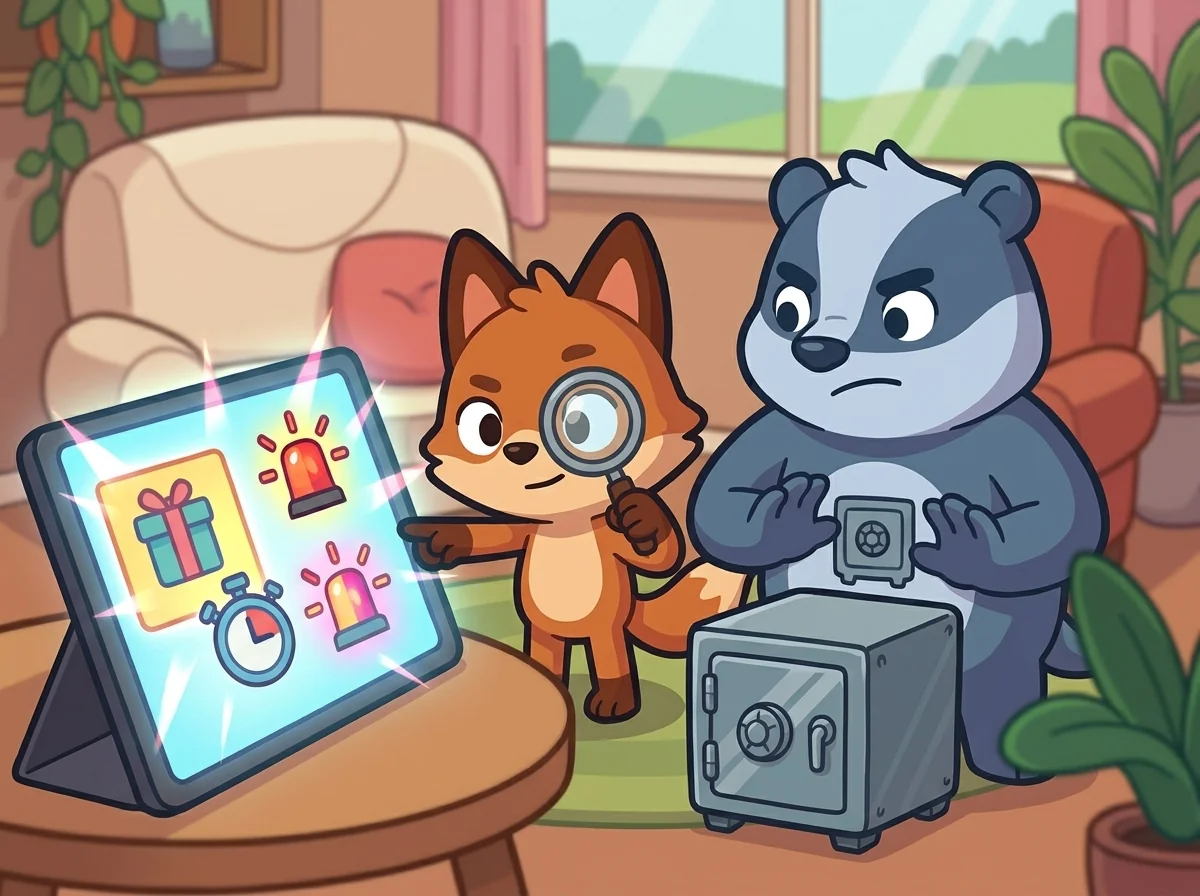
"Breathe," said Spot. "Notice the timer counting down? That's the first clue. Let's slow this way, way down."
Spot went first, because the whole point of a trick like this is speed — and Spot's whole nature is to slow it down until it falls apart.
"Look at how hard it's rushing you," said Spot. "'Now!' 'Only 5 minutes!' 'Act fast!' Ask yourself — why the hurry? Real, honest things don't usually panic you into deciding this second. The rush is there for one reason: to stop you thinking. Because the trick only works if you don't slow down and look." Spot began, calmly, to look. "So we look. Did you enter a contest for a console? No. Then how did you 'win' one? And why does a free prize need your parent's card number? And why does the 'company' have no name you can check?" Spot let each question land. "'Show me the proof' — that's my whole move. Slow it down, ask for the proof, and a scam falls apart every time, because there is no proof. The rush was the whole trick. Take the rush away, and there's nothing left but a grinning empty box." Spot clicked it closed. "When something seems too good to be true, and it's shoving you to hurry — that's exactly when you slow all the way down."
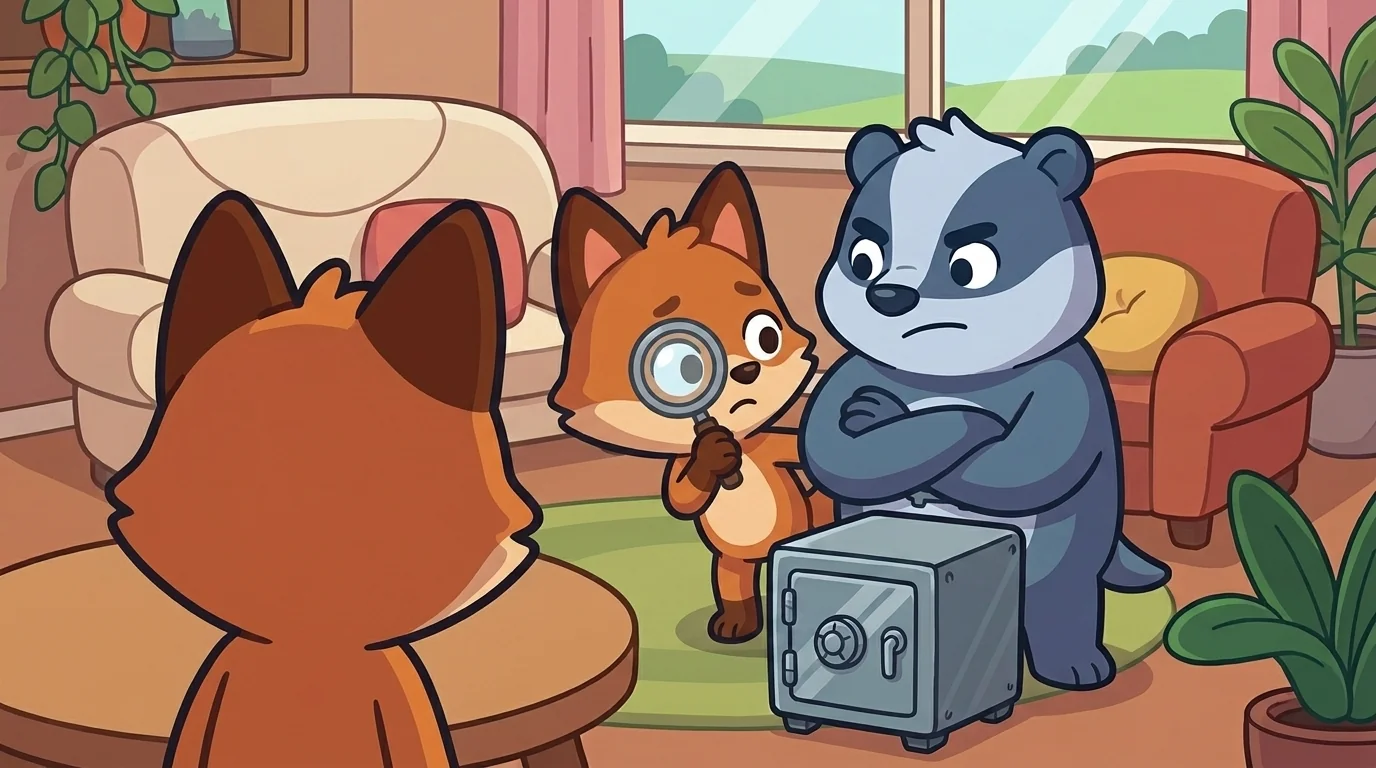
But Spot knew the deeper danger wasn't the fake prize — it was the information the box was fishing for. And that was Vault's whole reason for being.
"Even if you were curious," said Vault, standing firm in front of the box, "look at what it's actually asking for. Your name. Your address. Your parent's card number. Those aren't small things to hand a stranger — those are the keys to the house." Vault didn't budge. "My whole job is simple: some things stay in the vault. Your full name, where you live, passwords, card numbers, your parent's private information — those go in the vault, and they do not come out just because a cheerful box asked nicely." Vault's voice was calm and unashamed. "And here's the part people forget — you never owe anyone that information just because they asked. You don't have to be polite about it. You don't have to explain. 'That stays private' is a complete answer, all by itself. A stranger asking for the keys to your house doesn't get them, no matter how friendly the ask. Into the vault, and the vault stays shut."
The boy closed the message. No prize, of course — there had never been one. But nothing had been lost, either: no card number typed, no address handed over, no keys given to a stranger. Just a grinning empty trick, slowed down until it fell apart, and a vault that stayed shut.
"Good slowing," said Vault.
"Good guarding," said Spot.
There is a steady, unfrightened kind of safety in these two habits — not fear of the world, just a calm refusal to be rushed or fished. Slow down whatever's hurrying you; ask for proof; and keep your private things locked away without apology. The tricks that catch people almost all run on the same two things: speed, and trust given too easily. Take away the rush, and keep the keys in the vault, and most of them simply can't touch you. It isn't about being scared of everyone. It's about being calm enough to slow down, and sure enough to say — without a flicker of guilt — that stays private.
The LifeQuest ensemble
Spot and Vault is part of LifeQuest's distributed-narrative cast. Each character embodies a different curricular primitive; together they teach the full subject.
-

Save
Budgeting + financial planning — 'Money is a tool. Plan the tool.'
-

Parse
Reading-comprehension for adult docs — 'Slow down. Read it ALL.'
-

Spot
Scam-detection + critical-claim-evaluation — 'Show me the proof.'
-

Fill
Forms + paperwork + simplified taxes — 'Fill out. Then double-check.'
-

Cook
Meal planning + nutrition + budget-cooking — 'Eat well. Spend smart.'
-

Say
Self-advocacy + interview-craft — 'Be clear. Be kind. Be specific.'
-

Sort
Comparison-shopping — line options up side by side and compare real value, not loud labels
-

Borrow
Credit & debt basics — borrowed money isn't free; interest is the cost; a tool with rules, not a judgment
-

Vault
Digital privacy — some things stay locked; strong separate passwords; know who's actually asking
-

Dial
Time-management — the day is a pie; aim your hours at what matters, break big tasks small, keep a slice for rest