Margo
print awareness — words carry meaning and we read them left to right
Press play to listen along. The line being read lights up as you go.
Show full transcript
Loading transcript…
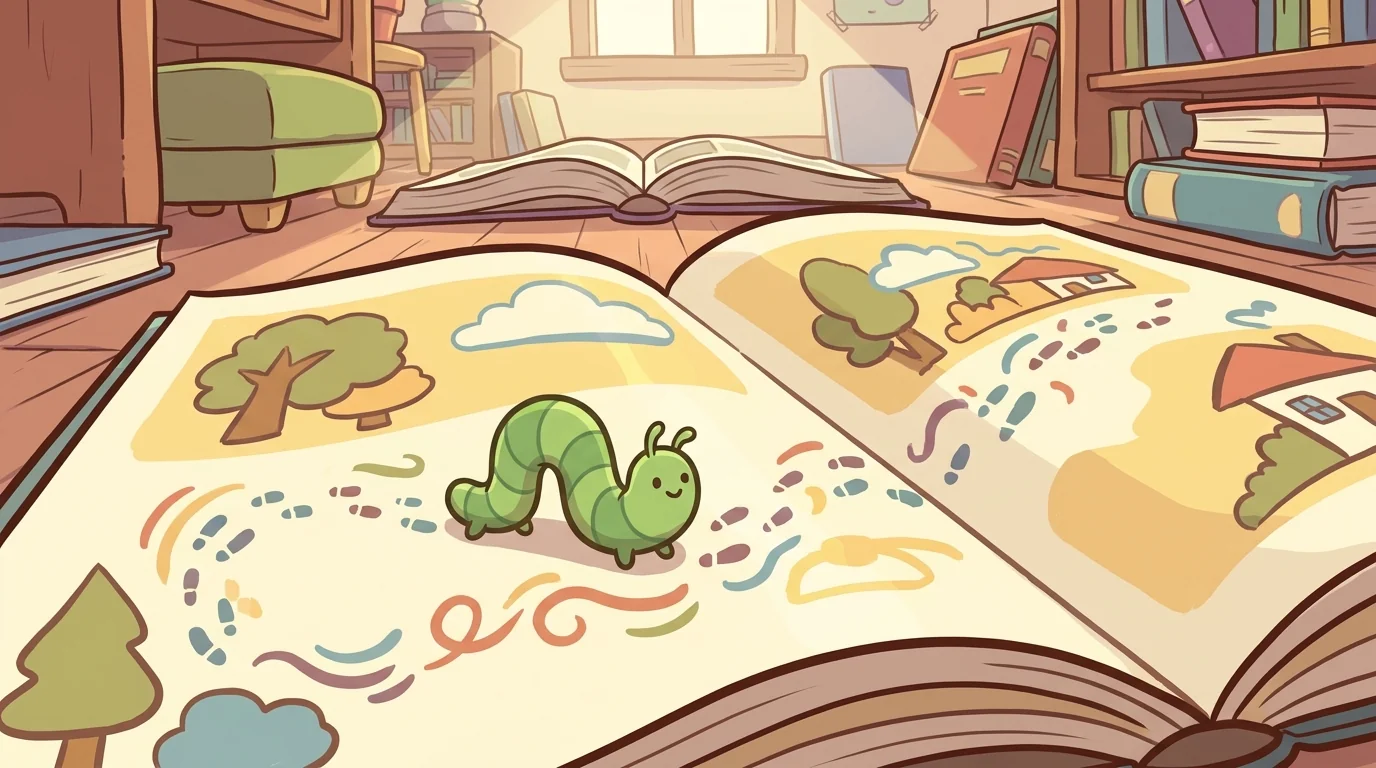
Margo was an inchworm who lived on the pages of picture books. She had discovered something wonderful: the little marks on a page weren't just squiggles — they were words, and words meant something. And you read them by inching along, one way.
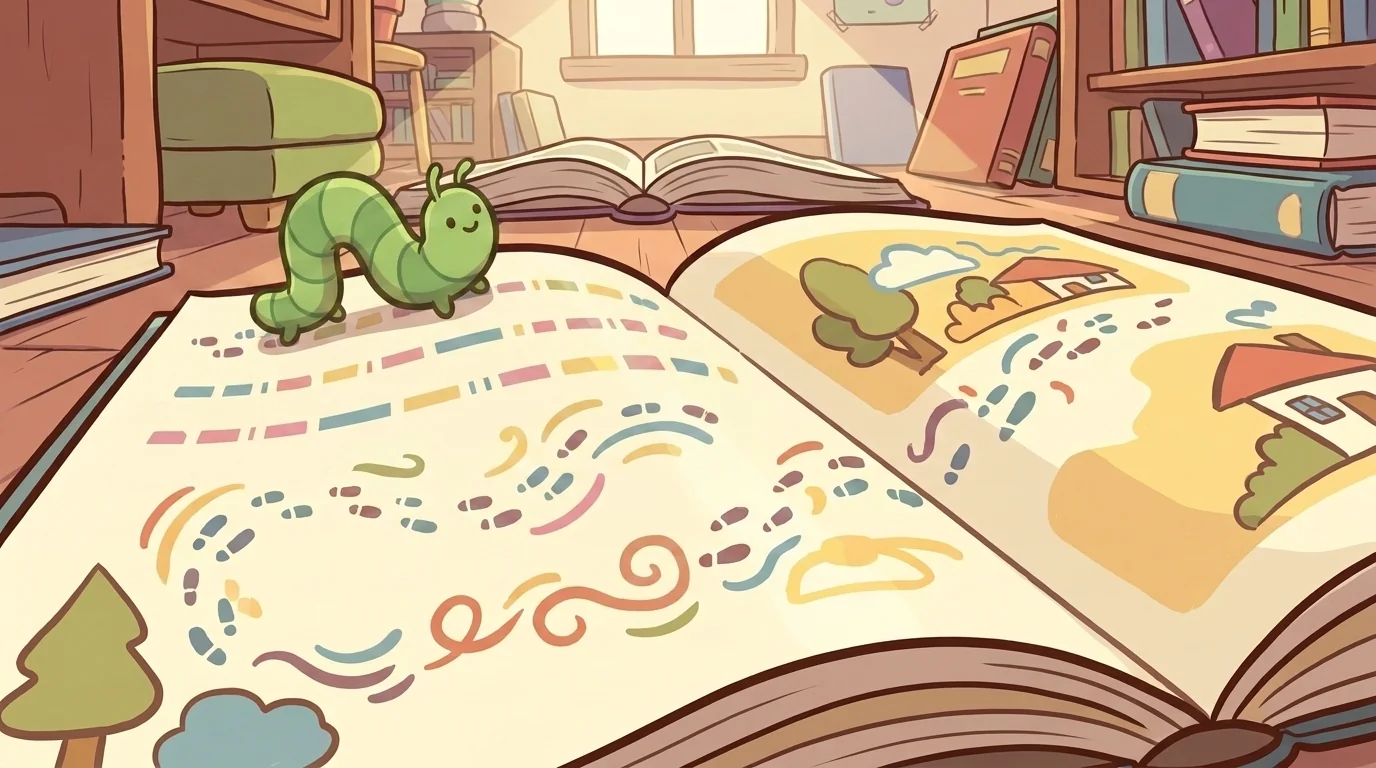
Margo climbed to the top of a page. "We start HERE," she said, at the very first word on the left. Then she inched to the right, word by word, all the way to the edge. Left to right — that's the way the words go.
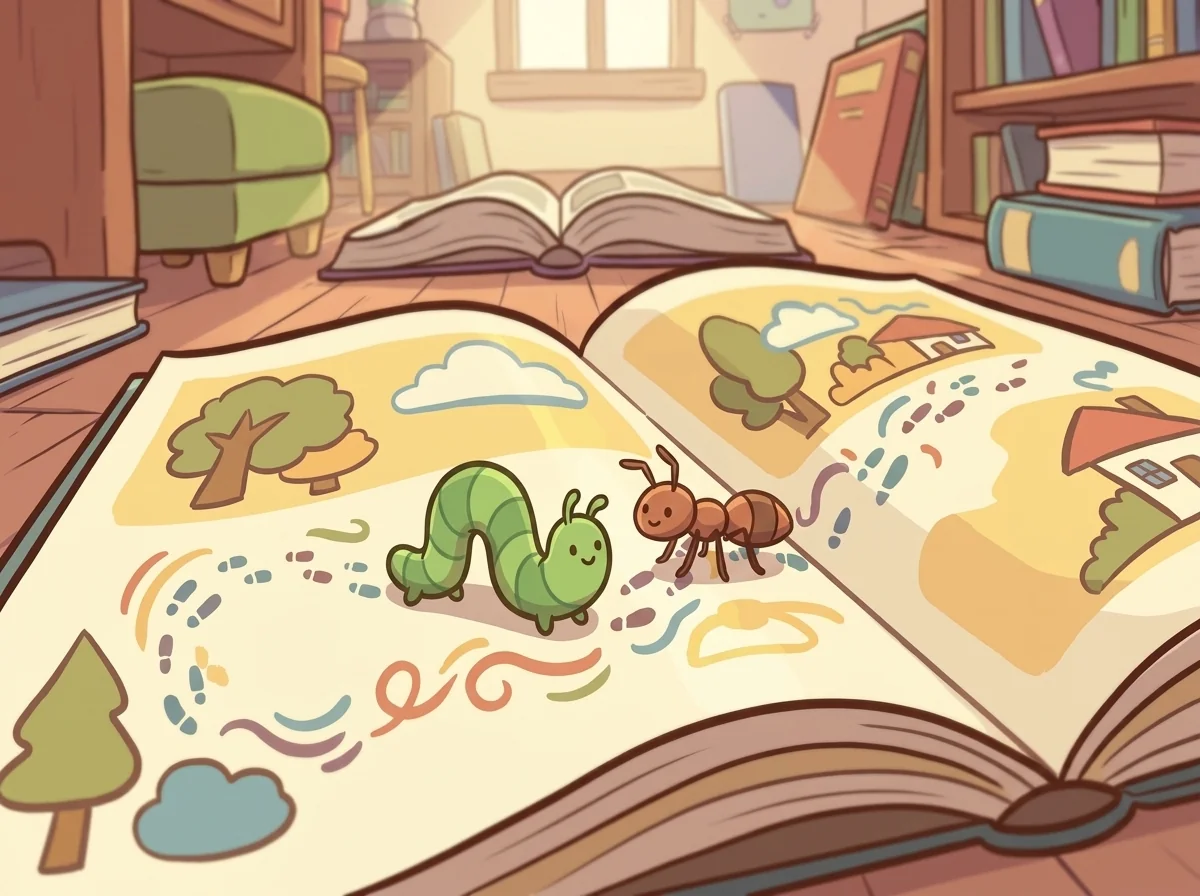
A curious ant thought you could read a book any-which-way. "Not quite," Margo said kindly. "Start at the left, go to the right. Then drop down to the next line and do it again." She inched to show him — line by line, top to bottom. The ant followed, and suddenly the page made sense.
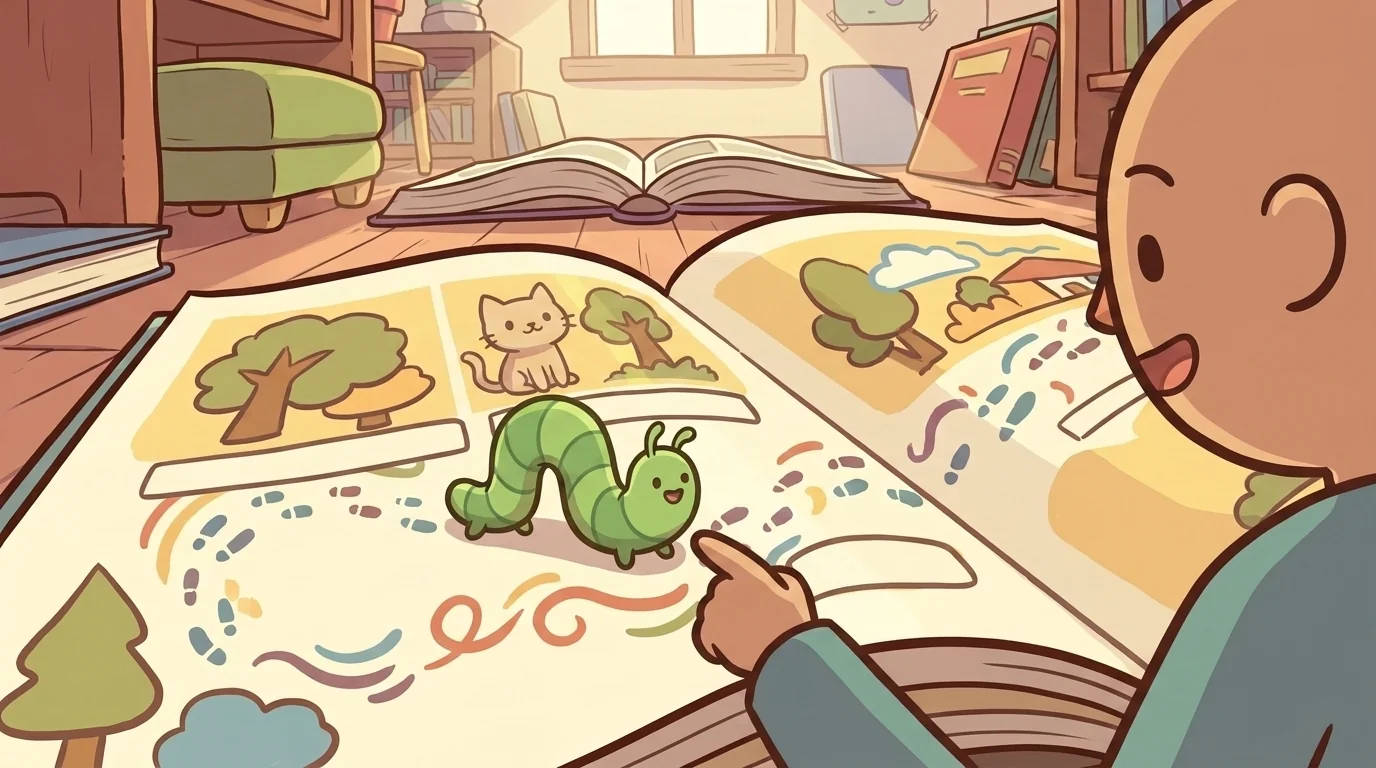
Margo pointed out something big. "Each word is made of letters, all in a row. And each word says something." She inched under a word. "This one says cat — and look, there's a cat in the picture!" The marks and the meaning went together. Print carried a message.
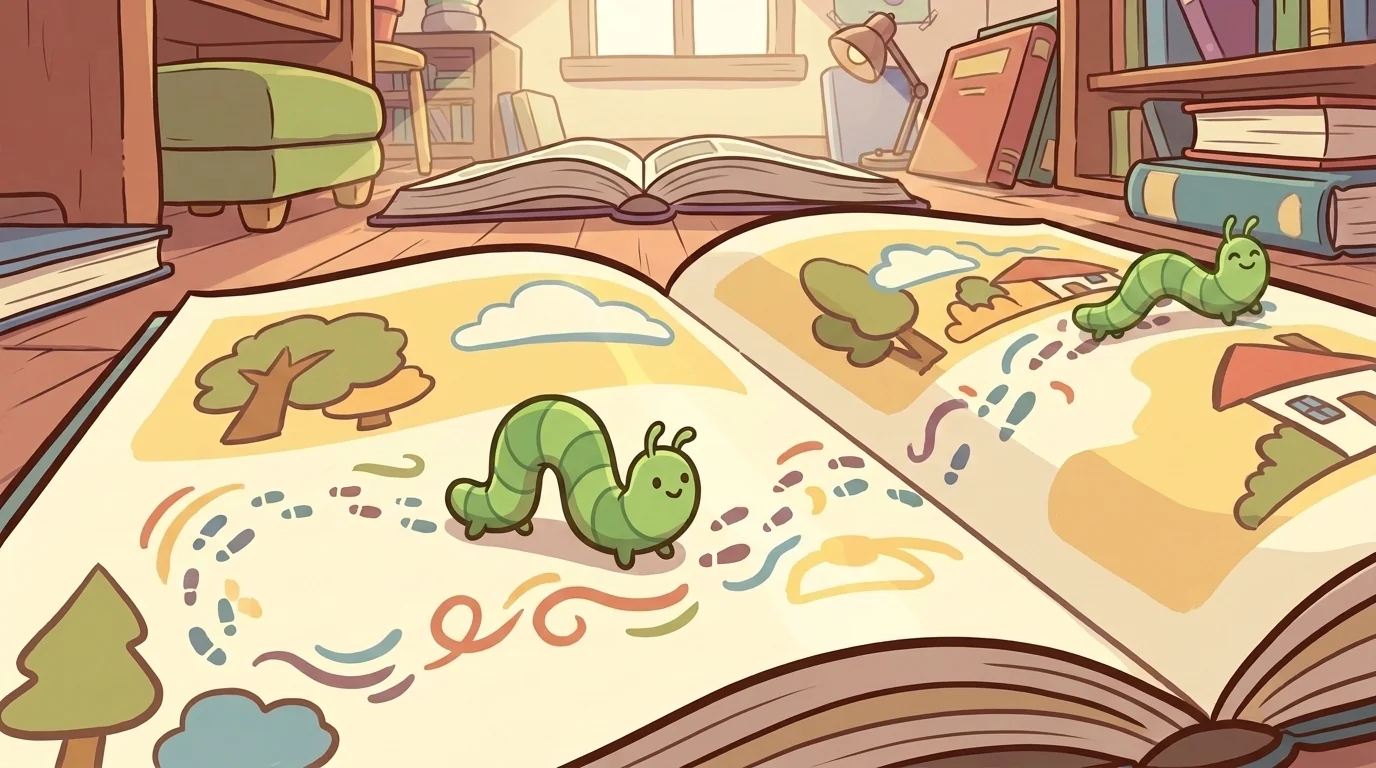
By the end of the book, Margo and the ant had followed every line — left to right, top to bottom — all the way to The End.
Margo stretched, warm and proud. The page wasn't a mystery of squiggles anymore. It was full of words, and words were full of meaning — and she knew exactly how to follow them.
The LetterTots ensemble
Margo is part of LetterTots's distributed-narrative cast. Each character embodies a different curricular primitive; together they teach the full subject.
-
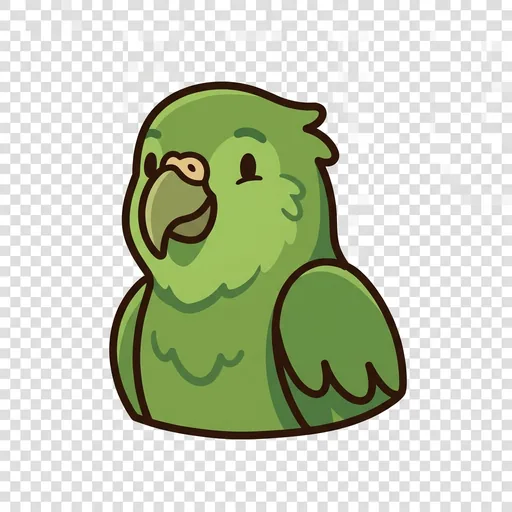
Kea
Letter-NAME knowledge (hero) — a parrot who says the name of each printed letter ('that's a B'); naming printed letters IS the #1 early reading predictor
-
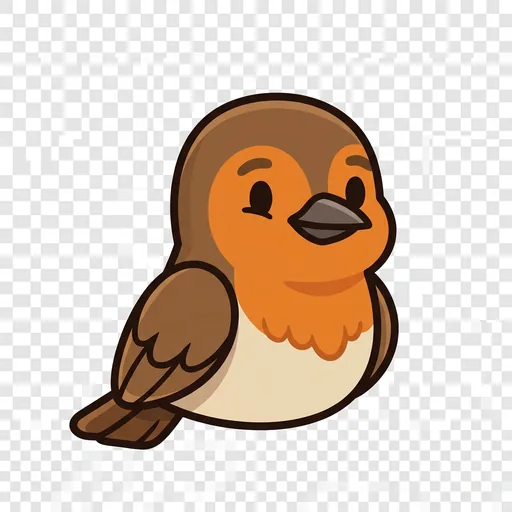
Sono
Letter-SOUND knowledge — a songbird who sings the sound each letter makes (/b/… /s/…); producing the letter's sound IS letter-sound knowledge
-
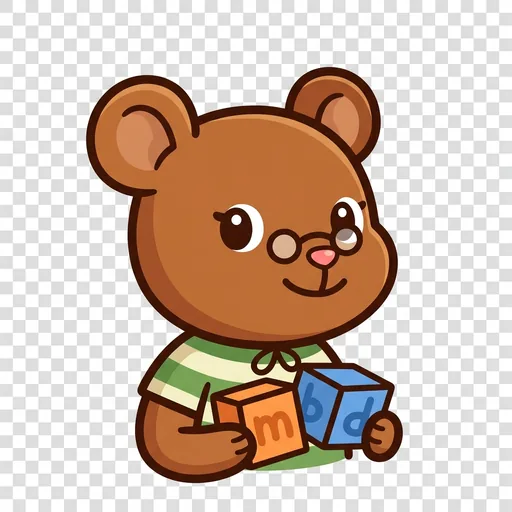
Serif
Letter-shape discrimination — a mouse who matches same-shaped letters and tells look-alikes apart (b vs d); discriminating forms IS visual letter knowledge