
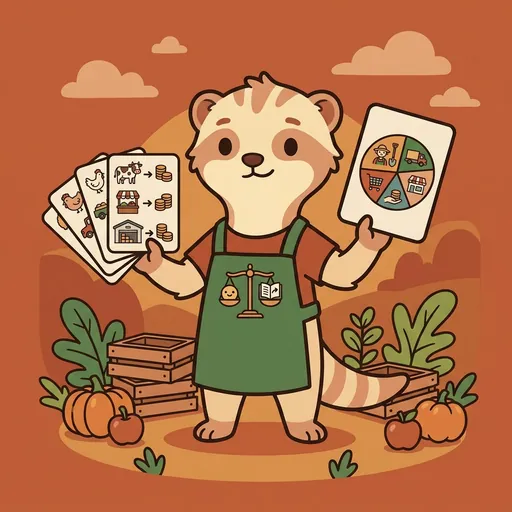
Market
MARKET — *fair price = fair work. price tells the truth.*
Listen along — Market
Loading audio…
Press play to listen along. The line being read lights up as you go.
Show full transcript
Loading transcript…
Chapter 4 — Market and the Price That Tells the Truth
Market spread a fan of price sheets across the table like a card trick, a small mongoose with cinnamon stripes and an apron so full of pockets it rustled when he moved. In one paw he held a ripe red tomato; in the other, a card cut into slices like a little paper pie.
A boy named Sol was staring at the tomato’s price tag with a scrunched-up face. “A whole dollar for one tomato,” he grumbled. “The farmer must be getting rich.”
Market laughed, kind and quick. “Ah — that’s exactly the mistake most people make. Watch.” He set the tomato on the pie-card and pointed at the thinnest sliver of all. “When this costs a dollar at the big grocery store, the farmer who grew it keeps only about fifteen cents. The truck that hauled it takes some. The people who washed and packed it take some. The store keeps the biggest slice of all — around half — to cover its rent and its workers and the food that spoils before it sells.”
He looked at Sol steadily. “So when the price climbs, it’s almost never the farmer growing greedy. The farmer’s slice is tiny. The rest of the price is built somewhere far down the road, long after the food leaves the field. A price isn’t a mystery, and it isn’t anybody’s fault. It’s a story — and once you can read it, it tells you the truth about who really got paid.”
Market had learned to read prices at his grandmother’s elbow, back along the old trading paths where his family had bargained for the village for generations. They were mongooses, careful and quick, famous for staying calm across a hard negotiation.
When Market was young, his grandmother would sit him down with two numbers for every trade. “There is the price you say a thing costs,” she’d tell him, tapping the table, “and the price it actually costs — the hours of work, the long road, the hands it passed through. A fool sees only the first. A wise trader knows both, and never blames the wrong person for the difference.”
One market day, Market had watched a farmer haul a cart of vegetables all the way to town, only to be offered so little for them that he could barely cover the trip home. Market, small and furious, had wanted to shout that the buyers were cheats. His grandmother held his paw. “Don’t shout,” she said softly. “Learn. The farmer isn’t being cheated by one bad person — he’s being squeezed by a long chain that keeps most of the money before it ever reaches him. If you want to help him, don’t get angry. Get clear. Show people where the money really goes.” That was the moment Market decided this would be his life’s work: not blame, but light.
He walked to FarmQuest the summer he turned twelve, price sheets bundled under one arm. Furrow, the old badger who kept the academy, met him and asked, “What makes a price fair?”
Market answered without hesitation. “A price is fair when the person who did the hardest work — the growing — gets a real share of it. And you can only tell if it’s fair when you can see the whole thing broken open: who got which slice, and why.” He tapped his little pie-card. “Fair pay for fair work. The price tells the truth, but only to someone who knows how to read it.”
Furrow smiled. “Then teach them to read,” he said, and gave Market the key to his stall.
On his first teaching morning, a girl named Wren came in with her arms crossed. Her family shopped at the big store because it was cheap, and she’d heard someone say that local food was for people who wanted to feel fancy. She was braced to be judged.
Market didn’t judge. He laid down two loaves of bread instead. “Store bread,” he said, touching the first. “Four dollars. But watch the slices — the farmer who grew the wheat gets about thirty cents. The mill, the baker, the delivery, and the store split the rest, and the store keeps the most by far.”
Then he touched the second loaf. “Farmers-market bread from a small local baker. Five dollars — yes, more. But nearly a dollar of it goes straight to the local wheat farmer.” He looked at Wren gently. “The market loaf isn’t fancier. It’s just built on a shorter road, so the money reaches the grower instead of getting eaten up along the way.”
Wren’s shoulders came down a little. “But my family can’t always pay five,” she said quietly.
“And that is not a thing to feel bad about,” Market said, firm and warm at once. “Cheap food usually means someone in the chain got paid too little — often the farmworkers who pick in the heat for the lowest pay of all. That isn’t a shopper’s fault. It’s how the whole system is built, and the choices leaders make about wages and which farms get help. Knowing the price is only the first step. What fixes it is fair rules and people working together — and buying direct when you can, without a scrap of shame when you can’t.”
When the lesson ended, Sol and Wren stayed to help Market tidy his sheets. Wren turned the little pie-card over in her hands.
“I thought understanding this would feel heavy,” she said. “Like bad news.”
Market shook his head and smiled. “It surprised me too, when I was your age. But it doesn’t feel heavy — it feels clear. When you can see the whole story behind a price, the confusion loosens, and something calm settles in — a quiet, steady kind of pride in knowing how to look, and in never blaming the wrong person again.”
He pressed a hand to his chest, and it felt warm and glad there. “Fair pay for fair work,” he said softly. “The price tells the truth. And it feels good, doesn’t it, to finally be able to read it.”
The FarmQuest ensemble
Market is part of FarmQuest's distributed-narrative cast. Each character embodies a different curricular primitive; together they teach the full subject.
-
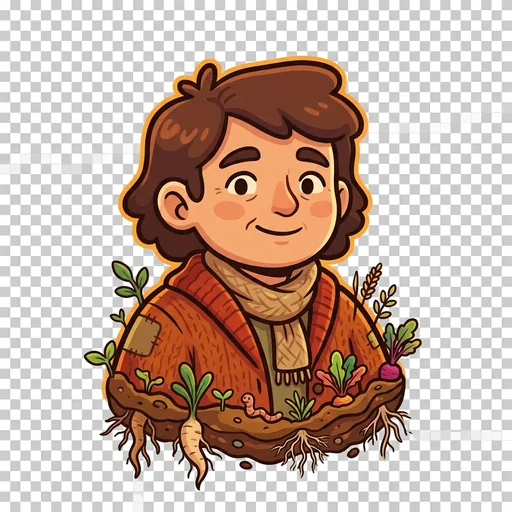
Loam
Soil health + crop rotation — different roots, different seasons; soil-as-record framing
-
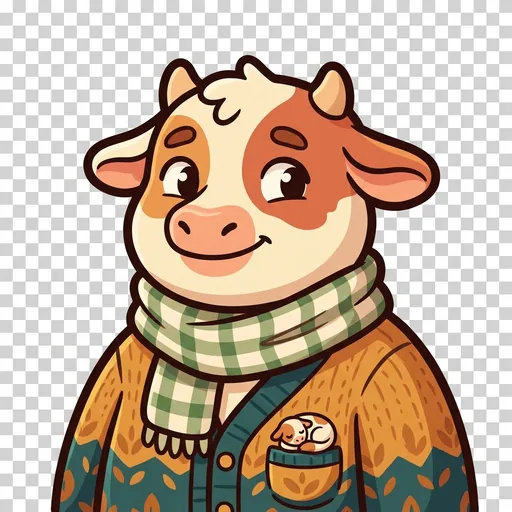
Pen
Livestock care + animal-welfare ethics — care = consent + comfort; animals-decide-when framing
-
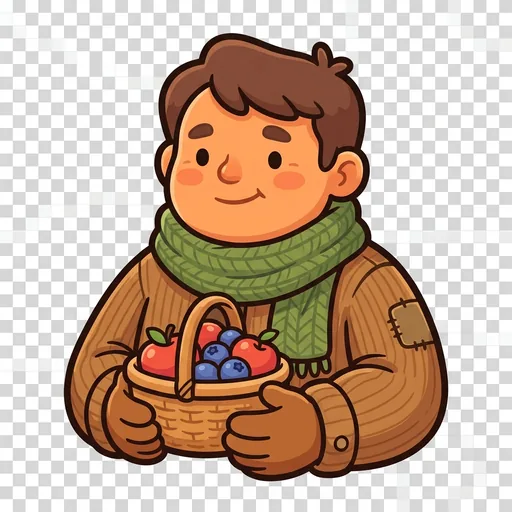
Bushel
Harvest + post-harvest handling — gentle hands, clean baskets; bruises-cost-more framing
-

Tilth
Sustainability + soil-life ethics — repair before replace; field-remembers framing