Edge
EDGE — *orient first. then everything's faster.*
Press play to listen along. The line being read lights up as you go.
Show full transcript
Loading transcript…
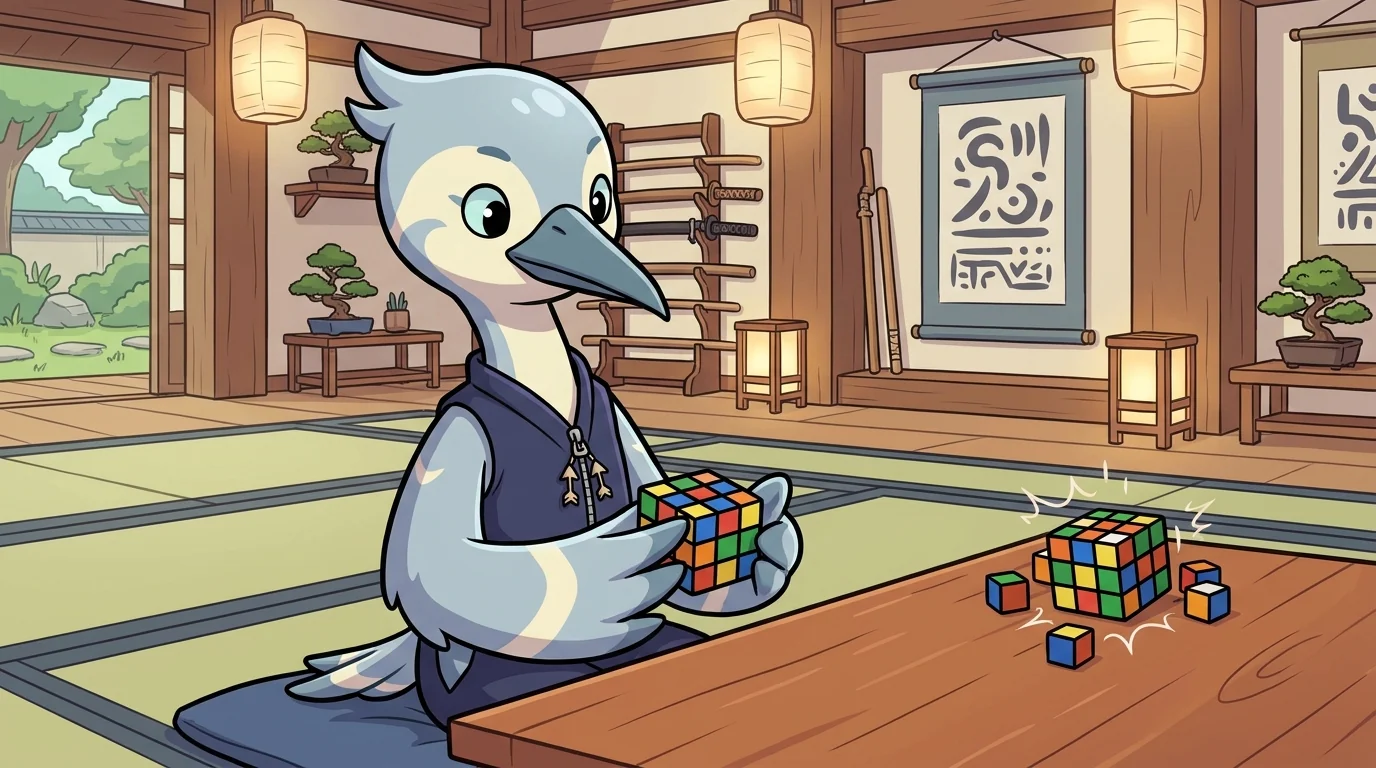
Edge was a young egret, and he was amazingly precise. He never, ever rushed a single move. His feathers were a cool, silvery blue with soft cream stripes. He wore a small vest, like a student at a quiet martial arts school. A little charm showing two aligned arrows dangled from the zipper. He practiced with his cube, his fingers moving in a steady, silent rhythm.
Across the table, his friend Maya was doing the exact opposite.
Slam!
Maya slapped her cube down on the table. It made a loud, angry clatter.
"Argh! I am so completely stuck," she groaned. She buried her face in her hands. "Fourteen seconds. Every. Single. Time. I just want to break twelve!"
She glared at Edge. His hands weren't a frantic blur like hers. They were strangely calm, moving with a quiet, hypnotic purpose. One side, then the top. His fingers danced across the colors like they knew the way home. The amazing part was that the cube itself never spun around. It stayed perfectly still in his hands, always facing her.
And then… click.
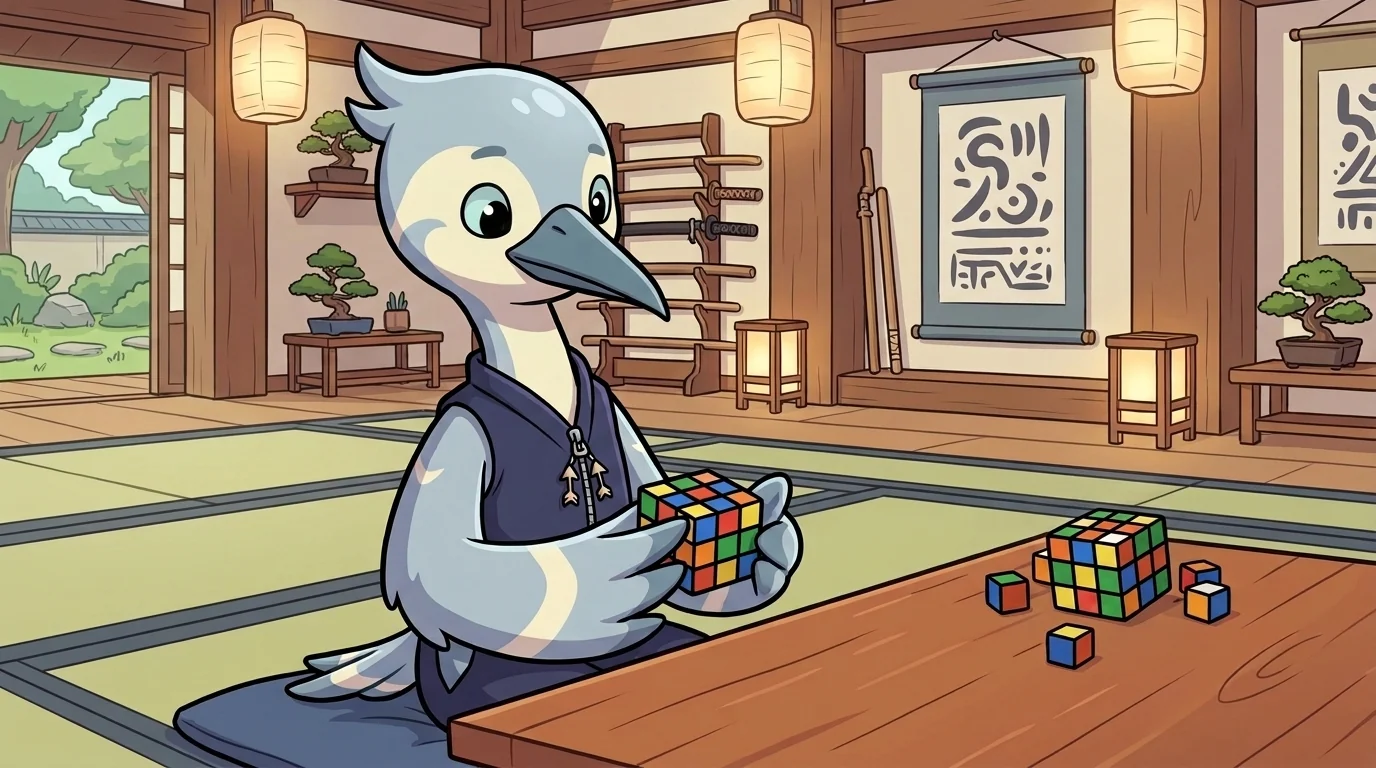
It was solved.
Maya’s jaw dropped. "How did you even do that? That was ridiculously fast. And you didn't turn the cube over once!"
Edge looked up, his eyes bright and focused. "I use a different way," he said, holding up his perfect cube. "It's called *the ZZ method*."
"The Zee-Zee method?" Maya asked, leaning so far forward she almost tipped her chair.
Edge nodded. His voice was quiet and clear. "The main idea is pretty simple. Orient first. Then everything's faster."
Maya picked up her scrambled cube and squinted at it. "What do you mean, 'orient'?"
"You make a cross first, right?" Edge asked.
Maya nodded. That was the first thing everyone learned to do.
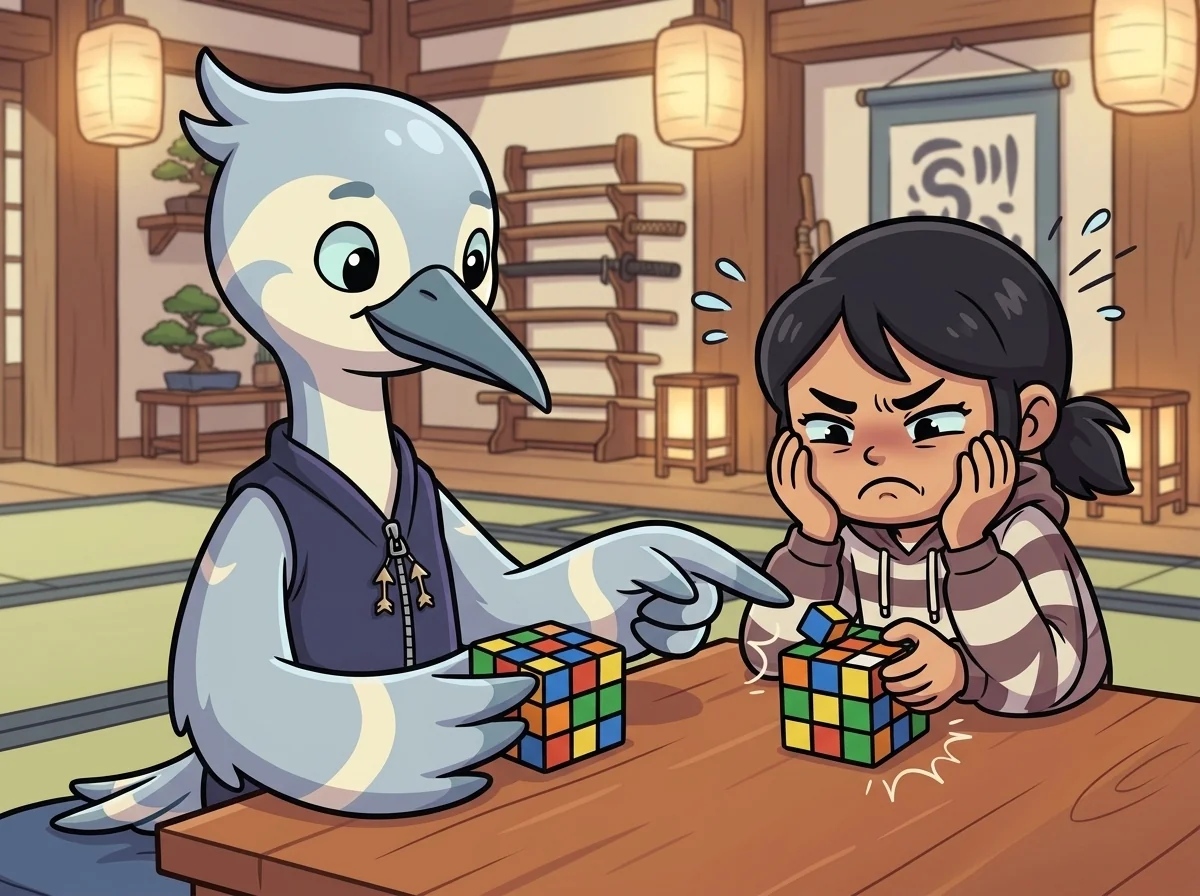
"I do something different," Edge explained. "It's harder at the start, but it makes the rest of the solve way easier." He pointed to the jumbled edge pieces on her cube. "The first step is called EOLine. That’s short for Edge Orientation Line. You have to make sure all twelve of these edges are flipped the right way up, right at the beginning."
Maya stared at the mess of colors. Flip all twelve edges? At the same time? "But... how?"
She picked up her cube and tried it. She twisted a side, and a yellow-and-blue edge piece popped into place. "Ha! Got one." But it was completely upside down. The yellow was where the blue should be.
"Okay, wait," she muttered, her brow furrowed in concentration. "If I fix this one…" She performed a few more quick twists. The first piece flipped correctly, but now two other edges were a total disaster.
"This is impossible!" she cried, her shoulders slumping. "It's like trying to pat your head and rub your stomach while hopping on one foot and singing the alphabet backwards!"
Edge gave a tiny, patient smile. "You have to do the hard part first," he said. "This first step takes the most thought. You have to see the whole puzzle at once, not just one piece."
He leaned over her cube and pointed with a slender finger. "Try turning the front face. Now the top. Now the right side."
Maya cautiously followed his instructions. Her fingers felt clumsy. Click. Clack. Click.
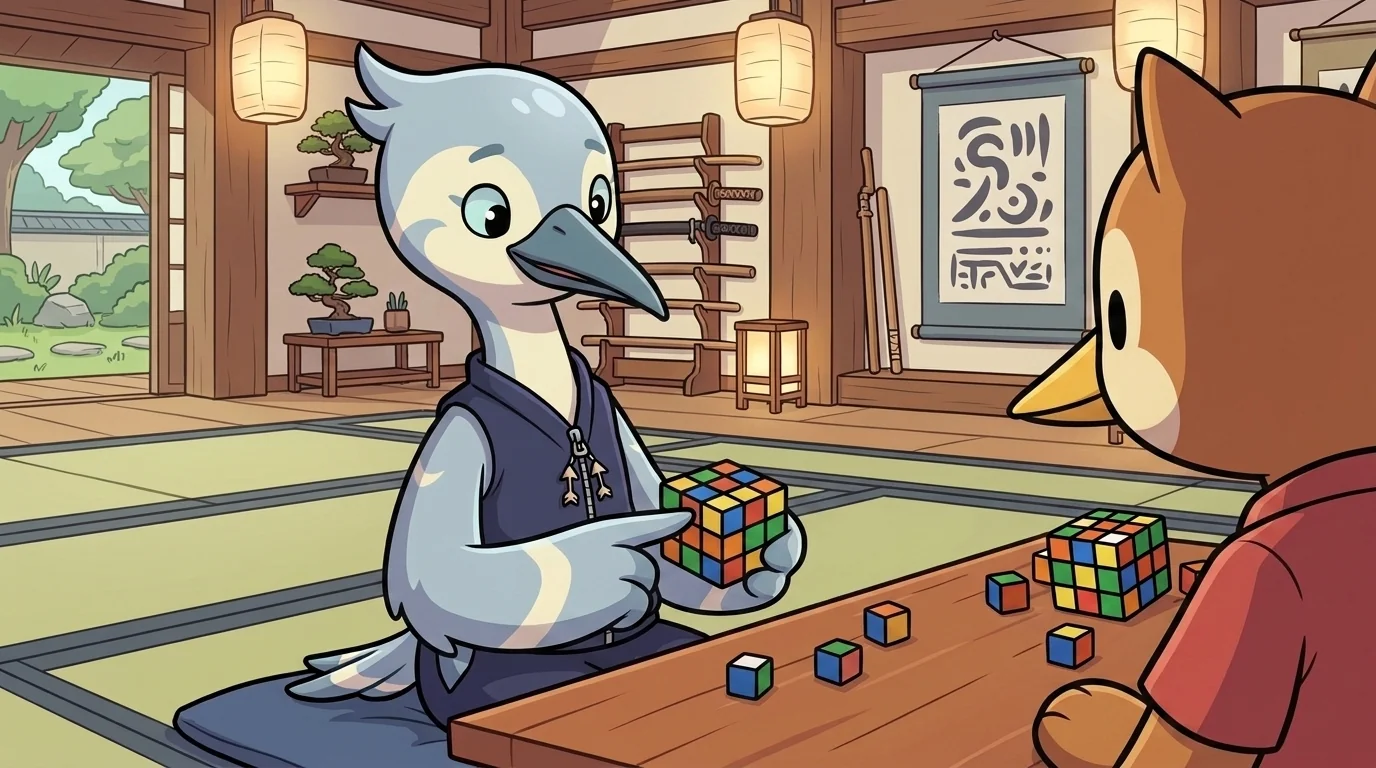
Suddenly, something amazing happened. All the edge pieces on her cube were pointing the right way. The colors were still a jumble, but every single edge was perfectly… aligned. It looked incredibly weird, like a half-finished secret code.
"Whoa," she breathed, turning it over in her hands. "Okay. Now what? The next fifty moves to fix this mess?"
"No," Edge said. "Now for the easy part."
He held up his right hand, then pointed to the top face of the cube. "From now on, you only need two kinds of moves. Just turns on the Right side, and turns on the Up side. That's it."
Maya stared at him. "You're kidding me. You can't solve the rest of the cube with just two types of moves."
"Just try it," Edge said, his eyes twinkling.
She was skeptical, but she gave it a shot. Her fingers started moving. R, U, R-prime, U. The pieces slid into place so smoothly it felt like magic. It was like the cube wanted to solve itself. She didn't have to stop and spin it around to hunt for a piece. Her hands just kept going in a steady, fast flow. R, U, R, U-prime. It felt less like solving a puzzle and more like playing a song.
In just a few seconds, she was on the last layer. A few more flicks of her wrist, and…
Click.
Solved.
Maya stared at the perfect cube in her hands. It felt warm. She glanced at the big digital timer on the wall. "Nine seconds," she whispered in disbelief. "I have never, ever gotten nine seconds." She looked at Edge, her eyes wide with a new kind of respect. "That was… so smooth. It felt like flying."
Edge nodded. "Hard step first," he said calmly. "Makes the rest of the journey easier." He tapped the little alignment charm on his vest. "Get everything pointing the right way at the start. Then the rest of the path is simple."
Cubix the mentor walked over. He had been watching from a distance. He nodded slowly, a thoughtful smile on his face.
"A powerful method, Edge," Cubix said, his voice warm and deep. He looked at Maya's solved cube and her astonished expression. "And it seems to suit you, Maya. You picked it up very quickly."
He looked from one to the other, his gaze kind. "It is good to remember there is more than one path to a solved cube."
The CubeSensei ensemble
Edge is part of CubeSensei's distributed-narrative cast. Each character embodies a different curricular primitive; together they teach the full subject.
-
Layer
Beginner method — layer-by-layer steward; 'Bottom first. Always.'
-

Cross
CFOP method — speedcubing steward; 'Cross, F2L, OLL, PLL — that's the road.'
-
Block
Roux method — block-building steward; 'Build the blocks. Skip the cross.'
-
Pair
Ortega method — 2x2 specialist; 'Two-by-two has its own rules.'
-
Look
Cross-method look-ahead coordinator; 'Eyes ahead. Hands following.'
-
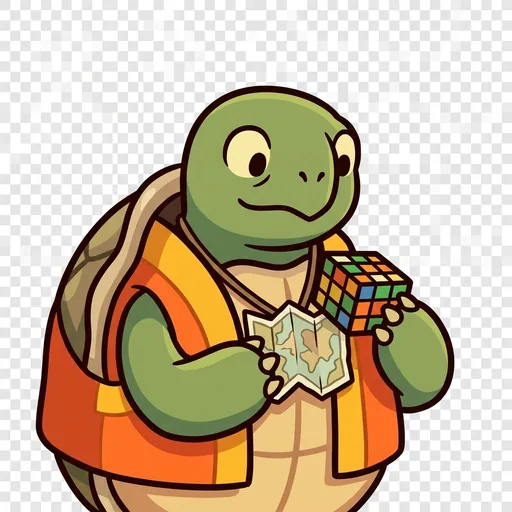
Chart
Lessons-layer cast (inspection planner — the fifteen-second pre-solve read)
-

Parity
Lessons-layer cast (the big-cube even-odd special case)