Tend
TEND — *slow hands, calm voice, patient first.*
Press play to listen along. The line being read lights up as you go.
Show full transcript
Loading transcript…
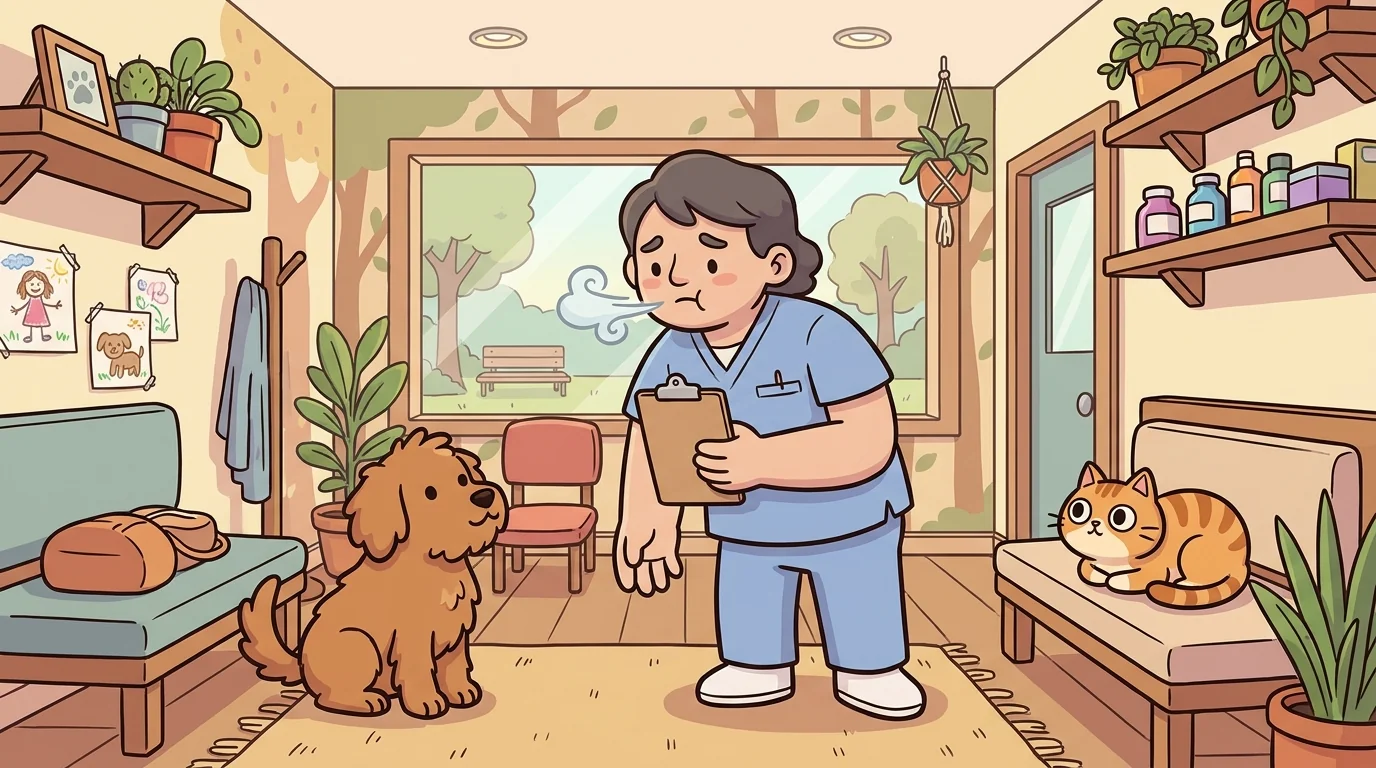
- sigh - DOG - CAT
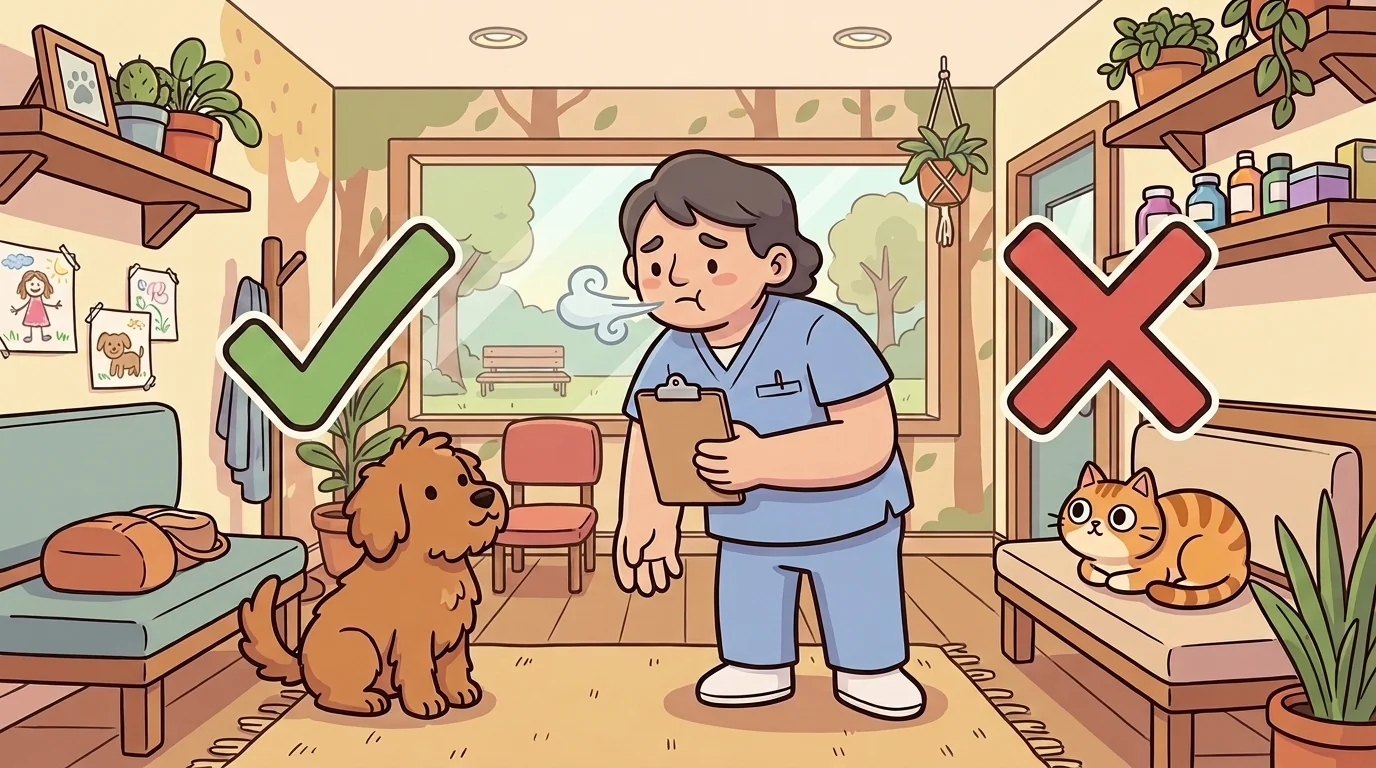
- VET - YES - NO
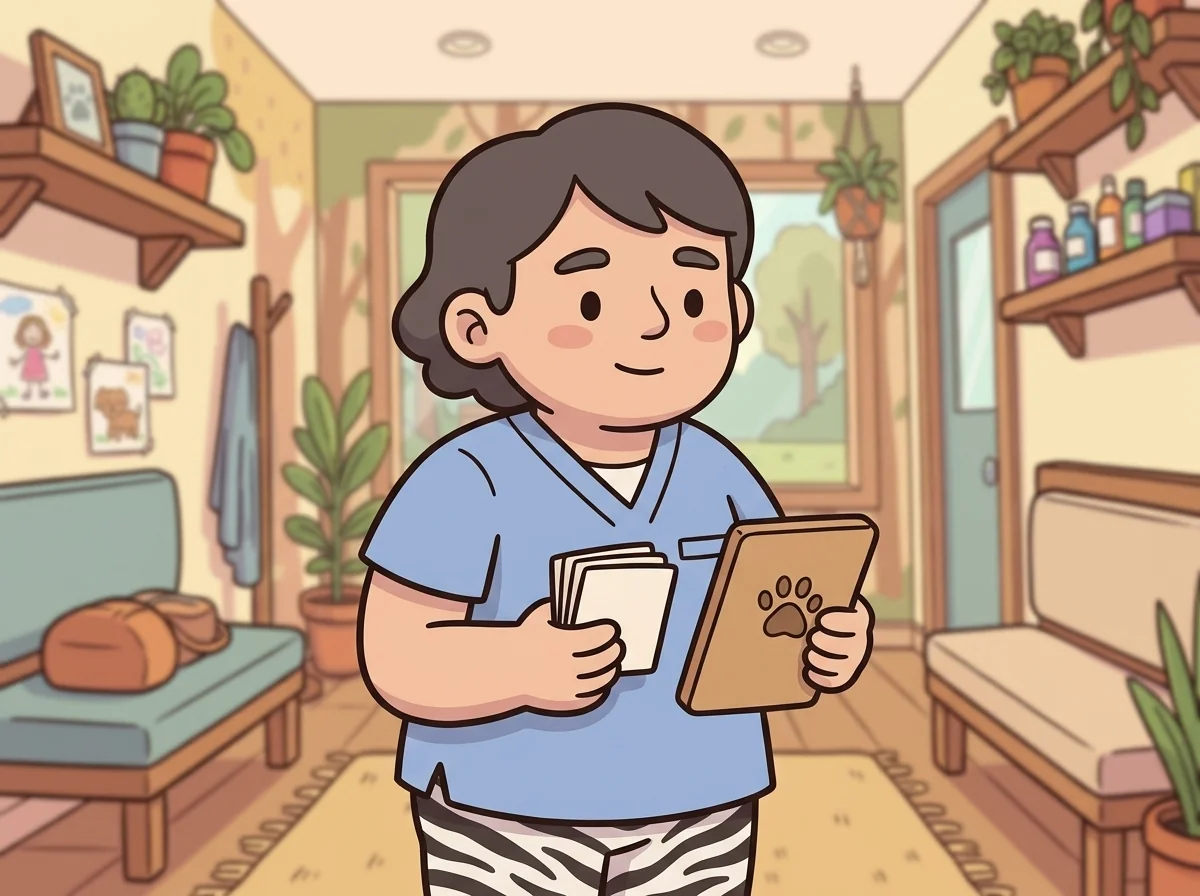
Tend was a steady kid. She moved with careful steps, like an okapi walking through the forest. Her vet tunic was a little chunky, but it fit her just right. She always carried a stack of small cards in one hand. In the other, she had her animal-consent-tracker.
Tend was small, but very steady. She moved with great care. Her skin was a warm cream color. She wore soft striped leggings, like a baby zebra. Tend watched her animal patients very closely. She always knew what they were feeling. Her favorite saying was, "Slow hands, calm voice, patient first." She used her cards to remember each step. Her tracker helped her make sure the animals were okay with everything. It reminded her to explain things first. She had to watch for signals. If an animal said "no" with a twitch or a growl, she would pause.
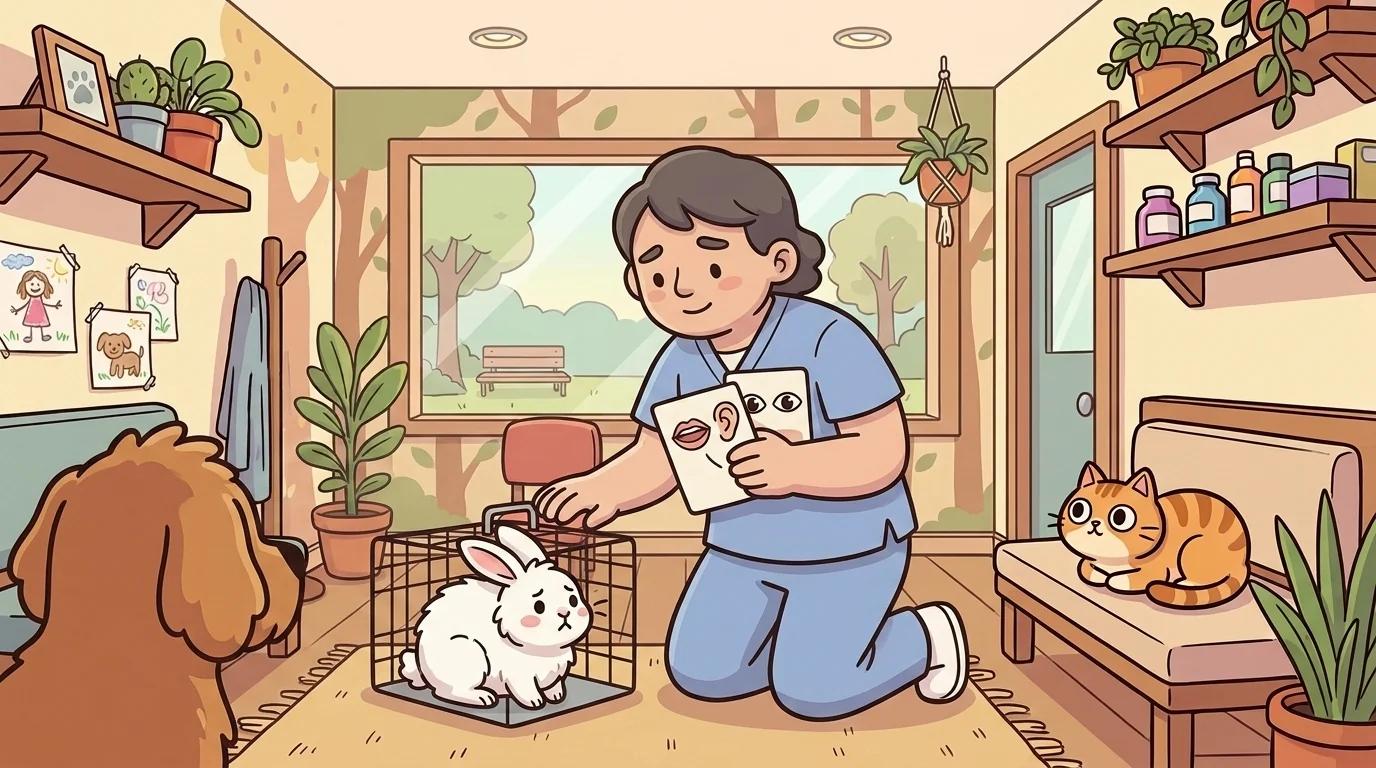
The clinic was usually busy. But today, a quiet little rabbit named Barnaby arrived. Barnaby was a puffball of white fur. He sat huddled in his carrier, twitching his nose. His big pink eyes looked around nervously. Tend knew right away Barnaby was scared. She pulled out her treatment cards. The first one said: Explain first.
Tend knelt down slowly. She spoke in a soft, calm voice. "Hello, Barnaby," she whispered. "My name is Tend. We just want to check your paw. It won't hurt." Barnaby flattened his ears a little. He didn't understand the words. But he understood her gentle tone. He understood her slow movements. Tend moved her hand towards the carrier. She stopped before touching him. She watched his nose twitch. She watched his ears.
Barnaby's nose twitched faster. His body tensed up. That was a "no" signal. Tend knew it. She pulled her hand back. "Okay, Barnaby," she said, still soft. "We can wait." She sat quietly for a moment. She let Barnaby get used to her. She pulled out another card. It said: Watch for signals.
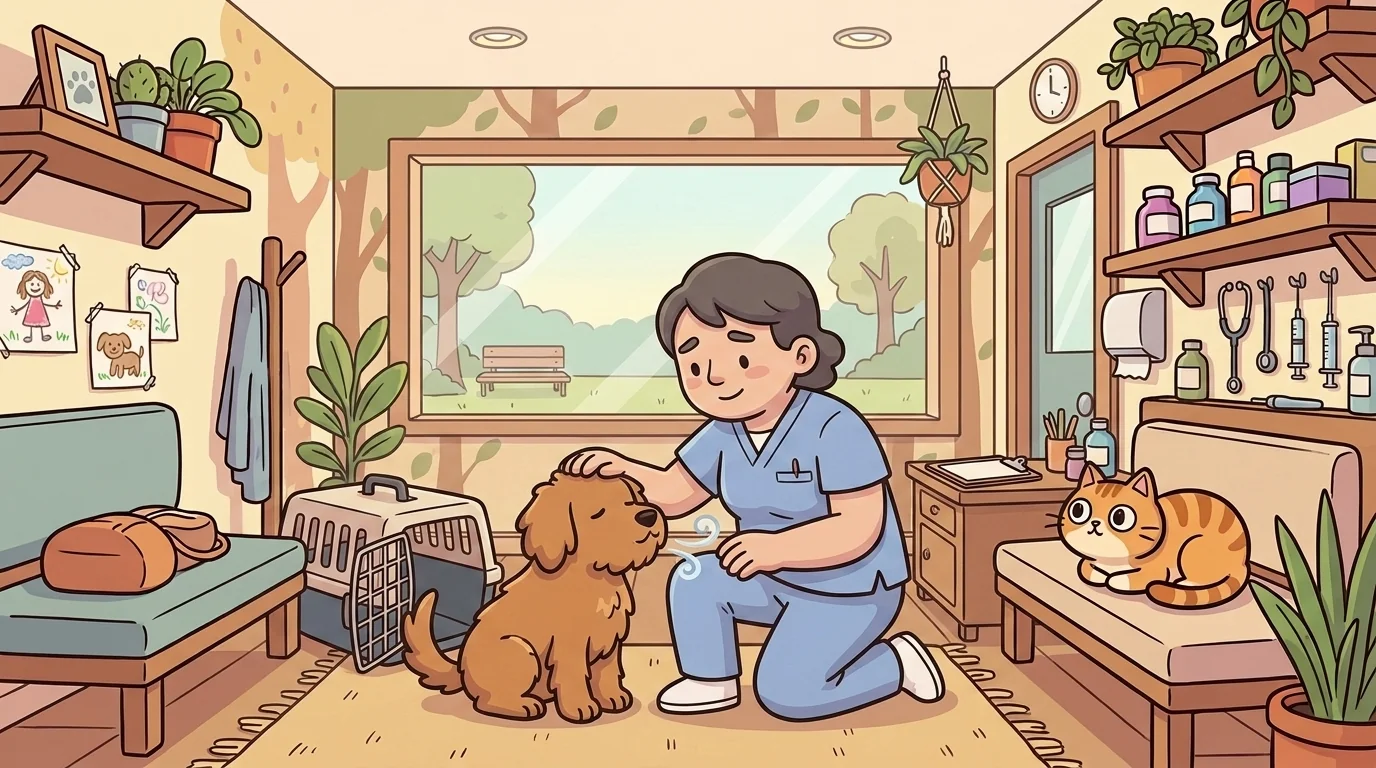
After a minute, Barnaby's ears perked up a tiny bit. His nose slowed its twitch. He was still nervous, but less so. Tend tried again. This time, she moved even slower. She put her hand on the carrier door. She didn't open it yet. Barnaby watched her. He didn't tense up this time. He just blinked. That was a "maybe okay" signal. Tend opened the door just a crack. She didn't try to pull him out.
She waited. Barnaby sniffed the air. He slowly poked his head out. Tend smiled a little. "Good boy," she murmured. She offered a tiny piece of carrot. Barnaby sniffed it. He took a small bite. He was starting to trust her. Tend pulled out her next card: Slow hands.
Tend gently reached into the carrier. She didn't grab Barnaby. She just rested her hand near him. Barnaby flinched a little. Tend froze. She didn't move her hand. She waited. Barnaby relaxed again. He seemed to realize she wasn't going to hurt him. Tend slowly, slowly, put her hand on his back. She stroked his fur. Barnaby leaned into her touch. He even let out a soft sigh.
The CreatureCare ensemble
Tend is part of CreatureCare's distributed-narrative cast. Each character embodies a different curricular primitive; together they teach the full subject.
-

Heed
Patient assessment — the listener who treats observation as relationship, not data-gathering ('listen first, look second, then we know')
-

Chart
Diagnostics — the thoughtful pattern-finder who treats lab data as story-fragments ('numbers are notes; notes are not the song')
-
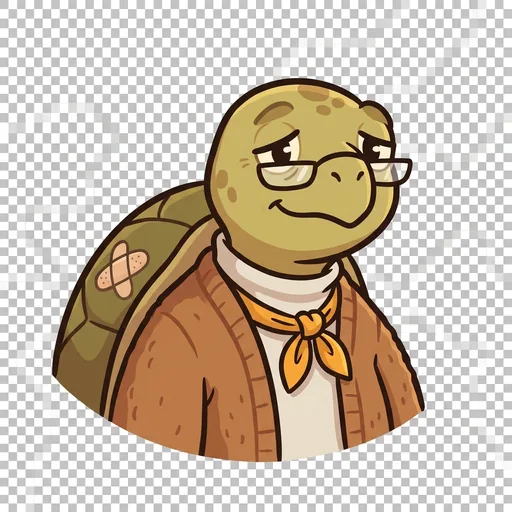
Knit
Recovery + follow-up — the patient tortoise-elder who teaches that healing is slow and that's the point ('days come, bandages come off, walk again — not yet, soon')
-

Bond
Welfare ethics + animal-human relationship — the wise heron-elder who carries the welfare-ethics gate at the kit-12 capstone ('care is more than cure — sometimes care means stopping; always care means seeing')